
A healthy car battery should read between 12.4 and 12.7 volts when the engine is off, and 13.7 to 14.7 volts when the engine is running.
If you've ever popped the hood and stared at your battery wondering whether that little box of power is doing its job, you're not alone. I've spent years working with vehicles of all kinds, and one of the most common questions drivers ask is about proper battery voltage. Knowing what your battery should read can save you from being stranded with a dead car, help you spot charging system issues early, and extend the life of an expensive component. Let me walk you through everything you need to know, from the basics to the details that most people overlook.

Understanding Car Battery Voltage Basics
A car battery is basically a storage tank for direct current electricity. It provides the juice needed to crank the engine and powers accessories when the engine isn't running. Once the engine starts, the alternator takes over and keeps everything charged while also replenishing the battery.
Voltage is a measure of electrical potential, and for a standard 12-volt lead-acid battery, that nominal rating is just a starting point. The real voltage changes depending on whether the engine is running, the temperature outside, and how much charge the battery is holding.
Think of voltage like water pressure in a hose. Even when no water is flowing, there's still pressure in the line. That's similar to a battery sitting idle with the engine off. Once you turn on the tap, that pressure gets used. And when the pump kicks on (the alternator in a car's case), it boosts the pressure back up.
What Voltage Should a Car Battery Have When the Engine Is Off
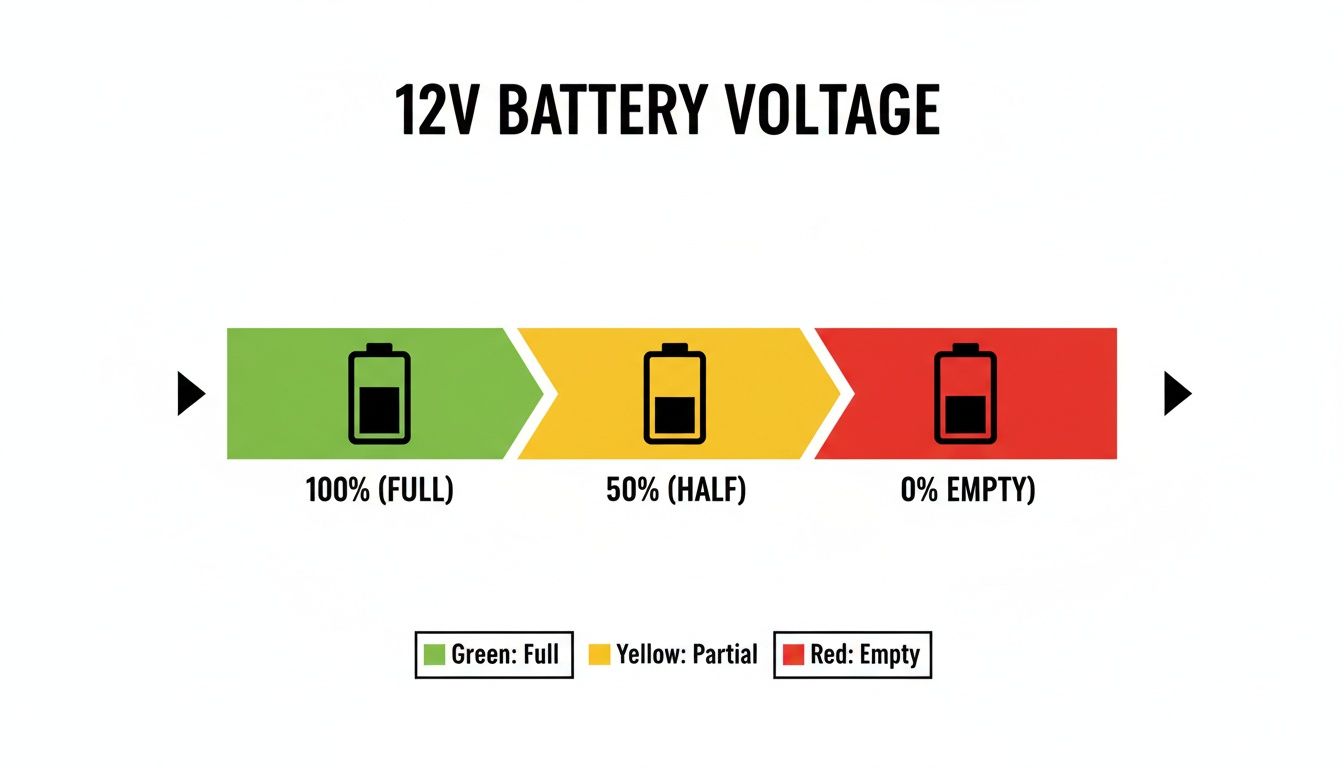
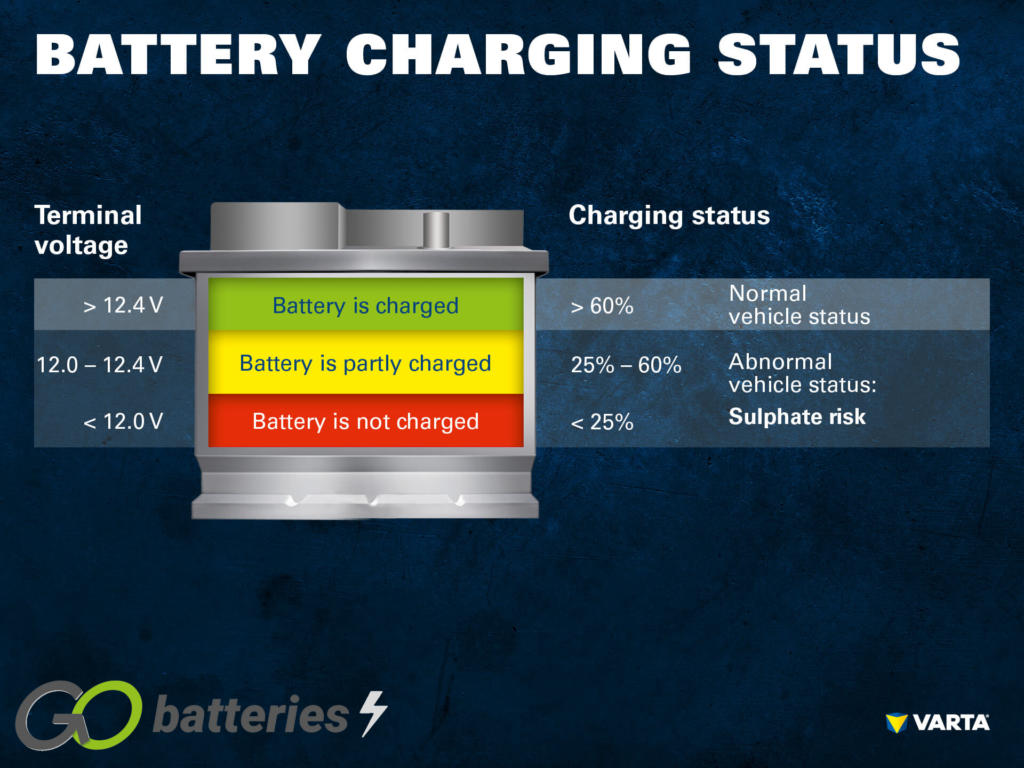
When your car is off and the battery is at rest, a fully charged battery should show around 12.6 to 12.7 volts. Some sources round this to 12.4 to 12.7 volts as the "healthy" range for a resting battery.
If you're testing, let the car sit for at least a few hours without running. The surface charge from the alternator needs to dissipate, or your reading will be artificially high.
Here's a quick breakdown of resting voltage readings:
- 12.6 volts or higher: Fully charged
- 12.4 volts: About 75 percent charged
- 12.2 volts: Around 50 percent charged
- 12.0 volts or below: Discharged, needs charging
If your resting voltage is below 12.0 volts, your battery is considered deeply discharged. Jump-starting might get you going, but you'll likely need a proper recharge or a replacement soon.

What Voltage Should a Car Battery Have When the Engine Is Running
Once the engine is running, the alternator should be charging the battery and powering everything else. The voltage should climb to between 13.7 and 14.7 volts. Most vehicles target around 14 volts when running.
A reading lower than 13.7 volts while running suggests the alternator isn't putting out enough juice. This often means a failing alternator, a bad voltage regulator, or loose or corroded connections.
A reading higher than 14.7 volts indicates overcharging, which can cook your battery, boil away the electrolyte, and damage sensitive electronics. If you see a number above 15 volts, have your charging system checked right away.
I've personally had a situation where a customer's truck kept dying at idle. The resting battery voltage was fine at 12.6 volts, but as soon as the engine started, the gauge dropped to 12.9 volts. That pointed straight to a weak alternator, which we confirmed with a bench test.

How Temperature Affects Battery Voltage
Temperature plays a sneaky role in battery performance. Cold weather thickens the oil in your engine, making the starter work harder, and it also slows down the chemical reactions inside the battery. A healthy battery might show 12.4 volts in freezing conditions and still crank fine.
Heat has the opposite effect. It speeds up chemical reactions but also accelerates battery degradation. In hot climates, batteries tend to have shorter lifespans because the heat causes water loss and internal corrosion.
If you're testing voltage in winter, remember that a slightly lower reading doesn't always mean a bad battery. Conversely, a battery showing "normal" voltage in summer might be hiding internal damage that won't show up until the first cold snap.
How to Test Your Car Battery Voltage
Testing battery voltage is one of the easiest diagnostic tasks you can do at home. All you need is a digital multimeter, and the whole thing takes about five minutes.
Follow these steps for an accurate reading:
- Turn off the engine and all accessories, including lights and the radio
- Remove the key from the ignition
- Set your multimeter to DC voltage (20V range works for most car batteries)
- Connect the red lead to the positive terminal, marked with a plus sign
- Connect the black lead to the negative terminal, marked with a minus sign
- Read the display and compare it to the healthy ranges
For the most accurate resting voltage, let the car sit overnight before testing. If you just drove it, wait at least an hour to let the surface charge dissipate.
If you want to test under load, turn on the high beams and the blower fan while measuring. A healthy battery should hold above 10 volts during this test. If it drops below 9.6 volts, the battery is likely on its last legs.
Signs of a Weak or Failing Battery
Voltage readings are just one piece of the puzzle. Real-world symptoms often tell the story before the numbers do.
Common signs that your battery is losing the battle include:
- Slow cranking when you turn the key
- Dim headlights, especially at idle
- Clicking sounds from the starter
- Electrical glitches like flickering dashboard lights
- Battery warning light on the dash
- Swollen or bulging battery case
- Sulfur or rotten egg smell near the battery
I've seen batteries that tested fine on a multimeter but failed the moment the cold weather hit. That's why age matters. Most car batteries last three to five years, even with perfect voltage readings. If yours is approaching that age range, start planning for a replacement before it catches you off guard.
What Causes a Car Battery to Lose Voltage
Several everyday situations can drain your battery faster than you'd think.
- Leaving headlights or interior lights on overnight
- A short drive that doesn't let the alternator fully recharge the battery
- Corroded or loose battery terminals
- A parasitic drain from a stuck relay or faulty module
- Extreme temperatures, especially extreme cold
- An aging battery that no longer holds a charge
In my shop, the most common culprit behind mysterious dead batteries is a parasitic draw. Something small stays awake when it should sleep, slowly sipping power until the battery can't crank the engine.
Maintaining Proper Battery Voltage
A little maintenance goes a long way. Here are a few habits that keep battery voltage in the healthy zone:
- Drive the car regularly, especially for longer trips
- Keep the terminals clean and tight
- Check the voltage once a month if the battery is more than three years old
- Use a battery maintainer if you store the car for weeks at a time
- Avoid short trips that don't allow a full recharge
- Get the charging system tested if the battery keeps dying
I've kept batteries alive for six years in my own vehicles by simply keeping the terminals clean and avoiding unnecessary short trips. It's not glamorous, but it works.
Frequently Asked Questions
Is 12.2 volts okay for a car battery?
A reading of 12.2 volts means the battery is around 50 percent charged. It will still start the car in warm weather but may struggle in the cold. It's a sign to charge or replace soon.
Is 11.9 volts a dead battery?
Yes, 11.9 volts is considered deeply discharged. The battery may not have enough power to crank the engine and likely needs a recharge or replacement.
What voltage is too low to start a car?
Below 12.0 volts is too low for reliable starting. Once a battery drops to around 11.8 volts, most starters will struggle or fail to engage.
How do I know if my alternator is bad?
If the running voltage is below 13.7 volts or above 14.7 volts, the alternator is likely failing. Dim lights, battery warning indicators, and frequent dead batteries also point to alternator trouble.
Can a battery show 12 volts and still be bad?
Yes. Voltage alone doesn't tell the whole story. A battery with damaged cells can show normal voltage but fail under load, which is why load testing matters for older batteries.
Keeping Your Battery in the Sweet Spot
Now you know that a healthy battery should sit between 12.4 and 12.7 volts at rest and climb to 13.7 to 14.7 volts with the alternator doing its thing. These numbers are your roadmap to a reliable ride.
Make it a habit to check your battery voltage a few times a year, especially before winter and summer, when batteries face the most stress. Pair those readings with a quick look at the terminals and a mental note of the battery's age. That small effort can save you from the frustration of a no-start morning.
If you found this guide helpful, share it with a fellow driver or drop a comment with your own battery tips. Stay charged and keep rolling.