
Your car's battery should read between 12.4 and 12.7 volts when the engine is off, and 13.7 to 14.7 volts when the engine is running.
That single number tells you a lot more than most drivers realize. A healthy car battery isn't just about starting your engine on a cold morning. It's the heartbeat of your entire electrical system, quietly powering everything from your headlights to your infotainment screen. Over the years, I've seen countless drivers get stranded simply because they ignored the silent warnings. Knowing your battery voltage isn't just smart, it's essential. Let me walk you through everything I've learned from testing batteries in everything from sedans to heavy-duty trucks.

Understanding Car Battery Voltage Basics
Think of your battery as a reservoir of electrical energy. Voltage is simply the pressure pushing that energy through your car's wiring. Most vehicles today run on a 12-volt battery system, though the actual reading fluctuates depending on whether the engine is on or off.
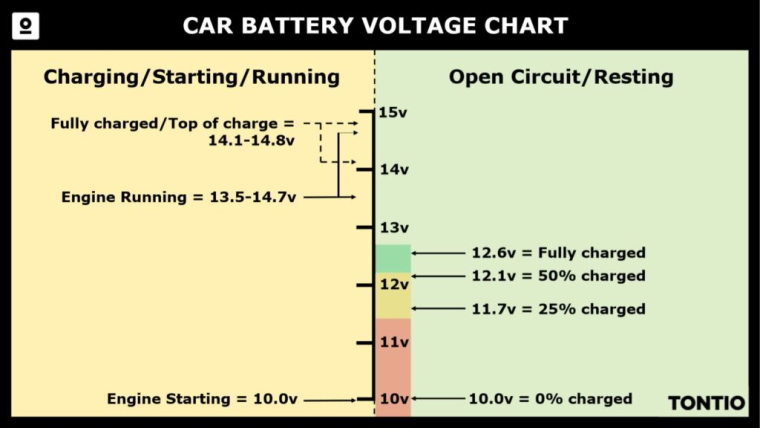
A fully charged, healthy battery at rest will sit around 12.6 volts. Once you start the engine, the alternator takes over and pushes the reading up to somewhere between 13.7 and 14.7 volts. This charging range is critical. Too low, and your battery never fully recharges. Too high, and you risk frying sensitive electronics.
I remember the first time I learned this the difference. I was working on an older pickup truck, and the owner kept wondering why his battery kept dying. Hooked up my multimeter and found the alternator pushing a whopping 15.2 volts. That kind of overcharging boils the acid inside the battery and destroys it over time. The fix? A $40 voltage replacement. The lesson? Voltage matters more than people think.

What the Numbers Actually Mean
Numbers can feel cold, so let me break them down in plain English.
A reading of 12.6 volts or higher means your battery is fully charged and in great shape. Between 12.4 and 12.6 volts means it's still healthy but could use a charge soon. Drop to 12.2 volts or lower, and you're looking at a significantly discharged battery. Anything below 11.8 volts usually signals a dead cell, which means your battery is finished.
Here's a quick reference I've used for years:
- 12.6 to 12.7 volts: Fully charged, perfect condition
- 12.4 to 12.5 volts: Good, around 75 percent charged
- 12.2 to 12.3 volts: Discharged, needs charging soon
- 12.0 volts or below: Deeply discharged, likely won't start your engine
- 11.8 volts or below: Dead battery, usually a failed cell
Think of it like a fuel gauge. You wouldn't ignore your low fuel light, so don't ignore a low voltage reading either.
Why Voltage Drops and What Causes It
Batteries lose charge for many reasons, and most of them sneak up on you.
Cold weather is the number one battery killer. Chemical reactions inside the battery slow down in the cold, reducing its capacity. That healthy 12.6-volt battery in summer can drop to 12.0 volts when winter hits.
Leaving your headlights or interior lights on overnight is another classic mistake. I've personally left my dome light on more times than I care to admit. That small drain can pull a battery below 12 volts in less than 12 hours.
Corroded battery terminals are a sneaky culprit. The white or bluish powder that builds up on your terminals acts like a dam, blocking the flow of electricity. Even a fully charged battery will read low if the connections are bad.
A failing alternator will also drag your voltage down. The alternator's job is to keep the battery charged while you drive. If it's weak or dying, your battery slowly loses charge even while you're driving.
Parasitic drains can also be a problem. Modern cars constantly draw small amounts of power for things like your alarm system, key fob receiver, and computer memory. These are normal, but if something like a trunk light stays on, it can drain your battery in days.

How to Test Your Battery Voltage
Testing your battery is easier than most people think. You don't need to be a mechanic.
Turn off your engine and all accessories. Let the car sit for at least an hour, ideally overnight, to get a true resting voltage. Set your multimeter to DC voltage, usually the 20V setting. Touch the red probe to the positive terminal (marked with a plus sign) and the black probe to the negative terminal. Read the display.
If you want to test under load, turn on your headlights for 15 minutes without starting the engine, then check the voltage. This simulates the strain of starting your car.
Testing the charging system is just as easy. Start the engine and check the voltage at the battery. You should see between 13.7 and 14.7 volts. Turn on accessories like the AC, headlights, and radio. The reading might dip slightly but should stay above 13.5 volts. Rev the engine slightly. The voltage should rise, not fall.
I keep a $20 multimeter in my garage at all times. It's saved me from being stranded more than once.

Signs Your Battery Voltage Is Off
Your car usually gives you warning signs before a battery fails.
Slow engine cranking is the most obvious. If your engine sounds sluggish when you turn the key, your battery is probably low.
Dim headlights or flickering interior lights are another red flag. Your battery struggles to power accessories when voltage drops.
The check engine or battery light on your dashboard often points to charging system issues. Don't ignore these lights.
Swollen battery case is a serious sign. It usually means the battery has overheated or frozen. Either way, it needs replacement.
A sulfur smell means your battery is venting gas. This is dangerous and means you need to address it immediately.

How to Maintain Healthy Battery Voltage
A little maintenance goes a long way.
Drive your car regularly. Short trips don't give your alternator enough time to recharge the battery. A 30-minute drive once a week helps keep voltage healthy.
Keep terminals clean. A wire brush and some baking soda mixed with water will clean corrosion quickly.
Avoid leaving electronics on when the engine is off. This includes phone chargers, heated seats, and interior lights.
Use a battery maintainer if you store your car for long periods. These smart chargers keep the battery at full charge without overcharging.
Test voltage monthly. It's a five-minute job that can save you hundreds in towing and replacement costs.
When to Replace Your Battery
Most car batteries last three to five years, depending on climate and driving habits. If your battery is over four years old, start testing it more frequently. If voltage consistently drops below 12.4 volts after driving, it's time for a replacement.
Don't wait until you're stranded. A battery that reads 12.2 volts or lower after a full charge is on its last legs.
Common Battery Voltage Mistakes to Avoid
Many drivers make the same mistakes I used to make.
They assume a new battery is always good. Even new batteries can be defective or sit on shelves too long.
They jump-start cars repeatedly without addressing the root cause. Jump-starting is a temporary fix, not a solution.
They ignore corrosion. A little corrosion can cripple your entire charging system.
They use cheap chargers. Modern cars have sensitive electronics. Cheap chargers can send voltage spikes that damage components.
Frequently Asked Questions
What voltage is too low for a car battery?
A car battery reading below 12.0 volts at rest is considered deeply discharged. Anything under 11.8 volts usually means the battery has a dead cell and needs replacement.
Is 11.9 volts enough to start a car?
11.9 volts is borderline. In warm weather, a healthy battery might still start the engine at this level. In cold weather, 11.9 volts is usually not enough to crank the engine reliably.
How often should I check my battery voltage?
Check your battery voltage at least once a month, especially before winter or after long periods of inactivity. Regular checks help you catch problems before they leave you stranded.
Can a battery show 12 volts and still be bad?
Yes, a battery can show 12 volts at rest but fail under load. This is why load testing is important. A load tester applies simulated strain to see how the battery performs under real-world conditions.
What should battery voltage be while driving?
While driving, your battery voltage should read between 13.7 and 14.7 volts. This indicates your alternator is charging properly. If it reads below 13.5 volts or above 15 volts, you likely have an alternator issue.
Taking Charge of Your Battery Health
Your battery voltage tells a story. It tells you whether your car is ready for the morning commute, a weekend road trip, or the dead of winter. By learning what those numbers mean and checking them regularly, you take control of one of the most overlooked systems in your vehicle.
Grab a multimeter, spend five minutes under the hood, and get to know your battery. It's a small habit that pays off big. And the next time someone asks you why their car won't start, you'll know exactly where to look first.