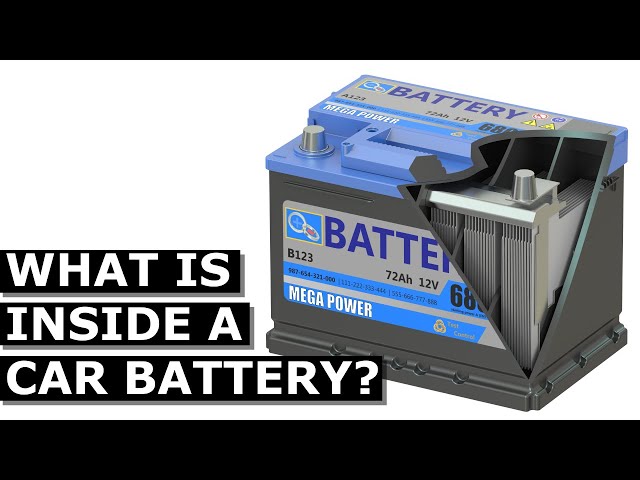
Inside every car battery you'll find lead plates, sulfuric acid electrolyte, and a polypropylene case working together to store and deliver electrical power. Sounds simple, right? But there's actually quite a bit of chemistry and engineering happening behind that familiar black box under your hood. Stick with me, because once you understand what's really going on inside your car battery, you'll save money, spot problems early, and never get stranded with a dead car again.
I've been around car batteries for years, from the old-fashioned flooded lead-acid batteries my dad used to top off with distilled water to the modern AGM and gel cell batteries in newer vehicles. I've had batteries die on me in parking lots, learned the hard way what sulfation looks like, and even recycled more dead batteries than I can count. Let me walk you through everything I've learned about what makes a car battery tick.

The Basic Anatomy of a Car Battery
A typical car battery is a 12-volt lead-acid battery made up of six cells, each producing about 2.1 volts. These cells sit inside a tough polypropylene plastic case that resists acid and heat. Inside each cell, you'll find alternating positive and negative lead plates, separators between them, and a sulfuric acid solution that does the actual electrical work.
Think of it like a sandwich. The lead plates are the bread, the separators are the cheese keeping things from short-circuiting, and the electrolyte is the mayo that makes everything conductive and tasty. Okay, maybe not tasty, but you get the idea.
The Six-Cell Structure
Each of the six cells holds its own little chemical reaction, and together they combine to give you the 12 volts your car needs to start the engine and run all the electronics. If one cell fails, your battery voltage drops, and you'll start noticing symptoms. A healthy battery at rest should read around 12.4 to 12.7 volts.
- 6 individual cells, each generating roughly 2.1 volts
- Cells are connected in series using lead connectors
- The total voltage adds up to about 12.6 volts when fully charged
- Each cell has its own set of plates and electrolyte

The Key Components Inside a Car Battery
Let me break down each part so you really know what's going on under that plastic lid.
Lead Plates (Positive and Negative)
The lead plates are the heart of the battery. They're not just pure lead, though. The positive plates are made of lead dioxide, which gives them that chocolate brown color. The negative plates are made of sponge lead, which looks more like dull gray metal. Both plates are cast into grids to give them strength and to hold the active material in place.
These plates are where the chemical reaction happens. When you turn the key, the acid reacts with the plates to release electrons, which flow out as electricity. When you charge the battery, the reaction reverses and the plates get ready for the next start.
- Positive plates use lead dioxide for higher energy output
- Negative plates use sponge lead for better conductivity
– More plates per cell generally mean more cranking power - Plate thickness affects how long the battery lasts
Sulfuric Acid Electrolyte
The liquid inside the battery is a mixture of sulfuric acid and distilled water, usually around 35 to 40 percent acid by weight. This electrolyte is what allows ions to move between the positive and negative plates, creating the electrical current that starts your car.
One thing I always tell people is to never let this stuff touch your skin or your clothes. I've seen what battery acid does to a cotton shirt, and trust me, holes appear pretty fast. If you ever need to handle the electrolyte, wear gloves and safety glasses.
- Made of about 35-40% sulfuric acid and 60-65% distilled water
- Specific gravity should be between 1.265 and 1.285 when fully charged
- Acts as the medium for ion transfer between plates
- Evaporation is normal in flooded batteries, which is why you may need to add water
Separators
Between each positive and negative plate, there's a thin sheet called a separator. These separators are usually made of polyethylene or fiberglass and they do exactly what you'd think. They keep the plates from touching each other while still allowing ions to pass through.
Without them, the positive and negative plates would short-circuit, and your battery would be useless. Separators are like referees in a soccer match, keeping the two teams apart while letting the game continue.
- Prevent short circuits between plates
- Allow ion flow through tiny pores
- Made from polyethylene, fiberglass, or rubber
- Critical for battery safety and longevity
Battery Terminals
On top of the case, you'll see two posts, one marked positive (+) and one marked negative (-). These are the battery terminals, and they're your connection point to the rest of the car. The terminals are usually made of lead, and they connect internally to the cell straps that link all six cells together.
Corrosion often builds up here, and that's one of the most common reasons a car won't start. A little baking soda and water, an old toothbrush, and some elbow grease can fix most terminal problems in minutes.
- Two posts: positive (+) and negative (-)
- Often marked with red and black covers
- Lead construction for conductivity
- Common site for corrosion buildup
The Polypropylene Case
The outer shell is made of polypropylene plastic, which is tough enough to handle the acid, vibrations, and heat under your hood. Inside, the case is divided into six separate compartments, one for each cell. This keeps the chemistry contained and prevents the cells from mixing.
Modern cases also have vents that allow gases to escape during charging. These vents help prevent pressure buildup, but they also mean you should never tip a flooded battery on its side, or you'll spill acid everywhere.
- Made from durable, acid-resistant polypropylene
- Divided into six separate cell compartments
- Includes vents for gas release
- Designed to handle vibration and temperature swings

Different Types of Car Batteries and What's Inside Them
Not all car batteries are built the same way. While the basic lead-acid chemistry stays the same, manufacturers use different internal designs to improve performance, lifespan, or maintenance needs.
Flooded Lead-Acid Batteries
These are the classic, traditional batteries. They're the cheapest option, and they're the ones with removable caps on top so you can add distilled water when the electrolyte level drops. Inside, you'll find the standard lead plates submerged in sulfuric acid.
I've used these for years in older cars, and they work great as long as you stay on top of maintenance. They're also the most common type in standard vehicles because they're affordable and reliable.
- Most affordable car battery option
- Requires occasional water refilling
- Standard lead plates and liquid electrolyte
- Vented design for gas release
AGM (Absorbent Glass Mat) Batteries
AGM batteries are a step up in technology. Instead of having loose liquid electrolyte sloshing around, the acid is absorbed into fiberglass mats that sit between the plates. This makes the battery spill-proof, more vibration-resistant, and better at handling deep discharges.
A lot of newer cars with start-stop systems use AGM batteries because they handle the constant on-off cycling much better. They're more expensive, but they last longer and perform better.
- Electrolyte absorbed in fiberglass separators
- Spill-proof and maintenance-free
- Better performance for start-stop vehicles
- Longer lifespan than flooded batteries in most cases
Gel Cell Batteries
Gel batteries are similar to AGM but use a thickening agent to turn the electrolyte into a gel. This makes them extremely resistant to vibration and ideal for off-road or marine use. They also work well in extreme temperatures.
You won't see gel batteries as often in regular cars, but they're popular in motorcycles, RVs, and specialty vehicles. The gel design prevents stratification, which is when the acid separates from the water over time.
- Electrolyte is a thick gel, not liquid
- Excellent vibration resistance
- Works well in extreme temperatures
- Less common in standard passenger vehicles
EFB (Enhanced Flooded Batteries)
EFB batteries are an upgraded version of the flooded design. They use a special carbon coating on the plates and a stronger electrolyte mixture to handle the demands of start-stop systems. They sit between standard flooded batteries and AGM batteries in terms of price and performance.
If your car has basic start-stop technology but doesn't require an AGM, EFB is often the factory-installed choice.
- Improved flooded design with carbon additives
- Designed for entry-level start-stop systems
- More cycles than standard flooded batteries
- Affordable upgrade over traditional lead-acid

How the Chemistry Works Inside a Car Battery
Here's where it gets really interesting. The chemical reaction inside a car battery is reversible, which is what allows the battery to be recharged by your alternator over and over again.
When you discharge the battery, the lead dioxide on the positive plates and the sponge lead on the negative plates both react with the sulfuric acid. This creates lead sulfate on both plates and releases electrons that flow out as electricity.
When you drive, the alternator sends current back into the battery, reversing the reaction. The lead sulfate converts back into lead dioxide and sponge lead, and the sulfuric acid concentration goes back up. Pretty neat, right?
The Discharge Process
- Sulfuric acid reacts with lead dioxide on positive plates
- Sulfuric acid reacts with sponge lead on negative plates
- Both plates develop lead sulfate coating
- Electrons flow from negative to positive, creating current
The Recharge Process
- Alternator sends current back through the battery
- Lead sulfate on plates converts back to active material
- Sulfuric acid concentration increases
- Battery returns to full charge

Common Issues Found Inside Car Batteries
After years of dealing with batteries, I've seen the same problems show up again and again. Knowing what these issues look like on the inside can help you understand why your battery might be failing.
Sulfation
Sulfation happens when lead sulfate crystals build up on the plates and harden. This usually occurs when a battery sits unused for too long or stays discharged for extended periods. Once sulfation becomes severe, the battery loses capacity and may not hold a charge anymore.
I've rescued a few batteries from sulfation using a slow, long charge cycle, but once the crystals get really hard, there's no saving them. The best cure is prevention: drive your car regularly or hook up a battery maintainer.
Corrosion
Corrosion on the terminals is super common, and it looks like a white, blue, or green powdery substance around the battery posts. It's caused by hydrogen gas reacting with the surrounding metal and acid vapors. Cleaning it off with a baking soda solution and a wire brush usually does the trick.
Acid Stratification
In flooded batteries, the acid can separate from the water over time, with heavier acid sinking to the bottom. This creates uneven chemical activity and reduces battery performance. AGM and gel batteries don't have this problem because their electrolyte is fixed in place.
Plate Damage
Vibration, extreme temperatures, and overcharging can warp or crack the plates inside the battery. Once the plates are physically damaged, the battery is done. You won't be able to see this without opening the battery up, but symptoms include rapid voltage drops and inability to hold a charge.

Safety Tips When Dealing With Battery Contents
Batteries contain sulfuric acid and produce hydrogen gas, both of which can be dangerous if mishandled. I've had acid splashed on my hands before, and I can tell you it's no fun. Here's how to stay safe.
- Always wear safety glasses and gloves when working on a battery
- Work in a well-ventilated area to disperse hydrogen gas
- Keep flames and sparks away from the battery
- Clean up acid spills immediately with baking soda and water
- Never tip a flooded battery on its side
- Dispose of old batteries at proper recycling centers

How to Make Your Car Battery Last Longer
Since you now know what's happening inside, you can take better care of your battery. Here are some practical tips that have saved me from countless roadside headaches.
- Drive your car at least once a week to keep the battery charged
- Use a battery maintainer if you store your vehicle long-term
- Keep the terminals clean and tight
- Check electrolyte levels in flooded batteries every few months
- Avoid short trips that don't give the battery time to fully recharge
- Have your charging system tested once a year
I've personally kept batteries going for seven or eight years using these habits. Most people replace them every four or five years simply because they don't pay attention until something goes wrong.
Frequently Asked Questions About What's Inside a Car Battery
What are the main materials inside a car battery?
The main materials are lead plates, sulfuric acid electrolyte, distilled water, and a polypropylene plastic case. These components work together through chemical reactions to produce the 12 volts your car needs.
How many cells are inside a standard car battery?
A standard 12-volt car battery contains six cells, each producing approximately 2.1 volts. Each cell holds multiple positive and negative lead plates submerged in electrolyte.
Is the liquid inside a car battery dangerous?
Yes, the electrolyte is a mixture of sulfuric acid and water that can cause burns and damage to skin, eyes, and clothing. Always handle batteries with proper safety gear like gloves and goggles.
What causes corrosion on battery terminals?
Corrosion forms when hydrogen gas released during charging reacts with surrounding metal and acid vapors. It's usually a powdery white, blue, or green substance that can be cleaned with baking soda.
Can you refill a dead car battery with acid?
No, you should never add acid to a battery. If electrolyte levels are low, top off with distilled water only. Adding more acid will raise the concentration too high and damage the internal plates.
Why do batteries sometimes leak fluid?
Leaking happens when the case cracks, the seals fail, or the battery is tipped over. Flooded batteries are more prone to leaking because the liquid electrolyte is free-flowing inside the case.
Conclusion
Understanding what's inside a car battery turns a mysterious black box into something you can actually make sense of. Lead plates, sulfuric acid, separators, terminals, and a tough plastic case all work together to deliver the power your car relies on every single day. Whether you drive a basic sedan or a modern start-stop vehicle, the same basic chemistry is happening inside, just in slightly different designs.
The biggest lesson I've learned from years of dealing with batteries is that a little attention goes a long way. Clean terminals, regular driving, and occasional checks can add years to your battery's life. Take care of it, and it will take care of you, especially on those cold mornings when you really need your car to start.
If you found this guide helpful, share it with a friend who always seems to be stuck with a dead battery. And feel free to drop a comment below with your own battery stories or questions. I'd love to hear them.