

Car battery voltage is the electrical potential of your car's battery, typically ranging from 12.6 volts when fully charged to around 9 volts when deeply discharged.
If you've ever turned the key in your ignition and heard nothing but a sad click, you've already met your car's battery voltage in person. It's the silent workhorse behind every start, every radio station, and every dashboard light. Understanding what car battery voltage is, how it works, and what healthy numbers look like can save you from roadside headaches, expensive repair bills, and the mystery of why your headlights dim at idle. I've spent years tinkering with everything from vintage muscle cars to modern hybrids, and I can tell you one thing for certain: voltage is the heartbeat of your vehicle's electrical system. In this guide, I'll walk you through exactly what car battery voltage means, what numbers you should know, and how to keep your battery humming for years to come.
What Exactly Is Car Battery Voltage?
Think of voltage as the pressure pushing electricity through your car's wiring, kind of like water pressure in a garden hose. The higher the pressure, the more current flows. Car batteries are designed to deliver a specific voltage range, and most passenger vehicles run on a 12-volt system. But here's the thing most people miss: a "12-volt" battery rarely sits at exactly 12 volts.
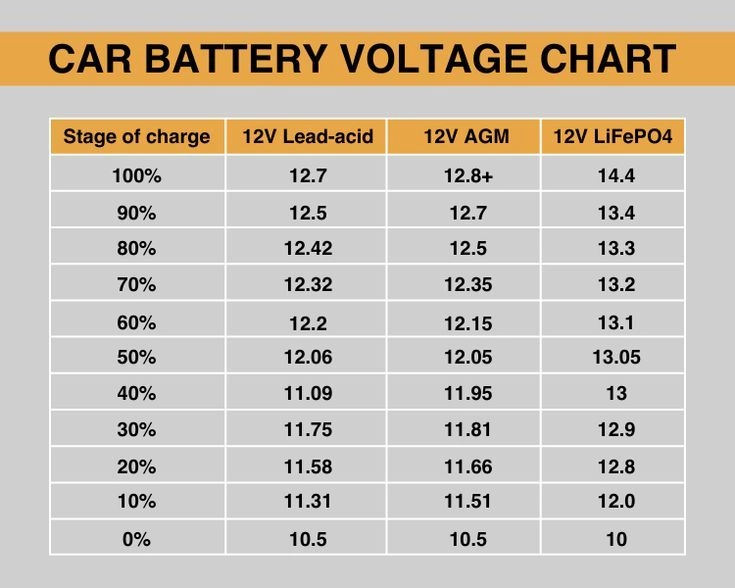
In reality, a healthy car battery voltage ranges between 12.4 and 12.7 volts when the engine is off and the battery is fully charged. When the engine is running, the alternator kicks in and pushes that number up to between 13.7 and 14.7 volts. This higher range is intentional because the alternator is actively charging the battery while powering your car's electronics.
Voltage is measured in volts (V), and for your car, it's the difference in electrical potential between the positive and negative terminals of the battery. Every time you start your car, power your windows, or charge your phone through the USB port, you're relying on this voltage to do its job.
How Car Battery Voltage Works
Your car's electrical system is a closed loop, and voltage is the driving force that keeps everything moving. Here's a simple breakdown of how it all comes together:
- The battery stores chemical energy and converts it into electrical energy, producing direct current (DC) voltage.
- The alternator generates alternating current (AC) and converts it to DC voltage to recharge the battery while the engine runs.
- The voltage regulator keeps the output steady, preventing overcharging or undercharging.
- The starter motor uses a massive burst of voltage to crank the engine.
Each component depends on stable voltage to function properly. If voltage drops too low, your starter struggles. If voltage climbs too high, sensitive electronics can fry.
What Is a Normal Car Battery Voltage?
Knowing what counts as "normal" can mean the difference between catching a problem early and getting stranded at the worst possible moment. Let's break it down by situation:
- Fully charged, engine off: 12.6 to 12.7 volts
- Resting (after sitting for a few hours): 12.4 volts or higher
- Engine running: 13.7 to 14.7 volts
- While cranking the engine: 10 volts or higher (briefly)
- Deeply discharged: below 11.8 volts
If you're seeing numbers outside these ranges, something's off. A reading below 12.2 volts often means your battery is undercharged. A reading above 15 volts while running suggests a faulty voltage regulator or alternator.
Why Car Battery Voltage Matters
You might be wondering why anyone needs to care about a few numbers on a voltmeter. The truth is, voltage is a window into your battery's health, your alternator's performance, and the overall stability of your electrical system.
When voltage is off, even by a small margin, you can experience:
- Dim or flickering headlights
- Slow engine cranking
- Random warning lights on the dashboard
- Malfunctioning accessories like power windows or infotainment systems
- Premature battery failure
I remember one winter when my old truck refused to start on a freezing morning. The battery tested at 11.9 volts, technically "low" but not dead. A quick drive and a proper charging cycle brought it back to life. Had I ignored it, I would've been buying a new battery within weeks.
How to Measure Car Battery Voltage
Checking your battery voltage is one of the easiest diagnostic tasks you can do at home. You don't need a mechanic's certification, just a basic multimeter or a dedicated battery tester.
Here's a step-by-step guide:
- Turn off your engine and all accessories (lights, radio, climate control).
- Wait at least 30 minutes to let the battery "rest" and surface charge dissipate.
- Set your multimeter to DC voltage (usually marked V⎓).
- Connect the red lead to the positive terminal (+) and the black lead to the negative terminal (−).
- Read the display and compare it to the healthy ranges listed earlier.
For a more complete picture, test the voltage while the engine is running. You should see a jump to the 13.7–14.7 volt range. If it stays low or climbs too high, your alternator or voltage regulator likely needs attention.
Factors That Affect Car Battery Voltage
Voltage doesn't stay perfectly constant. Several factors can push it up or pull it down:
- Temperature: Cold weather reduces battery capacity, making voltage drop faster. Heat accelerates chemical reactions but can shorten battery life.
- Age: As batteries age, their internal resistance increases, leading to lower voltage under load.
- Driving habits: Short trips don't give the alternator enough time to recharge the battery fully.
- Electrical load: Running too many accessories at once can pull voltage down temporarily.
- Alternator health: A weak alternator can't maintain proper charging voltage.
- Corroded terminals: Dirty or loose connections create resistance and lower voltage readings.
Signs of an Unhealthy Battery Voltage
Your car usually gives you hints when voltage is off. Some are subtle, others are hard to miss. Watch out for these warning signs:
- Clicking sound when turning the key
- Dashboard battery light staying on
- Headlights that brighten when revving the engine
- Swollen or bloated battery case
- Sulfur or rotten egg smell near the battery
- Electronics resetting or behaving erratically
If any of these sound familiar, grab your multimeter and check your battery voltage before things get worse.
Tips to Maintain Healthy Car Battery Voltage
A little attention goes a long way. Over the years, I've picked up a handful of habits that keep batteries happy:
- Drive your car regularly, especially on longer trips, to allow full charging cycles.
- Clean the terminals every few months with a wire brush and a baking soda solution.
- Keep the battery secure in its tray to prevent vibration damage.
- Avoid leaving accessories on when the engine is off.
- Test voltage monthly, especially before and after winter.
- Consider a battery maintainer if you store your vehicle for long periods.
These small steps can easily double the lifespan of your battery, which typically lasts 3 to 5 years under normal conditions.
Common Misconceptions About Car Battery Voltage
Let's clear up a few myths that float around the garage:
- "A 12-volt battery should read exactly 12 volts." Not quite. A healthy battery reads higher than 12 volts when fully charged.
- "Higher voltage always means a stronger battery." Not true. Excess voltage usually means a charging system problem.
- "You can't test a battery without special equipment." Actually, a basic multimeter works just fine for a quick check.
- "Jump-starting fixes battery problems." It gets you moving, but it doesn't address the underlying issue causing low voltage.
How Car Battery Voltage Compares to Other Vehicle Voltages
While most cars use a 12-volt system, there are exceptions and variations worth noting:
- Heavy-duty trucks and commercial vehicles often use 24-volt systems.
- Hybrid and electric vehicles have high-voltage battery packs (200V to 400V or more) for propulsion, in addition to a standard 12-volt auxiliary battery.
- Classic cars from the 1950s and earlier sometimes used 6-volt systems, which are rarer today but still found in restorations.
Knowing your system's standard helps you interpret voltage readings correctly and choose the right replacement battery when the time comes.
Frequently Asked Questions
What voltage is too low for a car battery?
A car battery voltage below 11.8 volts is considered deeply discharged and may not be able to start the engine. Anything consistently under 12.2 volts while resting indicates a charging issue or a failing battery.
Is 14.7 volts too high for a car battery?
A reading of 14.7 volts while the engine is running is at the upper end of normal. Anything consistently above 15 volts points to a voltage regulator problem and should be addressed quickly to prevent damage.
What voltage should a car battery show when off?
When the engine is off and the battery has rested for a few hours, a healthy reading should be between 12.4 and 12.7 volts. Lower numbers suggest the battery is undercharged or aging.
Can you overcharge a car battery by voltage?
Yes, if the alternator or voltage regulator malfunctions, it can push voltage above safe levels, boiling the electrolyte and permanently damaging the battery. That's why keeping the charging voltage under 15 volts is crucial.
How long does it take to recharge a low voltage car battery?
Driving for 30 minutes to an hour usually brings a mildly depleted battery back to a healthy voltage range. For deeply discharged batteries, a dedicated charger may take several hours or overnight to restore full charge.
Conclusion
Your car's battery voltage is more than just a number; it's the pulse of your entire electrical system. A healthy resting voltage sits between 12.4 and 12.7 volts, while a running engine should show 13.7 to 14.7 volts. Catching voltage problems early can save you from unexpected breakdowns, costly repairs, and the frustration of a car that won't start when you need it most. Grab a multimeter, check your battery today, and make voltage checks part of your regular maintenance routine. Your car will thank you with reliable starts and smooth performance for years to come. If you found this guide helpful, feel free to share it with fellow drivers or drop a comment with your own battery tips and experiences.