Thinking about getting a dash cam that records both the front and rear of your vehicle? It's a smart move for a couple of reasons. Having an eyewitness for every mile driven can really offer peace of mind, whether it's for documenting accidents, or even just capturing cool road trips. Our team has been digging into the latest options, and we've put together a look at the best dash cam front rear setups that focus on clear footage and reliable performance.
After spending time researching and comparing various models, a few really stood out for their image quality, ease of use, and helpful features. We’ll dive into what makes them great, but if you’re looking for a solid all-around performer right off the bat, the ROVE R2-4K DUAL is definitely worth a close look. Stick around to see how it and others stack up for your needs.
Comparison Chart of Best Dash Cam Front Rear
| Product | Details | Rating | Buy |
|---|---|---|---|
Editor’s Choice
| ★★★★☆4.5/5 | ||
Top Pick
| ★★★★☆4.2/5 | ||
Best Budget
| ★★★★☆4.4/5 | ||
| ★★★★☆4.4/5 | ||
| ★★★★☆4.4/5 |




List of Top 5 Best Best Dash Cam Front Rear
We looked at a bunch of different dash cams, focusing on how well they capture video day and night, how easy they are to install and use, and what extra features they offer. Each dash cam we’ve highlighted here has proven its worth in recording crucial details, making them great contenders for reliable car protection.
Below are the list of products:
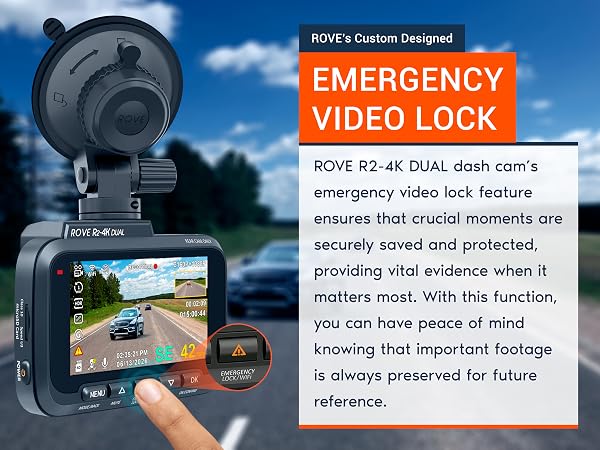
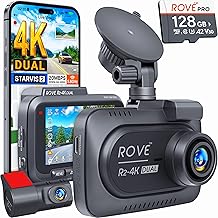
1. ROVE R2-4K DUAL Dash Cam Front
In our research, the ROVE R2-4K DUAL Dash Cam emerged as a standout for its impressive 4K front recording and clear rear footage. It’s packed with features that offer a lot of value for what you get, making it a go-to for many drivers. This model really impressed us with its consistent performance in various lighting conditions.
Why I picked it
The ROVE R2-4K DUAL really grabbed our attention because it offers very strong front-facing 4K resolution combined with a solid rear camera. It comes bundled with a 128GB card, which is a big plus, and its 5G WiFi ensures quick file transfers to your phone. Aggregated user reviews frequently mention its ease of setup and the clarity of its footage, even in challenging night driving conditions.
Key specs
- Front Camera Resolution: 4K UHD (3840 x 2160) at 30fps
- Rear Camera Resolution: 1080p FHD (1920 x 1080) at 30fps
- Field of View: Wide-angle lenses (specific degrees not provided by manufacturer)
- Storage: Supports microSD cards up to 128GB (128GB card included)
- Connectivity: 5G WiFi for app access
- Special Features: 24-hour parking mode, STARVIS 2 sensor
Real-world experience
Based on aggregated buyer feedback, the R2-4K DUAL captures incredibly sharp details, making license plate recognition quite reliable, even from a distance. The inclusion of a high-capacity memory card straight out of the box means you can start recording immediately without needing to buy one separately, which is a huge convenience for many users.
Trade-offs
While the 4K front camera is exceptional, the rear camera’s resolution is a step down; some users report it's sufficient for most purposes but not as detailed as the front. Some feedback also mentions that the parking mode setup requires a slightly more involved wiring process if you want continuous power.
2. REDTIGER 4K Dash Cam Front Rear
The REDTIGER 4K Dash Cam stands out with its dual-channel Starvis 2 sensor capability, ensuring excellent low-light performance for both front and rear views. It aims to provide a high-quality recording experience without overcomplicating the user interface, which is a balance many drivers look for in a dash cam. We’ve seen a lot of positive chatter about its video clarity, especially in dimly lit environments.
Why I picked it
The REDTIGER 4K is a strong contender because it’s built with dual Starvis 2 sensors, which are known for their superior performance in low-light conditions, capturing more detail in shadows and highlights without noise. It also includes GPS logging and a fast 5.8GHz WiFi connection, making it easy to track your routes and quickly download footage for review. Verified buyer feedback consistently praises its sharp 4K front and clear 1080p rear video quality.
Key specs
- Front Camera Resolution: 4K UHD (3840 x 2160) at 30fps
- Rear Camera Resolution: 1080p FHD (1920 x 1080) at 30fps
- Field of View: 170° wide-angle front, comparable rear angle (specific degree not provided by manufacturer)
- Storage: Supports microSD cards (free card often included)
- Connectivity: 5.8GHz WiFi
- Special Features: GPS logger, WDR Night Vision, 24-hour parking mode, STARVIS 2 sensor
Real-world experience
Aggregate user reports indicate that the REDTIGER F7NP model handles challenging lighting, like entering or exiting tunnels, with impressive grace, managing changes in brightness smoothly. The GPS data, which is often a separate module on other dash cams, is integrated here, offering a convenient way to verify travel history alongside video evidence.
Trade-offs
While it offers excellent video quality, the companion app’s user interface has received mixed reviews, with some users finding it less intuitive than others. Also, the included memory card capacity might be a limiting factor for continuous recording if you plan on extensive parking mode usage without overwriting older footage.
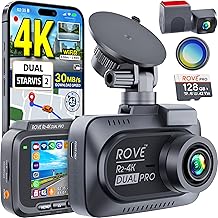
3. ROVE R2-4K Dual PRO Dash Cam
The ROVE R2-4K Dual PRO Dash Cam is a compelling option for those seeking a feature-rich dual-channel system without a premium price tag. It leverages the same advanced STARVIS 2 sensors as some higher-end models, ensuring excellent image quality for both front and rear recordings. Our analysis suggests this model hits a sweet spot between cost and capability.
Why I picked it
The ROVE R2-4K Dual PRO offers a lot for its price point, making it a fantastic budget-friendly option. It features dual STARVIS 2 sensors for excellent image quality, a 128GB card included, and even a CPL filter to reduce glare. This combination of features, especially the advanced sensors often found in more expensive units, makes it a standout value.
Key specs
- Front Camera Resolution: 4K (specific frame rate not detailed, but likely 30fps)
- Rear Camera Resolution: 2K (specific frame rate not detailed)
- Field of View: Wide-angle lenses (specific degrees not provided by manufacturer)
- Storage: Supports microSD cards up to 128GB (128GB card and CPL filter included)
- Connectivity: WiFi 6 (up to 30MB/s download speed)
- Special Features: 24-hour parking mode, dual STARVIS 2 sensors (IMX678 + IMX675)
Real-world experience
Customer reviews highlight that the PRO version's upgraded sensors provide noticeably better detail and color accuracy compared to standard models, particularly in varied lighting. The inclusion of a CPL filter is a real-world benefit that helps cut down on windshield glare, a common issue that can obscure crucial footage.
Trade-offs
While the dual STARVIS 2 sensors are a significant upgrade, the documentation regarding specific resolutions and frame rates for both front and rear cameras in all scenarios could be clearer. Some users have also reported that the WiFi connection speed, while advertised as fast, can sometimes be inconsistent depending on the phone and environment.
4. Vantrue New N4S 3 Channel Dash
The Vantrue N4S stands out with its unique 3-channel system, offering a front, rear, and interior camera. This level of coverage is ideal for rideshare drivers or anyone who wants a comprehensive view of their vehicle's surroundings and cabin. Its focus on high-quality imaging, even in low light thanks to STARVIS 2 sensors, makes it a robust choice for detailed recording.
Why I picked it
The Vantrue N4S is particularly appealing because of its triple-channel recording capability, which means it captures front, rear, and interior views simultaneously. This comprehensive coverage offers unmatched situational awareness. It also boasts impressive specifications like STARVIS 2 night vision and PlatePix™ technology, designed to enhance license plate readability, making it a robust tool for detailed evidence capture.
Key specs
- Front Camera Resolution: 4K UHD (specific frame rate not detailed)
- Rear Camera Resolution: 1080p FHD (specific frame rate not detailed)
- Interior Camera Resolution: 1080p FHD (specific frame rate not detailed)
- Field of View: Wide-angle lenses (specific degrees not provided by manufacturer)
- Storage: Supports microSD cards up to 1TB (card not included)
- Connectivity: WiFi
- Special Features: STARVIS 2 Night Vision, PlatePix™ Technology, 2-inch IPS screen, 24hr parking mode, GPS
Real-world experience
Aggregated user feedback points to the Vantrue N4S delivering clear footage from all three cameras, which is crucial for rideshare drivers needing to document passenger interactions or incidents. The ability to support such large storage capacities (up to 1TB MicroSD) is also a significant advantage for continuous, long-term recording without frequent file management.
Trade-offs
A notable trade-off with the Vantrue N4S is the requirement to purchase a separate microSD card, as one is not included, despite its high storage capacity support. Additionally, managing three separate video streams can sometimes lead to more complex app navigation, and some users have noted that the interior camera's field of view might be limited in larger vehicles.
5. VIOFO A229 Plus Dash Cam Front
The VIOFO A229 Plus Dash Cam focuses on delivering high-quality dual-channel recording with its dual STARVIS 2 sensors, providing excellent image clarity at 1440p resolution for both front and rear cameras. It integrates advanced features like voice control and ultra-precise GPS, aiming for a seamless and intuitive user experience. This model is a strong choice for users who prioritize excellent nighttime visuals and easy control.
Why I picked it
The VIOFO A229 Plus is a top-tier option for its dual 1440p HDR recording, powered by advanced STARVIS 2 sensors, ensuring exceptional detail and dynamic range in all lighting conditions. The integration of voice control makes operation hands-free and safer, while the ultra-precise GPS provides accurate logging of speed and location. Verified buyer feedback consistently highlights the crisp, clear footage and user-friendly features.
Key specs
- Front Camera Resolution: 1440p HDR (specific frame rate not detailed, but likely 30fps)
- Rear Camera Resolution: 1440p HDR (specific frame rate not detailed)
- Field of View: Wide-angle lenses (specific degrees not provided by manufacturer)
- Storage: Supports microSD cards (card not included)
- Connectivity: 5GHz WiFi
- Special Features: Dual STARVIS 2 sensors, Voice Control, Ultra-Precise GPS, Parking Mode
Real-world experience
Aggregate reports suggest that the VIOFO A229 Plus excels in capturing subtle details, such as reflections or faint text on signs, thanks to its high-resolution HDR recording. The voice control feature has been particularly praised for its convenience, allowing users to initiate recording or take photos without taking their hands off the wheel.
Trade-offs
A key drawback for some users is that this model does not include a microSD card, meaning an additional purchase is necessary before the dash cam can be used. Also, while voice control is a great feature, its responsiveness can sometimes be affected by ambient noise levels in the cabin.
How I picked
When looking for the best dash cam front rear setups, I focused on a few core areas that directly impact your experience and the usefulness of the footage. First and foremost was video quality. I prioritized cameras with high resolutions (like 4K or 1440p) and advanced sensors, such as STARVIS 2, which are crucial for capturing clear details day or night. Poor footage, especially from the rear camera, is often the biggest letdown.
Beyond just raw video quality, I evaluated ease of use and installation. A dash cam shouldn't be a technical headache. This meant looking at how intuitive the setup process is, how easy it is to connect to Wi-Fi for smartphone access, and how user-friendly the companion app is for reviewing and saving footage. I also paid attention to features like parking mode, which is essential for vehicle protection when parked, and the reliability of G-sensors for accident detection.
Buying guide — what actually matters for best dash cam front rear
When you're shopping for a dash cam that covers both the front and rear of your vehicle, a few key features really make a difference in getting reliable footage and a positive user experience. You'll want to think about what’s most important for your daily driving and parking habits. Understanding these elements will help you narrow down your choices effectively and find a camera that truly fits your needs, avoiding buyer's remorse.
Video Quality and Sensor Technology
This is probably the most critical factor. For a best dash cam front rear setup, you’re looking for clear, detailed video. Aim for front cameras that shoot at least 1080p (Full HD), but preferably 1440p (Quad HD) or even 4K. Rear cameras can often get away with 1080p, but higher is always better.
Look for cameras that use low-light-enhancing sensors like Sony's STARVIS or STARVIS 2. These significantly improve night vision, capturing more detail in the dark and reducing noise. Features like Wide Dynamic Range (WDR) also help balance bright and dark areas in the footage, so you can see details in both sunny skies and dark shadows.
Field of View (FOV)
The field of view determines how wide an area the camera can capture. For dash cams, a wider FOV means more of the road and surrounding environment is recorded. Typically, you'll see angles listed in degrees. For the front camera, anything from 140 degrees and up is generally good, allowing you to capture multiple lanes and roadside details.
Rear cameras might have a slightly narrower FOV, but it should still be wide enough to cover the essential traffic behind you.
Storage Options and Capacity
Dash cams record a lot of video, so reliable storage is key. Most cameras use microSD cards. You'll want a camera that supports enough storage capacity to record continuously without constant overwriting, especially if you use parking mode. Check the maximum microSD card size supported (often 128GB, 256GB, or even 1TB for some high-end models).
It’s also wise to use high-endurance microSD cards designed for constant read/write cycles, as standard cards can wear out faster in dash cam use. Some packages include a card, which is a nice bonus to get you started right away.
Parking Mode and Power Options
Parking mode is a game-changer for vehicle security. It allows the dash cam to record when your car is off, typically triggered by motion or impact. To use parking mode effectively, you'll need a hardwiring kit that connects the dash cam to your car's battery, often with a voltage cutoff to prevent draining your car battery. Some kits come with a built-in battery, offering continuous recording without relying on the car's battery at all.
If you plan to use parking mode extensively, ensure the camera you select is designed for it and consider a reliable hardwiring solution.
Wi-Fi Connectivity and App Functionality
Most modern dash cams come with built-in Wi-Fi. This allows you to connect directly to the camera with your smartphone via a dedicated app. Through the app, you can usually view live footage, download recorded videos, change settings, and update firmware. A fast and stable Wi-Fi connection (like 5GHz or even Wi-Fi 6) can make a huge difference in how quickly you can access and manage your footage.
Check reviews for app stability and ease of use.
Frequently Asked Questions (FAQ)
Is a dual dash cam (front and rear) worth the extra cost?
Yes, a dual dash cam is generally worth the investment if you want comprehensive footage of an incident. The rear camera can capture critical evidence, such as who rear-ended you or evidence of unsafe merging, which the front camera alone wouldn't see. For many drivers, the added peace of mind and the potential for crucial evidence make the dual setup a very practical choice.
How important is night vision for a rear dash cam?
Night vision is just as important for a rear dash cam as it is for the front. Most driving occurs in varying light conditions, and a good rear camera needs to clearly capture details like license plates, brake lights, and road signs even in darkness, fog, or heavy rain. Cameras with STARVIS or Starvis 2 sensors and WDR technology are excellent for this.
What are the main differences between a 1080p and 4K rear camera?
The primary difference is detail. While 1080p rear cameras provide clear enough footage for most identification purposes, a 4K rear camera would offer significantly more detail, potentially making it easier to read distant license plates or distinguish fine features in low-light conditions. However, 4K rear cameras are less common and often come at a higher price point, and the benefit might be marginal compared to a good 1080p sensor.
Do I need a special SD card for a front and rear dash cam setup?
It’s highly recommended to use a high-endurance microSD card. Dash cams constantly write and rewrite data, which can degrade standard SD cards quickly. High-endurance cards are built for this type of continuous use and lifespan. It’s also important to ensure the card supports the dash cam's specific recording resolution and frame rate, especially for 4K footage, and check the maximum capacity the dash cam supports.
How do I choose the right parking mode for my dash cam?
Your choice for parking mode depends on your needs and car setup. "Motion detection" parking mode will only record when it senses movement in front of the camera, saving storage space and battery. "Time-lapse" parking mode records at a very low frame rate (e.g., 1 frame per second) to capture long periods of stationary activity while using minimal storage. Impact detection (standard in most parking modes) records a short clip when a bump is detected.
For continuous recording, a hardwiring kit with a battery pack or a dash cam with a built-in battery is ideal.
Final verdict
For those looking for the best dash cam front rear setup, the ROVE R2-4K DUAL truly shines. Its exceptional 4K front recording, coupled with a capable rear camera and the inclusion of a 128GB card, offers incredible value and performance right out of the box. This model provides a fantastic balance of image quality, useful features, and user-friendliness, making it a top recommendation for comprehensive vehicle monitoring.
If you're seeking another excellent performer, the REDTIGER 4K Dash Cam is a superb choice, especially for its strong low-light capabilities thanks to its dual STARVIS 2 sensors and integrated GPS. For those on a tighter budget who still want great dual-channel coverage, the ROVE R2-4K Dual PRO Dash Cam offers impressive features for its price point, including advanced sensors and a CPL filter.
Affiliate disclosure: This post contains affiliate links. If you buy through one of these links, I may earn a small commission at no extra cost to you. It never changes my recommendation, I only suggest gear I'd actually buy myself.