If your car battery dies while driving, your engine will keep running for a short time, but eventually the vehicle will stall as critical electrical systems shut down.
There's nothing quite like the sinking feeling when your dashboard lights flicker, your radio cuts out, and suddenly your car starts losing power in the middle of traffic. I've been there, and I can tell you it's both scary and confusing, especially if you don't know what's happening under the hood. A dead battery while driving isn't something most drivers expect, but it does happen, and understanding why it occurs and what to do next can save you from a dangerous situation or an expensive repair. With years of hands-on experience dealing with automotive electrical issues, I've seen firsthand how quickly a failing battery can turn a normal drive into an emergency. In this guide, I'll walk you through exactly what happens when your car battery dies while driving, the warning signs to watch for, the common causes behind it, and the smartest steps to take to stay safe and get back on the road.
How a Car Battery Works While the Engine Is Running
Most drivers assume the battery is what keeps the car moving, but that's actually not true. The battery's main job is to start the engine. Once the engine is running, the alternator takes over and powers all the electrical systems while also recharging the battery for the next start.
Here's how the system flows in a healthy vehicle:
- The battery sends a burst of power to the starter motor.
- The engine turns over and begins running.
- The alternator kicks in and generates electricity.
- The alternator powers the lights, radio, ignition, fuel pump, and other electronics.
- Any leftover power flows back into the battery to keep it charged.
Think of it like a relay race. The battery runs the first leg, then hands the baton to the alternator. If the alternator is doing its job, the battery can actually die without the engine stopping right away. But if the alternator also fails or the battery is completely drained, the whole electrical system collapses fast.
What Happens Step by Step When the Battery Dies While Driving
When the battery fails mid-drive, the sequence of events usually follows a predictable pattern. Here's what most drivers experience:
- Dashboard warning lights start to flicker or stay on.
- The headlights dim or become noticeably weaker.
- Power accessories like the radio, windshield wipers, or power windows may stop working.
- The engine may begin to misfire or run rough.
- Eventually, the fuel pump loses power and the engine shuts off completely.
- Steering and braking become much harder because power assist disappears.
The car doesn't just stop like turning off a switch. It usually gives you a short window of warning before everything goes dark. That window can be a few seconds or a few minutes, depending on how much charge is left and whether the alternator is helping at all.
Common Causes of a Battery Dying While Driving
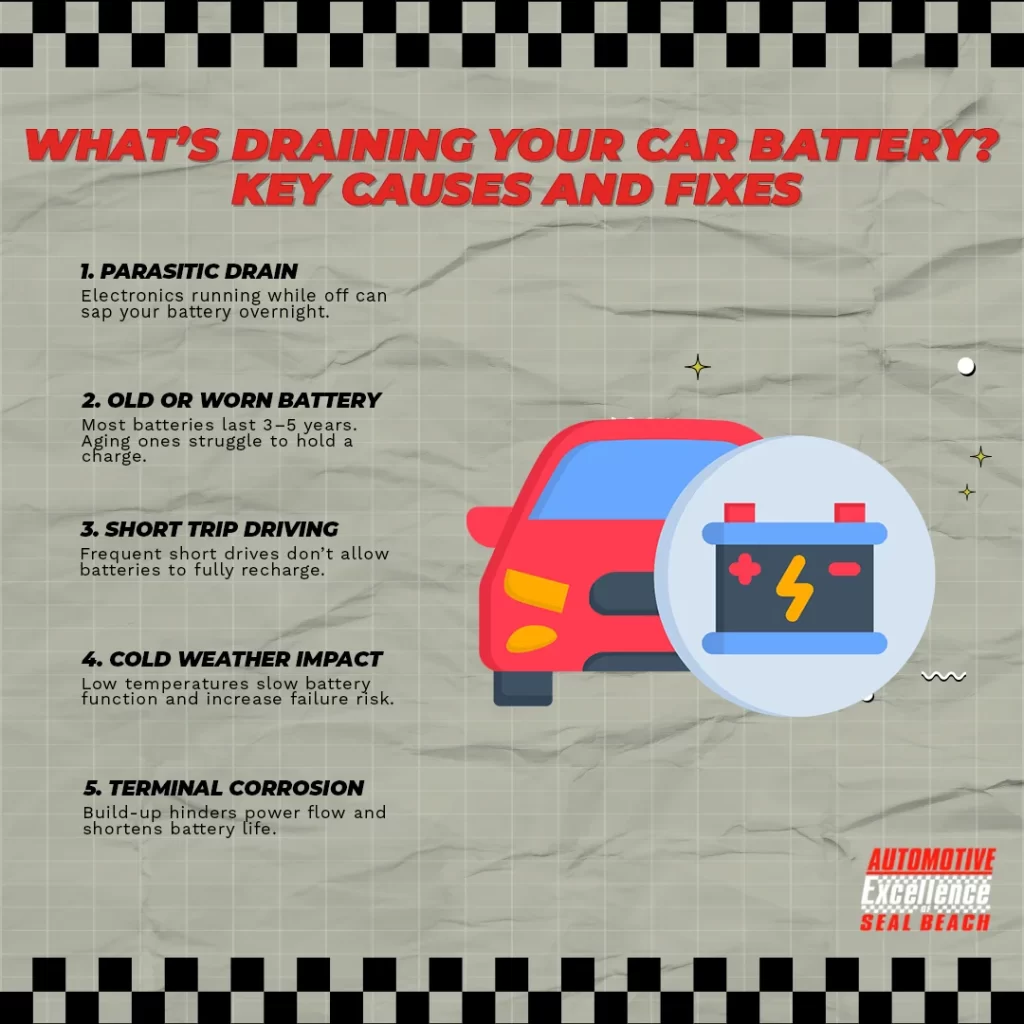
A battery dying while you're driving is usually a sign of a deeper issue, not just an old battery. These are the most common culprits I've come across:
- A failing alternator that isn't charging the battery properly.
- Loose or corroded battery terminals that break the electrical connection.
- A serpentine belt that's worn or snapped, which stops the alternator from spinning.
- An old battery that can no longer hold a charge.
- Electrical drains from accessories that were left running or installed improperly.
- A blown fuse in the charging system.
- Extreme temperatures that weaken battery performance.
In many cases, the battery is just the victim. The real problem is somewhere in the charging system, and the battery takes the blame because it's the weakest link.
Warning Signs to Watch For Before a Complete Failure
Your car almost always gives you clues before the battery gives up completely. Paying attention to these signs can help you pull over safely instead of stalling in the middle of an intersection:
- The check engine light or battery light comes on unexpectedly.
- Headlights look dimmer at idle but brighten when you rev the engine.
- The radio resets or clock resets to 12:00 randomly.
- You hear clicking sounds when trying to start the car.
- A sulfur or rotten egg smell comes from under the hood.
- Electrical accessories behave erratically, like windows moving slower than usual.
If you notice any of these, it's worth getting your charging system checked before the problem turns into a roadside emergency.
What to Do Immediately If Your Battery Dies While Driving
Staying calm is the first and most important step. Here's a clear action plan based on what experienced drivers and mechanics recommend:
- Stay alert and avoid panic. You usually have a brief window before total power loss.
- Turn on your hazard lights immediately to warn other drivers.
- Steer carefully to the shoulder or nearest safe spot.
- Shift into neutral if you're losing power steering to make maneuvering easier.
- Apply the brakes with more force since power brakes need vacuum from the engine.
- Turn the key to the off position once you've stopped to prevent electrical shorts.
- Call for roadside assistance or a tow if the car won't restart.
Trying to restart a car with a dead battery while driving is pointless because the alternator is either not working or the battery can't hold enough charge to crank the engine.

Can You Keep Driving With a Dead Battery?
Technically, if the alternator is still working, the car may run for a while even with a weak battery. But it's a gamble. Without a functioning battery, the alternator has to handle 100% of the electrical load, which can overload it and cause it to fail too.
Once the battery is completely dead and the alternator can't keep up, the engine will stall. After that, you're not going anywhere without a jump start or a tow.
Repair and Replacement Costs You Might Face
The cost of fixing a dead battery while driving depends on what's actually broken:
- A new car battery typically runs between $100 and $250 depending on the vehicle.
- Alternator replacement can cost anywhere from $300 to $800 including labor.
- Serpentine belt replacement is usually between $100 and $200.
- Cleaning or replacing corroded battery terminals is often under $50.
- Diagnostic fees range from $50 to $150 at most shops.
Catching the problem early usually means a cheaper fix. Ignoring it can lead to a domino effect that damages other electrical components.
How to Prevent This From Happening Again
Prevention is always cheaper than repair. Here are the habits that keep your charging system healthy:
- Get your battery tested during every oil change.
- Inspect the serpentine belt for cracks or fraying every six months.
- Clean battery terminals once a year to prevent corrosion buildup.
- Turn off all accessories before turning off the car to reduce battery drain.
- Avoid short trips that don't give the alternator time to recharge the battery.
- Replace the battery every 3 to 5 years even if it seems fine.
Think of your car's electrical system like your phone battery. It needs regular care, clean connections, and occasional replacement to stay reliable.
Frequently Asked Questions
Will a car stop running if the battery dies while driving?
Yes, eventually the engine will stall once the battery and alternator both fail to power the fuel system and ignition. You may get a short warning period where lights dim and accessories stop working.
How long can a car run with a dead battery?
If the alternator is still functioning, the car may run for a short time, but it's risky because the alternator can overheat or fail under the extra load. It's not something you should count on.
Is it dangerous if your battery dies while driving?
It can be, especially at high speeds or in heavy traffic. You lose power brakes, power steering, and potentially turn signals, which makes controlling the car much harder.
Can a bad alternator cause the battery to die while driving?
Absolutely. The alternator is responsible for charging the battery while the engine runs. If it fails, the battery will eventually drain completely and the car will shut off.
Should you replace the battery or the alternator first if both seem bad?
Always diagnose the charging system first. Many times a bad alternator kills a good battery. Replacing the battery without fixing the alternator will just leave you stranded again.

Final Thoughts on Handling a Dead Battery While Driving
A car battery dying while driving is one of those experiences that catches you off guard, but it doesn't have to leave you stranded or panicking. Understanding how your charging system operates, recognizing the early warning signs, and knowing exactly what to do in the moment can make all the difference. The key is paying attention to those small dashboard hints before they turn into a full shutdown, and keeping up with basic maintenance so your battery and alternator stay in good shape. If you've ever dealt with this issue, I'd love to hear your story in the comments. And if you found this guide helpful, consider sharing it with another driver who might need it.