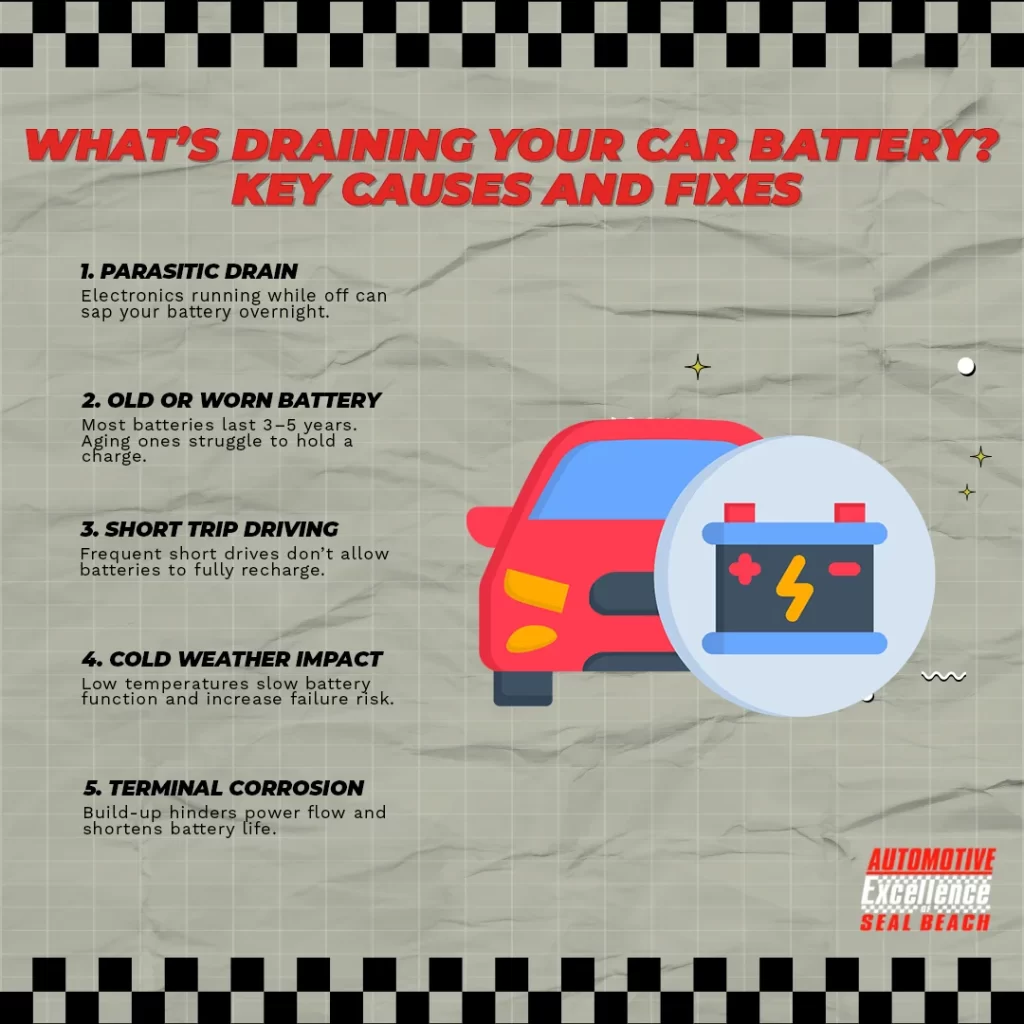
Common culprits include leaving lights on, parasitic drain from electronics, a failing alternator, old or damaged batteries, extreme temperatures, and short drives that prevent full recharging.
Imagine hopping into your car on a busy Monday morning, turning the key, and hearing nothing but a click, click, click. That sinking feeling is something most drivers face at some point. Your car battery is the silent hero under the hood, quietly powering everything from the ignition to your favorite playlist. Yet it has a breaking point, and understanding what drains it can save you from frustrating mornings, costly repairs, and unexpected breakdowns. I've dealt with dead batteries more times than I'd like to admit, and the lessons learned can help you keep yours strong and reliable.
Leaving Lights and Electronics On
One of the most common reasons for a dead car battery is simply leaving something on when the engine isn't running. Headlights, dome lights, and even the trunk light can slowly pull power until there's nothing left. I once left my interior light on overnight after a late grocery run, and the next morning my car sounded like it had given up on life. Modern cars often beep or alert you, but older models don't have that safety net. A quick habit check before locking up can prevent this easy mistake.
- Interior lights left on overnight
- Headlights not switched to auto
- Charging cables plugged into the 12V outlet
- Phone or dashcam left connected while parked
- Glove box or trunk light staying on
Parasitic Drain From Car Electronics
Every car has a small amount of parasitic drain, which is the power used to keep things like the clock, alarm system, and computer memory alive. A healthy battery can handle this, but when the drain is excessive, it can kill your battery in just a few days. I had a faulty infotainment module that secretly pulled power even when the car was off, and it took a mechanic with a multimeter to find the culprit. Things like malfunctioning sensors, stuck relays, or aftermarket accessories wired incorrectly are usual suspects. If your battery keeps dying mysteriously, a parasitic draw test can reveal the hidden energy thief.
A Weak or Failing Alternator
The alternator's job is to charge the battery while the engine runs. If it's not working properly, the battery never gets a full charge, and you'll eventually find yourself stranded. Common signs include dim headlights, flickering dashboard lights, or a battery warning light that refuses to go away. I learned this the hard way when my alternator failed on a long drive, and my car slowly lost all power until it coasted to a stop. A failing alternator doesn't just drain the battery; it can leave you completely stuck. Replacing it on time protects both your battery and your peace of mind.
Old, Corroded, or Damaged Batteries
Batteries don't last forever. Most car batteries last between three and five years, and as they age, their ability to hold a charge weakens. Corrosion on the terminals can also block the flow of electricity, making it seem like your battery is dead when it just needs a good cleaning. I once revived an old battery with a simple baking soda scrub and a wire brush, and it lasted another six months. However, if your battery is swollen, leaking, or older than five years, it's time for a replacement. A fresh battery is far cheaper than being stuck on the side of the road.
Extreme Weather Conditions
Both intense heat and freezing cold can take a serious toll on your car battery. Heat causes the fluid inside the battery to evaporate, which damages the internal structure, while cold thickens the engine oil and makes the battery work harder. I've seen batteries die overnight during cold snaps and during heat waves when everyone assumes the sun helps cars run better. Parking in a garage or shaded area can help, and in colder climates, a battery warmer can extend its life. Weather is one of those silent battery killers that people don't think about until it's too late.
Short Trips and Infrequent Driving
If you only drive short distances or let your car sit for long periods, your battery never gets a chance to fully recharge. Starting the engine takes a big burst of power, and short drives don't give the alternator enough time to top it off. I once used my car only for quick errands around the neighborhood, and within a month, the battery couldn't hold a charge. Taking your car for a longer drive once a week, or using a battery maintainer during storage, can prevent this slow drain. Batteries love consistency, so regular use keeps them happy and healthy.
Loose or Corroded Battery Connections
Sometimes the battery itself is fine, but the connections are loose or covered in corrosion. This prevents the electrical current from flowing properly, which can mimic the symptoms of a dead battery. I once jiggled my battery cables and instantly got my car started after thinking the battery was completely gone. A simple visual inspection and tightening of the terminals can solve the problem in minutes. Keeping the terminals clean and secure is one of the easiest maintenance tasks that people often overlook.
Aftermarket Accessories and Modifications
Adding extra electronics like powerful audio systems, LED light bars, or phone chargers can put extra strain on your battery. If these are installed without proper wiring or fuses, they can create a constant drain even when the car is off. I've seen car enthusiasts install subwoofers that drained their battery in a single night because they were wired directly to the battery without a relay. If you add aftermarket parts, make sure they're installed by a professional or follow the manufacturer's guidelines carefully. Your battery can only handle so much extra load.
Frequently Asked Questions
How long does a car battery usually last?
Most car batteries last between three and five years, depending on climate, driving habits, and maintenance. Extreme temperatures and frequent short trips can shorten its lifespan. It's a good idea to test your battery annually after the three-year mark.
Can a bad alternator drain a battery overnight?
Yes, a failing alternator can cause the battery to drain quickly, especially if it's not charging properly while driving. You may notice dim lights or a battery warning sign before it dies completely. Replacing the alternator is usually the only fix.
Does idling the car charge the battery?
Idling does charge the battery, but very slowly compared to driving at higher RPMs. Long periods of idling won't fully replenish a battery, especially if you're using electronics like the AC or radio at the same time.
What is parasitic battery drain?
Parasitic drain is the small amount of power your car uses to keep memory, clocks, and security systems running while parked. Normal parasitic draw is usually under 50 milliamps. Anything higher can kill your battery over time.
How can I tell if my battery is dying?
Common signs include slow engine cranking, dim headlights, a swollen battery case, or a battery warning light on the dashboard. If you notice any of these, it's smart to test the battery before it leaves you stranded.
Final Thoughts
Your car battery works hard every day, and it only takes one small oversight to leave you stuck. From leaving lights on to hidden parasitic drains, each cause has a fix once you know what to look for. A little attention and regular checks can add years to your battery's life and save you from frustrating surprises. Treat your battery like the essential part it is, and it will keep you moving for miles to come. If this guide helped, feel free to share it with a fellow driver or drop a comment below with your own battery-saving tips.