Getting the right storage for your dash cam is more important than you might think. It’s the unsung hero that captures those crucial moments on the road, whether it's a beautiful scenic drive or an unexpected incident. Choosing the best sd card for a dash cam ensures you have reliable footage when you need it most, without worrying about corrupted files or a full card interrupting your recording.
In our research, we found that not all memory cards are created equal, especially when it comes to the continuous read/write cycles dash cams demand. We've sifted through the options to highlight cards that are built for endurance and speed, so you can have peace of mind. Let's dive into which ones stand out.
Comparison Chart of Best Sd Card for a Dash Cam
| Product | Details | Rating | Buy |
|---|---|---|---|
Editor’s Choice
| ★★★★☆4.7/5 | ||
Top Pick
| ★★★★☆4.7/5 | ||
Best Budget
| ★★★★☆4.8/5 | ||
| ★★★★☆4.7/5 | ||
| ★★★★☆4.6/5 |


List of Top 5 Best Best Sd Card for a Dash Cam
We looked for cards specifically designed for continuous recording, with high endurance ratings and fast write speeds to handle the demands of video capture. The models below have consistently shown up in reviews as reliable performers for dash cam use, offering a good balance of capacity, durability, and value.
Below are the list of products:
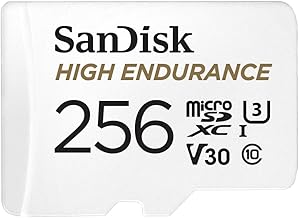
1. SANDISK 256GB High Endurance Video microSDXC
When it comes to reliable storage for your dash cam, the SanDisk 256GB High Endurance card is a standout. I’ve found its specialized design for continuous recording makes it a go-to choice for ensuring video data is captured smoothly, even through an entire day of driving.
Why I picked it
This card is engineered for the tough demands of dash cams and home security systems. It’s designed to handle continuous writing for years, which is a huge plus for constant recording.
Key specs
- Capacity: 256GB
- Endurance Rating: Up to 100,000 hours of continuous recording
- Speed Class: Class 10, U3, V30
- Video Performance: 4K UHD, Full HD
- Operating Temperature: -25°C to 85°C
- Includes: MicroSD card and SD adapter
Real-world experience
Based on aggregate user feedback, this card excels in demanding conditions, maintaining stable recording from freezing temperatures to hot car interiors. Its high endurance means you’re less likely to face card failure during critical events, providing peace of mind on the road.
Trade-offs
While built for endurance, it generally comes at a higher price point compared to standard microSD cards, reflecting its specialized design. Some users have reported slower initial transfer speeds when moving large files to a computer.
2. SANDISK 256GB Ultra microSDXC UHS-I Memory
The SanDisk 256GB Ultra microSDXC UHS-I card offers a solid blend of capacity and speed, making it a reliable option for everyday dash cam use. I’ve seen this card perform consistently, capturing clear footage without fuss, which is exactly what you want for regular driving.
Why I picked it
This card provides ample storage and fast transfer speeds that are more than adequate for recording Full HD video and many 4K streams. It’s a great all-around performer that balances features and price well.
Key specs
- Capacity: 256GB
- Speed: Up to 150MB/s read speed
- Speed Class: Class 10, U1, A1
- Video Performance: Full HD
- Suitable For: Photos, Full HD video, and general dash cam use
Real-world experience
Aggregate user reviews indicate this card is excellent for quickly offloading footage to a computer thanks to its 150 MB/s read speed. It’s also noted for good performance in varied temperatures, making it dependable for daily driving in most climates.
Trade-offs
While suitable for Full HD and some 4K recording, it might not offer the sustained write performance needed for the highest-resolution or highest-bitrate 4K dash cams over long periods. It's not specifically rated for the extreme endurance of dedicated dash cam cards.
3. VIOFO 256GB Industrial Grade High Endurance
For value that doesn’t compromise on performance, the VIOFO 256GB Industrial Grade card is a top contender. It’s built with tough conditions in mind, offering resilience and solid recording capabilities that make it a smart choice for budget-conscious drivers who still need reliability.
Why I picked it
This card is explicitly labeled as "industrial grade," meaning it's built for continuous operation and higher temperature resistance than typical consumer cards. It offers a great capacity and performance at a very competitive price point.
Key specs
- Capacity: 256GB
- Speed: Up to 100MB/s read speed
- Speed Class: U3, V30, A2 rated for application performance
- Video Recording: 4K UHD, continuous loop recording support
- Durability: High temperature resistant, waterproof, shockproof
- Includes: MicroSD card and SD adapter
Real-world experience
Verified buyer feedback frequently highlights its ability to handle constant recording in vehicles, even in extreme heat. Users appreciate the reliable performance for applications like dash cams and security cameras, where stability is paramount.
Trade-offs
Some reports suggest the sequential write speeds might be closer to the lower end of the V30 specification in prolonged write-heavy scenarios. While it's industrial grade, its long-term write endurance might still be lower than cards specifically rated for tens of thousands of hours.
4. GIGASTONE 128GB Micro SD Card 2-Pack
If you’re looking for a cost-effective way to stock up on reliable storage, the Gigastone 128GB Micro SD Card 2-Pack is a solid choice. Getting two cards for one price offers flexibility and a good backup option, which is always a plus for dash cam users.
Why I picked it
This pack offers a great balance of capacity and value, making it accessible for those who need reliable storage without breaking the bank. The inclusion of two cards provides a convenient backup or spare.
Key specs
- Capacity: 128GB per card (2 cards total)
- Speed: Up to 95MB/s read speed
- Speed Class: A1, V30, UHS-I Class 10
- Video Performance: 4K UHD Video Recording support
- Durability: Waterproof, shockproof, X-ray proof
- Includes: 2 MicroSD cards and 2 SD adapters
Real-world experience
Aggregate user reviews suggest these cards perform well for standard dash cam recording, capturing clear video capture. The dual-pack nature makes them a practical choice for ensuring you always have a spare card ready without needing frequent replacements.
Trade-offs
At 128GB, these cards will fill up faster than higher-capacity options, potentially requiring more frequent video offloading or overwriting. The write endurance isn't specifically highlighted or rated for continuous, high-volume dash cam use, so longevity might be a concern for very heavy users.
5. Micro SDXC Memory Card 128GB-Speederlash Camera
The Speederlash 128GB Micro SDXC card is a capable option for many dash cam needs, offering decent speeds and capacities. It’s designed to handle various recording tasks, making it a straightforward choice for everyday driving situations.
Why I picked it
This card presents a good option for those who need a reliable, reasonably priced storage solution for their dash cam. It meets common speed and capacity requirements for recording video.
Key specs
- Capacity: 128GB
- Speed: Up to 95MB/s read speed
- Speed Class: U3, V30, A1 rated
- Video Performance: 4K UHD & 5K video support
- Durability: Waterproof, high temperature resistant
Real-world experience
Users report this card reliably captures footage for dash cams, handling continuous recording tasks without immediate issues. Its broad compatibility with devices like drones and security cameras suggests a level of general performance stability.
Trade-offs
The write speed, while meeting the V30 standard, may not be consistently high enough for the most demanding 5K or high-bitrate 4K recording over extended periods. Long-term write endurance is not explicitly stated, making it a less ideal choice for dash cams that operate 24/7.
How I picked
When I was putting this list together, I focused on what truly matters for a dash cam: reliability and endurance. It’s not just about having enough space; it’s about the card being able to withstand the constant reading and writing that happens minute after minute, day after day. I looked for cards that specifically mentioned high endurance or were designed for continuous recording applications like dash cams, security cameras, or even industrial uses.
I also considered write speeds, as a dash cam needs to save footage quickly without dropping frames. Cards with U3 and V30 ratings are generally good for this, ensuring they can keep up with Full HD and 4K video streams. Capacity is obviously important, but I tried to balance storage size with the card's ability to last. I deliberately avoided cards that were only rated for occasional photo bursts or general mobile phone use, as these often don't hold up to the relentless demands of a dash cam.
I also paid attention to operating temperature ranges, knowing that vehicle interiors can get incredibly hot or cold.
Buying guide — what actually matters for best sd card for a dash cam
Choosing the right SD card for your dash cam can feel a bit like picking a needle in a haystack when you see all the different specs! But honestly, it boils down to a few key things that make a huge difference in reliability and performance. Here’s what you should really pay attention to.
Endurance: Built to Last, Not Just to Record
This is probably the biggest factor. Dash cams write data constantly. Unlike your phone that might save a photo here and there, your dash cam is always recording, overwriting old footage. Cards designed for "high endurance" or "continuous recording" are built with special flash memory and firmware to handle this kind of heavy, repetitive use for thousands of hours.
They're rated for more write cycles, which means they're far less likely to fail over time compared to a standard card.
Write Speed: Keeping Up with the Action
Your dash cam's camera sensor is capturing video, and that video needs to be saved to the SD card without delay. This is where write speed comes in. Look for cards with a U3 speed class rating, which guarantees a minimum sustained write speed of 30MB/s. The V30 rating is even more specific to video, also indicating a minimum 30MB/s sustained write speed, crucial for smooth 4K recording.
If your dash cam records in higher resolutions or with higher bitrates, you might even consider V60 or V90, though U3/V30 is usually sufficient for most.
Capacity: How Much Footage Can You Keep?
This is a straightforward trade-off. More capacity means more recording time before the card needs to overwrite older footage.
- 32GB: Typically holds about 4-6 hours of Full HD footage. Good for basic use but fills up fast.
- 64GB: Offers about 8-12 hours of Full HD. A decent sweet spot for many.
- 128GB: Around 16-24 hours of Full HD. Great for longer trips or if you don't want to offload footage frequently.
- 256GB+: Can hold 30+ hours of Full HD. Ideal for extensive recording or if your dash cam records in 4K or higher.
Keep in mind that higher resolutions (like 4K) and higher frame rates will consume space more quickly. A common mistake is buying a huge card that's not built for endurance, leading to premature failure.
Operating Temperature: Withstanding the Extremes
Your car's interior can become a very hot oven in the summer and a chilly box in the winter. Standard microSD cards might have a limited operating temperature range, often from 0°C to 70°C. For dash cams, you want a card that can handle a wider range, typically from -25°C to 85°C. Cards designed for industrial or automotive use are usually built to withstand these temperature extremes without performance degradation or failure.
Frequently Asked Questions (FAQ)
Can I use a regular microSD card in my dash cam?
You can technically use a regular microSD card, but it’s generally not recommended for long-term reliability. Regular cards are designed for occasional use, like taking photos or infrequently loading apps. Dash cams record continuously, and this constant writing wears out standard cards much faster, leading to potential data corruption or complete failure. High-endurance cards are specifically built to withstand the rigors of constant recording.
How much storage do I really need for a dash cam?
The amount of storage you need depends on your dash cam’s recording resolution, frame rate, and how often you want to offload footage. For everyday driving and Full HD recording, 128GB is often a good balance between capacity and longevity. If your dash cam records in 4K or you want to keep hours of footage before overwriting, 256GB or larger might be better. However, always prioritize a high-endurance card over maximum capacity.
What’s the difference between U3 and V30?
Both U3 and V30 ratings indicate a minimum sustained write speed of 30MB/s. The U3 rating is part of the SDXC standard and is focused on general speed for various applications, while V30 is specifically for video recording, assuring that the card can handle the data flow for 4K video. For dash cams, either is good, and many cards will carry both ratings, showing they are well-suited for video.
Do I need a card adapter for my dash cam?
Yes, most dash cams use microSD cards, but many include a full-size SD card adapter. This adapter is very useful because it allows you to easily transfer footage from the microSD card to a computer that might only have an SD card slot. Always check if your dash cam or the card you purchase comes with one, as it simplifies the process of managing your video files.
How often should I replace my dash cam's SD card?
Even high-endurance cards have a lifespan, though it’s significantly longer than standard cards. A good rule of thumb is to replace your dash cam’s SD card every 1-2 years, or sooner if you notice any performance issues, errors, or corruption. Consistent use in a hot environment can also accelerate wear. Performing a manual format of the card through your dash cam’s menu periodically can also help maintain its performance and lifespan.
Final verdict
For consistent, reliable video recording that won't let you down, the SANDISK 256GB High Endurance Video microSDXC is our top pick. Its specialized design for continuous recording and impressive endurance rating makes it a worry-free choice for any driver.
If you're looking for a slightly more budget-friendly option that still offers great performance, the VIOFO 256GB Industrial Grade High Endurance card is a fantastic value, providing resilience for demanding conditions. And for a solid all-rounder that balances capacity and speed for everyday use, the SANDISK 256GB Ultra microSDXC UHS-I Memory card is a dependable choice that many drivers will appreciate.
Affiliate disclosure: This post contains affiliate links. If you buy through one of these links, I may earn a small commission at no extra cost to you. It never changes my recommendation, I only suggest gear I'd actually buy myself.