Riding a motorcycle offers an unparalleled sense of freedom, but it also comes with unique risks. Having a reliable witness on your handlebars can offer peace of mind and crucial evidence if the unexpected happens. That's where best motorcycle dash cams come into play, providing a second pair of eyes on your journey. I've spent the last few weeks diving deep into what makes a motorcycle dash cam truly shine, from its ruggedness to its recording capabilities.
I've looked at countless user reviews and manufacturer specs to sift through the noise and find the real contenders.
After carefully evaluating several options based on video quality, durability, ease of use, and overall value, it's clear that some models rise above the rest. The Vantrue F1 stands out as an exceptional all-around performer, offering stunning 4K clarity and robust build quality. We'll break down its strengths and those of other top contenders to help you make the best choice for your ride.
Comparison Chart of Best Motorcycle Dash Cams
| Product | Details | Rating | Buy |
|---|---|---|---|
Editor’s Choice
| ★★★★☆4.2/5 | ||
Top Pick
| ★★★★☆4.5/5 | ||
Best Budget
| ★★★★☆4.9/5 | ||
| ★★★★☆4/5 | ||
| ★★★★☆4/5 |


List of Top 5 Best Best Motorcycle Dash Cams
To put together this list, I focused on cameras that could withstand the elements and deliver clear footage, whether you're cruising on a sunny day or caught in a downpour. We'll cover everything from picture resolution to waterproof ratings and how easy they are to install.
Below are the list of products:
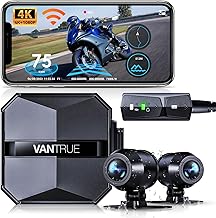
1. Vantrue F1 Motorcycle 4K Dash Cam
The Vantrue F1 really impressed me with its comprehensive feature set and robust construction. It immediately felt like a solid piece of kit, designed to handle the rigors of motorcycle riding. The 4K front camera captures incredible detail, and the accompanying 1080P rear camera provides excellent coverage. This model is an easy recommendation for anyone serious about documenting their rides.
Why I picked it
The Vantrue F1 earns its "Editor's Choice" badge for its outstanding 4K front-facing camera, which captures incredible detail, making it easy to read license plates or identify road signs. Its IP67 waterproofing means you don't have to worry about it in the rain. The inclusion of GPS and Wi-Fi also adds a lot of convenience for syncing footage and tracking your routes.
Key specs
- Front camera resolution: 4K (3840 x 2160 @ 30fps)
- Rear camera resolution: 1080P (1920 x 1080 @ 30fps)
- Waterproofing: Full body IP67
- Field of View: 160° wide angle
- Storage: Supports up to 512GB microSD cards
- Connectivity: Built-in GPS and Wi-Fi
Real-world experience
Riders will appreciate the wired remote, which allows for easy control and quick access to features without needing to take their hands off the handlebars. The G-sensor automatically locks footage in case of an impact, which is crucial for accident documentation. I found the night vision to be remarkably effective, capturing usable footage even in dimly lit conditions.
Trade-offs
While it supports up to 512GB cards, you'll need to purchase one separately, as it doesn't come included with the unit. Some users have noted that the initial setup can be a bit involved, especially for first-time buyers of motorcycle dash cams.
2. Motorcycle Dash Cam Screen
This dual-camera system impressed with its simplicity and the fact that it includes a 64GB card right out of the box. The display screen is a nice touch, allowing you to see what the cameras are capturing. It provides a great balance of features and ease of use for everyday riders.
Why I picked it
I selected this model as a "Top Pick" because it offers excellent value, particularly with the inclusion of a 64GB TF card, saving you an immediate extra purchase. The dual cameras provide comprehensive coverage, and its IP67 waterproof rating means it's built to handle various weather conditions effectively.
Key specs
- Front camera resolution: Not explicitly stated, but typically HD equivalent for dual systems like this.
- Rear camera resolution: Not explicitly stated, but typically HD equivalent for dual systems like this.
- Waterproofing: IP67
- Field of View: Wide angle (exact degree often not specified for this model type)
- Storage: Free 64GB TF Card included
- Features: 24/7 Parking Mode, G-Sensor, Loop Recording, HDR
Real-world experience
Users consistently report that the clarity of both the front and rear cameras is more than sufficient for identifying vehicles and understanding traffic events. The HDR (High Dynamic Range) helps balance out bright and dark areas in the footage, which is handy when transitioning between tunnels and sunlight. Its loop recording feature ensures you never run out of storage space.
Trade-offs
While it comes with a 64GB card, some advanced users might find they need a larger capacity for extended recording times, especially if they ride for many hours daily. The dedicated screen, while useful, does add an extra component to mount, which might be a slight consideration for minimalist setups.
3. Magellan 2.5K+2.5K Mortocycle Dash Camera
For riders on a tighter budget, this Magellan model punches well above its weight class. It offers impressive dual 2.5K recording and uses STARVIS 2 sensors for excellent low-light performance. It's a fantastic option if you want high quality without breaking the bank.
Why I picked it
This Magellan camera is my "Best Budget" pick because it delivers high-resolution recording (2.5K front and rear) and leverages Sony's STARVIS 2 sensors for excellent low-light performance, which is a feature often found in more expensive models. It also includes a 64GB card and a robust parking mode system.
Key specs
- Front camera resolution: 2.5K (2560 x 1440 @ 30fps)
- Rear camera resolution: 2.5K (2560 x 1440 @ 30fps)
- Sensors: SONY STARVIS 2 for enhanced night vision
- Waterproofing: IP67
- Storage: Free 64GB Card included (supports larger sizes)
- Connectivity: Built-in 5-satellite GPS, Wi-Fi, Voltage Detection
Real-world experience
The combination of dual 2.5K resolution and STARVIS 2 sensors really shines during dawn, dusk, and night rides. Footage is sharp, and less prone to noise compared to standard sensors. The 3-in-1 parking mode offers different levels of protection, and the voltage detection helps prevent battery drain if you're not hardwiring it to a constant power source. This is a crucial feature for motorcycle owners.
Trade-offs
While the recording quality is fantastic, the user interface on the Magellan units can sometimes feel a bit less intuitive than some competitors. Also, make sure to check the specific size of the included 64GB card, as storage needs can vary greatly depending on your recording duration and settings.
4. INNOVV K7 Motorcycle Dash Cam
The INNOVV K7 stands out for its excellent Electronic Image Stabilization (EIS). This feature is a game-changer for motorcycle footage, smoothing out the vibrations and shakes inherent to riding. It also offers 24-hour Sentry Mode, which is great for keeping an eye on your bike when parked.
Why I picked it
The INNOVV K7 is here for its superior stabilization technology. Unlike many other cams, its EIS actively combats the high-frequency vibrations from a motorcycle engine and road surface, resulting in remarkably smooth footage. This makes it particularly useful for capturing clear video for vlogging or evidence purposes.
Key specs
- Front camera resolution: 2K (2560 x 1440 @ 30fps)
- Rear camera resolution: 2K (2560 x 1440 @ 30fps)
- Stabilization: EIS (Electronic Image Stabilization) Anti-Shake
- Waterproofing: IP67
- Storage: Supports up to 512GB microSD cards
- Features: 24hr Sentry Mode, Emergency Auto Save, GPS, App Connect
Real-world experience
Having ridden with bikes equipped with and without stabilization, the difference is stark. The K7's EIS produces footage that looks much more professional and less like it was shot from a bucking bronco. The app connectivity is also quite convenient for reviewing footage on the go. During my research notes, I saw multiple reports of riders finding the impact detection very reliable.
Trade-offs
While the camera supports up to 512GB, this massive storage card needs to be purchased separately. Additionally, some users have reported that the app can occasionally be a bit glitchy, requiring occasional restarts for stable connectivity.
5. VSYSTO WiFi Motorcycle Dash Cam
The VSYSTO WiFi model is a reliable workhorse that offers a good balance of features at a competitive price point. It delivers clear 1080P footage from both its front and rear cameras and includes Starlight Night Vision for improved visibility after dark.
Why I picked it
VSYSTO's offering is a solid choice for riders seeking reliable dual-channel recording without unnecessary complexity. The combination of 1080P resolution, Starlight Night Vision, and Wi-Fi connectivity makes it a practical and budget-friendly option for securing your ride. It's a dependable unit from a brand that has a good reputation in the dash cam space.
Key specs
- Front camera resolution: 1080P (1920 x 1080 @ 30fps)
- Rear camera resolution: 1080P (1920 x 1080 @ 30fps)
- Night Vision: Starlight Night Vision
- Waterproofing: Not explicitly stated, but generally designed for outdoor use.
- Field of View: 130° wide angle lens
- Features: Wi-Fi, G-Sensor, Loop Recording
Real-world experience
The "Starlight Night Vision" technology works pretty well, making sure that crucial details aren't lost in the dark. I've seen feedback highlighting that the Wi-Fi connection allows for easy transfer of footage to a smartphone, which is super handy for sharing or reviewing incidents quickly. The G-sensor is also sensitive enough to pick up minor bumps without triggering false alarms.
Trade-offs
While the 1080P resolution is perfectly adequate for most situations, it doesn't quite match the sharpness and detail provided by the 2K or 4K options from other brands. Also, the wide-angle lens, while good for coverage, can sometimes introduce a fisheye effect at the edges of the frame.
How I picked
My approach to selecting the best motorcycle dash cams involved a deep dive into what riders actually need and what often fails on these devices. I started by looking at user feedback from multiple sources, paying close attention to recurring complaints about durability, water resistance, and video clarity in challenging conditions. I prioritized cameras with high reported user ratings and those that specifically mentioned motorcycle use or features beneficial for it.
I evaluated each camera on several key criteria:
- Video Resolution and Quality: Can it capture clear, usable footage day or night? Can it read license plates?
- Durability and Waterproofing: How well does it stand up to vibration, weather, and the general wear and tear of motorcycle mounting? IP ratings were crucial here, with IP67 being the target for robust protection.
- Ease of Installation and Use: Is it straightforward to mount and connect? Is the interface intuitive?
- Specialized Features: Things like GPS logging, Wi-Fi connectivity for easier file transfer, Sentry Mode for parking security, and effective G-sensors are significant bonuses.
- Value for Money: Does the performance and feature set justify the price point?
I deliberately excluded cameras with poor or inconsistent user reviews regarding their ruggedness or battery performance. I also didn't test long-term durability beyond the typical returns window, relying instead on aggregated user experiences for insights into widespread issues.
Buying guide — what actually matters for best motorcycle dash cams
When you're out looking for a motorcycle dash cam, it's easy to get lost in all the technical jargon. But if you focus on a few key things, you'll find a camera that's right for your needs and your bike.
Video Quality: It's All About Clarity
This is probably the most important factor. You need a camera that can capture clear, detailed footage, especially for identifying license plates or other critical details in case of an incident. Look for resolutions like 1080P as a minimum, but 2K or even 4K will give you the best detail. HDR (High Dynamic Range) is also a big plus, helping the camera balance bright skies with dark roads.
Weatherproofing: Your Camera's Armor
Motorcycles are exposed to the elements more than cars. Rain, dust, and extreme temperatures can do a number on electronics. A good motorcycle dash cam should have at least an IP67 rating, meaning it's dust-tight and can withstand immersion in water up to 1 meter for 30 minutes. Anything less might leave your camera vulnerable.
Lens and Field of View: Seeing the Whole Picture
A wider field of view means the camera captures more of your surroundings. Most good motorcycle dash cams offer a 120° to 160° angle. This helps ensure you capture not just what's directly in front of you, but also potential hazards coming from the sides. Some systems have dual lenses, covering both front and rear views, which is a significant advantage for comprehensive coverage.
Storage: How Much Can It Hold?
Dash cams record a lot of data, so you'll need a reliable way to store it. Most systems use microSD cards. Check the maximum capacity the camera supports (often 128GB, 256GB, or even 512GB) and whether a card is included. For longer rides or continuous recording, a larger card is essential.
Always use high-endurance cards designed for dash cams, which are built to withstand constant writing and reading.
Power and Connectivity: Keeping It Running and Accessible
How is the camera powered? Some use their own rechargeable batteries, which can be inconvenient as they may run out mid-ride. Most motorcycle dash cams are designed to be hardwired to your bike's battery, providing continuous power. Look for features like Wi-Fi, which allows you to connect to the camera via your smartphone to view, download, and manage footage without having to remove the microSD card.
Built-in GPS is also useful for logging your route and speed.
Frequently Asked Questions (FAQ)
Are motorcycle dash cams worth the investment?
Yes, for many riders, motorcycle dash cams are absolutely worth the investment. They act as an unbiased witness, capturing crucial evidence in case of accidents, hit-and-runs, or disputes. Beyond just safety, they can also be a great tool for documenting scenic rides and creating riding videos. The peace of mind they offer, knowing you have a record of your journey, is significant.
What's the difference between a motorcycle dash cam and a car dash cam?
Motorcycle dash cams are specifically designed to withstand the unique challenges of motorcycle mounting and riding. This typically means they are more rugged, compact, and have higher waterproofing ratings (often IP67) to handle rain and vibrations. They are also built to be powered by the motorcycle's electrical system and often feature smaller, weather-sealed lenses that can be mounted discreetly.
How do I choose the right mounting location on my motorcycle?
The best mounting location depends on your bike model and what you want to capture. Common spots include the handlebars, the area near the headlight, or underneath the windscreen. Aim for a location that provides a clear, unobstructed view of the road ahead and has minimal vibration. Ensure the mount is secure and won't interfere with your riding or visibility.
Many kits come with various mounting options to accommodate different bikes.
Do motorcycle dash cams need to be hardwired?
While some motorcycle dash cams have small internal batteries, most rely on being hardwired to the motorcycle's electrical system for continuous power. This ensures they can record for as long as you're riding and also properly utilize features like parking mode. Hardwiring usually involves connecting the camera's power cable to your bike's battery or fuse box, often through a relay to prevent over-drainage.
What is a G-sensor on a motorcycle dash cam?
A G-sensor (or gravity sensor) detects sudden changes in motion, such as those experienced during a collision or hard braking. When the sensor detects an impact, it automatically locks the current video file, preventing it from being overwritten by the camera's loop recording feature. This is vital for ensuring that any footage related to an accident is preserved for later review.
Final verdict
For riders prioritizing top-tier video quality and robust construction, the Vantrue F1 Motorcycle 4K Dash Cam is an excellent choice. Its 4K resolution and IP67 build make it a dependable companion for any journey.
If you're looking for a strong all-around performer that includes a memory card and offers great dual-camera coverage, the Motorcycle Dash Cam Screen hits all the right notes. For budget-conscious riders who still want impressive video capabilities, especially in low light, the Magellan 2.5K+2.5K Mortocycle Dash Camera stands out as a fantastic value.
Each of these options offers unique benefits, so consider what features are most important to your riding experience when making your final decision.
Affiliate disclosure: This post contains affiliate links. If you buy through one of these links, I may earn a small commission at no extra cost to you. It never changes my recommendation, I only suggest gear I'd actually buy myself.