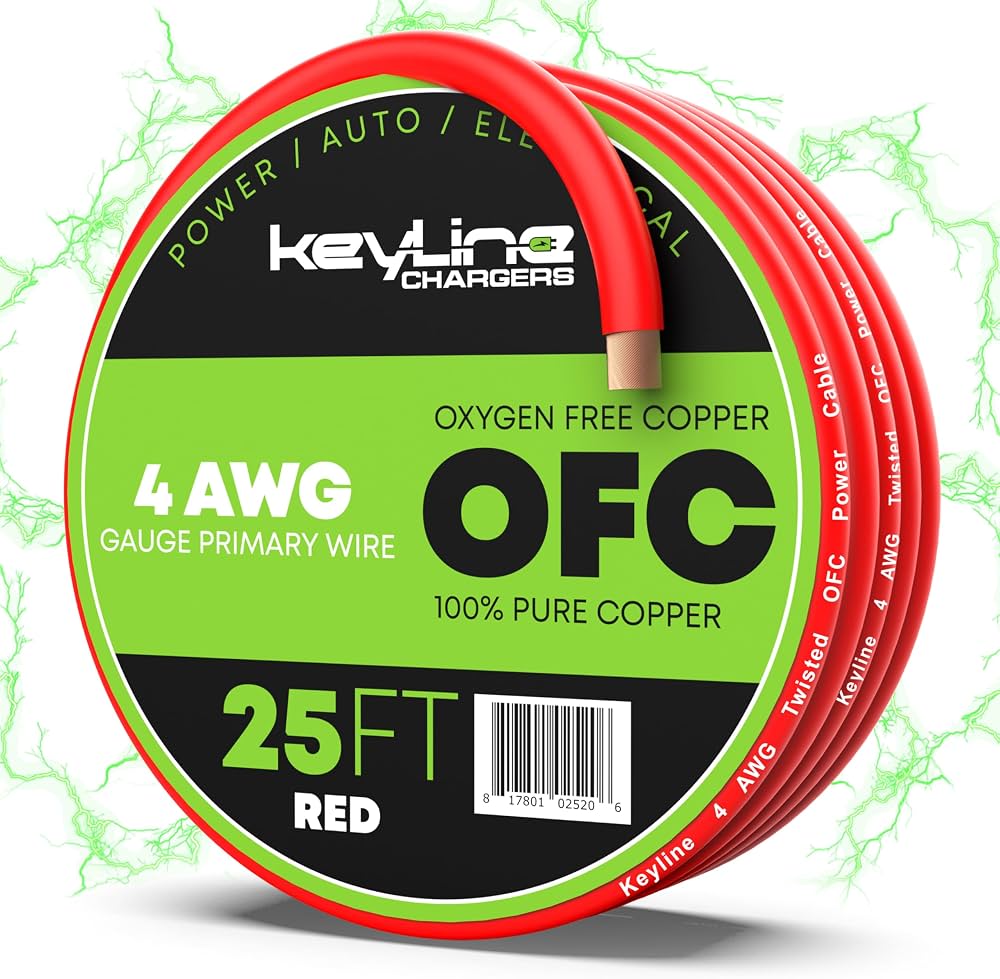
For most cars, a 4 to 6 gauge wire works best for battery cables, while smaller accessories can use 8 to 10 gauge wire.
Choosing the right wire gauge for your car battery might sound like a small detail, but it can make the difference between a smooth start every time and a frustrating dead battery on a cold morning. After years of working on everything from classic muscle cars to daily commuters, I have seen how the wrong wire size can cause voltage drops, overheating, and even fire hazards. In this guide, I will walk you through exactly what gauge wire to use for your car battery, why it matters, and how to pick the perfect fit for your setup. Stick around, because this is one of those things you will wish you learned sooner.

Understanding Wire Gauge and Why It Matters
Wire gauge refers to the thickness of a wire. In the American Wire Gauge system, a lower number means a thicker wire, while a higher number means a thinner wire. Think of it like a garden hose: a wider hose lets more water flow with less resistance, and a thicker wire lets more current flow with less voltage drop.
When you connect a battery to your starter, alternator, or ground, the wire needs to carry a huge burst of current. If the wire is too thin, it resists the flow of electricity, causing the battery to work harder and lose power along the way. This is why picking the right gauge is not just about convenience, but safety and performance.
Here is what gauge really controls:
- Current capacity
- Voltage drop over distance
- Heat buildup during high loads
- Overall durability and lifespan
I remember installing a cheap 10 gauge wire on a buddy's truck because we thought any wire would do. The engine cranked slowly, and the wire got warm to the touch. Once we swapped it for a proper 4 gauge, the starter spun like a champ and the voltage at the battery stayed solid.
The Common Wire Gauges Used for Car Batteries
Different parts of your car's electrical system need different wire sizes. Let me break down the most common gauges and where they work best.
4 Gauge Wire
- Best for: heavy-duty applications like high-output alternators, winches, or large sound systems
- Can handle up to 100 amps or more depending on length
- Ideal for trucks, SUVs, and performance cars with big electrical demands
6 Gauge Wire
- Best for: standard battery to starter connections in most passenger vehicles
- Handles around 60 to 80 amps safely
- The most common choice for OEM replacement battery cables
8 Gauge Wire
- Best for: smaller accessories like lights, fans, or basic audio setups
- Good for ground straps on smaller engines
- Handles around 40 amps
10 Gauge Wire
- Best for: low-draw accessories such as interior lighting or small electronic modules
- Not suitable for main battery cables
- Handles around 30 amps
Most cars on the road use 6 gauge wire for the main battery cables. If you have a high-performance vehicle or added accessories, stepping up to 4 gauge gives you extra headroom and safety.
How to Choose the Right Gauge for Your Setup
Choosing the right gauge depends on three main things: how much current your system needs, how long the wire run is, and the type of vehicle you drive.
If you drive a standard sedan or compact car with a factory starter, 6 gauge is your safest bet. If you drive a truck with a big V8 or added accessories like a winch or inverter, go with 4 gauge. For custom builds or race cars, I always recommend 2 gauge or even 1/0 gauge for ultimate current flow and minimum voltage drop.
Length matters too. The longer the wire run, the more resistance you get. As a rule of thumb, if your battery cable is over 10 feet long, you should go one gauge thicker to compensate. For example, if 6 gauge is normally enough, use 4 gauge for a long run.
Here is a quick decision guide:
- Daily driver or commuter car: 6 gauge
- Truck or SUV with stock electronics: 4 to 6 gauge
- Performance car or modified vehicle: 2 to 4 gauge
- Off-road rig with winch and lights: 1/0 to 2 gauge
Signs You Are Using the Wrong Wire Gauge
Sometimes your car will tell you it is unhappy with the wire size. Here are the red flags I always look for:
- Slow cranking or clicking when starting
- Dim headlights when the engine is off
- Battery cables feel warm or hot after use
- Corrosion buildup at the terminals
- Voltage drops more than 0.5 volts under load
If you notice any of these, it is time to check your wire gauge. I once had a customer who kept buying new batteries because his old ones kept dying. Turns out his ground wire was 12 gauge, which was way too thin for his diesel truck. A quick swap to 4 gauge fixed the issue for good.
Tips for Installing Car Battery Wires the Right Way
Once you pick the right gauge, how you install it matters just as much. A thick wire with a bad connection is just as bad as a thin one.
- Always use pure copper or tinned copper wire for the best conductivity
- Choose marine-grade or welding cable if you need extra flexibility
- Use proper crimping tools, not just pliers, to attach terminals
- Seal connections with heat shrink tubing to prevent corrosion
- Route wires away from heat sources and moving parts
I learned the hard way to never use cheap aluminum wire for battery cables. It corrodes fast, expands when hot, and can cause loose connections. Stick with copper, and you will save yourself a world of headaches.

Safety and Longevity: What to Keep in Mind
Your battery cables are not something you want to replace every year. A good set should last the life of the car if installed correctly. Here is how to make sure they go the distance:
- Inspect terminals every oil change for corrosion or looseness
- Keep cables clean and free of road grime
- Replace any cable that is stiff, cracked, or shows signs of melting
- Use dielectric grease on terminals to prevent oxidation
- Secure cables with proper clamps to reduce vibration damage
Think of your battery cables like the arteries of your car. If they get clogged or damaged, nothing else works right. Taking 10 minutes to check them twice a year can save you from being stranded.
Common Mistakes to Avoid
Over the years, I have seen the same mistakes pop up again and again. Save yourself the trouble and avoid these:
- Using the wrong gauge for high-amperage accessories
- Mixing aluminum and copper connections without proper adapters
- Skipping the fuse or circuit breaker on the main power wire
- Routing wires near the exhaust or sharp edges
- Using household wire instead of automotive-grade cable
A good rule of thumb I live by is this: if you are unsure, go one gauge thicker than you think you need. It is always better to have too much capacity than too little.

Frequently Asked Questions
What is the best gauge wire for a car battery ground?
A 4 to 6 gauge wire is ideal for most car battery grounds. For high-performance setups, go with 2 gauge. A solid ground connection is just as important as the positive cable, so do not cheap out here.
Can I use 8 gauge wire for a car battery?
You can use 8 gauge for small accessories, but not for the main battery to starter connection. It is too thin for starter motors and can cause voltage drop and overheating.
How long can a car battery wire be without losing power?
For every 10 feet of cable length, voltage drop increases. To keep performance solid, use 4 gauge for runs under 15 feet, and go thicker for longer distances.
Is copper or aluminum wire better for car batteries?
Copper is the gold standard for car battery cables. It conducts better, resists corrosion, and handles heat well. Aluminum is cheaper but less reliable for automotive use.
Do I need a fuse for my car battery wire?
Yes, always install a fuse or circuit breaker within 18 inches of the battery on the positive cable. This protects your car from electrical fires in case of a short circuit.
Wrapping It Up
Picking the right gauge wire for your car battery is one of those small upgrades that pays huge dividends. For most cars, 6 gauge is the sweet spot, while trucks and performance builds benefit from 4 gauge or thicker. Always match your wire size to your current needs, cable length, and vehicle type. Use quality copper cable, install it right, and inspect it regularly. Your starter will spin faster, your battery will last longer, and you will avoid those annoying no-start mornings. If you are planning a new install or upgrading your current setup, take a few minutes to measure your runs, pick the right gauge, and do it once the right way. Your car will thank you every time you turn the key.