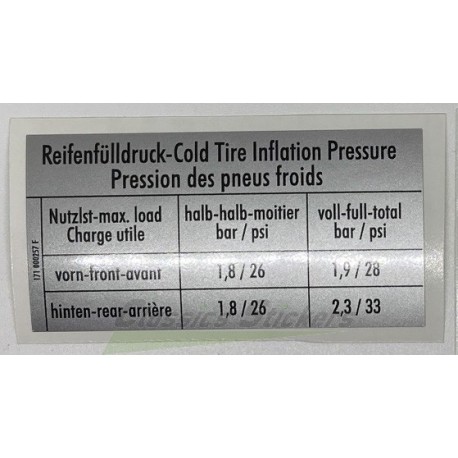
Cold tire inflation pressure is the air pressure measured in tires when they are cold, before any driving has warmed them up. Most drivers overlook this small detail, but understanding cold tire pressure can transform how your car feels, how safe you are on the road, and even how much fuel you spend each month. In this guide, I will walk you through everything you need to know about cold tire inflation pressure, from what it means and why it matters, to how to check it the right way and avoid common mistakes.

What Exactly Is Cold Tire Inflation Pressure
Cold tire inflation pressure is the amount of air inside your tire when it has not been used for at least three hours or has been driven less than a mile at low speed. When tires sit still, the air inside settles at a temperature that matches the surrounding air, usually around 68°F to 75°F depending on your location and season. This resting state gives you a true baseline reading because heat from driving has not expanded the air molecules yet.
Think of it like taking a patient's temperature when they have been sitting quietly in a waiting area. You want the most natural, uninfluenced reading. The same logic applies to your tires. The number printed on your driver's side door jamb or in your owner's manual is always given as a cold inflation value. That is the number you are aiming for when you check your pressure.
The reason cold pressure matters so much is simple physics. As a tire rolls, friction between the rubber and the road creates heat. That heat causes air to expand, which raises the pressure inside the tire. A tire that reads 35 PSI after driving for thirty minutes might have only been at 32 PSI when you pulled out of your driveway. Checking pressure when the tire is hot will give you a misleadingly high number, and adjusting to that hot reading will leave your tires underinflated once they cool down again.
Why Cold Tire Pressure Is More Important Than Most Drivers Realize
After spending years helping friends and family troubleshoot weird tire wear patterns and fuel economy issues, I have seen firsthand how often the root cause traces back to incorrect cold inflation. Here are the biggest reasons this number deserves your attention.
Safety Comes First
Underinflated tires are one of the leading causes of tire blowouts, especially on highways. When pressure drops too low, the sidewall flexes more than it should with every rotation. That extra flexing builds up heat, and heat is the enemy of rubber. Over time, it weakens the structure and can lead to a sudden failure at the worst possible moment.
On the flip side, overinflated tires reduce the tire's contact patch with the road. That means less grip, longer braking distances, and a harsher ride. Neither extreme is good. Cold tire inflation pressure is the sweet spot that balances safety, comfort, and performance.
Fuel Economy Adds Up Over Time
Tires that are even a few PSI below the recommended cold pressure create more rolling resistance. Your engine has to work harder to push the car forward, which means it burns more fuel. Studies have shown that properly inflated tires can improve gas mileage by up to three percent. That might not sound like a lot, but over a year of commuting, it can add up to real money in savings.
Tire Life Gets Longer
I learned this the hard way when I ignored my front tires for too long and ended up replacing them after only 30,000 miles instead of the 50,000 miles they were rated for. Uneven pressure causes uneven wear. The shoulders of underinflated tires wear faster, while the center of overinflated tires wears down quicker. Sticking to the correct cold pressure keeps the tread wearing evenly across the whole tire, which means you get full use out of every tire you buy.
Ride Quality Stays Comfortable
Proper cold inflation also affects how your car feels on rough roads. Too much pressure makes every bump feel jarring. Too little pressure makes the car feel sluggish and floaty. The manufacturer's recommended cold pressure is calibrated to give you the best mix of comfort and control for that specific vehicle.
How to Find the Correct Cold Tire Pressure for Your Vehicle
One of the most common mistakes I see is people looking at the tire sidewall and using the maximum pressure listed there. That number is the maximum the tire can safely hold, not the recommended pressure for your vehicle. Here is where you actually find the right number.
Check the Driver's Side Door Jamb
Open your driver's side door and look at the sticker on the edge of the door frame. Most vehicles made after 2003 have a yellow or white label that lists the recommended cold tire pressure for the front tires, rear tires, and sometimes the spare. This is the most accurate number for your specific car or truck.
Look in the Owner's Manual
If the door jamb sticker is missing or hard to read, your owner's manual will have the same information in the maintenance or specifications section. It will usually break down the recommendation by tire size and load capacity.
Understand the Difference Between Vehicle and Tire Recommendations
This is a subtle but important point. The number on your door jamb is what the vehicle manufacturer wants you to use based on the car's weight, suspension, and intended use. The number on the tire sidewall is what the tire manufacturer says is the safe maximum. Always go with the vehicle recommendation unless a tire professional specifically tells you otherwise.
When and How to Check Cold Tire Pressure the Right Way
Checking your tires is one of the easiest maintenance tasks you can do, but doing it correctly makes a huge difference. Here is the step-by-step process I follow every month, and the same one I recommend to anyone who asks.
Step 1: Check Tires When They Are Truly Cold
The best time to check is first thing in the morning before you drive anywhere, or after the car has been parked for at least three hours. If you have been driving, even a short distance to the gas station, the pressure will already be elevated and your reading will not be accurate.
Step 2: Use a Quality Tire Pressure Gauge
Pencil-style gauges are cheap and work fine for occasional use. Digital gauges are more accurate and easier to read. If you want the most reliable readings, look for a gauge that is calibrated to within half a PSI. I personally keep a digital gauge in my glove box because it is quick and gives me confidence in the number.
Step 3: Check All Four Tires and the Spare
Pressure can vary from tire to tire even on the same car. One tire might have a slow leak while the others hold air perfectly. Make it a habit to check all four corners, and do not forget the spare. A spare that is flat when you need it is worse than not having one at all.
Step 4: Add Air Slowly and Recheck
If a tire needs air, add it a little at a time and check frequently. It is easier to add a little air than to let too much out. If you accidentally overfill, you can release air by pressing the small metal stem in the center of the valve with the back of your gauge or a small tool.
Step 5: Replace the Valve Caps
Valve caps keep dirt and moisture out of the valve stem. A missing cap can lead to slow leaks over time. Put the caps back on every time you finish checking.
Common Mistakes That Lead to Wrong Cold Pressure Readings
Over the years, I have made just about every mistake in the book, and I have watched others do the same. Here are the most common pitfalls to avoid.
Checking Pressure After Driving
This is the number one error. Even a quick trip to the store can raise tire pressure by two to four PSI. If you check after driving and see 38 PSI, and your door jamb says 32 PSI, you might think you are overinflated when you are actually right where you need to be.
Using the Number on the Sidewall
I have seen people fill their tires to the maximum number printed on the tire because they thought it was the recommended pressure. That number is for the tire's maximum capacity, not your car's recommendation. Trust the door jamb.
Ignoring Temperature Changes
Tire pressure drops about one PSI for every ten degrees Fahrenheit the outside temperature falls. That means if you checked your tires at 70°F and they were perfect, the same tires might be three PSI low when winter hits and temperatures drop to 40°F. Seasonal changes matter, especially in regions with extreme temperatures.
Forgetting About the Spare
Spare tires, whether they are full-size or compact temporaries, lose pressure over time. A spare that has been sitting for a year might be flat or dangerously low. Check it at least twice a year.
How Temperature Affects Cold Tire Inflation Pressure
This is one of those things that sounds technical but is actually very intuitive once you understand it. Air is a gas, and gases expand when they get hot and contract when they get cold. Your tires are filled with air, so they respond to temperature changes just like a balloon would.
In the morning, your tires are at their coldest because they have been sitting in the cool overnight temperatures. As the day warms up and you start driving, the air inside the tires heats up and expands. By the afternoon, your tires might be three to five PSI higher than they were in the morning.
This is also why you should add a little extra pressure if you know a cold snap is coming, or check your tires more frequently during seasonal transitions. A car that was perfectly inflated in October might be underinflated by December in a cold climate.
How Driving Habits Influence Cold Tire Pressure
Different drivers see different wear patterns based on how they drive, but cold tire pressure affects everyone the same way at the start of every trip. If you mostly drive short distances around town, your tires never fully heat up, so your cold pressure reading will stay accurate longer. If you commute on the highway for an hour each way, your tires go through significant temperature swings every day.
Heavy loads also put more demand on tires. If you regularly haul cargo, tow a trailer, or carry heavy passengers, you might need to adjust your cold pressure slightly to account for the extra load. Your owner's manual usually includes a separate recommendation for maximum load situations.
The Difference Between Cold Pressure and Hot Pressure Readings
Hot tire pressure is what you see after driving. It is not a useful number for adjusting your inflation because it is always elevated. However, you can use it as a diagnostic tool. If your hot pressure is significantly higher than your cold pressure, that tells you the tires are working hard, which is normal. If your hot pressure is barely higher than your cold pressure, that might mean the tires are underinflated and not building up the expected heat from normal flexing.
Some advanced drivers and tire professionals use a rule of thumb where they add three to four PSI to their cold pressure target when checking hot tires. This gives them a rough estimate of where the cold pressure should be, but it is not as accurate as waiting for the tires to cool down.
Frequently Asked Questions About Cold Tire Inflation Pressure
How often should I check my cold tire pressure?
You should check your cold tire pressure at least once a month, and ideally before any long road trip. Tires naturally lose about one PSI per month due to slow permeation through the rubber, so monthly checks keep you ahead of any significant pressure loss.
Can I check tire pressure when it is raining or the ground is wet?
Wet conditions do not significantly affect tire pressure readings, but they can affect your comfort and safety while checking. The important factor is that the tires themselves have not been driven on recently, regardless of the weather outside.
Is it okay to use nitrogen instead of regular air?
Nitrogen is used in some racing applications and commercial fleets because it is less affected by temperature changes. For everyday drivers, regular air works perfectly fine. The key is to keep your tires at the correct cold pressure, regardless of what gas you use to fill them.
What should I do if my tire keeps losing pressure?
If a tire loses more than two PSI per month, there is likely a slow leak. Common causes include a small puncture, a damaged valve stem, or corrosion on the wheel where the tire beads against it. A tire shop can often diagnose and repair slow leaks quickly.
Does cold tire pressure change with altitude?
Altitude itself does not significantly affect tire pressure over normal driving elevations. However, the temperature differences at high altitudes can be more extreme, which indirectly affects pressure. The main rule remains the same: check when the tires are cold and aim for the manufacturer's recommendation.
Putting Cold Tire Knowledge Into Action
Cold tire inflation pressure is one of those small details that separates careful drivers from everyone else. It affects your safety, your wallet, and the lifespan of one of the most expensive components on your vehicle. By checking your pressure monthly, using the right reference number, and understanding how temperature and driving affect your readings, you are already ahead of most drivers on the road.
Pick a day this month to check your tires when they are cold. Write down the readings so you can track changes over time. If any tire is more than a few PSI off, add or release air until it matches the recommendation on your door jamb. That single habit will save you money, extend your tire life, and give you more confidence every time you get behind the wheel.