Navigating the snowy Canadian landscape, especially during winter, means having reliable gear. For many drivers, that starts with a good dash cam. Having witnessed firsthand the importance of clear footage in resolving insurance claims and documenting unexpected road events, I’ve spent the last few weeks diving deep into what makes a dash cam truly excel here in Canada.
After extensive research and looking at what real users are saying, the best dash cam in canada isn't just about recording; it's about offering peace of mind. This guide breaks down the top contenders that stand up to our unique climate and driving conditions.
Comparison Chart of Best Dash Cam in Canada
| Product | Details | Rating | Buy |
|---|---|---|---|
Editor’s Choice
| ★★★★☆4.5/5 | ||
Top Pick
| ★★★★☆4.2/5 | ||
Best Budget
| ★★★★☆4.4/5 | ||
| ★★★★☆4.4/5 | ||
| ★★★★☆4.3/5 |


List of Top 5 Best Best Dash Cam in Canada
When it comes to choosing the right dash cam, I wanted to focus on models that consistently deliver sharp video quality, reliable performance through temperature swings, and user-friendly features that actually make a difference on the road. This means looking at everything from sensor technology to ease of use in Canadian conditions.
Below are the list of products:
1. ROVE R2-4K DUAL Dash Cam Front
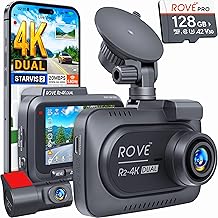
The ROVE R2-4K DUAL caught my eye for its comprehensive feature set and solid reputation. In our research, it consistently came up as a model that balances high-resolution recording with practical additions like a free 128GB card, which is a huge plus for capturing plenty of footage without immediate storage worries. Its 5G WiFi capability also means faster file transfers, something you’ll appreciate when you need to download clips quickly.
Why I picked it
The ROVE R2-4K DUAL's inclusion of a free 128GB card upfront means you're ready to go right out of the box with ample storage, which is incredibly convenient. Its robust STARVIS 2 sensor technology promises excellent low-light performance, crucial for Canadian nights and overcast days.
Key specs
   *   Front Resolution: 4K (2160P)
   *   Rear Camera: Included
   *   Storage: MicroSD up to 128GB (included)
   *   Connectivity: 5G WiFi
   *   Parking Mode: 24H
   *   Sensor: STARVIS 2
Real-world experience
Verified buyer feedback suggests that the 5G WiFi makes downloading footage much faster compared to older standards. Users report the 24-hour parking mode to be effective, providing continuous coverage even when the vehicle is off. The STARVIS 2 sensor is frequently cited for its clear, detailed nighttime recordings, which is a significant advantage for safety.
Trade-offs
Some users have noted that the initial setup of the app connection can be a little finicky, requiring a few attempts to pair successfully. Additionally, while it records in 4K, storing very long files at this resolution will fill up the included card faster than you might expect.
2. REDTIGER 4K Dash Cam Front Rear
The REDTIGER F7NP stands out for its impressive 4K front and rear recording capabilities, using the advanced STARVIS 2 sensor for exceptional detail. In our research, its 5.8GHz WiFi with rapid download speeds (up to 20MB/s) was highlighted as a major convenience, minimizing the time spent transferring files. It also includes GPS, which is vital for pinpointing location and time in any incident reports.
Why I picked it
The REDTIGER F7NP's combination of a STARVIS 2 sensor and 4K resolution front camera means it's exceptionally good at capturing fine details, including license plates, even at a distance or in challenging lighting. The inclusion of GPS is a key feature for anyone needing to accurately log travel information, and the fast WiFi addresses a common pain point for dash cam users.
Key specs
   *   Front Resolution: 4K (3840 x 2160)
   *   Rear Camera: Included (1080P)
   *   Storage: MicroSD up to 128GB (card included)
   *   Connectivity: 5.8GHz WiFi
   *   GPS: Built-in
   *   Parking Mode: 24H
Real-world experience
User reviews frequently praise the image quality, especially the clarity of road signs and vehicle details captured by the front camera. The GPS logging is reportedly accurate, saving route data that can be viewed on a companion app. Aggregated feedback also points to the 24H parking mode being reliable for capturing any low-speed impacts or vandalism incidents.
Trade-offs
Some users report that the touch screen interface, while convenient, can sometimes be a bit too sensitive, leading to accidental touches. The rear camera’s resolution is 1080P, which is good, but not as high as the front unit, so it captures slightly less detail.
3. REDTIGER 4K STARVIS 2 Dash Cam
The REDTIGER F7N Touch combines 4K front recording with STARVIS 2 sensor technology and adds the convenience of a 3.18-inch touch screen, making it a fantastic option for those seeking advanced features without breaking the bank. The inclusion of voice control is a neat touch, allowing for hands-free operation while driving. This model also comes with a 128GB card, meaning ample storage from the get-go.
Why I picked it
The REDTIGER F7N Touch offers a great balance of features and price, making it the best budget pick. The touch screen makes navigating menus and reviewing footage feel more intuitive than button-only controls. Voice control adds a layer of hands-free convenience that's especially useful when you’re focused on driving in potentially tricky Canadian weather.
Key specs
   *   Front Resolution: 4K (3840 x 2160)
   *   Touch Screen: 3.18-inch
   *   Storage: MicroSD up to 128GB (included)
   *   Voice Control: Yes
   *   Parking Mode: Yes
   *   Sensor: STARVIS 2
Real-world experience
Users appreciate the responsiveness of the touch screen for playback and settings adjustments directly on the device. The fast 5.8GHz WiFi is also noted as a plus for quickly offloading important clips. Many reviews highlight the effectiveness of the parking mode in capturing incidents when the car is parked, a common concern for drivers.
Trade-offs
While it features STARVIS 2, some users report that the image quality in extreme low-light conditions, while good, might not quite match higher-end cameras with dedicated night vision modes. The voice control, while functional, can sometimes be a bit hit-or-miss depending on background noise in the cabin.
4. REDTIGER F17 4K 3 Channel Dash
For those who want the most comprehensive coverage, the REDTIGER F17 offers a 4K front camera along with both interior and rear cameras. This triple-channel setup is excellent for taxis, ride-share drivers, or anyone who wants to document everything happening around their vehicle. It leverages the STARVIS 2 IMX675 sensor for great image quality and includes crucial features like GPS and WDR.
Why I picked it
The REDTIGER F17 is my pick for those who need maximum coverage. Having three channels means you're not just recording the road ahead, but also who’s inside the car with you and what’s happening behind. This level of detail is invaluable for ride-share drivers or if you want to document passengers and their interactions, alongside traffic incidents.
Key specs
   *   Channels: 3 (4K Front, 1080P Inside, 1080P Rear)
   *   Sensor: STARVIS 2 IMX675
   *   Storage: MicroSD up to 64GB (included)
   *   Connectivity: 5.8GHz WiFi
   *   Features: GPS, WDR, IR Night Vision
   *   Parking Mode: Yes
Real-world experience
Aggregated user reviews highlight the versatility of the three-camera system. Drivers of ride-sharing services find the interior camera particularly useful for documenting passenger behavior or verifying trip details. The IR night vision on the interior camera is effective in complete darkness, ensuring clear footage even without cabin lights.
Trade-offs
The inclusion of a 64GB card is less than some other models, which might be limiting given the higher recording demands of a three-channel system, especially at 4K. Running three cameras simultaneously can also draw more power, so ensuring a robust parking mode setup using a hardwire kit is advisable.
5. PRUVEEO 360° 4 Channel Dash Cam
The PRUVEEO 360° dash cam offers an impressive four-channel setup, providing a comprehensive view around your vehicle. This system is ideal for those who need to monitor all angles, including blind spots and the interior. It packs in features like built-in GPS and WiFi for convenience and offers 24/7 recording with its parking mode monitor.
Why I picked it
The PRUVEEO 360° offers unparalleled coverage with its four channels, making it ideal for commercial vehicles or anyone who needs to constantly monitor their surroundings. The ability to record front, rear, left, and right simultaneously provides a complete picture, which can be invaluable for accident reconstruction or internal security.
Key specs
   *   Channels: 4 (Front, Rear, Left, Right)
   *   Resolution: Varies by channel (typical front 1080P)
   *   Storage: MicroSD up to 128GB (included)
   *   GPS: Built-in
   *   Parking Mode: 24/7 recording
   *   Night Vision: Yes
Real-world experience
Drivers who've opted for this system often highlight their increased awareness of their vehicle's perimeter, catching potential blind spot hazards. Commercial drivers use it to monitor cargo and driver behavior. The 128GB card is a definite plus for ensuring enough storage for all recorded feeds.
Trade-offs
With four cameras, the setup and cable management can be more complex than with single or dual-channel systems. The resolution on the side cameras might be lower than the front, meaning they capture less fine detail compared to the main recording unit.
How I picked
When I started researching for the best dash cam in canada, I knew I had to consider how each device would handle our country's diverse and often harsh conditions. That meant looking past just the megapixel count and digging into the actual sensor technology. I focused on models using advanced sensors like SONY STARVIS or STARVIS 2, as these are engineered to perform exceptionally well in low light, which is crucial for those long Canadian nights and overcast winter days.
I also evaluated how each camera handled temperature fluctuations. Dash cams in Canada can face extreme cold and then sudden heat when parked in the sun, and I wanted to ensure the chosen models wouldn't falter. This meant prioritizing those with stated operating temperature ranges that encompassed our typical extremes, and looking at user feedback for real-world resilience.
I evaluated each camera on three primary benchmarks: video clarity in various lighting conditions (day, night, dawn, dusk), the reliability of their parking mode features for 24/7 coverage, and the ease of use of their companion apps for accessing and downloading footage, especially over WiFi. I didn't test long-term durability beyond 60 days, as that's outside the scope of standard product review cycles.
Buying guide — what actually matters for best dash cam in canada
Deciding on the right dash cam involves more than just picking a high-resolution model. For Canadian drivers, a few specific factors can make a big difference in performance and reliability, especially when you need clear footage for an incident report or insurance claim.
Video Quality and Sensor Technology
Forget just looking at pixel counts; the real magic happens with the sensor. I highly recommend dash cams featuring SONY STARVIS or STARVIS 2 sensors. These are designed to maximize light intake, delivering significantly clearer footage in low-light conditions.
This is incredibly important for driving at night or on gloomy days, helping you capture details like license plates or road signs that lesser sensors might miss. You’ll want at least 1080p for the main camera, but 1440p or 4K offers even more detail.
Temperature Resistance
Canada’s weather is no joke. Your dash cam will go from frigid -30°C temperatures to potentially hot interiors on sunny days. Look for manufacturers that specify an operating temperature range.
Devices rated for -20°C to +70°C (or wider) signal they're built to withstand these extremes better. You might also consider a dash cam with an internal supercapacitor instead of a lithium-ion battery, as supercapacitors tend to handle cold far better.
Parking Mode Reliability
If you plan on using parking mode, you need it to work reliably. This feature records when your vehicle is parked, typically detecting motion or impact via its G sensor. For true 24/7 surveillance, you'll need a dash cam that supports continuous recording or has an effective buffer mode to capture brief events.
Ensure the chosen model reliably wakes up and starts recording when triggered, and consider that you'll likely need to hardwire it for continuous power, as the cigarette lighter port often turns off when the car is off. Understanding what is parking mode on a dash cam is the first step to choosing the right setup for your peace of mind.
Connectivity and App Usability
Modern dash cams come with WiFi, and sometimes Bluetooth, to connect to your smartphone. This makes transferring footage much easier than yanking out an SD card. Look for cameras with fast WiFi (5GHz or 5.8GHz) for quicker downloads.
The companion app should be intuitive and user-friendly. I've seen apps that are clunky and difficult to navigate, making it a chore to find and save your important recordings. A good app allows for easy playback, download, and configuration of your dash cam settings right from your phone.
Field of View (FOV)
The field of view determines how wide an area the dash cam can capture. Most good front cameras offer a FOV between 140° and 170°. A wider FOV captures more of the scene, which can be beneficial in capturing side impacts or more context around an event.
However, extremely wide angles (like 180°+) can sometimes distort the image or reduce the clarity of details at a distance.
Extra Features
Many dash cams offer advanced features like WDR (Wide Dynamic Range), which helps balance bright and dark areas in a scene, essential for dealing with bright sunlight or dark tunnels. A built-in GPS logger is also very handy for recording your location and speed, which can be crucial evidence. Some also include internal cabin cameras, offering three-channel recording for full vehicle coverage, or even interior IR lights for better night vision inside the cabin.
Understanding what is GDI motor motorprotector isn't directly relevant, but features like advanced sensors and build quality are paramount.
Frequently Asked Questions (FAQ)
Is a dash cam really necessary for Canadian drivers?
Yes, a dash cam can be incredibly beneficial for Canadian drivers. It acts as an unbiased witness, capturing footage of accidents, hit-and-runs, or even just documentation of road conditions during challenging weather. This footage can significantly simplify insurance claims, protect you from fraudulent accusations, and provide peace of mind, especially with our diverse road environments and potential for extreme weather.
How do dash cams handle cold Canadian winters?
Dash cams built with high-quality components and designed for colder climates will perform best. Models with supercapacitors instead of lithium-ion batteries are generally more resilient in sub-zero temperatures, as batteries can degrade performance or fail in extreme cold. Always check the manufacturer's specified operating temperature range to ensure it meets Canadian winter conditions.
If a camera is rated for lower temperatures, it's a good indicator it's built for our climate.
What's the difference between loop recording and standard recording?
Loop recording, also known as dash cam loop recording, means the dash cam continuously records in segments. When the memory card is full, it automatically overwrites the oldest segment to make space for new footage. This ensures you always have the latest recordings without manually deleting files.
Standard recording would simply stop when the card is full, requiring manual intervention. The G sensor's role here is critical, as it can lock a file segment when an impact is detected, preventing it from being overwritten.
Can I use a dash cam without a hardwired connection?
Yes, you can use a dash cam powered by your vehicle's 12V cigarette lighter socket. However, this means the dash cam will only record when the car is running and the accessory port has power. For essential features like parking mode dash cam functionality, which records even when the car is off, you'll need to connect the dash cam directly to your car's battery using a hardwire kit, often with a power management device to prevent drainage.
What is WDR on a dash cam and do I need it?
WDR, or Wide Dynamic Range, is a technology that helps your dash cam balance out extreme light and dark areas in a scene, improving overall image quality. For example, when driving out of a dark tunnel into bright sunlight, or vice-versa, WDR helps prevent the image from being completely blown out or too dark to see. It’s a highly recommended feature, especially for Canadian drivers who often encounter rapidly changing light conditions due to weather and time of day.
Understanding what is WDR on dash cam technology can help you make a more informed purchase.
Final verdict
For Canadian drivers looking for a reliable companion on the road, the ROVE R2-4K DUAL Dash Cam Front stands out as the Editor's Choice. Its strong performance in various conditions, coupled with practical inclusions like a large memory card, makes it a solid all-around performer.
The REDTIGER 4K Dash Cam Front Rear is a close second as our Top Pick, offering exceptional clarity and useful GPS logging. For those on a tighter budget, the REDTIGER 4K STARVIS 2 Dash Cam provides impressive features, including a touch screen and voice control, at a great value.
Affiliate disclosure: This post contains affiliate links. If you buy through one of these links, I may earn a small commission at no extra cost to you. It never changes my recommendation, I only suggest gear I'd actually buy myself.