Getting your air compressor to kick on and off exactly when you need it isn't just about convenience, it's about making your tools work right and keeping things safe. Knowing how to set air compressor pressure switch correctly is a crucial skill. If the settings are off, you could be dealing with weak air tools or, far worse, a motor that's constantly struggling.
A properly calibrated pressure switch ensures your compressor operates within its optimal range, usually specified by the manufacturer. For example, many home compressors are designed to run efficiently between 90 and 125 pounds per square inch (PSI). Let's dive into why this adjustment is so important and how you can manage it safely.
Why Setting Your Air Compressor Pressure Switch Matters (Seriously!)
You might think, "It's just a switch, how complicated can it be?" Well, your air compressor pressure switch is actually the brain of your unit's pneumatic system. It dictates when the compressor's motor starts pumping air into the tank and when it stops. Messing this up isn't just an inconvenience; it can lead to some real headaches, and even dangerous situations.
The stakes here are quite high. An incorrectly set switch can lead to your compressor short cycling, which means it turns on and off too frequently. This wears out the motor and other components prematurely, shortening your compressor's lifespan. More critically, setting the cut-out pressure too high can exceed the maximum allowable working pressure (MAWP) for your air tank, leading to potential tank rupture.
This is a serious safety hazard, so accurate adjustment is truly non-negotiable.
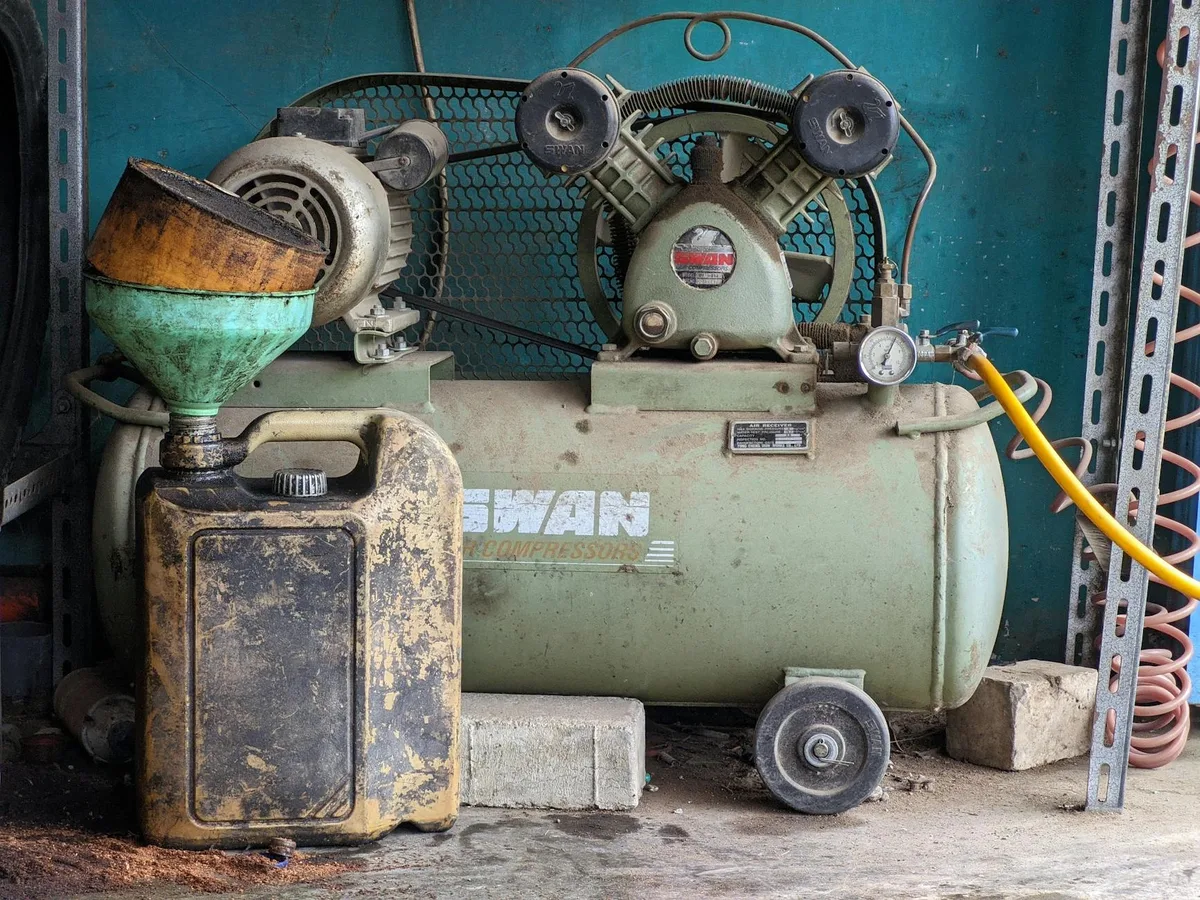
Understanding Your Air Compressor's Pressure Switch: The Basics
At its core, a pressure switch is an electrical device that responds to changes in air pressure. It has a diaphragm or piston that moves in response to tank pressure, which then activates or deactivates electrical contacts. These contacts control the power supply to the compressor motor. When the pressure drops below a certain point, the switch "cuts in" and starts the motor.
When it reaches a higher point, it "cuts out" and stops the motor.
Knowing these two main points, cut-in and cut-out pressure, is fundamental to setting your switch correctly. You're essentially telling your compressor, "Start pumping when the tank hits X PSI, and stop when it hits Y PSI." This range, or "differential," is also adjustable on most modern switches.
What "Cut-In" and "Cut-Out" Really Mean
Let's break down these two critical terms because they're central to the whole process.
- Cut-In Pressure: This is the lower pressure threshold. When the air pressure inside your compressor's tank drops to this point, the pressure switch engages the motor, and the compressor starts running. You want this set high enough to provide consistent tool performance, but low enough to avoid constant running.
- Cut-Out Pressure: This is the upper pressure threshold. Once the air in the tank reaches this pressure, the pressure switch disengages the motor, and the compressor stops pumping. This setting is often the primary adjustment you'll make, and it should always stay below your tank's maximum safe operating pressure. For most consumer-grade compressors, this is typically around 125-150 PSI, but always check your specific unit's manual.
The Role of the Unloader Valve
You'll often find an unloader valve, sometimes called a bleeder valve, integrated into or connected to your pressure switch manifold. This small but mighty component releases any residual air pressure from the compressor's pump head and delivery tube after the compressor cuts out. Why is this important?

Well, it ensures that when the compressor needs to restart, the motor isn't trying to push against a full head of pressure. This dramatically reduces the strain on the motor during startup, preventing overheating and extending its life. If your compressor struggles to restart, especially under load, a faulty or improperly functioning unloader valve might be the culprit, not just the pressure switch settings.
Before You Adjust Anything: Safety First!
Alright, before we even think about touching a screwdriver, we need to talk about safety. Working with air compressors involves high pressure and electricity, both of which can be dangerous if you're not careful. We can't stress this enough: always prioritize safety. Ignoring these steps could lead to serious injury or damage to your equipment.
Manufacturer warnings and Occupational Safety and Health Administration (OSHA) guidelines consistently emphasize the risks associated with pressure systems. Always assume the system is energized until you've manually confirmed otherwise. As of 2026, many newer compressors even include built-in diagnostic safety features, but these don't replace basic precautions.
Essential Safety Gear
You wouldn't work on anything else without the right gear, and your air compressor is no different. Make sure you have these items readily available:
- Eye Protection: Safety glasses or goggles are non-negotiable. Compressed air can kick up debris, and unexpected leaks can cause projectiles.
- Hearing Protection: Compressors can be loud, especially older models. Earplugs or earmuffs protect your hearing from sustained noise exposure.
- Gloves: Protect your hands from sharp edges, hot surfaces, and electrical components.
- Work Clothes: Avoid loose clothing that could get caught in moving parts.

Disconnecting Power: Your #1 Rule
This is probably the single most important safety step. You must completely disconnect the air compressor from its power source before you start any adjustments or maintenance. Don't just flip the switch on the unit; pull the plug from the wall outlet.
If your compressor is hardwired, you need to turn off the corresponding breaker in your electrical panel. This adheres to fundamental electrical lockout/tagout procedures, ensuring no accidental power surge or startup. This completely de-energizes the system, making it safe to work on the electrical components of the pressure switch. Never, ever skip this step.
Getting Started: Identifying Your Pressure Switch Adjustments
Most air compressor pressure switches have two main adjustment points, though their exact appearance can vary by manufacturer and model. You'll typically find them under a protective cover, which you might need to unscrew to access. These are usually small screws, sometimes with a spring mechanism. One controls the overall pressure, and the other controls the pressure differential.
When you remove the cover, take a moment to observe the layout. Some switches have clear labels (like "RANGE" or "DIFFERENTIAL"), while others require you to consult your compressor's owner's manual. Don't guess which screw does what; precision is key here.
Main Pressure Adjustment (Cut-Out)
This adjustment screw usually has a larger spring underneath it and controls the upper limit, or the cut-out pressure. Turning this screw typically changes both the cut-in and cut-out pressure simultaneously, maintaining a consistent differential.
- Clockwise: Turning this screw clockwise will generally increase both the cut-in and cut-out pressures.
- Counter-clockwise: Turning it counter-clockwise will decrease both pressures.
This is your primary adjustment for setting the maximum pressure your tank will hold before the compressor shuts off. Always adjust in small increments and retest, as we'll discuss shortly.
Differential Pressure Adjustment (Cut-In)
The second adjustment screw, often smaller and sometimes with a smaller spring, controls the differential pressure. This means it adjusts the gap between the cut-in and cut-out pressures. Adjusting this screw typically changes the cut-in pressure only, while the cut-out pressure remains largely unaffected.
- Clockwise: Turning this screw clockwise will generally increase the differential, meaning the compressor will run for a longer period between restarts (lower cut-in, same cut-out).
- Counter-clockwise: Turning it counter-clockwise will decrease the differential, making the compressor cycle more frequently (higher cut-in, same cut-out).
Most manufacturers recommend a differential of about 20-30 PSI for optimal efficiency and to prevent short cycling. Adjusting this properly helps save your motor from unnecessary wear.
Step-by-Step: How to Safely Adjust Your Air Compressor Pressure Switch
Now that you understand the components and the critical safety precautions, let's walk through the actual adjustment process. Take your time with each step, and remember, small adjustments are always best. You're working with precise components, so a little goes a long way.
This is where your focus needs to be sharp. We're going to use the gauges, make small turns, and re-check constantly. This iterative process is crucial for both safety and achieving the optimal setting.
Step 1: Drain the Tank & Disconnect Power
First things first, make sure the air tank is completely drained of any stored air. Open the drain valve at the bottom of the tank until all the air and condensate are out. This relieves all internal pressure, making it safer to work on. Next, and we can't stress this enough, unplug the compressor from the wall outlet or flip its circuit breaker off. Confirm there's no power reaching the unit.
Step 2: Locate the Adjustment Screws
Remove the protective cover from your pressure switch. It usually involves unscrewing a few small screws or clips. Carefully set the cover aside. Inside, you'll see the electrical contacts and, crucially, the two adjustment screws with their springs.
Refer to your compressor's manual if you're unsure which screw is for the main pressure (cut-out) and which is for the differential (cut-in).
Step 3: Adjusting the Main (Cut-Out) Pressure
This is where you'll set your desired maximum pressure.
- Identify: Locate the main pressure adjustment screw (often the larger one).
- Initial Adjustment: Turn it slightly clockwise to increase the pressure or counter-clockwise to decrease it. We're talking 1/4 to 1/2 turn maximum for an initial adjustment.
- Replace Cover (temporarily): For safety, loosely put the cover back on (you don't need to screw it down fully yet, just cover the electricals).
- Test Cycle: Plug the compressor back in and let it build pressure. Watch the main tank pressure gauge closely. Note the exact PSI when the compressor motor cuts out.
- Evaluate: Is it where you want it? If not, unplug the compressor again, drain the tank, and repeat steps 2-4 with another small adjustment. Continue until your cut-out pressure is exactly right for your needs and, importantly, below the tank's MAWP.
Step 4: Adjusting the Differential (Cut-In) Pressure
Once your cut-out pressure is dialed in, you'll adjust the differential.
- Identify: Locate the differential adjustment screw (often the smaller one).
- Initial Adjustment: With the compressor off and unplugged (and tank drained), turn the differential screw slightly. Clockwise will increase the gap (lower the cut-in pressure), and counter-clockwise will decrease the gap (raise the cut-in pressure). Again, think in 1/4 to 1/2 turns.
- Replace Cover (temporarily): Cover the electricals.
- Test Cycle: Plug in the compressor. Let it build to your desired cut-out pressure and shut off. Now, open an air tool or a bleed valve to slowly release air from the tank. Watch the main pressure gauge and note the exact PSI when the compressor motor cuts back in.
- Evaluate: Is the differential (the difference between cut-out and cut-in) roughly 20-30 PSI? If not, unplug, drain, and adjust the differential screw again until you hit that sweet spot.
Step 5: Testing Your Settings & Observing the Cycle
This is the final check to ensure everything is working smoothly and safely.
- Full Test: Screw the pressure switch cover back on securely. Plug the compressor in.
- Watch the Gauges: Let the compressor build pressure from empty to your set cut-out point. Then, use an air tool or slowly release air to observe when it cuts back in.
- Listen and Feel: Pay attention to how the compressor sounds during startup and shutdown. Is it smooth? Is there any struggling?
- Repeat if Necessary: If you're not quite happy with the cut-in or cut-out, or if the compressor is short cycling (turning on and off too frequently), go back to Step 1 and make very small, incremental adjustments again.
What's the Right Pressure For Your Tools?
The "right" pressure for your air compressor isn't a one-size-fits-all number; it really depends on the pneumatic tools you're using. Each tool has a recommended operating pressure, usually found in its manual or stamped directly on the tool itself. Operating a tool below its minimum required pressure will lead to poor performance, while exceeding its maximum can cause damage or even make it unsafe.
For instance, a framing nailer might need a consistent 90 PSI to sink nails properly, while an airbrush only needs 20-40 PSI. An impact wrench could demand 90-100 PSI for effective loosening or tightening. Always check these specifications. It helps to set your compressor's cut-out pressure slightly higher than your most demanding tool, then use an air pressure regulator at the point of use to fine-tune the delivery pressure.
Common Mistakes to Avoid When Adjusting Your Pressure Switch
Even with the best intentions, it's easy to make a few common missteps when adjusting your pressure switch. These mistakes can range from minor inefficiencies to serious safety concerns. Understanding them proactively helps you prevent problems before they start.
We've observed these issues crop up frequently in workshop forums and manufacturer troubleshooting guides. Taking a moment to review these pitfalls can save you time, money, and potential frustration down the road.
Over-Pressurizing Your Tank
One of the most dangerous mistakes is setting the cut-out pressure higher than your air tank's Maximum Allowable Working Pressure (MAWP). Every air tank has this rating stamped on its data plate, usually in PSI. This value is engineered for safety.
Exceeding the MAWP can severely weaken the tank, increasing the risk of a catastrophic rupture. This isn't just equipment damage, it's a life-threatening explosion risk. Always cross-reference your desired cut-out pressure with your tank's MAWP and ensure your setting is well below it, ideally with a significant safety margin.
Ignoring the Differential Pressure
Sometimes, folks focus solely on the cut-out pressure and forget about the differential adjustment. If your differential is too small, your compressor will short cycle excessively, meaning it turns on and off constantly. This is incredibly hard on the motor, leading to overheating and premature failure.
Conversely, a differential that's too wide means you'll experience significant pressure drops before the compressor kicks back in. This can interrupt your work and cause tools to perform poorly. Aim for that 20-30 PSI differential we discussed earlier for optimal motor health and consistent airflow.
Short Cycling Your Compressor
Short cycling happens when your compressor repeatedly starts and stops in rapid succession. Besides ignoring the differential pressure, other factors can cause this, such as a leaky air system or a check valve that isn't holding pressure. Each start-up puts immense strain on the motor.
Regular short cycling leads to increased electricity consumption, excessive heat buildup, and accelerated wear on electrical contacts and mechanical parts. If your compressor is short cycling, double-check your differential setting, inspect for air leaks, and verify the check valve operation.
Skipping Safety Precautions
We covered safety extensively, but it bears repeating: neglecting safety precautions is a critical error. Adjusting a pressure switch involves working with both electricity and pressurized air. Failing to disconnect power, drain the tank, or wear appropriate personal protective equipment (PPE) like eye and hearing protection, leaves you vulnerable.
Fatal accidents and serious injuries have occurred due to electrical shock or tank ruptures from improper handling. Always treat your air compressor with the respect its power demands. Never rush the safety steps.
Troubleshooting: My Compressor Isn't Working Right After Adjustment
Even if you follow all the steps carefully, sometimes things don't go exactly as planned. If your compressor isn't behaving as expected after adjusting the pressure switch, don't panic. Many issues have straightforward fixes. We've outlined some common post-adjustment problems and their likely solutions.
The key here is systematic problem-solving. Don't immediately assume the worst; start with the simplest checks and work your way up.
- Compressor Won't Start:
- Check power: Is it plugged in? Is the breaker tripped?
- On/Off switch: Is the manual switch on the pressure switch set to "ON" or "AUTO"?
- Cut-in pressure: Has the tank pressure dropped below the newly set cut-in point? If it's too low, the compressor won't activate.
- Pressure switch contacts: The electrical contacts inside the switch might be worn or dirty. This is a common issue with older switches.
- Compressor Won't Stop (Over-Pressurizes):
- Cut-out setting: Is the cut-out pressure screw set too high, exceeding the switch's internal limit?
- Diaphragm/Piston: The internal sensing mechanism of the pressure switch might be faulty or stuck.
- Pressure relief valve: If the compressor keeps running past the set cut-out, your pressure relief valve should open as a safety backup. If it doesn't, it's a critical safety issue and indicates a problem with the valve itself or dangerously high internal pressure.
- Compressor Short Cycles (Starts/Stops Too Often):
- Differential setting: The differential pressure might be set too narrow. Re-adjust for a wider gap (20-30 PSI).
- Air leaks: Even small leaks in hoses, fittings, or the tank itself can cause rapid pressure drops. Listen carefully for hissing sounds.
- Check valve: A faulty check valve can allow air to leak back from the tank into the pump head, causing a false pressure drop and triggering a restart.
- Unloader Valve Always Hissing:
- Stuck open: The unloader valve might be stuck in the open position. This usually means air is constantly escaping, preventing the tank from building pressure.
- Check valve issue: A leaky check valve can also cause constant unloader valve activation because pressure isn't being held in the tank.
Expert Tips for Optimal Performance and Lifespan
Beyond just setting the switch, a few pro tips can significantly enhance your compressor's performance and extend its operational life. These insights come from years of working with various compressor systems. They focus on proactive maintenance and smart usage rather than reactive fixes.
Think of these as best practices that keep your equipment running smoothly, preventing many common issues from even starting. They contribute directly to efficiency and reliability.
- Consult Your Manual First: Seriously, always refer to your specific compressor's owner's manual. Manufacturers often have precise instructions and diagrams tailored to your model's pressure switch. What works for one compressor might not be ideal for another.
- Use a Dedicated Pressure Gauge: While your compressor has a built-in gauge, a separate, calibrated pressure gauge can offer more precise readings when you're making critical adjustments. This helps verify accuracy, especially if you suspect your onboard gauge might be off.
- Monitor for Air Leaks Regularly: Even a perfectly set pressure switch won't compensate for constant air leaks. These leaks force your compressor to run more often, wasting energy and wearing out components. Regularly check fittings, hoses, and the tank for audible hisses or use soapy water to spot bubbles.
- Drain the Tank Daily: Condensation builds up in the air tank, leading to rust and reduced tank capacity. Draining the tank after each use or at least daily is crucial for preventing internal corrosion and extending tank life.
- Keep It Clean: Dust and debris can clog vents and interfere with the pressure switch mechanism. Periodically clean the compressor's exterior and ensure good airflow around the motor to prevent overheating.
- Consider a Higher-Quality Pressure Switch: If your current switch is old, unreliable, or non-adjustable, upgrading to a higher-quality, more robust pressure switch can be a worthwhile investment. Look for models with clear labeling, durable components, and a good reputation for reliability.
- Lubricate Moving Parts (If Applicable): Some compressor models benefit from occasional lubrication of specific pump components. Always follow your manufacturer's guidelines; over-lubrication or using the wrong type of lubricant can cause damage.
FAQs About Air Compressor Pressure Switches
We often hear similar questions from users about their air compressor pressure switches. It's totally normal to have these queries, especially when dealing with critical system components. Let's tackle some of the most common ones to help clear things up.
Understanding these frequently asked questions helps cement your knowledge and addresses practical concerns that pop up during use or maintenance.
How often should I check my pressure switch settings?
You should check your pressure switch settings periodically, especially if you notice a change in your compressor's cycling behavior or tool performance. We recommend a quick check-in every few months, or more often if the compressor sees heavy daily use. It's also a good idea to verify settings after moving the compressor or performing other major maintenance.
Can a bad pressure switch damage my compressor motor?
Yes, absolutely. A malfunctioning pressure switch can severely damage your compressor motor. If the switch fails to cut out, the motor will continue to run, potentially leading to overheating and burnout. If it fails to cut in, the motor won't start, which can lead to frustrating downtime.
Short cycling caused by a poor differential setting also accelerates motor wear.
What's the typical lifespan of an air compressor pressure switch?
The lifespan of an air compressor pressure switch varies widely based on usage, quality, and environmental factors. Generally, a good quality switch on a home-use compressor might last 5-10 years. However, switches on heavy-duty or industrial compressors, or those in dusty/humid environments, might need replacement more frequently, sometimes every 2-3 years. Signs of failure include erratic cycling, constant hissing from the unloader, or complete failure to switch.
Do all pressure switches have adjustable cut-in and cut-out settings?
No, not all pressure switches have independently adjustable cut-in and cut-out settings. Some entry-level or older models might have a fixed differential, meaning you can only adjust the main (cut-out) pressure, and the cut-in pressure will adjust automatically at a set difference. Always consult your specific model's manual to understand its adjustment capabilities before you start.
Can I replace a pressure switch myself?
Replacing a pressure switch is often a manageable DIY task for someone comfortable with basic electrical work, provided you prioritize safety. The process generally involves disconnecting power, carefully documenting and disconnecting wiring, removing the old switch, and installing the new one. Always ensure the replacement switch matches the original's electrical ratings (voltage, amperage) and connection type. If you're unsure or uncomfortable with electrical wiring, it's always best to consult a qualified electrician or compressor technician.
When to Call a Pro (or Replace the Switch Entirely)
There are definitely times when DIY adjustments aren't enough, or simply aren't the safest path. Knowing when to call in a professional or when to replace the pressure switch outright can save you a lot of headaches, and potentially prevent more serious issues. Don't be afraid to recognize when a task exceeds your comfort or expertise level.
Your safety and the longevity of your equipment should always be the top priorities. Here are clear indicators that it's time to seek expert help or consider a replacement.
- Persistent Over-Pressurization: If, despite your best efforts, the compressor consistently builds pressure beyond its safe limit and the pressure relief valve is activating, there's a serious underlying issue. This indicates a critical failure of the pressure switch or a blockage, and it's dangerous. Stop using the compressor immediately and call a professional.
- Electrical Issues Beyond Simple Wiring: If you're seeing sparks, smelling burning plastic, or experiencing frequent circuit breaker trips that you can't trace to a simple overload, there might be a more complex electrical fault within the switch or compressor wiring. This requires an experienced electrician or compressor technician.
- Physical Damage to the Switch: Any visible cracks, corrosion, or severe wear on the pressure switch itself suggests it's compromised. Internal components can fail, leading to unreliable operation or safety hazards. In this case, a replacement is necessary.
- Age and Wear: If your compressor and its pressure switch are quite old, components naturally degrade. Internal diaphragms can stiffen, electrical contacts can pit and burn, and springs can lose tension. If you've tried adjusting without success on an older unit, replacement is often the most cost-effective and reliable solution.
- Inability to Achieve Desired Settings: After following the adjustment steps carefully multiple times, if you still can't get the cut-in and cut-out pressures to stabilize within the recommended range, the switch itself is likely faulty. Its internal mechanisms might be too worn or damaged to respond correctly.
- Unloader Valve Malfunction: If the unloader valve connected to your switch continuously hisses or fails to release pressure during cut-out, and you've confirmed it's not a check valve issue, the pressure switch assembly may need replacement as a unit.