A dead car battery stops the engine from cranking and disables all electrical systems, leaving you stranded with a vehicle that won't start. Imagine turning the key or pressing the start button one morning and hearing nothing but a click, or worse, complete silence. That moment of panic is something almost every driver experiences at some point, and understanding exactly what happens can save you time, money, and stress. I've been there myself, standing in a parking lot at midnight with a car that wouldn't budge, and it taught me just how important it is to know what's really going on under the hood. In this guide, I'll walk you through every step of what actually happens when your car battery dies, why it happens, and what you can do to prevent it from happening again.

What Exactly Happens Inside Your Car When the Battery Dies
Your car battery is the heart of its starting system, and when it stops working, a very clear sequence unfolds. Think of the battery as the spark that gets the whole engine party started, without it, nothing else can happen.
First, the starter motor loses the high-amperage burst of electricity it needs to crank the engine. That's usually when you hear that awful rapid clicking sound, or sometimes just a single, lonely click. Next, the fuel pump and ignition system lose power, so even if the engine could somehow turn over, it wouldn't have fuel or spark to fire. All the electronic accessories like your radio, power windows, interior lights, and dashboard display also shut down because they're running off battery power or the alternator, which needs the engine running to work.
Over the past fifteen years working with cars and writing about automotive care, I've learned that a dead battery rarely means the battery is actually bad. More often, it simply lost its charge because something drained it, the car sat too long, or the weather was extreme. Understanding this chain of events is the first step to getting back on the road faster.
Common Signs That Your Battery Is Dying
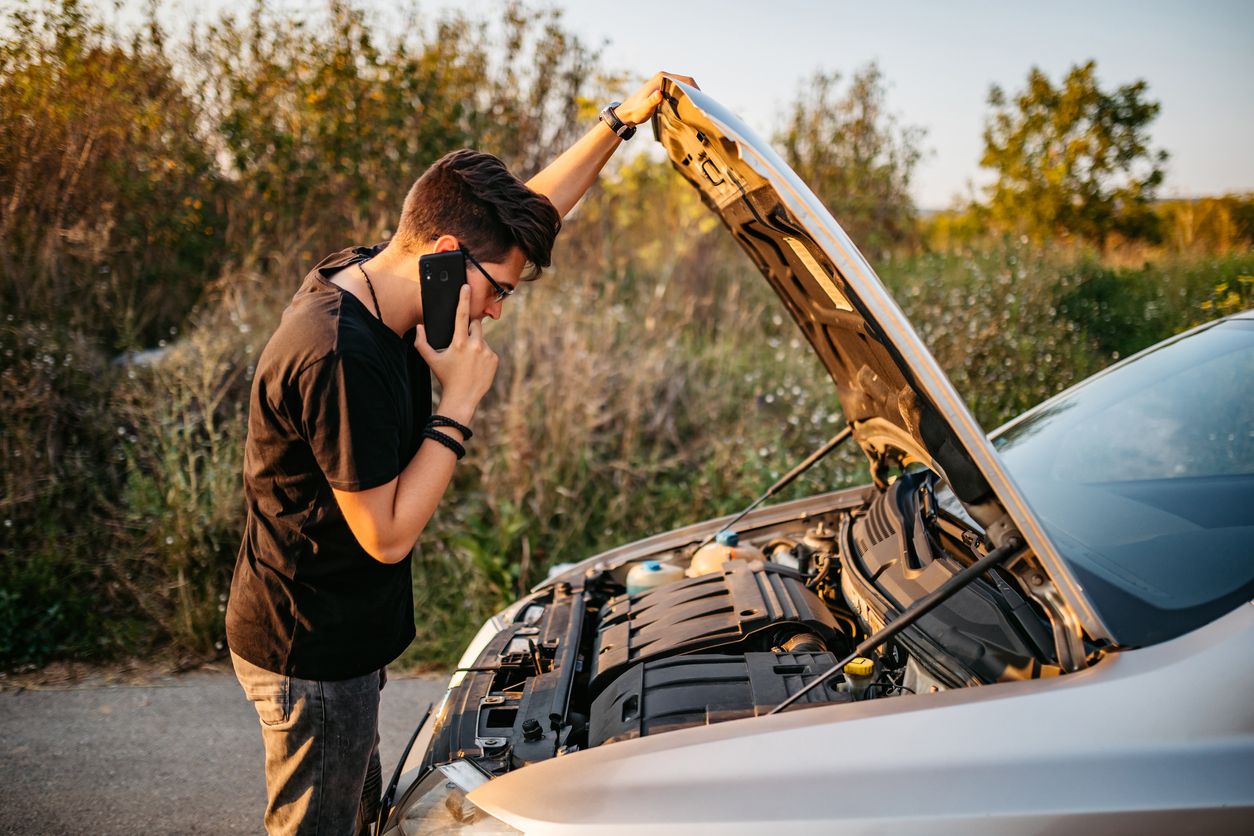
Before your battery actually dies completely, it usually gives you warning signs. Knowing these can save you from getting stranded.
Here are the most common symptoms I always tell friends and family to watch for:
- The engine cranks slowly when you turn the key, like it's struggling to wake up.
- The dashboard lights or headlights dim when you try to start the car.
- You hear a clicking sound but the engine doesn't turn over.
- The check engine light or battery warning light comes on intermittently.
- Your radio, clock, or other electronics reset or act glitchy.
- The battery case looks swollen or bloated, which means it's failed internally.
- You smell a rotten egg scent near the battery, which means it's leaking gas.
If you notice any of these signs, it's better to act now rather than wait for the day your car refuses to start in the middle of rush hour.
Why Car Batteries Die: The Most Common Causes
There are many reasons a car battery can die, but in my experience, most fall into a handful of common categories. Let me break them down so you can figure out what might be happening with your vehicle.
Leaving Lights or Accessories On
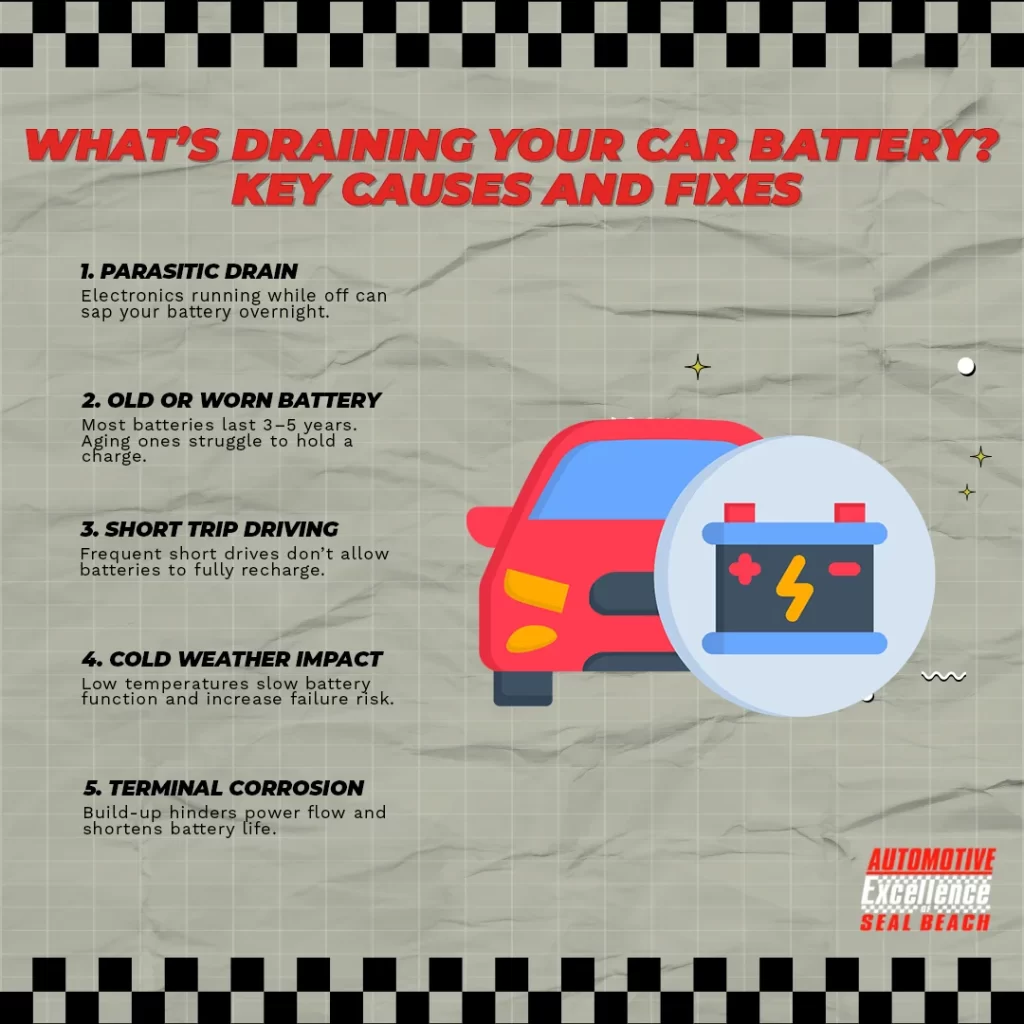
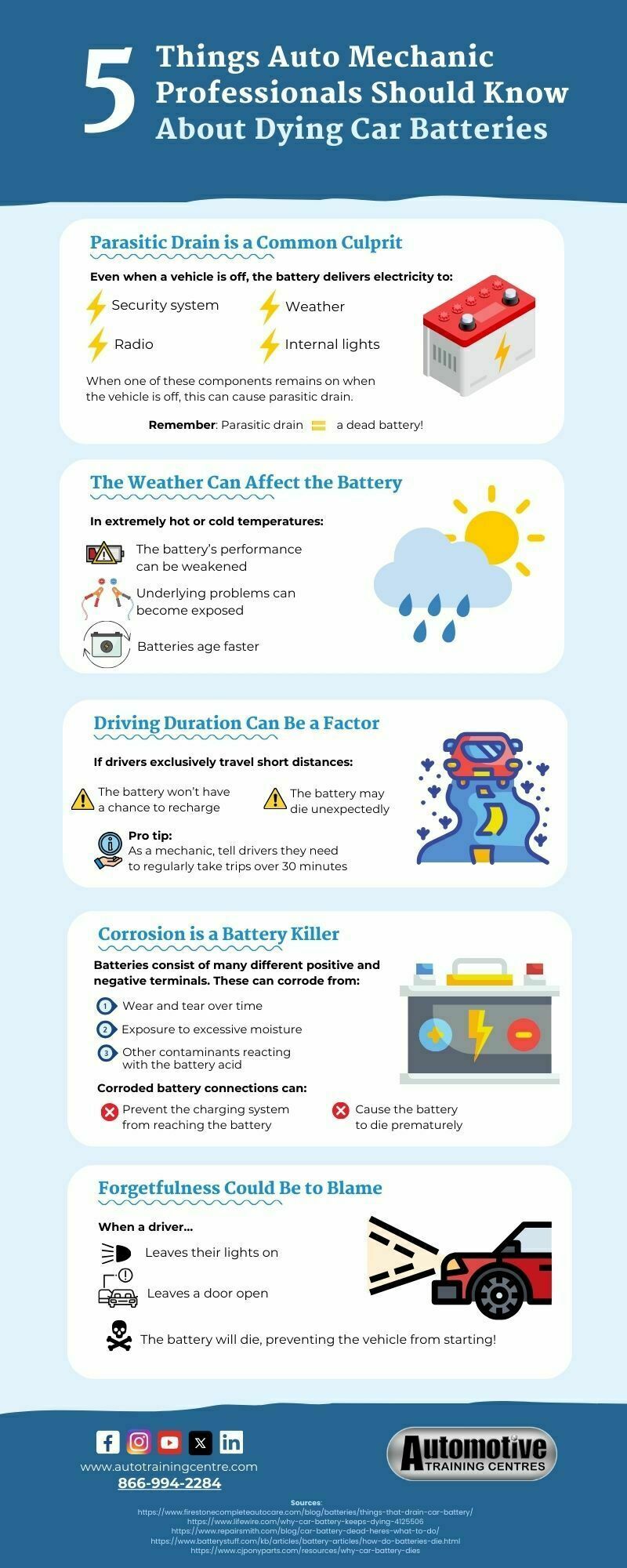
This is the number one cause of dead batteries I see every day. People leave their headlights, dome lights, or phone chargers plugged in overnight. Modern cars are supposed to shut things off automatically, but not all do, especially with aftermarket accessories.
Extreme Temperatures
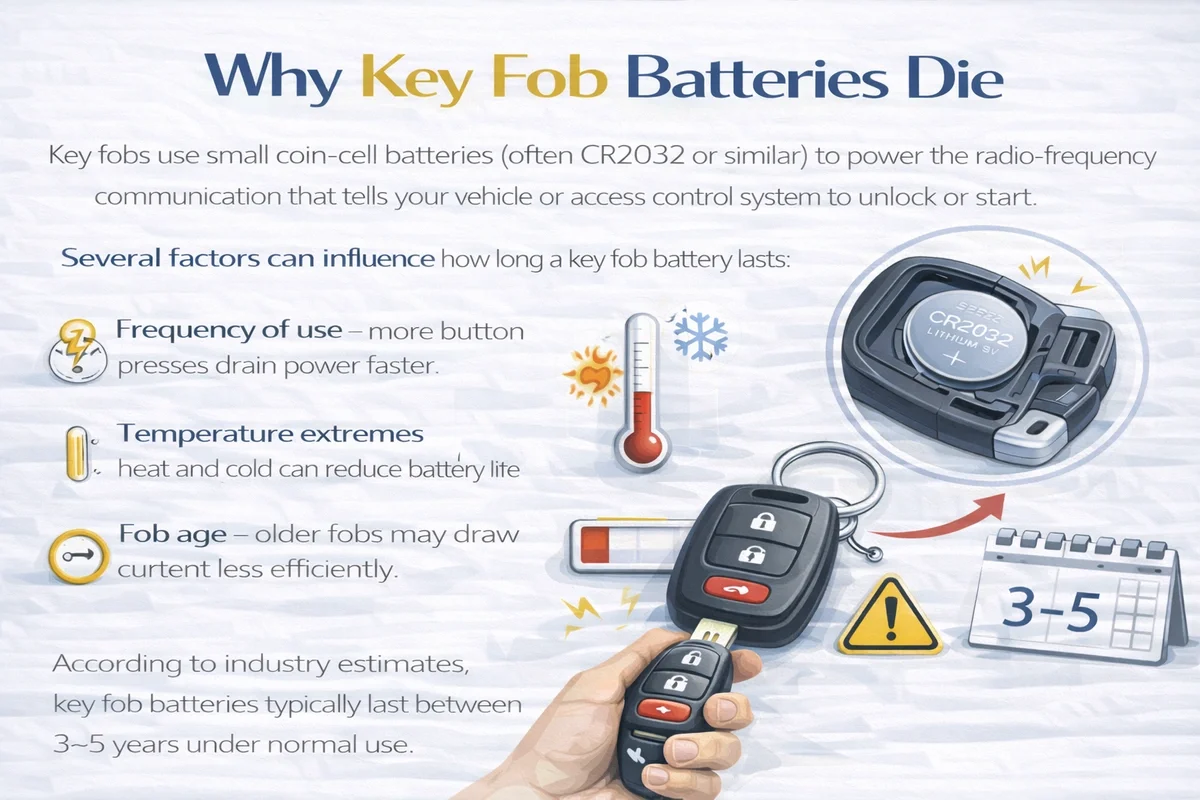
Both very hot and very cold weather are battery killers. Heat causes the battery fluid to evaporate and damages internal plates, while cold slows down the chemical reactions inside the battery, making it weaker. If you live in a place with harsh winters, you've probably noticed older cars struggle more on cold mornings.
Short Trips That Don't Recharge the Battery
If you only drive short distances, the alternator never has enough time to fully recharge the battery. Over time, this leaves the battery in a partially discharged state, which shortens its life.
An Old or Worn-Out Battery
Most batteries last between three and five years. If yours is older than that, it's living on borrowed time. I always recommend checking the manufacturing date on the battery case before buying a used car.
Corroded or Loose Battery Connections
The cables that connect your battery to the rest of the car can loosen or get corroded over time. This prevents the battery from delivering full power, even if the battery itself is fine.
Parasitic Drains
Some electrical components, like the clock, alarm system, or computer memory, draw small amounts of power even when the car is off. Normally this is fine, but if something malfunctions, it can drain the battery overnight.
What to Do When Your Car Battery Dies
When your battery dies, the first thing to feel is usually frustration, but staying calm helps you solve the problem faster. Here's exactly what I do, and what I recommend to anyone who finds themselves in this situation.
Try a Jump Start
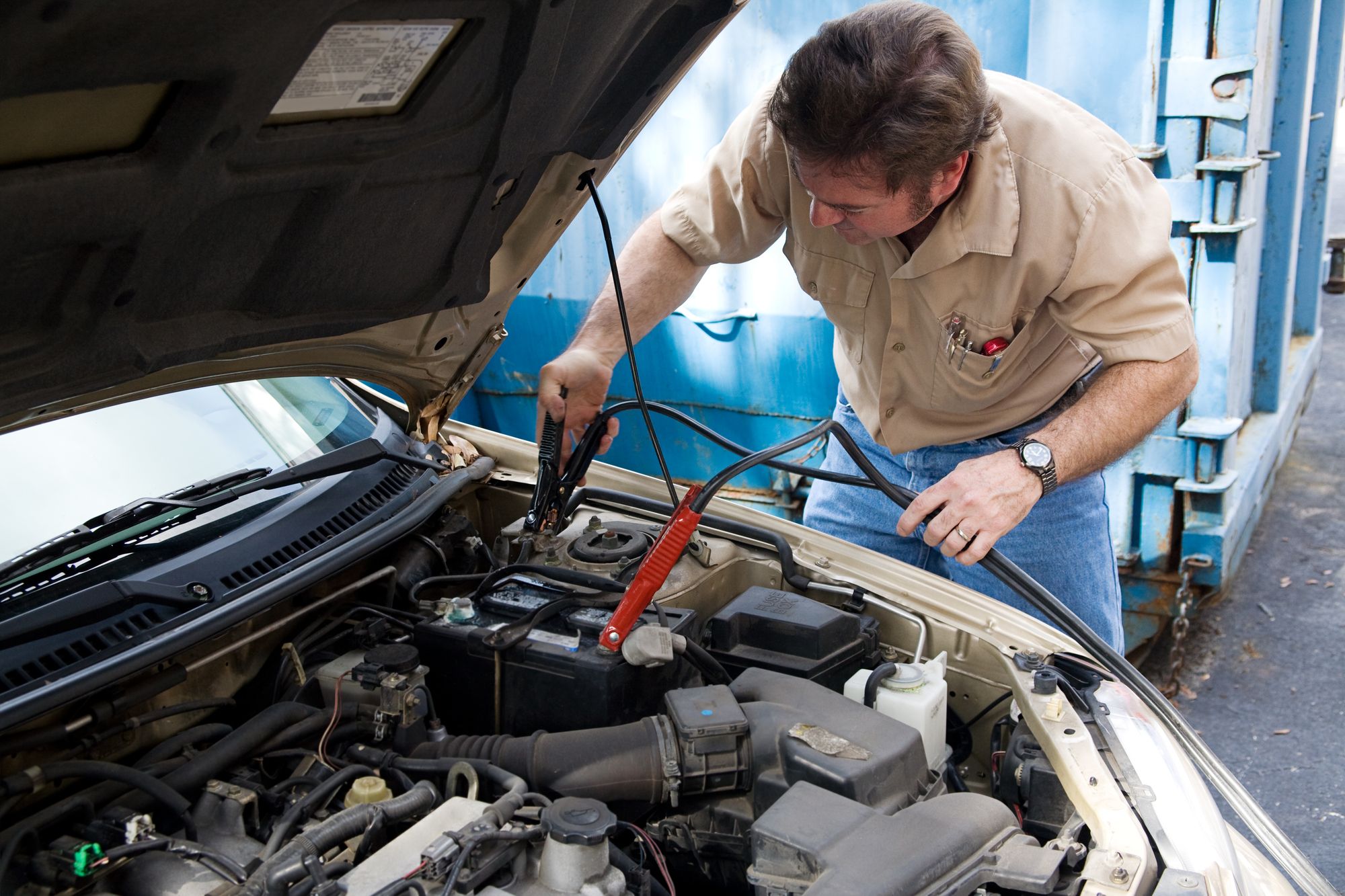
If you have jumper cables and another car available, a jump start is the quickest fix. Connect the positive cable to the positive terminal of the dead battery, then the positive terminal of the good battery. Next, connect the negative cable to the negative terminal of the good battery, and finally to a grounded metal surface on the dead car, not the negative terminal. Start the working car, let it run for a few minutes, then try starting yours. Once your car is running, drive it for at least twenty minutes to let the alternator recharge the battery.
Use a Portable Jump Starter
These compact lithium battery packs are lifesavers, especially if you're parked somewhere and there's no other car around. I keep one in my trunk at all times now because I've learned the hard way that help isn't always nearby.
Call for Roadside Assistance
If you don't have cables or a jump starter, calling for help is the safest option. Many insurance plans and auto clubs offer this service, and it's usually faster and safer than trying to flag down a stranger.
Replace the Battery
If your battery is more than four or five years old and keeps dying, replacement is the smartest move. New batteries aren't that expensive, and they save you from future headaches.
How to Prevent Your Car Battery from Dying Again
Once you've gone through the hassle of a dead battery, you'll do almost anything to avoid it happening again. Here are the habits I swear by after dealing with my own share of dead batteries.
First, drive your car regularly. If you let it sit for more than a week without starting it, the battery will slowly lose charge. Just fifteen minutes of driving once a week is enough to keep things topped off. Second, keep the battery terminals clean. A quick scrub with a wire brush and some baking soda mixed with water removes corrosion and ensures a strong connection. Third, turn off everything before you exit the car. Double-check your headlights, dome lights, and phone chargers.
Fourth, park in a garage when possible during extreme weather. Keeping the car out of direct freezing cold or intense heat helps the battery last longer. Finally, get your battery tested once a year. Most auto parts stores will test it for free, and they'll tell you if it's getting weak before it leaves you stranded.

When a Dead Battery Means Something More Serious
Sometimes, a dead battery is a symptom, not the actual problem. If your battery keeps dying even after you replace it or drive regularly, there might be a deeper issue.
The alternator is the most common culprit. If the alternator isn't working properly, it won't recharge the battery while the engine runs, and the car will eventually die. A bad alternator usually comes with warning lights, flickering lights, or strange smells. Another possible issue is a parasitic drain. If something in your car is drawing power when it shouldn't be, the battery will die overnight. Mechanics can run a parasitic draw test to find this.
I once owned a truck that kept dying every few days, and I kept buying new batteries thinking that was the fix. It turned out a small trunk light had burned out in a way that actually turned it on instead of off. That little mistake cost me three batteries before I finally found the real issue.

Understanding Battery Life and When to Replace It
Batteries don't last forever, and knowing when to replace yours can save you a lot of frustration. On average, a car battery lasts between three and five years, but that can vary based on climate, driving habits, and maintenance.
Hot climates tend to shorten battery life because heat speeds up the chemical breakdown inside the battery. Cold climates put more stress on the battery each time you start the car. If you do a lot of short trips, your battery will likely wear out faster than someone who drives longer distances regularly.
Most batteries have a date code stamped on the case. A code like "C24" means the battery was made in March 2024. If you're shopping for a used car, always check this date so you know what you're getting into.

The Difference Between a Dead Battery and a Bad Alternator
This is one of the most common confusions I hear from people, and it's an important one to understand. A dead battery simply means there's not enough charge left to start the car. A bad alternator means the battery isn't getting recharged while the engine runs.
If your car starts with a jump but dies shortly after, that's a classic sign of a bad alternator. If your car starts with a jump and keeps running fine, the battery was probably just drained. If you're unsure, most auto parts stores will test both your battery and your charging system for free, and that little test can save you hundreds of dollars.
Myths About Car Batteries You Should Stop Believing
There are a lot of old-school tips floating around about car batteries, and some of them are flat-out wrong. Let me clear up a few of the most common ones.
Some people think you need to run your car for a long time to fully recharge the battery after a jump. In reality, a twenty to thirty-minute drive is usually enough to put a decent charge back in. Others believe disconnecting the battery will damage the car's computer. Modern cars can be sensitive to power loss, but a brief disconnect for storage or replacement is usually fine if done correctly.
Another big myth is that idling your car charges the battery as well as driving. Idling does put some charge back, but not nearly as much as actual driving at higher RPMs. If you want to recharge, take it for a spin.
Final Thoughts on Staying Powered and Prepared
A dead battery is more than just an inconvenience, it's a reminder that every part of your car needs care and attention. Over the years, I've learned that the drivers who rarely deal with dead batteries are the ones who stay ahead of problems instead of reacting to them. Simple habits like regular driving, clean terminals, and yearly testing can add years to your battery's life.
If you're stuck right now with a car that won't start, don't panic. Try a jump start if you can, call for help if you can't, and replace the battery if it's old. Once you're back on the road, take an hour to inspect your charging system and make sure the next dead battery isn't lurking around the corner.
For more tips on keeping your car running smoothly, check out my other guides on alternator care, winter driving prep, and roadside emergency kits. Drive safe, stay charged, and never let a dead battery ruin your day.
Frequently Asked Questions
How long does a car battery usually last?
Most car batteries last between three and five years, depending on climate, driving habits, and maintenance. Regular testing can help you know when it's time for a replacement.
Can a dead battery come back to life?
Sometimes a deeply discharged battery can be recharged with a slow charger, but most batteries that are completely dead won't hold a charge for long. Replacement is usually the best option.
Will idling my car recharge the battery?
Idling puts a small charge back into the battery, but driving at higher RPMs recharges it much faster. A thirty-minute drive is usually better than an hour of idling.
What drains a car battery when the car is off?
Common culprits include interior lights, phone chargers, a malfunctioning alarm system, and computer modules drawing current. A mechanic can run a test to find the source.
Is it safe to jump-start a car in the rain?
Yes, jump-starting in light rain is generally safe, but avoid doing it in heavy storms or if the battery is visibly leaking or cracked. Safety should always come first.
Conclusion
A dead car battery stops your engine from starting, disables your electrical systems, and can leave you feeling stuck, but it's almost always a solvable problem. By understanding the signs of a weak one, knowing the common causes, and learning how to jump-start safely, you can turn a frustrating situation into a quick fix. Keep jumper cables or a portable jump starter in your car, test your battery once a year, and replace it when it's old. A little preparation goes a long way toward keeping you confidently on the road. Drop a comment below if you've ever been stranded by a dead battery, and share this guide with anyone who could use a little peace of mind.