A healthy car battery needs about 12.6 volts to start, dropping to 10–11 volts during cranking before the alternator takes over. If your battery reads below 12.4 volts or the cranking voltage dips under 9.6, it’s time to pay attention before you end up stranded on a chilly morning.
After spending years working on vehicles, I can tell you that voltage is the silent hero under your hood. Most drivers never think about their battery until something goes wrong, and by then they’re stuck turning a key to nothing. Understanding what voltage your car battery needs to start isn’t just for mechanics; it’s for you, the everyday driver who wants to avoid that awful click-click-click moment. Think of it like checking the air in your tires. It only takes a minute, and it saves you from a world of hassle. Let me walk you through everything I’ve learned, from what numbers to look for, to how weather, age, and even short trips can quietly drain your battery’s strength.
Understanding Car Battery Voltage Basics
Before we get into the exact numbers, it helps to understand what your battery is actually doing. A car battery isn’t just a box of power; it’s a chemical storage unit that delivers a quick burst of energy to crank your engine. That energy is measured in volts, and the standard automotive battery is a 12-volt system. But here’s the thing: a fully charged 12-volt battery doesn’t sit at exactly 12 volts. It sits a little higher because of how lead-acid chemistry works.
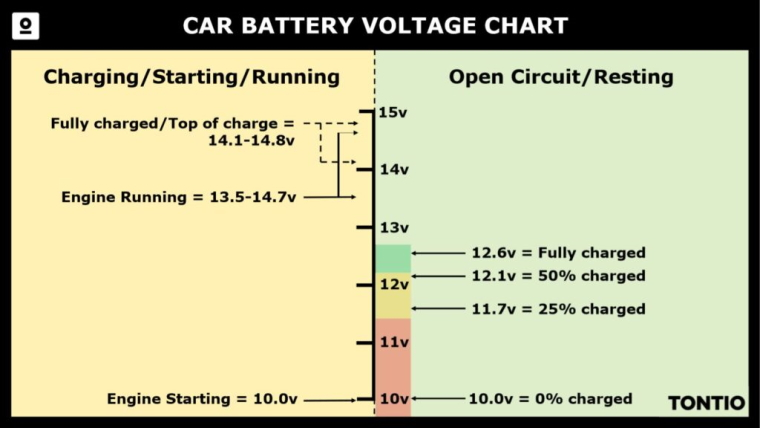
When the engine is off and the battery has been resting for a few hours, a healthy battery should read between 12.4 and 12.7 volts. That resting voltage is your baseline, the snapshot of how much juice is actually stored. If you check it right after driving, you’ll see a higher reading because the alternator has been topping it off. Give it time to settle, and you’ll get the true story.
From my own experience, I’ve learned that drivers often get fooled by a surface-level charge. A battery can show 12 volts briefly and still be on its last legs. That’s why voltage testing matters so much, and why knowing the difference between resting voltage, cranking voltage, and charging voltage can save you hundreds in unnecessary repairs.
What Voltage Does a Car Battery Need to Start
Here’s the part most people care about: the actual voltage needed to fire up your engine. The magic number is 12.6 volts or higher at rest, and during cranking, the voltage should stay above 10 volts. If you hook up a multimeter and watch the reading while someone turns the key, you’ll see it dip, then recover once the engine is running.
Think of it like blowing up a balloon. You need a certain amount of air pressure before the balloon pops into shape. Your battery needs that stored voltage to push enough current through the starter motor. When cranking voltage drops below 9.6 volts, the starter struggles, and the engine either cranks slowly or doesn’t crank at all. That’s the danger zone.
I’ve tested hundreds of batteries over the years, and I can tell you the pattern is always the same. A weak battery shows its age during cold mornings because the chemical reactions slow down. That’s why a battery that worked fine all summer suddenly leaves you stranded in January. Cold weather doesn’t kill it; it just exposes the weakness that was already there.
Resting Voltage vs Cranking Voltage vs Charging Voltage
These three terms get thrown around a lot, but they mean very different things. Let me break them down simply.
Resting voltage is what your battery reads when nothing is turned on and it’s been sitting for a few hours. This is the true state of charge.
Cranking voltage is what you see while the starter is turning the engine. It should dip but stay above 10 volts for a healthy battery.
Charging voltage is what the alternator pushes back into the battery while the engine runs. It usually sits between 13.7 and 14.7 volts. Anything outside that range means your alternator might be overcharging or undercharging, both of which damage your battery over time.
From a practical standpoint, I always tell people to test in this order: check resting voltage first, then cranking voltage, then charging voltage. Each one tells you a different part of the story. Resting tells you if it’s charged. Cranking tells you if it can deliver power. Charging tells you if your alternator is doing its job. Skip any of them, and you’re guessing.
How Temperature Affects Battery Voltage
Temperature is one of the biggest factors people overlook. A battery that tests perfect at 70°F can feel half-dead at 20°F. That’s because cold slows the chemical reactions inside the battery, making it harder to deliver the same current.
When it’s hot, batteries actually perform better in the short term, but heat accelerates internal corrosion and shortens overall lifespan. So there’s a trade-off. Hot climates kill batteries slowly. Cold climates expose weak batteries quickly.
I’ve seen this play out in real life many times. A customer brings in a car that wouldn’t start on a frosty morning. We test the battery, and it reads 12.1 volts, which sounds okay, but it’s too weak to crank in the cold. The fix is simple: charge it up or replace it. The lesson is to test your battery before winter hits, not after you’re stuck in a parking lot with a dead engine.
How to Test Your Car Battery Voltage at Home
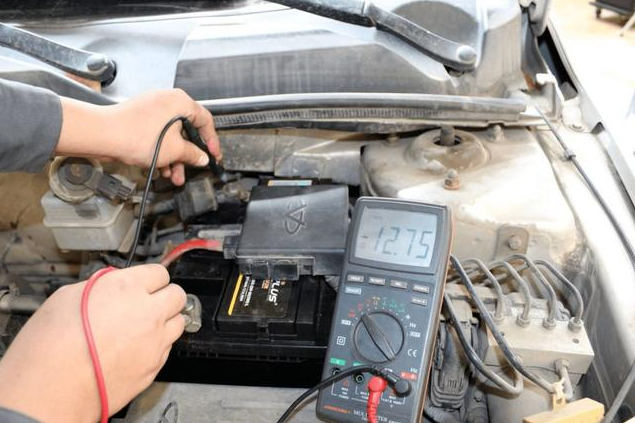
You don’t need to be a mechanic to check your battery. All you need is a basic digital multimeter, which costs about the same as a nice dinner for two. Here’s how I walk people through it.
Turn off the car and remove the key. Pop the hood and locate the battery. Touch the red multimeter probe to the positive terminal and the black probe to the negative terminal. Read the voltage on the screen. That’s it.
If you want to test cranking voltage, have a friend turn the key while you watch the meter. It should drop briefly but stay above 10 volts. If it plunges below 9.6, your battery is weak or your starter is drawing too much power.
I always recommend testing once a month, especially if your car sits for long periods. Batteries lose charge slowly even when not in use, and a little maintenance goes a long way. Think of it like brushing your teeth. It’s a small habit that prevents big problems.

Signs Your Battery Voltage Is Too Low
Voltage drops don’t happen silently. Your car gives you warning signs; you just have to know what to listen for.
The first sign is slow cranking. If the engine sounds like it’s turning over lazily, that’s low voltage. The second sign is dim headlights, especially at idle. The third is a clicking sound when you turn the key but no engine turnover. That clicking is the solenoid trying to engage without enough power to do its job.
In my experience, dashboard warning lights also give clues. The battery light usually means the charging system is having trouble, not just the battery. If that light comes on while driving, your alternator may not be keeping up, and your battery is slowly draining as you drive.
Another subtle sign is electrical gremlins. Power windows moving slowly, radio cutting out, or interior lights flickering. These are all hints that voltage is dropping below the threshold your accessories need.
What to Do If Your Battery Voltage Is Low
So you’ve tested and the numbers are low. Don’t panic. There are a few ways to handle it depending on what you find.
If the resting voltage is between 12.0 and 12.4, your battery is just undercharged. A good drive of 30 minutes or a battery charger can bring it back. If the voltage is below 12.0, the battery is deeply discharged and may need a slow charge or replacement. If it’s below 11.8 and won’t hold a charge, it’s likely sulfated or damaged internally, meaning replacement is the smart move.
I always tell people not to jump-start a deeply discharged battery too often. Jump-starting gives a quick burst but doesn’t fix the underlying problem. It’s like putting a band-aid on a leaking pipe. It works for a minute, but the leak comes back.
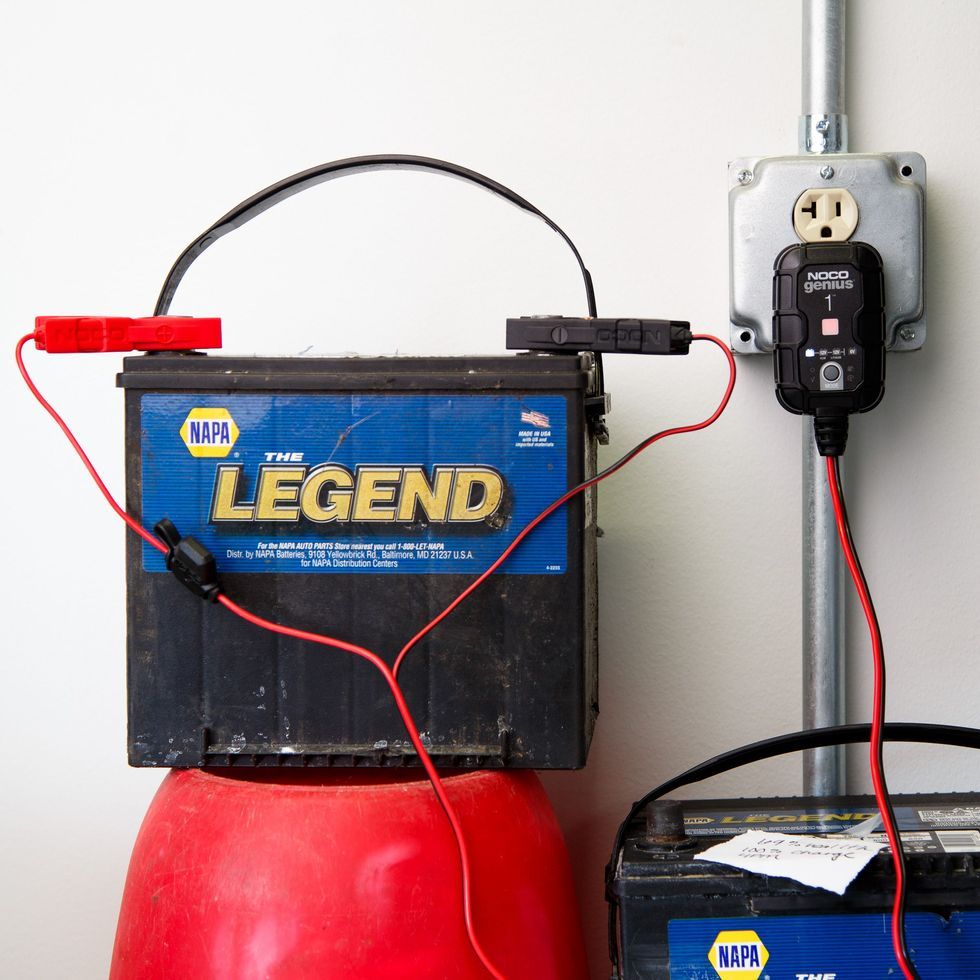
If you’re dealing with a weak battery, invest in a quality battery maintainer, especially if you don’t drive every day. It keeps the voltage topped off and extends battery life by months, sometimes years.
How Long Does a Car Battery Hold Proper Voltage
A healthy battery holds proper voltage for years if treated well. Most last between three and five years, though I’ve seen some go seven with great care. The key factors are heat exposure, driving habits, and maintenance.
Short trips are the silent killer. When you start your car, the battery uses a big burst of energy. If you drive only a mile or two, the alternator doesn’t have enough time to fully recharge what was used. Over time, that shortfall adds up, and the battery stays chronically undercharged.
I learned this the hard way with my old pickup. I used it just for weekend errands, and within two years, the battery was toast. The lesson? If you drive short distances often, take a 20-minute highway drive once a week to give the battery a proper charge cycle.

Common Myths About Car Battery Voltage
There’s a lot of bad information out there, so let me clear up a few myths.
First, a battery showing 12 volts is not fully charged. It needs 12.6 or higher. Second, idling your car does not fully recharge the battery. The alternator is most efficient at higher RPMs. Third, you don’t need to drive every day to keep a battery healthy, but you do need to either drive long enough or use a maintainer.
Another myth is that turning off the engine while idling saves gas but kills the battery. In reality, starting a car uses about the same amount of energy as idling for 10 seconds, so shutting off for short stops saves gas without draining the battery. It’s the long-term storage without driving that kills batteries.
Tips for Maintaining Proper Battery Voltage
Here are a few habits I’ve picked up over the years that really make a difference.
Keep the terminals clean. Corrosion acts like a dam, blocking the flow of current. A quick scrub with a wire brush and some baking soda water keeps everything flowing. Check the resting voltage monthly. It takes 30 seconds and tells you everything. Avoid deep discharges. Leaving lights on or accessories plugged in overnight can drop voltage below the recovery threshold. Drive regularly and for long enough to let the alternator do its job.
These simple steps have saved me from battery trouble more times than I can count. They’re easy, cheap, and effective. Think of them as basic hygiene for your car.
When to Replace Your Battery Based on Voltage
Voltage alone isn’t the only sign, but it’s a great place. If your resting voltage is consistently below 12.2 even after charging, replacement is likely due. If cranking voltage drops below 9.6 under load, the battery can’t do its job. If your battery is more than four years old and showing signs of weakness, don’t wait for failure.
I always suggest replacing batteries proactively rather than reactively. Waiting until you’re stranded is stressful, dangerous in some cases, and usually happens at the worst possible time. Swap it out on your schedule, not your car’s.
Frequently Asked Questions
What voltage is too low to start a car?
If your battery voltage drops below 12.0 volts at rest, it’s too weak to reliably start most vehicles. During cranking, anything below 9.6 volts means the starter isn’t getting enough power, and the engine likely won’t turn over.
Can a car start with 11.8 volts?
It might, but it’s not reliable. At 11.8 volts, the battery is deeply discharged and may crank slowly or not at all, especially in cold weather. It’s a sign you need to charge or replace the battery soon.
What voltage should a car battery show while driving?
While driving, a healthy charging system should show between 13.7 and 14.7 volts. This means the alternator is properly charging the battery. Anything outside this range indicates a problem with the alternator or voltage regulator.
How long should a car battery hold 12.6 volts?
A fully charged battery should hold 12.6 volts for weeks without use if it’s healthy. If it drops quickly, there may be a parasitic drain somewhere in the electrical system, or the battery is aging and losing its capacity.
Is 12.2 volts okay for a car battery?
12.2 volts means the battery is about 50 percent charged. It can still start a car in warm weather, but it’s considered low and should be charged to avoid damage over the long run.
Your battery is the heart of your car’s electrical system, and knowing its voltage is like knowing your own blood pressure. It’s a simple number that tells you a lot about the health of something you rely on every day. Take a few minutes each month to peek under the hood, test the voltage, and keep those terminals clean. Trust me, your future self will thank you when you’re not stuck in a parking lot at midnight waiting for a jump. Stay proactive, stay charged, and your car will keep starting when you need it most. If you found this helpful, share it with a friend or drop a comment below with your own tips and experiences.