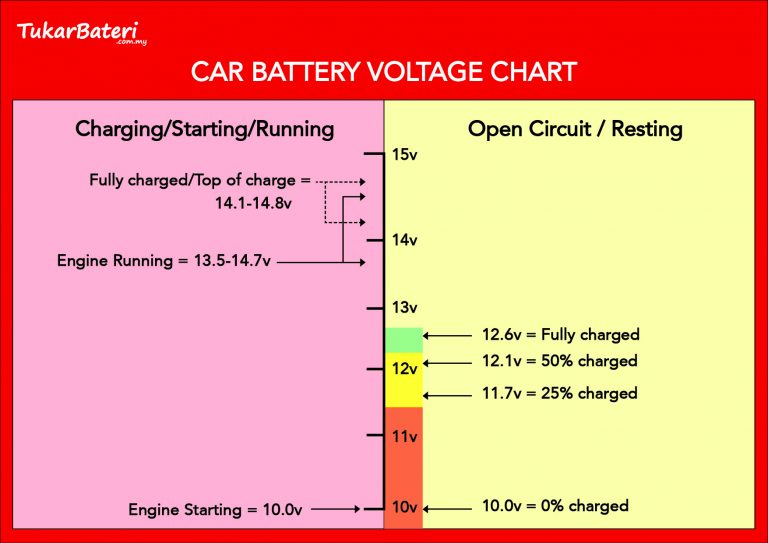
A typical car battery measures around 12.6 volts when fully charged, dropping to roughly 10 volts while cranking the engine.
Understanding car battery voltage is one of the most practical skills any driver can learn. Over the years, I've watched countless people get stranded simply because they didn't know what their battery voltage really means. Think of it like a fuel gauge for your car's electrical system, just a little more technical. When you know what those numbers represent, you can spot problems early, save money on repairs, and avoid those frustrating mornings when your car refuses to start. Whether you're a weekend DIYer or just someone who wants to take better care of your vehicle, this guide will walk you through everything you need to know about car battery voltage in plain, simple language.
What Is Car Battery Voltage and Why Does It Matter
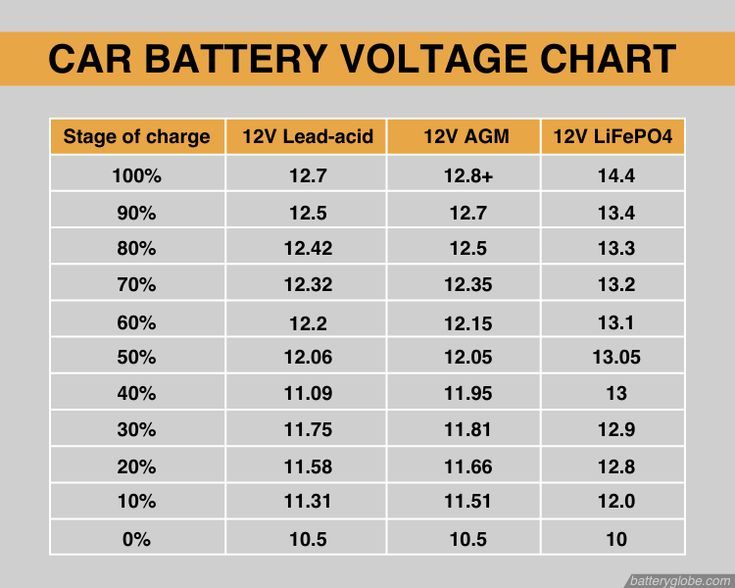
Car battery voltage refers to the electrical pressure your battery produces to power your vehicle. Most cars run on a 12-volt system, but the actual resting voltage of a fully charged battery sits closer to 12.6 volts. This extra bit of voltage exists because the battery needs enough stored energy to handle demanding tasks like starting the engine, running lights, and powering onboard computers.
Voltage matters because every electrical component in your car depends on it. If voltage drops too low, your starter motor struggles, your lights dim, and your electronics behave oddly. On the flip side, if voltage rises too high, it can fry sensitive circuits. So keeping your battery voltage in a healthy range keeps your entire car happy.
I've personally tested batteries in everything from sedans to trucks, and the story is always the same. The battery voltage tells you the battery's state of charge, its overall health, and whether your alternator is doing its job properly.
The Standard Voltage of a Car Battery Explained
A standard car battery is made up of six cells, each producing roughly 2.1 volts when fully charged. Multiply that by six, and you get the familiar 12.6 volts. Even though we call it a 12-volt battery, the real resting voltage is slightly higher.
Here is a simple breakdown of what you can expect from a healthy battery:
- Resting voltage (engine off, no load): 12.4 to 12.7 volts
- Cranking voltage (engine starting): 9.5 to 10.5 volts
- Running voltage (engine on, alternator charging): 13.7 to 14.7 volts
Think of resting voltage as the battery's natural state, like a person sitting quietly and breathing normally. Cranking voltage is the battery working hard, like running a sprint. Running voltage is the battery getting topped off, like taking a sip of water after that sprint.
What Voltage Should a Car Battery Have When the Car Is Off
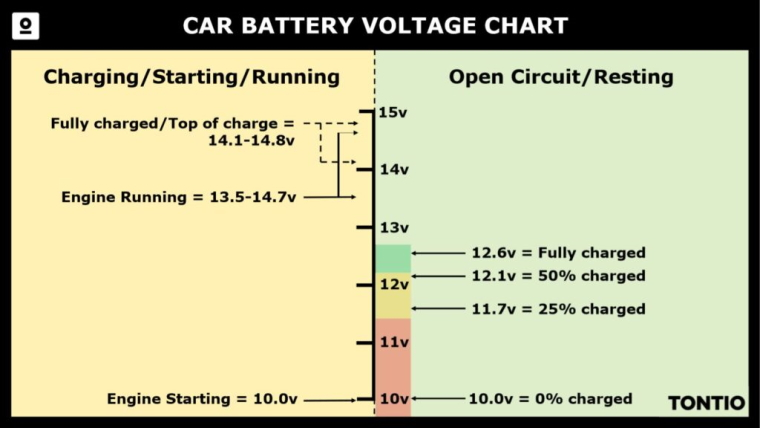
When your car is off, a healthy battery should read between 12.4 and 12.7 volts. If you measure it and see 12.7 volts, you're looking at a fully charged battery. If it reads around 12.4 volts, the battery is about 75 percent charged, which is still fine for short-term use.
Anything below 12.0 volts usually means the battery is deeply discharged. I've had people call me panicking because their battery read 11.8 volts after sitting for a week. In most cases, that points to either a dying battery or something draining power while the car sits, like a stuck relay or an aftermarket accessory.
Here's a quick reference guide for resting voltage:
- 12.6 volts or higher: fully charged
- 12.4 volts: about 75 percent charged
- 12.2 volts: about 50 percent charged
- 12.0 volts or lower: discharged and needs attention
What Happens to Voltage When the Car Is Running
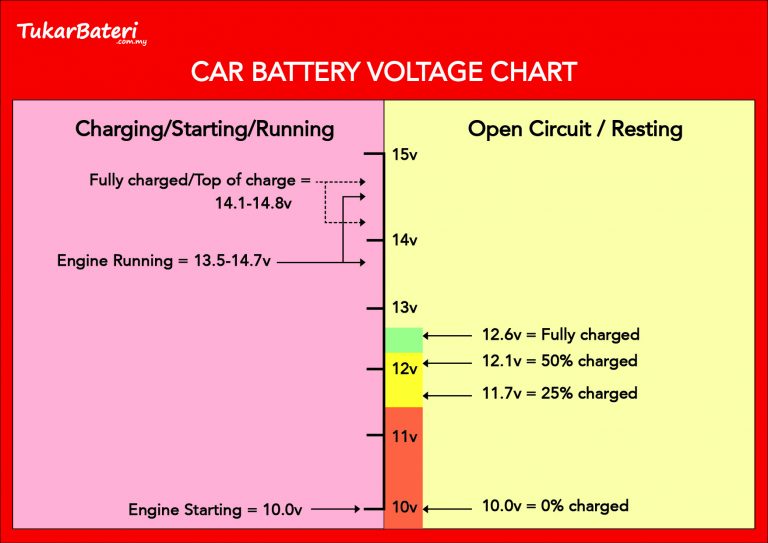
When you start the engine, the alternator takes over and pushes voltage back into the battery while also powering the car's electrical systems. A properly working alternator should produce between 13.7 and 14.7 volts while the engine runs.
If your voltage gauge or multimeter shows less than 13.5 volts while the engine is running, the alternator might be undercharging the battery. If it shows more than 15 volts, the alternator could be overcharging, which often points to a bad voltage regulator. Both situations can shorten battery lifespan and damage electronics.
Think of the alternator like a water pump filling a bucket. Too little flow, and the bucket never fills. Too much flow, and the bucket overflows. You want steady, controlled pressure.
How to Measure Car Battery Voltage Safely
Measuring battery voltage is one of the easiest tests you can do at home. You only need a basic digital multimeter, which you can find at any auto parts store for a reasonable price.
Follow these steps for an accurate reading:
- Turn off the engine and all accessories.
- Wait at least 15 minutes to let the battery settle into its resting state.
- Set your multimeter to DC volts, usually the 20V setting.
- Connect the red probe to the positive terminal, marked with a plus sign.
- Connect the black probe to the negative terminal, marked with a minus sign.
- Read the voltage on the display.
I always recommend wearing gloves and safety glasses when working around batteries. Even though car batteries only produce 12 volts, they can deliver a lot of current, and the acid inside can splash if mishandled.
What Voltage Indicates a Bad Car Battery
A bad battery often reveals itself through low voltage readings, especially under load. If your resting voltage stays below 12.2 volts even after a full charge, the battery is likely on its way out. If the voltage drops below 9.6 volts while cranking the engine, that battery is no longer strong enough to start the car reliably.
Other signs that voltage problems point to a failing battery include:
- The engine cranks slowly or makes a clicking sound
- Lights dim significantly when you turn the key
- The battery warning light stays on while driving
- Electronics reset or flicker unexpectedly
In my experience, most car batteries last between four and six years. If your battery is in that age range and the voltage keeps dropping, replacement is usually the smartest move.

Common Causes of Low Car Battery Voltage
Low voltage doesn't always mean the battery is bad. Sometimes the problem lies elsewhere. Here are some common causes I've seen over the years:
- Parasitic drain from accessories that keep drawing power when the car is off
- A weak alternator that fails to recharge the battery during driving
- Corroded battery terminals that block proper current flow
- A loose or damaged serpentine belt that prevents the alternator from spinning
- Extreme temperatures that affect battery chemistry
A simple way to test for parasitic drain is to disconnect the negative terminal and connect an ammeter between the terminal and the cable. A draw above 50 milliamps usually means something is pulling power that shouldn't be.
How Temperature Affects Car Battery Voltage
Temperature plays a huge role in battery performance. Cold weather slows down the chemical reactions inside the battery, which reduces its ability to deliver voltage and current. That is why cars often struggle to start on freezing mornings.
On the other hand, hot weather speeds up chemical reactions but also speeds up corrosion and water loss inside the battery. In both cases, voltage can drop, and lifespan can shorten.
Think of your battery like a runner. In cold weather, the muscles tighten and slow down. In extreme heat, the runner tires faster and needs more recovery. Either way, performance drops.

How to Maintain Proper Car Battery Voltage
Keeping your battery voltage in a healthy range is easier than most people think. A little routine care goes a long way.
Try these simple maintenance tips:
- Drive your car regularly to allow the alternator to recharge the battery
- Keep the battery terminals clean and free of corrosion
- Check the voltage monthly with a multimeter
- Avoid leaving lights or accessories on when the engine is off
- Use a battery maintainer if you store the car for long periods
I personally keep a small battery maintainer plugged in during winter for any vehicle I don't drive daily. It costs pennies in electricity and can double the life of your battery.
Frequently Asked Questions About Car Battery Voltage
Is a car battery 12 volts or 12.6 volts?
A car battery is technically a 12-volt battery, but a fully charged one actually reads 12.6 volts when at rest. That extra voltage comes from the six individual cells inside the battery, each producing about 2.1 volts.
At what voltage is a car battery dead?
A car battery is generally considered dead or deeply discharged when its voltage drops below 11.9 volts at rest. At that point, it usually cannot start the engine and may need a jump or replacement.
Can a car battery show 14 volts?
Yes, a car battery can show around 14 volts while the engine is running. That reading means the alternator is actively charging the battery, which is normal and healthy.
How many volts should a car battery lose overnight?
A healthy battery typically loses about 0.01 to 0.02 volts overnight. If you notice a drop of more than 0.1 volts overnight, something might be draining the battery or the battery could be weakening.
Does higher voltage mean a stronger battery?
Not necessarily. A higher voltage reading just means the battery has more stored charge at that moment. Strength comes from cranking amps and overall capacity, not voltage alone.
Can you overcharge a car battery by driving too much?
You can't overcharge a battery by driving too much because the alternator regulates voltage. However, a faulty voltage regulator can allow the alternator to overcharge the battery, which can cause damage.
Conclusion
Car battery voltage is one of those small details that can save you from big headaches. A healthy resting voltage sits around 12.6 volts, cranking voltage drops to about 10 volts, and running voltage rises to roughly 14 volts. Knowing these numbers helps you spot problems early, extend battery life, and keep your car running smoothly. If you take a few minutes each month to check your voltage, you will stay ahead of most battery-related issues before they leave you stranded. Pick up a basic multimeter, make it part of your car care routine, and you'll never have to guess about your battery again.