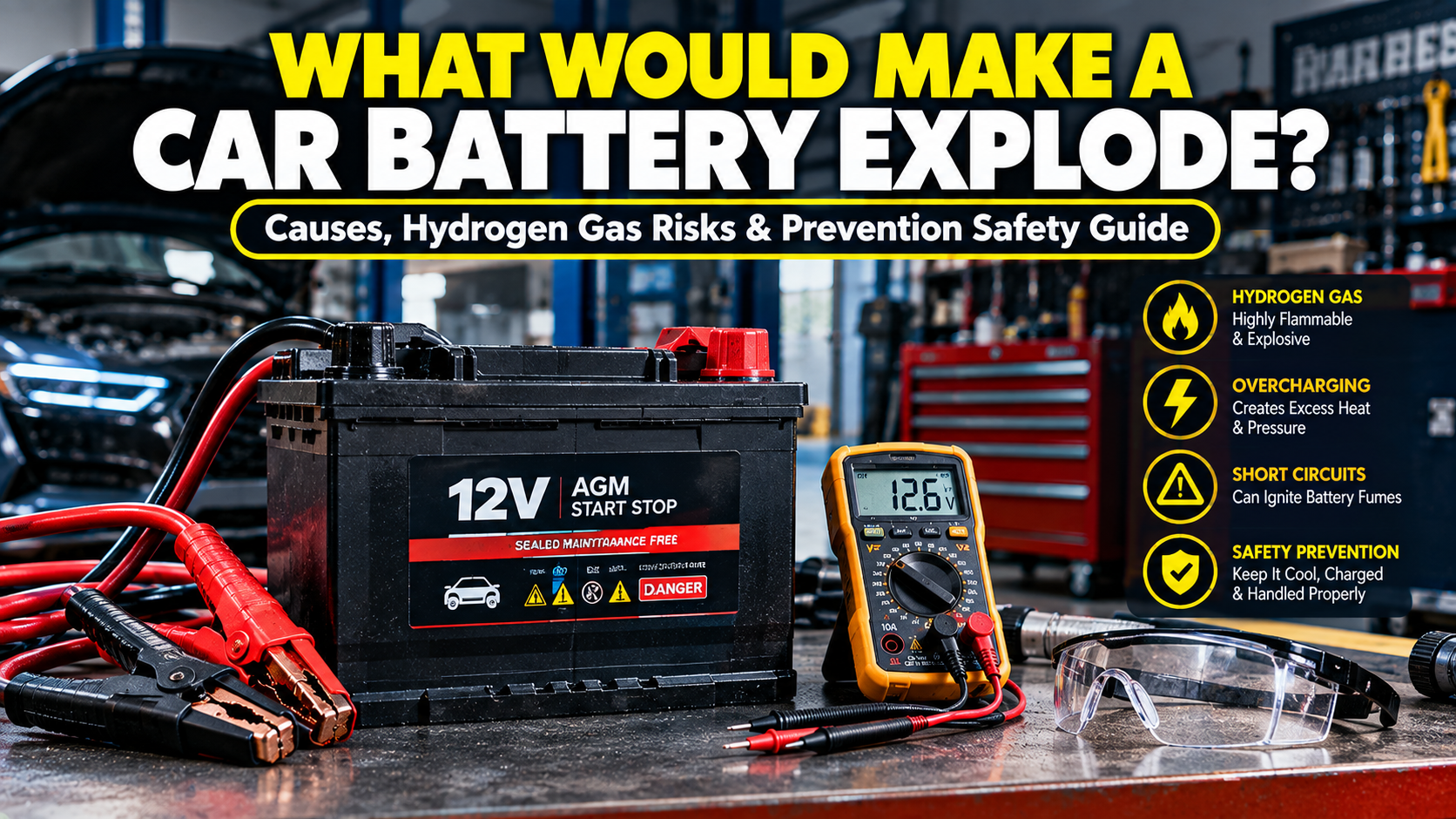
A car battery can explode when hydrogen gas builds up inside the case and meets a spark, flame, or extreme heat, causing a sudden and violent burst.
Most people never think twice about the box sitting under their hood until something goes wrong. I've popped the hood on hundreds of cars over the years, and I've learned that a car battery is basically a controlled chemical reaction with a temper. When that control slips, the results can be scary and even dangerous. This guide walks you through everything that can make a car battery explode, from hidden gases to simple mistakes people make every day. By the end, you'll know how to spot the warning signs, handle your battery safely, and avoid becoming the next cautionary tale at your local repair shop.
How a Car Battery Actually Works
Before we dive into the boom factor, it helps to understand what is going on inside that heavy black box. A standard 12-volt car battery is a lead-acid battery made up of six cells. Each cell contains lead dioxide, sponge lead, and a mixture of sulfuric acid and water called electrolyte.
When you turn the key or push the start button, the battery sends a burst of electrical energy to the starter motor, which cranks the engine. Once the engine is running, the alternator takes over and recharges the battery. This back and forth happens thousands of times over the life of the battery.
While all of this is happening, a small chemical reaction is also taking place. Water in the electrolyte breaks down into hydrogen and oxygen gases. Under normal conditions, these gases escape slowly through tiny vents. The problem starts when something disrupts this balance and lets those gases pool up or ignite.

The Chemistry Behind a Battery Explosion
The real culprit behind most battery explosions is hydrogen gas. Hydrogen is extremely flammable, and when it builds up in a confined space like a battery case, it only takes a tiny spark to set it off.
Here is the basic chain of events:
- The battery charges, especially if the voltage is too high
- Electrolysis splits water into hydrogen and oxygen
- These gases collect inside the battery cells
- A spark, flame, or high heat triggers combustion
- The pressure builds and the case ruptures violently
This is why a car battery does not just catch fire like a piece of paper. It actually detonates. The casing is sealed, so when the gas ignites, it has nowhere to go except out, often with a loud pop and a spray of corrosive acid.
Think of it like shaking up a soda can and then cracking the seal. The pressure has to release, and when it does, things get messy fast.
Common Causes of a Car Battery Explosion
There are several everyday situations that can lead to a battery explosion. Some are mechanical failures, while others come down to human error.
Overcharging the Battery
Overcharging is one of the top causes. When a battery receives too much voltage from a faulty alternator or an incorrect charger, the electrolyte starts to boil. This speeds up gas production and raises the internal pressure. In many cases, the vent caps cannot release the gas fast enough.
If you have ever smelled a strong sulfur or rotten egg odor coming from under the hood, that is hydrogen sulfide mixed with other gases. That smell is a warning sign that pressure is building.
Jump Starting Mistakes
Jump starting is one of those tasks that seems simple until you mix up the cables. Connecting the positive and negative clamps the wrong way can cause a massive electrical surge. This surge can spark inside the battery, igniting any hydrogen gas that is hanging around.
Even connecting in the right order can be risky if the battery is already damaged or leaking gas. That little spark you get when you hook up the final clamp can be more than enough to cause a blow-up.
I learned this the hard way years ago when a buddy handed me a set of jumper cables and said, "Just hook it up." I connected the positive cables first like the manual said, then went for the negative. The moment the negative touched the chassis, there was a loud pop and a flash. Luckily, the battery just vented gas instead of exploding, but my heart jumped straight into my throat.
Physical Damage and Cracks
If a battery case gets cracked from an impact, a pothole, or even from being installed too tightly, the internal structure can shift. This can cause the lead plates to touch and create a short circuit. A short can spark, boil the electrolyte, and build pressure inside the already weakened case.
Batteries are tougher than they look, but they are not indestructible. A hard hit from a wrench during installation or a cracked mounting bracket can be all it takes to start a chain reaction.
Extreme Heat
Heat and batteries are not friends. High under-hood temperatures, especially in summer or after long drives, can speed up the chemical reactions inside the battery. This leads to more gas and more pressure.
In hot climates, batteries tend to have shorter lifespans and a higher chance of swelling or venting. If you live somewhere like Arizona or Texas, you already know that summer heat can do a number on a car.
Manufacturing Defects
Sometimes the problem is not anything you did. Internal defects, weak welds, or poor quality control can leave a battery prone to failure. A weak spot in the case or a faulty valve can allow gas to escape into the engine bay, where any spark from the alternator or a loose wire can ignite it.
This is rare, but it does happen, and it is one of the reasons buying a battery from a reputable brand with a solid warranty matters.
Sparks Near the Battery
This one sounds obvious, but it catches people off guard all the time. If you are working under the hood with a wrench and accidentally create a spark near the battery or a vent hose, that spark can ignite hydrogen gas. It only takes a fraction of a second.
Smoking near a battery is a terrible idea for the same reason. Even a cigarette ember can light off a cloud of hydrogen that built up around the terminals.
Warning Signs Your Battery Might Be at Risk
Batteries rarely blow up without warning. There are usually some clues that things are going wrong inside. Here is what to watch for:
- A bulging or swollen battery case
- A strong sulfur or rotten egg smell
- Corrosion buildup around the terminals
- Visible cracks or leaks on the case
- Clicking or hissing sounds coming from the battery
- The battery feels hot to the touch after driving
If you spot any of these signs, it is time to take action before the situation gets worse. A swollen battery is a ticking time bomb and should be replaced as soon as possible.
How to Handle a Car Battery Safely
Working around a car battery is not complicated, but it does require a little respect. Here are some habits that can keep you safe:
- Wear safety glasses and gloves whenever you handle a battery
- Keep sparks, flames, and cigarettes far away from the engine bay
- Always connect jumper cables in the correct order, positive first, negative last
- Make sure the battery is securely mounted to avoid vibration damage
- Check the terminals regularly for corrosion and clean them when needed
- Avoid overcharging by using a smart charger or having your alternator tested
- Replace old batteries every three to five years to stay ahead of failures
Treat the battery like a small but powerful tool. It deserves the same care you would give any other part of your car.

What to Do If Your Battery Explodes
Even with the best precautions, things can still happen. If a battery does blow up while you are under the hood, here is what to do:
- Move away from the battery right away
- Avoid breathing in the fumes, as they are toxic
- If acid splashes on your skin or eyes, flush with water for at least 15 minutes
- Neutralize acid spills on the engine or ground with baking soda and water
- Do not touch the battery until it has cooled down
- Replace the battery and inspect the electrical system before driving
In most cases, a battery explosion will not destroy the engine, but it can damage nearby components, melt wiring, or leave you stranded. Getting it checked out by a mechanic is always the smart move.
Myths and Misconceptions About Battery Explosions
There are a few popular myths that can lead to dangerous mistakes. Let me clear them up.
Myth: A dead battery cannot explode.
Truth: A dead battery can still hold residual charge and gas. It is just as risky as a working one.
Myth: Only cheap batteries explode.
Truth: Any lead-acid battery can explode under the right conditions. Price is not a guarantee of safety.
Myth: You can jump start a battery in the rain without worry.
Truth: Rain itself is not a major risk, but water on the terminals can cause corrosion and poor connections that lead to sparking.
Myth: A small crack is no big deal.
Truth: Even a tiny crack can let gas escape and create a fire hazard. Cracked batteries should be replaced immediately.
Understanding the truth behind these myths can save you from making a costly or dangerous mistake.
How to Choose a Safer Battery
If you are in the market for a new battery, look for features that improve safety. Sealed or maintenance-free designs reduce the chance of gas leaks. Built-in flame arrestors are another good feature, as they prevent external sparks from reaching the gases inside.
Brands that meet strict quality standards and offer strong warranties tend to have fewer defects. Spending a little more upfront can save you a lot of headaches down the road.

The Role of the Alternator and Charging System
A healthy charging system is your battery's best friend. The alternator controls how much voltage flows into the battery while the engine is running. If the alternator is bad and pushes too much voltage, the battery will overcharge and gas will build up.
Most vehicles run between 13.5 and 14.5 volts while the engine is running. Anything higher than that for an extended period is a red flag. Having your charging system tested once a year is a small habit that can prevent big problems.
Environmental Factors That Increase Risk
Where and how you drive can also play a role. Off-road driving, rough terrain, and extreme weather all put extra stress on a battery. Vibrations from rough roads can loosen internal components, while cold weather thickens the electrolyte and makes starting harder.
If you live in a place with harsh winters or scorching summers, keep a closer eye on your battery's age and condition. Climate is one of the biggest factors in battery lifespan and safety.
Frequently Asked Questions About Car Battery Explosions
Can a car battery explode while driving?
Yes, it can. If the alternator overcharges the battery or the battery has internal damage, pressure can build while the engine is running. In rare cases, this can cause an explosion under the hood.
How loud is a car battery explosion?
It is loud enough to startle you and anyone nearby. Many people describe it as a gunshot or a small firecracker. The sound comes from the rapid release of gas pressure and the rupture of the plastic case.
Is it safe to jump start a swollen battery?
No. A swollen battery is already under pressure and at high risk of exploding. Do not attempt to jump start it. Disconnect it carefully and replace it instead.
Can a battery explosion start a car fire?
It can. The spark from the explosion can ignite any gas, oil, or debris in the engine bay. That is why it is important to address any signs of a failing battery right away.
How do you dispose of a damaged battery safely?
Take it to a certified recycling center or an auto parts store that accepts old batteries. Never throw it in the trash, as the lead and acid are hazardous to the environment.

Final Thoughts
A car battery explosion is rare, but it is not something you want to experience. The good news is that most of the causes are preventable with a little knowledge and regular care. Keep an eye out for warning signs, handle your battery with respect, and do not ignore the small things like a strange smell or a loose terminal.
Think of your battery like a campfire. Give it the right fuel, keep it under control, and it will serve you well. Push it too far, leave it unattended, or drop a spark near it, and you are asking for trouble.
Take a few minutes this week to pop the hood, check your battery, and make sure everything looks and smells right. A little attention now can save you from a scary moment later. If you have ever had a battery blow up or act up in a strange way, share your story in the comments. Real experiences help everyone drive safer.