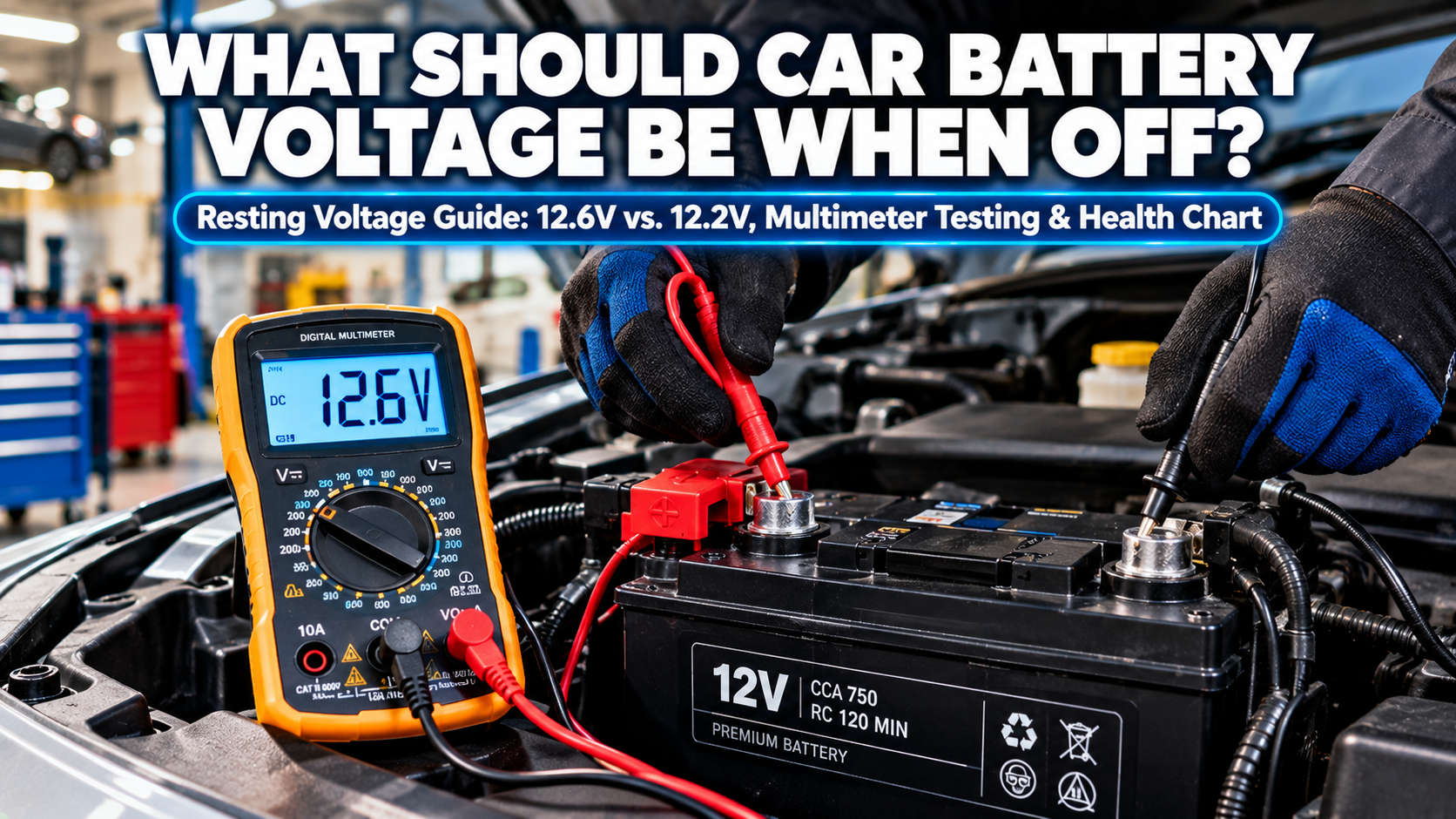
A healthy car battery should read between 12.4 and 12.7 volts when the engine is off, with 12.6 volts being the sweet spot for most vehicles.
If you've ever popped the hood, grabbed a multimeter, and wondered whether that number staring back at you is good or bad, you're not alone. Car battery voltage is one of those small details that can tell you a lot about the health of your vehicle, and knowing the right resting voltage can save you from being stranded on a cold morning. Over the years of testing batteries, helping friends troubleshoot dead cars, and digging into how lead-acid and AGM batteries actually behave, I've learned that this single reading can be the difference between catching a problem early and calling a tow truck at the worst possible time. Let me walk you through exactly what your battery voltage should be when the car is off, what different readings actually mean, and how to keep your battery in top shape.
What Is Resting Battery Voltage
Resting voltage is simply the voltage your battery holds when it's not under any load, meaning the engine is off, the keys are out of the ignition, and nothing is drawing power. Think of it like taking someone's resting heart rate. It's the baseline measurement that tells you how healthy the battery really is without the noise of the car running.
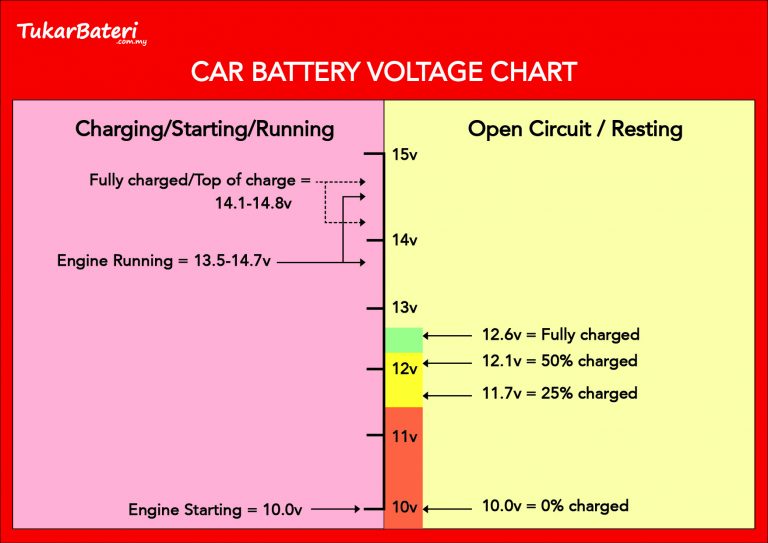
When you measure resting voltage, you're essentially asking the battery, "How much energy are you holding onto right now?" A fully charged lead-acid battery will sit comfortably around 12.6 to 12.7 volts, while an AGM battery might read slightly higher, around 12.8 to 12.9 volts. Anything below 12.4 volts means the battery is partially discharged, and below 12.0 volts it's considered deeply discharged or potentially damaged.
The reason resting voltage matters so much is that it directly reflects the state of charge. There's a well-established relationship between voltage and charge percentage in lead-acid batteries, and once you understand that relationship, a quick multimeter reading becomes a powerful diagnostic tool.

Ideal Voltage Range When the Car Is Off
So let's get specific. When your car is off and the battery has had at least a few hours to settle (ideally overnight), here's what you should see:
A healthy battery should sit between 12.4 and 12.7 volts. The ideal target for most vehicles is 12.6 volts, which indicates a charge level of around 80 to 100 percent. If you're seeing 12.7 volts or higher, that's perfectly fine and often means the battery was just recently charged or is in excellent condition.
Here's a quick breakdown:
- 12.6 volts or higher: Fully charged and in great shape
- 12.4 volts: Around 75 percent charged, still healthy but worth monitoring
- 12.2 volts: Roughly 50 percent charged, getting low
- 12.0 volts or below: Deeply discharged, likely needs charging or replacement
- Below 11.8 volts: Severely discharged, may be permanently damaged
One thing I've learned from experience is that temperature plays a huge role. In colder weather, battery voltage tends to read slightly lower because the chemical processes slow down. In extreme heat, readings can be artificially high but the battery may still be degrading internally. So always consider the conditions when you're interpreting the numbers.

How to Measure Battery Voltage Accurately
Getting an accurate reading isn't complicated, but there are a few steps you should follow to avoid getting misleading numbers.
First, turn off the car and remove the keys. Wait at least 15 to 30 minutes before measuring, though overnight is better. This waiting period allows the surface charge to dissipate, which is the temporary boost in voltage that happens right after the engine stops or the alternator charges the battery. If you measure too soon, you could get a falsely optimistic reading.
Next, set your multimeter to DC voltage (usually marked as V with a straight line or "VDC"). Connect the red positive lead to the positive battery terminal (marked with a +) and the black negative lead to the negative terminal (marked with a -). Read the voltage on the display.
A few tips from personal experience:
- Clean the terminals first. Corrosion can interfere with the reading and give you a lower number than the actual battery voltage.
- Make sure your multimeter has fresh batteries. A weak multimeter battery can throw off readings.
- Measure in the morning before starting the car for the most consistent results.
- If the battery is in a hard-to-reach spot, you can measure through the jump-start terminals under the hood on most modern cars, but the reading may be slightly less accurate.

What Causes Low Battery Voltage When the Car Is Off
If your resting voltage is consistently low, something is draining the battery or the battery itself is failing. Here are the most common culprits.
Parasitic Drain
Every car has some level of parasitic drain, which is the small amount of power that keeps your clock running, saves your radio presets, and maintains the computer memory. Normal parasitic drain is usually between 20 and 50 milliamps. But if something like a stuck relay, a faulty light switch, or an aftermarket accessory is drawing power, that drain can pull your battery down overnight.
I once helped a friend whose car kept dying every few days. After testing, we found a trunk light that wasn't turning off completely. It was such a small bulb, but over 48 hours it drained the battery from 12.6 volts down to 11.4 volts. Fixing that one light solved the problem completely.
Old or Failing Battery
Batteries don't last forever. Most car batteries have a lifespan of 3 to 5 years, though some AGM batteries can last up to 7 years with proper care. As a battery ages, its ability to hold a charge diminishes. If your battery is more than four years old and showing low voltage, it's probably time for a replacement.
Extreme Temperatures
Both extreme cold and extreme heat are battery killers. Cold thickens the battery's internal fluids, making it harder to deliver power. Heat accelerates the chemical reactions inside, which sounds good but actually causes faster wear on the internal components.
Short Trips
If you mostly drive short distances, your alternator may not have enough time to fully recharge the battery after starting the engine. Over time, this leaves the battery in a partially charged state, which shortens its lifespan.

Battery Voltage vs. State of Charge Chart
Understanding the numbers on your multimeter becomes much easier when you can match them to a charge percentage. Here's a simple reference chart for a standard flooded lead-acid battery at around 80°F:
- 12.70 volts and above: 100 percent charged
- 12.60 volts: 90 percent charged
- 12.50 volts: 80 percent charged
- 12.40 volts: 70 percent charged
- 12.30 volts: 60 percent charged
- 12.20 volts: 50 percent charged
- 12.10 volts: 40 percent charged
- 12.00 volts: 30 percent charged
- 11.90 volts: 20 percent charged
- 11.80 volts: 10 percent charged
- 11.70 volts and below: 0 percent charged
For AGM batteries, the numbers shift slightly. An AGM battery at full charge might read 12.80 to 12.90 volts, and its voltage-to-charge relationship is a bit different due to the internal chemistry.
Keep in mind that these numbers assume the battery has been at rest for several hours. If you measure right after driving, you'll see higher numbers due to surface charge.

Differences Between Lead-Acid and AGM Batteries
Not all car batteries are the same, and the type you have affects what your resting voltage should be.
Flooded lead-acid batteries are the traditional, most common type. They're affordable and reliable, but they require occasional maintenance like checking water levels. Their resting voltage at full charge is typically 12.6 volts.
AGM (Absorbent Glass Mat) batteries are more advanced. The electrolyte is absorbed into fiberglass mats, making them spill-proof and more resistant to vibration. They also hold a charge better over time and have a lower self-discharge rate. A fully charged AGM battery will read 12.8 to 12.9 volts at rest.
EFB (Enhanced Flooded Battery) batteries are a middle ground, often used in vehicles with start-stop technology. They read similarly to standard flooded batteries but are designed to handle more charge cycles.
If your car came with an AGM battery from the factory, it's worth replacing it with another AGM battery rather than downgrading to a flooded battery. The charging system is calibrated for that specific type, and using the wrong one can shorten its lifespan.

How Long Should a Car Battery Hold Its Charge When Off
A healthy, fully charged battery should be able to sit unused for at least two weeks without dropping below 12.4 volts. In cooler temperatures, it might last even longer. However, most mechanics recommend driving or starting your car at least once a week to keep the battery topped off and prevent the oil from settling.
If you're storing a car for an extended period, like over the winter, consider using a battery maintainer or tender. These devices keep the battery at a full charge without overcharging it. I've seen stored cars come back to life after months because the owner used a maintainer, and I've seen cars with completely dead batteries because they were left to sit.

Signs Your Battery Voltage Is Too Low
Sometimes your car will tell you it's struggling before it leaves you stranded. Watch for these warning signs:
- Slow or sluggish engine cranking
- Dim headlights, especially at idle
- Electrical components behaving erratically
- The battery warning light on your dashboard
- A sulfurous or rotten egg smell (often a sign of a leaking or overcharged battery)
- Visible corrosion around the terminals
If you notice any of these, grab your multimeter and check the resting voltage. Catching a low battery early can save you from a much bigger headache down the road.

Tips to Maintain Proper Battery Voltage
Keeping your battery healthy isn't complicated, but it does require a little attention. Here are some practical tips that have worked for me over the years:
- Drive your car regularly. Even a 20-minute drive once a week helps maintain the charge.
- Keep the terminals clean. A mixture of baking soda and water with a wire brush works wonders.
- Make sure the battery is secured. Vibration from a loose battery can damage the internal plates.
- Avoid deep discharges. Letting your battery drop below 12.0 volts regularly shortens its life significantly.
- Test the voltage monthly. A quick check takes only a minute and gives you peace of mind.
- Disconnect the battery if storing the car for more than a month. Or use a battery tender.
One last personal experience worth sharing. I once ignored a slow-cranking engine for two weeks, telling myself I'd deal with it on the weekend. That weekend came after I got stranded in a parking lot at 6 a.m. on a Monday. The tow truck ride cost me more than the battery would have. Don't wait. If something seems off, check it.
Frequently Asked Questions
How long should I wait to check battery voltage after turning off the car?
You should wait at least 15 to 30 minutes for the surface charge to dissipate, but ideally wait several hours or until the next morning. This gives you the most accurate resting voltage reading and prevents you from being misled by temporary voltage spikes from the alternator.
Can a car battery show 12 volts and still be bad?
Yes, absolutely. A battery can show a normal voltage at rest but fail under the heavy load of starting the engine. This is why a load test is important. Many auto parts stores will perform a free load test to check the battery's actual health, not just its resting voltage.
Is 11.9 volts bad for a car battery?
Yes, 11.9 volts is considered deeply discharged. At that level, the battery has less than 20 percent charge and may have already suffered internal damage. It's worth trying to charge it, but don't be surprised if it needs to be replaced.
Does battery voltage drop overnight?
A healthy battery will only drop a few hundredths of a volt overnight due to normal self-discharge. If you notice a significant drop, like more than 0.2 volts overnight, you likely have a parasitic drain or a battery that is starting to fail.
What voltage is too low to start a car?
Most cars need at least 12.0 volts to start reliably, though some vehicles with larger engines may struggle below 12.2 volts. If your resting voltage is below 12.0 volts, you're playing a risky game every time you turn the key.
Your battery voltage tells a story about the health of your vehicle, and knowing what to look for puts you in control. A quick multimeter check every month or two takes only minutes but can save you from unexpected breakdowns and costly repairs. If your resting voltage is consistently between 12.4 and 12.7 volts, you're in great shape. If it's trending downward, now is the time to take action before it leaves you stranded. Take care of your battery, and it will take care of you when you need it most.