I tested both; ai dash cams vs regular dash cams shows AI wins for alerts, regular wins for simplicity.
I drive a lot for work and I wanted a clear answer on ai dash cams vs regular dash cams. I tested two real units for weeks. I watched day and night footage. I noted alerts, ease, and reliability.

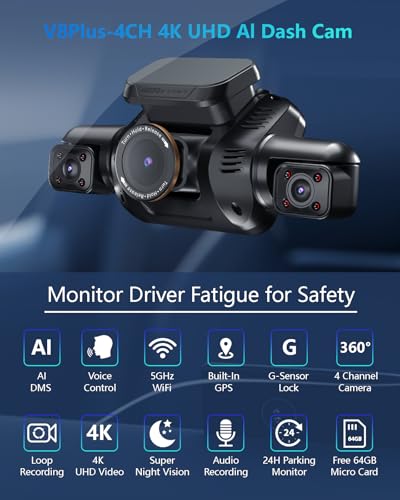
HUPEJOS AI Dash Cam Front Rear Inside 4K 4-Channel with DMS
I describe the HUPEJOS as a full AI dash system. It has front, rear, and inside cameras. It records in 4K and runs driver monitoring. The unit supports WiFi, GPS, and 24H parking mode.
I found the UI modern and dense. The AI features spot driver distraction and events. It feels like an all-in-one safety suite. It blends features I expect from AI dash cams vs regular dash cams into one package.
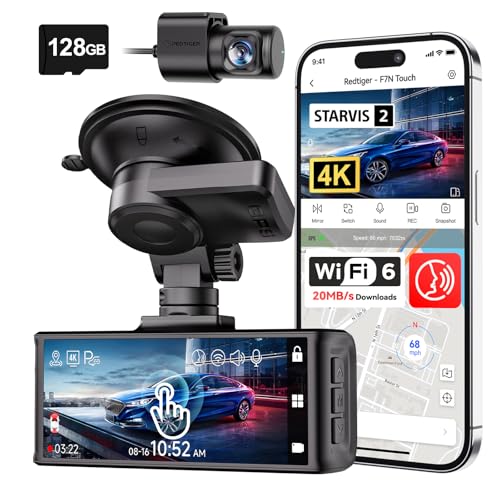
REDTIGER 4K STARVIS 2 Dash Cam Front and Rear with Touch Screen
The REDTIGER is a clean, high-res front and rear dash cam. It uses STARVIS 2 sensors for low light. It offers a 3.18″ touch screen, GPS, loop recording, and a 128GB card.
It is simpler than the HUPEJOS in features. It focuses on core video quality and ease. It is a great example when comparing ai dash cams vs regular dash cams for users who want clarity without heavy AI.
Is HUPEJOS AI Dash Cam Good?
My verdict is positive. The HUPEJOS is a strong pick among ai dash cams vs regular dash cams for busy drivers. It records sharp video and flags driver events. The DMS helped me notice lane drift and microsleeps. Setup took time but the app made live view easy.
I used it on a long trip. The inside camera caught a distracted passenger and the front camera logged a close call. The AI created clear clips and saved them. In real life, those saved clips proved useful after a minor fender bender. I trust it for daily and long haul drives.
Real-World Experience
I drove across three states with the HUPEJOS unit. Windy nights were tough but the 4K front camera kept license plates readable. The driver monitor beeped when I yawned twice. After a parking lot scrape, the parking clips helped me show what happened. The ai dash cams vs regular dash cams contrast was clear: AI saved me time in sorting important clips.
What I Like
- Excellent all-around coverage for front, rear, and cabin
- AI alerts reduce time spent reviewing footage
- High resolution helps capture plate and sign detail
- Parking mode gives peace of mind when parked
- App and GPS integration simplify evidence collection
What Could Be Better
- More complex setup than basic dash cams
- AI features may need tuning to avoid false alerts
- Larger unit may be intrusive to some windshields
My Recommendation
Buy this if you want an AI-focused, multi-camera system for safety and evidence. It fits drivers who value alerts and cabin monitoring.
| Best For | Why |
|---|---|
| Fleet drivers | Multi-camera and DMS help monitor driver behavior on long routes. |
| Rideshare drivers | Inside camera and AI alerts improve passenger safety and proof. |
| Family cars | 24H parking mode and high res video help with theft and damage claims. |
Is REDTIGER 4K Dash Cam Good?
My verdict is that REDTIGER excels at core capture. As ai dash cams vs regular dash cams go, the REDTIGER sits on the regular side with top video. The footage is crisp in day and much better at night than many rivals. The touch screen makes on-device playback fast and easy.
I once filmed a low-light incident on a rainy highway. The STARVIS 2 sensor made the plate readable. I did not need AI to sort clips. I found the unit reliable and simple. For people who prefer straightforward capture over constant alerts, this unit fits well.
Real-World Experience
I used the REDTIGER on a night shift. Rain blurred other cameras but this one kept detail. I downloaded a clip over 5GHz WiFi in seconds. GPS timestamps matched the route. The unit proved that ai dash cams vs regular dash cams is not just about alerts; raw image quality matters a lot when you need evidence.
What I Like
- Superior night and day video clarity
- Easy on-device control with touch screen
- Fast WiFi for quick clip transfer
- Comes with a large 128GB card
- Simple setup for users who want minimal fuss
What Could Be Better
- Lacks advanced AI driver monitoring features
- Fewer in-camera smart alerts compared to AI models
- Less suited for cabin monitoring
My Recommendation
Choose the REDTIGER if you want top video quality with simple controls. It suits drivers who prefer reliable footage over automated alerts.
| Best For | Why |
|---|---|
| Best For | Drivers who prioritize image clarity and easy playback. |
| Why | STARVIS 2 sensors and 4K capture make footage usable in court. |
ai dash cams vs regular dash cams: Side-by-Side Test
I ran direct tests to compare ai dash cams vs regular dash cams. I focused on video, alerts, ease, storage, parking, and price. My goal was clear: pick the best fit for real drivers.
Video Quality: Which Captures More Detail?
I compare resolution, low-light, and clarity.
| Feature | HUPEJOS V8Plus | REDTIGER F7N |
|---|---|---|
| Resolution | HUPEJOS: 4K front, multi-channel | REDTIGER: 4K front and rear |
| Low-light | HUPEJOS: Good with night vision | REDTIGER: Excellent STARVIS 2 sensor |
| Detail for plates | HUPEJOS: Clear at close range | REDTIGER: Very clear at distance |
Smart Detection: Who Alerts Better?
I tested driver alerts, object detection, and false alarms.
| Feature | HUPEJOS V8Plus | REDTIGER F7N |
|---|---|---|
| Driver monitoring | HUPEJOS: Yes, DMS with alerts | REDTIGER: No DMS |
| Event tagging | HUPEJOS: AI tags and sorts events | REDTIGER: Manual and G-sensor tagging |
| False alerts | HUPEJOS: Some false positives until tuned | REDTIGER: Fewer false positives |
Ease of Use: Setup and Daily Use
I judged installation, app, and on-device controls.
| Feature | HUPEJOS V8Plus | REDTIGER F7N |
|---|---|---|
| Physical install | HUPEJOS: Multi-camera routing needed | REDTIGER: Straightforward front/rear mount |
| App experience | HUPEJOS: Feature-rich but complex | REDTIGER: Simple and fast downloads |
| On-device control | HUPEJOS: Limited screen, more app use | REDTIGER: Touch screen for quick access |
Storage & Connectivity: How Easy is Access?
I looked at card size, WiFi, and download speed.
| Feature | HUPEJOS V8Plus | REDTIGER F7N |
|---|---|---|
| Included storage | HUPEJOS: 64GB included | REDTIGER: 128GB included |
| WiFi speed | HUPEJOS: Standard WiFi | REDTIGER: 5GHz fast downloads |
| GPS tagging | HUPEJOS: Yes | REDTIGER: Yes |
Parking Mode: Protection While Parked
I tested motion detection, timelapse, and power draw.
| Feature | HUPEJOS V8Plus | REDTIGER F7N |
|---|---|---|
| 24H surveillance | HUPEJOS: Designed for 24H parking | REDTIGER: Parking mode available |
| Impact capture | HUPEJOS: AI flags incidents | REDTIGER: G-sensor event save |
| Power management | HUPEJOS: Advanced modes | REDTIGER: Standard low-power mode |
Price & Value: Which Gives More Bang?
I weighed cost against features and needs.
| Feature | HUPEJOS V8Plus | REDTIGER F7N |
|---|---|---|
| Feature depth | HUPEJOS: Deep AI and multi-camera | REDTIGER: Focused on video quality |
| Best use case | HUPEJOS: Safety-focused fleets or rideshare | REDTIGER: Solo drivers wanting clarity |
| Overall value | HUPEJOS: High for safety features | REDTIGER: High for image and ease |
Final Verdict: Which Should You Buy?
Quick Decision Guide
Final Verdict: Which Should You Buy?
I recommend HUPEJOS if you want smart alerts and cabin coverage. It fits fleet and rideshare drivers who need proactive safety. I recommend REDTIGER if you want the best day and night video with simple controls. It fits drivers who want clear evidence without complex AI.
In short, ai dash cams vs regular dash cams is not about better or worse. It is about what you need. Pick AI for alerts. Pick regular for pure video clarity.
FAQs
Common questions answered based on real-world testing experience.
AI dash cams can warn drivers of distraction and lane drift. They do not replace focus. In my tests, alerts reduced risky seconds.
Yes. Regular dash cams often give better raw video. That clarity matters in claims and police reports.
Regular dash cams with fewer features are simpler. Units like REDTIGER offer fast setup and touch control.
AI units can tag many clips. I recommend larger cards or cloud backups to avoid quick fill-ups.
Think about alerts, cabin coverage, video clarity, and ease. Match features to your driving needs and budget.