Tire inflation is the process of filling your tires with air to the correct pressure for safe, efficient, and comfortable driving. Think of your tires as the shoes of your car. Just like you need the right fit in your shoes to walk comfortably, your car needs the right air pressure in its tires to drive smoothly and safely.
I've been working with cars and tires for over a decade now, and I can tell you from real experience that tire inflation is one of the most overlooked yet crucial parts of vehicle maintenance. Many drivers don't think about it until something goes wrong. But once you understand what tire inflation really is, why it matters, and how to do it right, you'll save money, stay safer, and get better performance from your vehicle. Let me walk you through everything you need to know, just like I'd explain it to a friend in my garage.

What Exactly Is Tire Inflation
Tire inflation is simply the act of putting air into your tires until they reach the right pressure level. That pressure is usually measured in PSI, which stands for pounds per square inch. Every tire has a recommended PSI number, and you can find that number in your car's owner manual, on the driver's side door jamb, or sometimes inside the glove box.
When I first started learning about cars, I thought all tires just needed "some air." I quickly learned that was a bad idea. Too much air or too little air can both cause problems. The right amount of air keeps the tire shape proper, supports the weight of your vehicle, and gives you the grip you need on the road.
Think of a tire like a balloon. If you fill a balloon with too little air, it flops around. Too much air, and it might pop. The sweet spot is where the balloon feels firm but still has a little give. Your tires work the same way. The correct inflation keeps them firm, stable, and ready to roll.
Why Tire Inflation Matters More Than You Think
Proper tire inflation affects almost everything about your driving experience. From safety to fuel economy to how long your tires last, the air in your tires is a big deal. Let me break it down for you.
Safety Comes First
Underinflated tires are one of the leading causes of tire blowouts on the highway. When a tire doesn't have enough air, it flexes more than it should. That extra flexing creates heat, and heat is the enemy of rubber. Over time, that heat weakens the tire structure, and you could end up with a flat or even a blowout at high speed.
I remember a time when I was driving back from a road trip and noticed my car pulling slightly to one side. I pulled over, checked my tires, and the front left tire was noticeably low. If I had kept driving at highway speeds, that tire could have failed completely. That day taught me to never ignore how my car feels on the road.
Overinflated tires aren't much better. They reduce the contact patch, which is the part of the tire that actually touches the road. Less contact means less grip, and less grip means longer stopping distances. In wet conditions, that can be especially dangerous.
Better Fuel Efficiency
Here's something most drivers don't realize. Underinflated tires make your engine work harder. When a tire is low on air, it has more rolling resistance, which means your car has to burn more fuel just to move forward. The U.S. Department of Energy has noted that keeping your tires properly inflated can improve gas mileage by up to 3 percent.
That might not sound like a lot, but over a year, it can add up to real savings at the pump. I started checking my tire pressure every month, and I noticed I was filling up less often. It was a small change with a real impact.
Longer Tire Life
Tires aren't cheap. A good set can cost several hundred dollars or more. If you want to protect that investment, proper inflation is key. Underinflated tires wear down faster on the edges, while overinflated tires wear down faster in the middle. Either way, you're losing tread life, and that means you'll need to replace your tires sooner.
When my tires wear evenly, I know my pressure is dialed in. When one tire looks different from the others, it's usually a sign that something is off, and nine times out of ten, it's a pressure issue.
Smoother and More Comfortable Ride
Your tires are also part of your suspension system in a way. They absorb bumps, cracks, and imperfections in the road. When they're properly inflated, they do this job well. When they're not, the ride can feel rough, bumpy, or even unstable.
I once rented a car that felt like it was vibrating on the highway. After about twenty minutes of being annoyed, I pulled into a gas station and checked the tires. All four were overinflated by about 5 PSI. After letting some air out, the car drove like a dream. It was a great reminder of how much difference the right pressure makes.

How to Find the Right Tire Pressure
Now that you know why tire inflation matters, let's talk about how to find the right pressure for your vehicle. This part is actually pretty simple, and once you do it a few times, it becomes second nature.
Check Your Vehicle's Placard
The easiest place to find your recommended tire pressure is on the placard sticker. This is usually located on the driver's side door jamb, right where the door latches. Open the door and look along the edge. You should see a sticker with information about tire size and pressure.
If you don't see it there, check your owner's manual. The manual will have a section on tire information that includes the recommended PSI for both front and rear tires.
One common mistake I see is people using the number on the tire sidewall as their target pressure. That number is the maximum pressure the tire can hold, not the recommended pressure for your vehicle. Always go with the vehicle manufacturer's number, not the tire manufacturer's max.
Consider Your Driving Conditions
The recommended PSI on your placard is a great starting point, but your real-world conditions might call for slight adjustments. For example, if you're carrying a heavy load or towing a trailer, you might need to add a few PSI to the rear tires. If you're driving in very cold weather, your pressure might drop naturally, so it's a good idea to check more often during winter months.
Use a Quality Tire Pressure Gauge
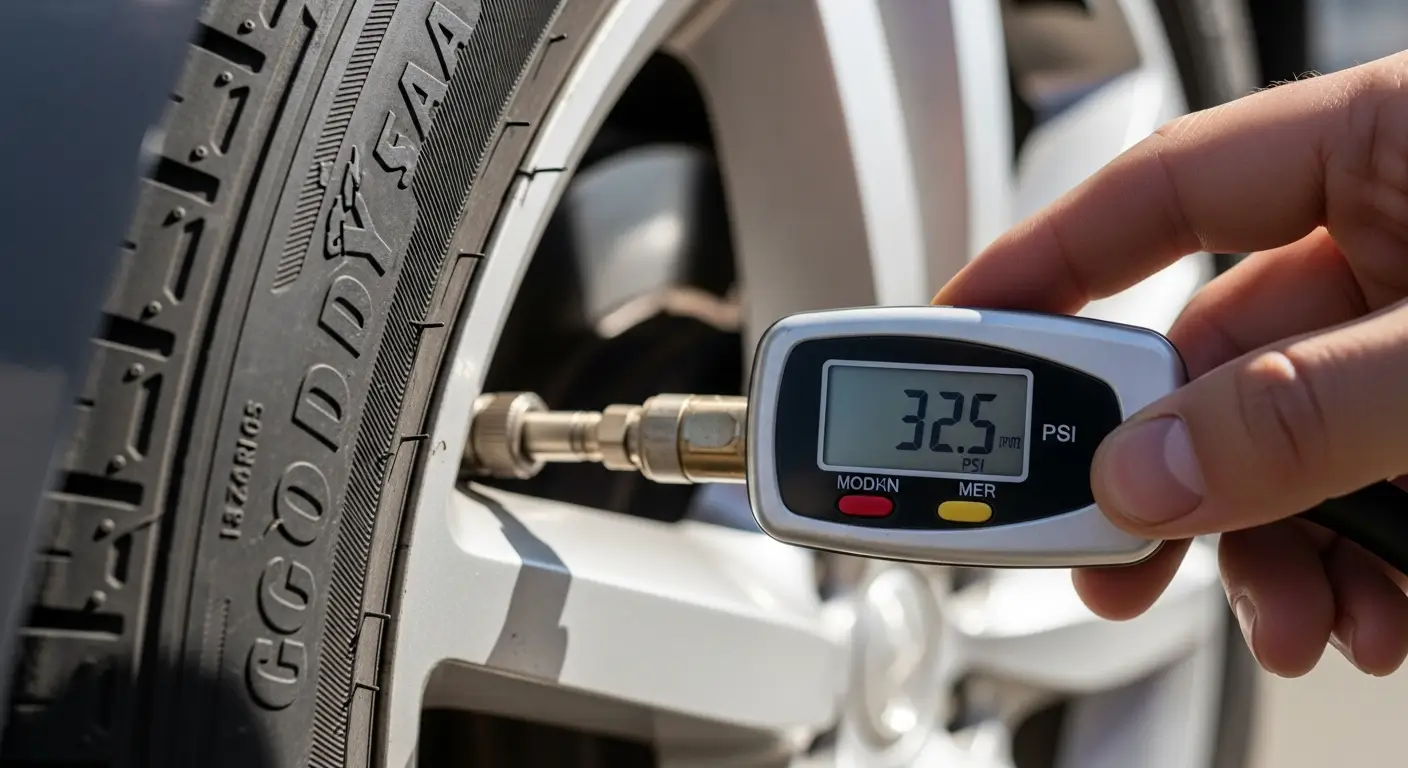
A good tire pressure gauge is one of the most useful tools you can keep in your car. You can find digital gauges, dial gauges, and even simple stick-style gauges. I prefer digital ones because they're easy to read, but any accurate gauge will do the job.
There's also a difference between checking tires when they're cold versus when they're hot. Tire pressure increases as you drive because the friction heats up the air inside. For the most accurate reading, check your tires before you drive or after the car has been sitting for a few hours. Most manufacturers give their PSI recommendations based on cold inflation.
How to Inflate Your Tires Step by Step
Inflating your tires is something you can easily do at home, at a gas station, or at a tire shop. Here's a simple step-by-step process that works every time.
- Park your car on a flat surface and turn off the engine.
- Remove the valve cap from the tire you want to inflate.
- Press your tire pressure gauge firmly onto the valve stem and read the pressure.
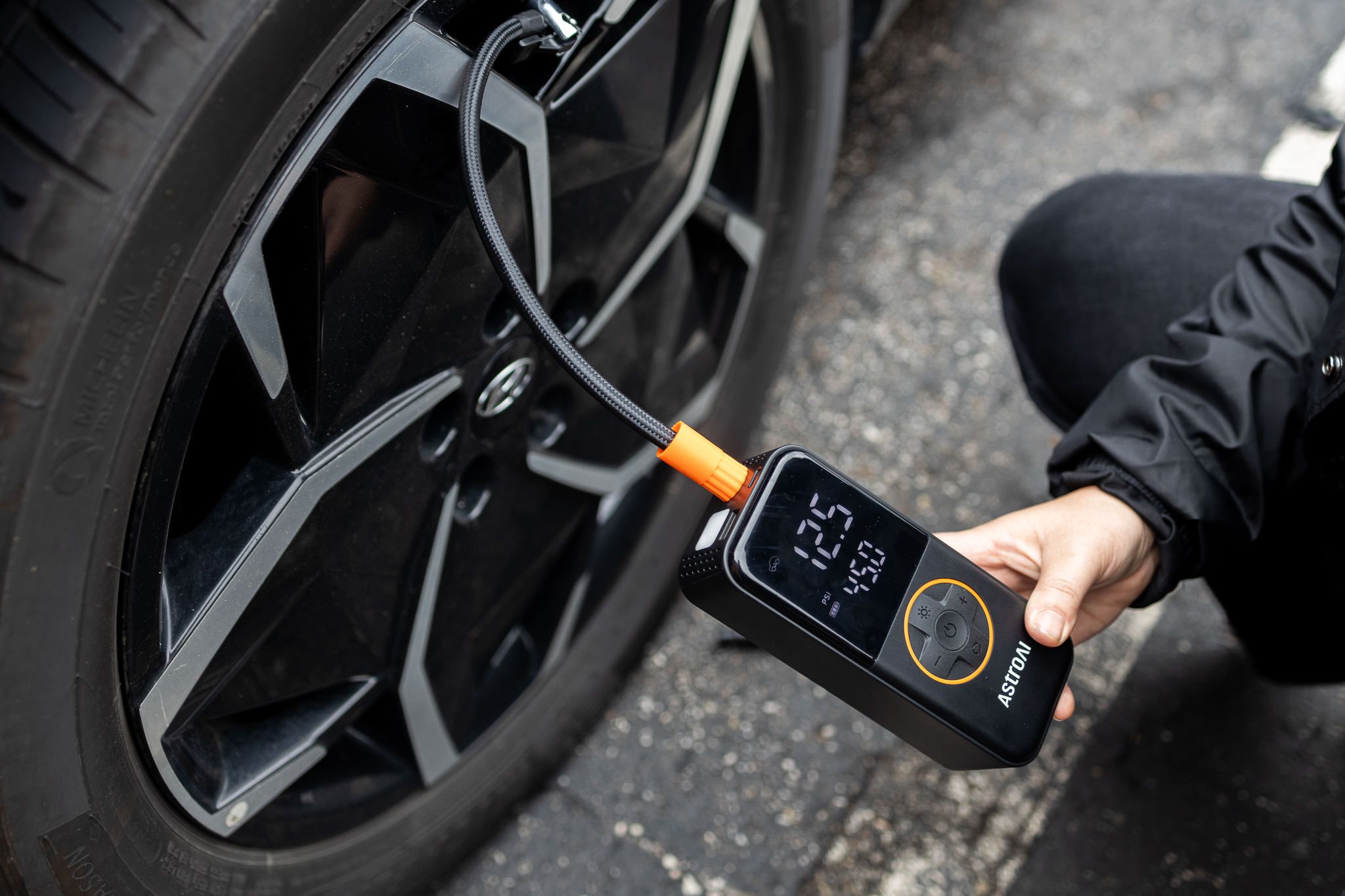
- If you need to add air, attach your air compressor hose or use a gas station air pump.
- Fill in short bursts and check the pressure often to avoid overinflating.
- Once you reach the right PSI, remove the hose and quickly replace the valve cap.
- Repeat for each tire, including the spare if your vehicle has one.
If you accidentally overinflate, most gas station air pumps have a small button or lever that lets you release air. Just press it gently and check the pressure until it drops to the right level.
Pro Tips From Personal Experience
After years of checking and inflating tires, here are a few tips that have made the process easier and more effective for me.
- Check your tire pressure at least once a month, even if your car feels fine.
- Always check before long road trips, especially if you're heading into different weather conditions.
- Don't forget the spare tire. Many people overlook it, and it can let you down when you need it most.
- If you notice a tire losing air quickly, there might be a puncture or a slow leak. Get it inspected by a professional.
- Keep a small tire inflator in your trunk. Portable compressors are affordable and can save you in a pinch.

Common Myths About Tire Inflation
There are a lot of myths out there about tire inflation, and I want to clear up a few of the most common ones I've heard over the years.
Myth 1: The Tire Pressure Number on the Sidewall Is the Right Pressure
As I mentioned earlier, this is false. The number on the tire is the maximum pressure, not the recommended pressure. Always use the number from your vehicle's placard or owner's manual.
Myth 2: New Tires Don't Need to Be Checked
Even brand-new tires can lose air. In fact, it's a good idea to check new tires after the first 50 to 100 miles to make sure everything is holding steady.
Myth 3: You Only Need to Check Tires in Winter
Tire pressure changes with temperature, but that doesn't mean you only need to check in the cold. Hot weather can also increase pressure, and overinflation comes with its own set of risks. Year-round checking is the best approach.
Myth 4: Nitrogen Is Always Better Than Air
Nitrogen can help maintain more consistent pressure over time because it doesn't expand and contract as much as regular air. However, for most everyday drivers, regular air works just fine. The key is keeping your tires at the right pressure, regardless of what you fill them with.

Signs Your Tires Need Attention
Sometimes your car will tell you when something is off with your tires. Here are the most common warning signs I always tell my friends and family to watch for.
- The car pulls to one side when driving on a straight road.
- The steering wheel feels shaky or wobbly, especially at higher speeds.
- You notice uneven wear on the tread across your tires.
- The tire looks visibly low or flat when you check it.
- Your fuel economy suddenly drops without any clear reason.
- The tire pressure warning light on your dashboard comes on.
If you notice any of these signs, don't ignore them. A quick pressure check can often solve the problem, or at least point you in the right direction.
The Role of Tire Pressure Monitoring Systems
Most modern vehicles come equipped with a Tire Pressure Monitoring System, often called TPMS. This system uses sensors inside each tire to monitor pressure and alerts you when one or more tires drop below a safe level.
TPMS is a great safety feature, but it's not perfect. The warning light usually comes on only when pressure is significantly low. By the time that light shows up, you might already be dealing with uneven wear or reduced fuel efficiency. That's why I always recommend manual checks in addition to relying on TPMS.
Also, if you've ever noticed the TPMS light blinking before staying solid, that usually means there's a problem with the system itself, not necessarily the tires. In that case, a professional can diagnose the issue and reset the system.

Seasonal Effects on Tire Inflation
Temperature has a big effect on tire pressure. For every 10-degree change in temperature, tire pressure can change by about 1 PSI. That means your tires can lose pressure quickly during a cold snap or gain pressure during a heat wave.
Cold Weather Tips
In the winter, check your pressure more often, especially after a significant drop in temperature. Cold air contracts, and that lowers your PSI. Underinflated tires in winter can lead to poor traction, especially on icy or snowy roads.
Hot Weather Tips
In the summer, heat expands the air in your tires, which can lead to overinflation. This might seem like a good thing, but it can reduce grip and make your tires more prone to damage from potholes or curbs. Let a little air out if needed, but be careful not to drop below the recommended level.
I always keep a small journal in my glove box where I log my tire pressure each season. It's a simple habit, but it helps me spot patterns and adjust before problems start.
How Often Should You Check Tire Pressure
A good rule of thumb is to check your tire pressure at least once a month and before any long trip. Some people check every time they fill up with gas, which is a great habit if you have the time.
If you drive a lot, carry heavy loads, or live in an area with extreme temperature swings, you might want to check even more often. The few minutes it takes can save you from bigger problems down the road.
I also recommend checking your tires when they are cold for the most accurate reading. Driving even a short distance can heat up the air inside and give you a higher PSI reading than the actual cold pressure.
Frequently Asked Questions About Tire Inflation
What PSI should my tires be
The right PSI for your tires depends on your vehicle, not the tire itself. You can find the recommended PSI on the sticker inside your driver's side door jamb or in your owner's manual. Most passenger cars fall between 30 and 35 PSI, but always go with the number recommended for your specific vehicle.
How do I know if my tires are overinflated
Overinflated tires often show wear in the center of the tread, feel bouncy on the road, and may make your car more sensitive to bumps. You can confirm with a tire pressure gauge. If the PSI is higher than what's listed on your vehicle placard, let some air out.
Can I drive with low tire pressure
You can drive a short distance with low tire pressure, but it's not safe for long. Low pressure increases heat, reduces grip, and can lead to a blowout. If your TPMS light comes on, check your pressure as soon as possible and add air if needed.
Is it okay to use nitrogen instead of air in tires
Yes, nitrogen is fine and can even help with more stable pressure over time. However, regular air works perfectly well for most drivers. The most important thing is keeping your tires inflated to the correct PSI, regardless of the gas you use.
How long does it take for tires to lose air naturally
Tires can lose about 1 PSI per month under normal conditions. This is why monthly checks are a smart habit. If you're losing air faster than that, you might have a slow leak and should have your tires inspected.
Conclusion
Tire inflation is one of those simple things that makes a huge difference. It affects your safety, your wallet, your comfort, and even the lifespan of your tires. The good news is that it doesn't take much time or effort to stay on top of it. A quick check once a month, a reliable gauge, and a basic understanding of your vehicle's recommended PSI are all you need.
Over the years, I've seen how a little attention to tire pressure can prevent big headaches. From avoiding roadside flats to saving money on gas and getting more life out of a set of tires, the benefits are real. Make it a habit, and your car will thank you.
Take a few minutes this week to check your tire pressure. It's one of the easiest ways to take care of your vehicle and keep yourself safe on the road. If you found this guide helpful, feel free to share it with a friend or leave a comment with your own tire care tips.