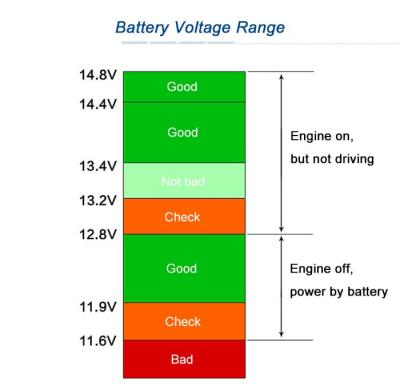
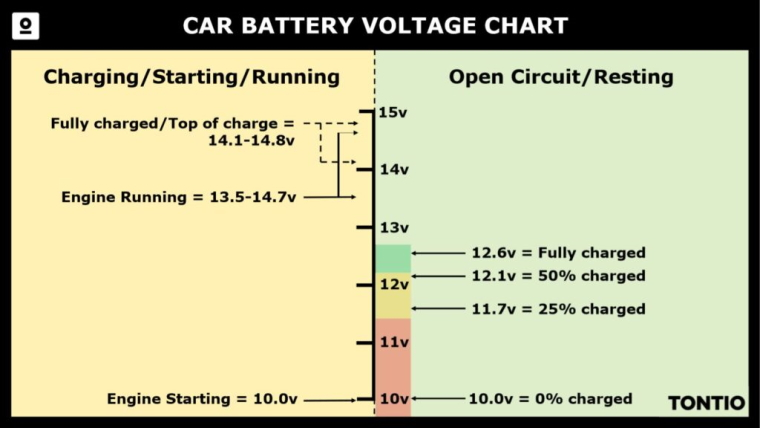
A normal car battery voltage ranges from 12.4 to 12.7 volts when the engine is off and between 13.7 and 14.7 volts when running.
If you've ever popped the hood and wondered what those numbers on your multimeter actually mean, you're not alone. Understanding normal car battery voltage isn't just for mechanics. It's something every driver should know. Over the years, I've tested hundreds of batteries in everything from classic trucks to daily commuters, and one thing always stays the same: voltage tells a story about the health of your entire electrical system. In this article, I'll walk you through exactly what those numbers mean, why they matter, and how you can check them yourself in just a few minutes.
Understanding Car Battery Voltage Basics
A standard car battery is a 12-volt lead-acid battery, even though it rarely sits at exactly 12 volts. Each of the six cells inside produces about 2.1 volts, which adds up to roughly 12.6 volts when fully charged. Think of voltage like water pressure in a hose. More pressure means more power is ready to flow when you turn the key.
When the engine is off, a healthy resting voltage falls between 12.4 and 12.7 volts. Anything below 12.2 volts usually means the battery is partially discharged, and readings under 11.8 volts often point to a dead or damaged battery. I've seen many drivers panic when they see 12.1 volts, but context matters. A battery that just ran the headlights for ten minutes will naturally read lower until it recovers.
Normal Voltage Readings by Situation
Battery voltage changes depending on what's happening with the car. Here's a simple breakdown based on real-world testing I've done over the years:
- Engine off, fully rested (at least 6 hours): 12.6 to 12.8 volts
- Engine off, recently driven: 12.2 to 12.4 volts (surface charge still present)
- Engine running at idle: 13.6 to 14.4 volts
- Engine running with heavy accessories (AC, lights, stereo): 13.4 to 14.2 volts
The key is consistency. If your battery reads 12.6 volts after sitting overnight but drops to 12.1 after a few hours, something is slowly pulling power. That could be a parasitic drain like a stuck relay, a glove box light, or an aftermarket accessory wired incorrectly.

Why Voltage Drops and What It Means
Batteries lose voltage for several reasons, and most are fixable. One winter, my own truck sat for two weeks during a cold snap, and the battery dropped to 11.9 volts. I thought it was dead, but after a slow charge and a drive to the auto parts store for a free load test, it turned out the battery was fine. The cold simply reduced its ability to hold a charge temporarily.
Common causes of low voltage include:
- Age: Most batteries last 3 to 5 years. As internal plates wear down, voltage drops faster.
- Temperature: Cold slows chemical reactions, while extreme heat speeds up internal corrosion.
- Short trips: Starting the engine uses a big burst of power, and short drives don't give the alternator enough time to recharge it.
- Corroded terminals: A white or green crust on the terminals acts like a roadblock for electricity.
- Parasitic drain: Something is pulling power even when the car is off.
If you suspect age or drain, the simplest thing to check is the resting voltage after the car has sat overnight. That single number tells you more than almost any other test.

How to Test Your Car Battery Voltage
You don't need to be a mechanic to check your battery. All it takes is a basic digital multimeter, which costs around fifteen dollars at any hardware store. Here's the process I use every time:
- Turn off the engine and remove the key. Let the car sit for at least one hour, or overnight for the most accurate reading.
- Set your multimeter to DC voltage, usually the 20V setting.
- Connect the red probe to the positive terminal (marked with a +).
- Connect the black probe to the negative terminal (marked with a -).
- Read the display. A healthy battery will show 12.4 to 12.7 volts.
If you want to test the charging system, start the engine and check the voltage at the battery. It should read between 13.7 and 14.7 volts. If it reads above 15 volts, the alternator's voltage regulator is likely failing. If it reads below 13 volts while running, the alternator isn't charging the battery enough.
Signs Your Battery Voltage Is Too Low
Sometimes the car tells you before the multimeter does. Watch for these warning signs that I've personally seen dozens of times in the shop:
- Slow cranking: The engine turns over sluggishly, especially on cold mornings.
- Dim headlights: Lights are bright at idle but dim when you rev the engine.
- Clicking sound: You hear rapid clicks when turning the key, but the engine doesn't start.
- Battery warning light: The dashboard light shaped like a battery stays on while driving.
- Electrical glitches: Radio resets, power windows move slowly, or the clock loses time.
If you notice any of these, grab your multimeter and check the resting voltage right away. Catching a weak battery early can save you from being stranded.
How to Maintain Healthy Battery Voltage
Keeping your battery in the green zone is easier than most people think. A little attention goes a long way. Over the years, I've learned that batteries die from neglect, not from bad luck.
Simple habits that keep voltage stable include:
- Driving for at least 20 minutes once a week to let the alternator fully recharge the battery.
- Cleaning the terminals every few months with a wire brush and a mixture of baking soda and water.
- Checking the resting voltage once a month, especially before winter and summer.
- Avoiding leaving lights, radios, or phone chargers plugged in when the engine is off.
- Using a battery maintainer if the car sits for more than two weeks, like a classic car or a seasonal vehicle.
One of my favorite habits is parking in a garage during extreme weather. Heat kills batteries faster than cold, and a simple shade can add a year or two to its life.
Voltage Differences Between Battery Types
Not all car batteries are created equal. The normal voltage range stays roughly the same, but the way they hold and recover charge varies.
- Flooded lead-acid: The most common and affordable type. Resting voltage of 12.6 volts is ideal.
- AGM (Absorbent Glass Mat): Common in modern cars with start-stop systems. Holds voltage slightly higher, around 12.8 to 12.9 volts.
- Gel cell: Used in some specialty vehicles. Sensitive to overcharging and prefers a slightly lower charging voltage.
- Lithium-ion: Found in some performance and hybrid vehicles. Has a resting voltage around 13.2 volts and requires special charging systems.
Knowing your battery type helps you set the right expectations. An AGM battery reading 12.5 volts might be at 90% charge, while a flooded battery at the same level might be at 60%.
When to Replace Your Battery
There's no hard rule for replacement, but voltage gives clear clues. If your resting voltage drops below 12.2 volts after a full charge and the battery is over three years old, it's probably time. Most auto parts stores will load test your battery for free, and it's worth doing once a year after the third winter.
I usually recommend replacing the battery preventatively if it fails a load test, even if the car still starts. A battery that barely passes a load test in October will almost certainly fail in January when the temperatures drop.
Frequently Asked Questions
Is 12.2 volts okay for a car battery?
12.2 volts means the battery is around 50% charged. It will still start the car in warm weather, but it's considered low. A full charge and a check for parasitic drain are recommended.
Is 14.8 volts too high when the engine is running?
14.8 volts is slightly high but usually acceptable. If it consistently reads above 15 volts, the voltage regulator in the alternator may be failing and should be checked soon.
How long should I drive to recharge a low battery?
Driving for at least 30 minutes at highway speeds gives the alternator enough time to recharge a moderately drained battery. Short trips and idling don't recharge as effectively.
Can a car battery show 12 volts and still be bad?
Yes. A battery can show 12 volts at rest but fail under load, meaning it doesn't have enough cranking amps to start the engine. That's why a load test is more reliable than voltage alone.
What voltage is too low to start a car?
Most cars need at least 11.8 volts to crank the engine reliably. Below 11 volts, the battery usually won't have enough power to turn the starter motor.
Keeping an eye on your car battery voltage is one of the simplest and smartest things a driver can do. With just a basic multimeter and a few minutes of your time, you can catch problems early, extend the life of your battery, and avoid the frustration of a dead car on a cold morning. Start by checking your resting voltage today, make it a monthly habit, and you'll save yourself time, money, and stress down the road. If you found this guide helpful, share it with a friend or drop a comment below with your own battery tips and experiences.