Outboard motor shaft length is a critical, often overlooked, spec that directly impacts your boat’s performance and your engine’s health. Getting this measurement wrong can lead to a host of frustrating problems, from reduced speed to costly damage. Understanding how to correctly measure shaft length ensures your outboard is operating at its intended depth in the water.
Manufacturer specifications often categorize shaft lengths into standard designations like "S" for short, "L" for long, and "XL" for extra-long, typically corresponding to ranges in inches. As of 2026, these measurements remain a foundational element in outboard motor setup. Today, we'll walk you through precisely how to determine the correct shaft length for your outboard.
Why Outboard Motor Shaft Length Is a Big Deal
The shaft length on your outboard motor isn't just an arbitrary number; it dictates where the propeller sits relative to the hull and the water's surface. This positioning is paramount for efficient operation.

If this measurement is off, several issues can arise. A shaft that's too short means the propeller might operate too high in the water, leading to performance problems. Conversely, a shaft that’s too long can cause the gearcase to drag or strike submerged objects.
The Anti-Ventilation Plate: Your Measurement Clue
The anti-ventilation plate is your primary visual cue when assessing outboard motor shaft length. This is the flat, horizontal plate located directly above the propeller on the lower unit of the motor.
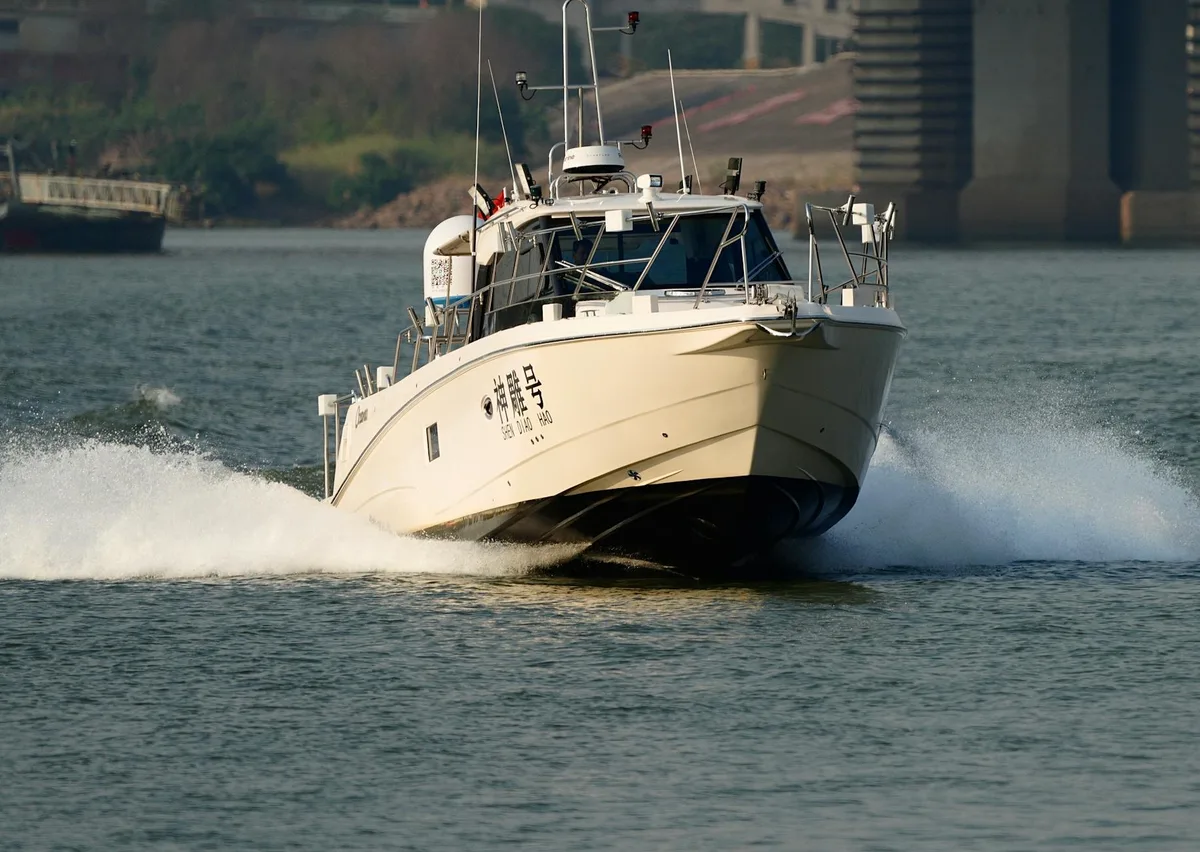
Its purpose is twofold: it helps direct water flow evenly to the propeller, preventing air from being sucked in (cavitation), and it serves as a key reference point for trim adjustments and, importantly, for judging the motor's operating depth. The bottom edge of this plate should ideally be about one to three inches above the water surface when the boat is at planing speed and trimmed correctly.
How to Visually Assess Your Motor's Waterline Position
Visually assessing your motor's position in the water involves observing where the anti-ventilation plate sits relative to the boat's running surface and the water itself. When a boat is at rest, the motor will sit deeper than when it's planing. The critical measurement for shaft length pertains to the motor's position while in motion and operating at trim.
For a proper assessment, you need to see how the boat handles at its typical cruising speed. The goal is to ensure the propeller is submerged enough to grip the water effectively but not so deep that the gearcase causes drag or potential damage.
Identifying Your Motor's Shaft Length Designation (S, L, XL)
Outboard motor manufacturers use standardized designations to simplify shaft length identification. These designations correspond to specific ranges that are crucial for matching the motor to the correct boat.
- S (Short Shaft): Typically designed for smaller boats with a transom height of approximately 15 inches.
- L (Long Shaft): Common for most recreational boats, with a transom height around 20 inches.
- XL (Extra Long Shaft): Used for larger boats or those requiring a higher mounting point, often with a transom height of approximately 25 inches.
- XXL: Some manufacturers offer even longer shafts for specialized applications, typically around 30 inches.
Manufacturer specifications, readily available on their official websites or in owner's manuals, will detail the exact inch range for each designation and model. For instance, checking the Mercury Marine specifications for their popular models will confirm these standard measurements.
Practical Steps for Checking Shaft Length
Determining your outboard's shaft length involves observing its position in the water under operating conditions. This isn't a static measurement taken when the boat is docked, but rather a dynamic assessment.
Checking with the Boat in the Water
The most accurate way to gauge your shaft length is to observe your outboard while the boat is running at a typical planing speed on calm water.
- Trim for Performance: Adjust your outboard's trim. For most boats, this means finding a trim angle that provides good speed and stability, with the anti-ventilation plate sitting slightly above the water.
- Observe the Plate: Look at where the bottom edge of the anti-ventilation plate is in relation to the water surface. For optimal performance and to avoid cavitation, it should generally be 1, 3 inches above the water.
- Measure if Necessary: If you suspect an issue, you can use a ruler or tape measure to get a rough idea of the distance from the bottom of the anti-ventilation plate to the water's surface.
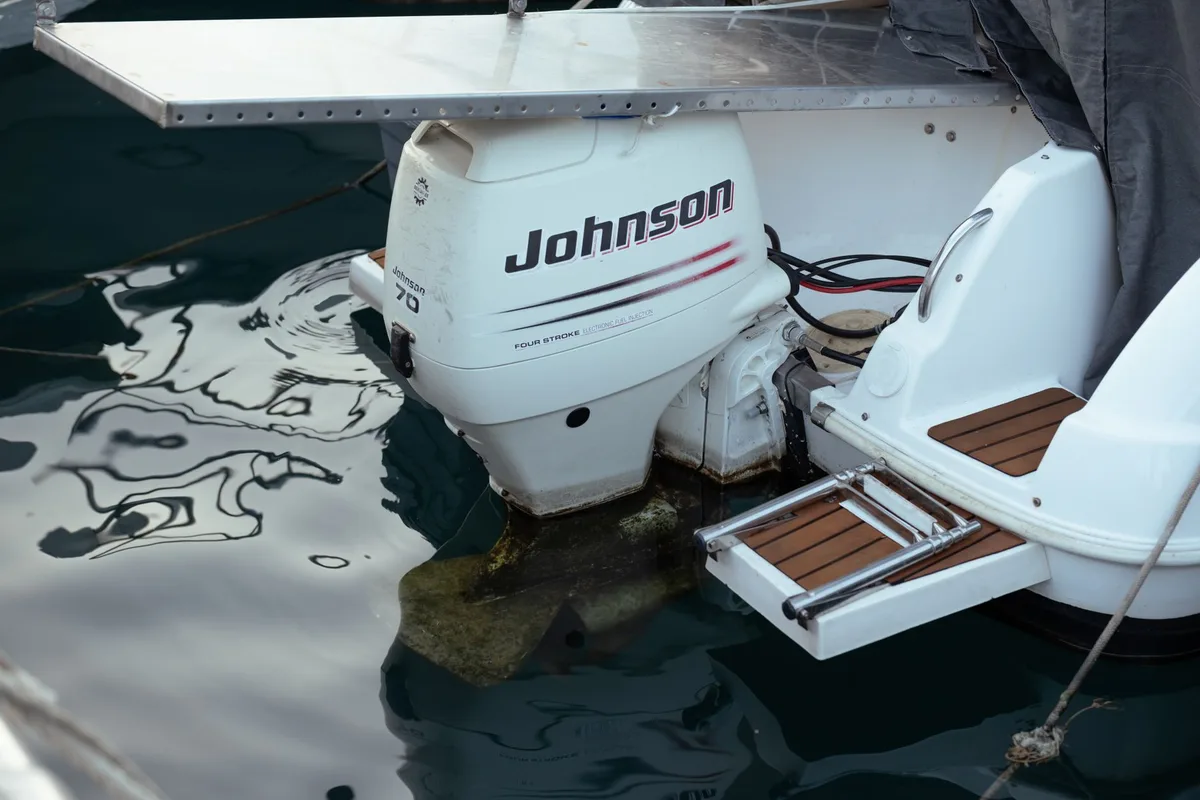
This visual check, combined with how the boat handles during this phase, gives you insight into whether the shaft length is appropriate for your transom height.
Estimating if the Boat Isn't In Its Element
If you can't test the boat in the water, you can still get a good estimate of the required shaft length for your boat's transom.
- Measure Transom Height: Measure the vertical distance from the top of your boat's transom down to the bottom edge of the hull (the keel).
- Consult Chart: Compare this measurement to a transom height chart provided by outboard motor manufacturers or marine equipment suppliers. This chart will indicate the recommended shaft length (S, L, XL, etc.) for your specific transom height.
- Inspect Motor: If the motor is already mounted, you can visually compare its overall length from the mounting bracket to the propeller with known measurements for S, L, or XL shafts, but this is less precise than observing it in operation.
Common Mistakes When Measuring Shaft Length
Getting the shaft length wrong often stems from a few recurring misunderstandings about what's actually being measured. It's not about the physical length of the entire motor or its housing; instead, it focuses on the operational depth of the gearcase in the water.
Over-reliance on Motor Dimensions
One common pitfall is assuming the shaft length is simply the distance from the top of the engine mounting bracket to the tip of the propeller. This overlooks how the motor is mounted on the transom and its trim angle. Manufacturer charts and practical observation are more reliable than trying to measure the entire motor's physical length.
Ignoring Motor Trim
Another significant error is failing to account for the motor's trim. When a boat planes, the outboard is usually trimmed out, lifting the bow and changing the angle and depth of the gearcase. Measurements taken with the motor straight down or at extreme trim angles won't reflect its performance position.
What Happens with the Wrong Shaft Length
The consequences of an improperly matched shaft length can range from minor performance annoyances to serious mechanical issues. Understanding these risks highlights why accuracy in measurement is so important.
The Risks of a Shaft That's Too Short
If your outboard has a shaft that's too short for your transom height, the propeller will likely sit too high relative to the intended water level. This can lead to cavitation, where the propeller spins without effectively gripping the water, causing a significant loss of thrust and speed.
This condition can also cause the engine to over-rev, potentially leading to internal damage over time. Handling can become erratic, with the boat feeling unstable and unresponsive, especially during acceleration or turns.
The Risks of a Shaft That's Too Long
Conversely, a shaft that's too long will cause the gearcase to sit too low in the water. This increased drag can reduce your boat's top speed and fuel efficiency. More critically, the lower unit might strike submerged debris like rocks, logs, or sandbars, leading to costly damage to the propeller, gears, or housing.
When to Consult a Pro
While checking shaft length can be a DIY task, there are times when professional help is best. If you've inherited a boat with an unknown motor history, or if you're experiencing persistent performance issues that you can't resolve through basic checks, a marine mechanic is your best resource.
They have the experience to interpret subtle handling characteristics and the specialized tools to accurately assess motor height and shaft length compliance. They can also advise on the correct propeller pitch and diameter, which work in conjunction with shaft length for optimal performance.
Ensuring Optimal Boat Performance and Safety
Ultimately, correctly measuring your outboard motor's shaft length is about achieving peak efficiency and ensuring a safe boating experience. The right shaft length ensures your propeller operates in its intended zone, maximizing thrust and stability.
It contributes to better fuel economy by reducing unnecessary drag and prevents damage by keeping the gearcase at a safe operating depth. This attention to detail is a hallmark of responsible boat ownership.