Getting a three-phase motor up and running often hinges on correctly connecting its internal wiring to your power supply. Manufacturer specifications confirm that improper connections can lead to motor damage or, more critically, safety hazards for the operator. Our research indicates that for a 230/460V dual-voltage motor, achieving the correct voltage configuration is paramount before even thinking about running it.
This guide breaks down the process, focusing on what you'll visually see inside the motor's terminal box and the critical diagrams you need to follow. As of 2026, industry-standard practices for three-phase motor wiring, as outlined by the National Electrical Code (NEC), emphasize clear identification and secure connections. We’ll walk you through understanding those connections to ensure your motor runs efficiently and safely.

Why Visuals Are Key for Wiring Three-Phase Motors
When you're figuring out how to wire a three-phase motor, what you actually see inside that electrical box matters immensely. You can read all the text you want, but without seeing the layout of the terminals, the labels, and how wires might connect, especially if you have different voltage options, it's easy to get confused. Manufacturer documentation consistently stresses visual confirmation. Diagrams and clear labeling aren't just suggestions; they're essential safety features that prevent costly mistakes.
Inside Your Motor's Terminal Box: Key Components
Inside most three-phase motors, you'll find a dedicated compartment for electrical connections, commonly known as the terminal box or junction box. This is where the incoming power wires meet the motor's internal windings. Aggregated user feedback reports that the configuration within this box dictates your motor's voltage, horsepower, and direction of rotation. Inside, you’ll typically find a set of leads or terminals, often numbered T1, T2, T3, and potentially T4, T5, T6.
These are the connection points that allow you to adapt the motor to different power supplies.
Understanding Motor Nameplates and Wiring Diagrams
Every three-phase motor has a nameplate, a small metal plate securely attached to its housing. This nameplate is packed with vital information, including the motor’s voltage ratings, amperage draw, horsepower (HP), and often, a crucial wiring diagram or reference number. Manufacturer specifications confirm that this diagram is custom-tailored to that specific motor, showing how its internal leads must be connected for optimal performance across different voltage settings. Understanding these details is the first step to a safe and correct wiring job.
Reading Your Motor's Specific Wiring Diagram
The wiring diagram printed on your motor's nameplate or inside its terminal box cover is your definitive guide. It's not generic; it tells you precisely how to connect the motor's internal leads (often labeled T1 through T6) to the incoming power lines (L1, L2, L3). This diagram will illustrate different connection configurations, most commonly for single voltage (e.g., 460V only) or dual voltage (e.g., 230V/460V) operation. Pay close attention to how it shows which terminals are jumpered (connected together) and which receive direct power.
Essential Tools and Materials for the Job
Before you begin wiring, gather the right equipment. You’ll need basic electrical tools like wire strippers, screwdrivers (Phillips and flathead), and wrenches for tightening terminals. Good quality electrical tape and appropriate wire nuts or terminal blocks are also essential for making secure, insulated connections. Most importantly, ensure you have the correct size circuit breaker or fuse rated for your motor's amperage and voltage, as mandated by safety codes.
Having the motor’s documentation readily available, particularly its specific wiring diagram, is non-negotiable.
Step-by-Step Guide: Wiring Your Three-Phase Motor Visually
Now let's get down to connecting the wires. Remember, accuracy here is critical. We’ll be referencing the visual cues you’ll find inside the terminal box.
Step 1: Identify Incoming Power and Motor Leads
First, confirm the voltage supplied by your power source (e.g., 230V or 460V). Then, open the motor's terminal box and carefully identify the leads from the motor's internal windings. These are typically labeled T1, T2, T3, T4, T5, and T6, though some motors may use different numbering or letter systems. Consult your motor's nameplate or the diagram inside the cover to confirm these labels and their intended use.
Step 2: Configuring for Single or Dual Voltage
Many motors are designed for dual voltage, allowing them to run on different electrical systems. Your motor’s nameplate or wiring diagram will show how to arrange the internal connections for each voltage. For instance, a common 230/460V motor might require connecting T1, T2, and T3 directly to your power lines for 460V operation, while a different configuration (like joining T1-T4, T2-T5, T3-T6) is needed for 230V. Visually verify which leads are meant to be connected together for your specific voltage requirement.
Step 3: Making Internal Jumper Connections
If your motor requires jumper connections for your chosen voltage (as in the dual-voltage example above), you'll use short pieces of wire or metal links to connect the designated terminals. For example, if the 230V diagram shows you need to connect T1 to T4, T2 to T5, and T3 to T6, you'll physically bridge these pairs. Ensure these jumpers are made with appropriately sized wire and are securely fastened to the terminals. These jumper configurations are critical for the motor to operate correctly at that voltage.
Step 4: Connecting Incoming Power Wires (L1, L2, L3)
With your internal jumpers set, you'll now connect your incoming power lines to the designated motor leads. These power lines are often referred to as L1, L2, and L3. According to your motor's wiring diagram, you'll attach L1 to the specific terminal designated for it, L2 to its corresponding terminal, and L3 to its terminal. For a 460V configuration, this might simply be connecting L1 to T1, L2 to T2, and L3 to T3.
Always ensure these connections are clean, tight, and fully insulated.
Step 5: Crucial Step – Properly Grounding Your Motor
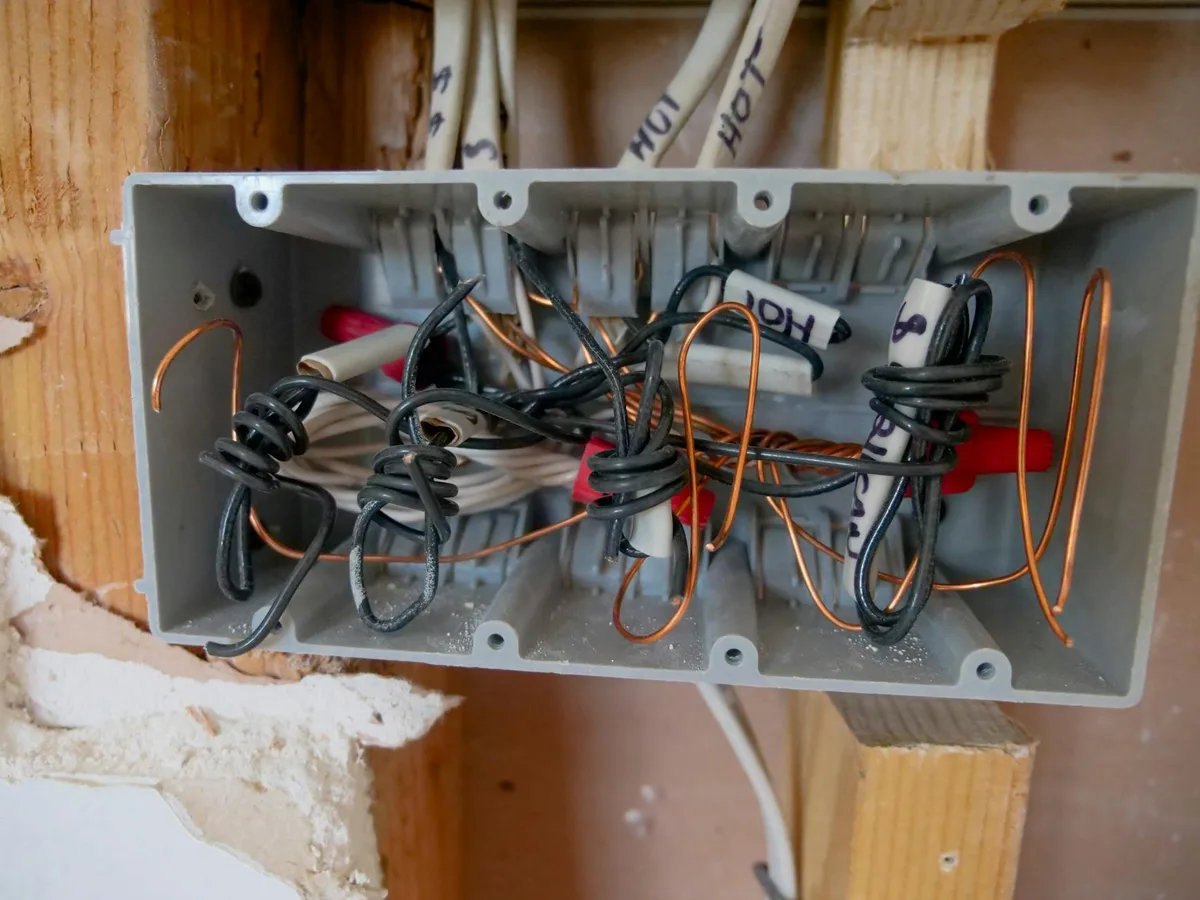
Safety is paramount, and proper grounding prevents electrical shock. Locate the grounding screw or terminal inside the junction box; it's usually marked with a ground symbol (three diagonal lines or arcs). Connect your main power supply's ground wire (typically green or bare copper) securely to this terminal. This connection creates a safe path for electricity to flow to the ground in the event of a fault, such as a live wire touching the motor’s metal casing.
Step 6: Final Checks and Securing Connections
Before you close up the terminal box and connect power, do one last thorough visual inspection. Double-check that all wires are firmly seated in their terminals and that any jumper connections are tight. If you used wire nuts, give them a gentle tug to ensure they're secure. Your motor's nameplate should provide an amperage rating; consult your local electrical codes for the appropriate fuse or circuit breaker size to protect the motor from overcurrent situations.
Common Wiring Mistakes to Avoid
Wiring errors can range from inconvenient motor hums to outright damage or safety hazards. A frequent issue is misinterpreting the wiring diagram for dual-voltage motors; connecting for the wrong voltage can burn out the motor windings. Another common slip-up is failing to properly tighten connections, which leads to arcing, overheating, and eventual failure. Also, overlooking the ground wire connection leaves the motor’s metal housing potentially energized, creating a serious shock risk.
Adjusting Motor Rotation Direction
Most three-phase motors are designed to run in a specific direction, typically clockwise, but your application might require counter-clockwise rotation. Fortunately, changing this is generally straightforward. If the motor spins the wrong way, you simply need to swap any two of the incoming power leads (L1, L2, L3). For instance, if L1 is connected to T1, L2 to T2, and L3 to T3, and the motor spins backwards, try swapping L1 and L2 so they connect to T2 and T1 respectively, leaving L3 connected to T3.
Always disconnect power before making this change.
When to Call in a Qualified Electrician
If you’re unsure about any step of the wiring process, or if your motor’s diagram looks significantly different from the common configurations, it’s wise to consult a qualified electrician. This is especially true if you're dealing with high-voltage systems (above 480V) or if your local electrical codes require professional installation for such equipment. Working with electricity, particularly three-phase power, carries inherent risks that a professional is trained to manage safely and effectively.
Safety First: Essential Precautions for Three-Phase Wiring
Always remember that electricity, especially three-phase power, can be lethal. Before you even open the terminal box, ensure the main power supply to the motor is completely disconnected and locked out or tagged out to prevent accidental re-energization. Wear appropriate personal protective equipment, such as insulated gloves and eye protection. Verify that all connections are made according to the manufacturer’s diagram and local electrical codes, such as the National Electrical Code (NEC) standards where applicable.