A car battery has a date code that shows the month and year it was manufactured, which helps you know its age and remaining lifespan.
Think of that tiny stamped code on your battery the way you'd think of a "born on" date on a carton of milk. Skip past it, and you might end up stranded with a battery that's been quietly aging on a shelf for two years. As someone who's worked hands-on with vehicles for years, I can tell you that reading a battery date isn't just a mechanic's trick. It's one of the smartest things a car owner can learn. This guide will walk you through exactly what that date means, how to decode it, and why it matters more than most people think.

Why the Date on a Car Battery Matters
A car battery doesn't last forever. On average, it gives you about three to five years of solid service. But that window starts the moment the battery is built, not the moment you install it. Every day it sits on a shelf, in a warehouse, or on a store floor, it slowly loses a bit of charge through a process called self-discharge. So if you buy a battery that's already been sitting around for a year, you're essentially losing a year of its life before you even turn the key.
Here's why paying attention to the date matters:
- Fresh batteries hold a stronger charge out of the box.
- An old battery may look brand new but fail much sooner than expected.
- Knowing the date helps you verify you're not getting old stock disguised as new.
- It's useful when comparing warranties, which are often tied to the purchase date.
I learned this the hard way early in my career. A customer came in with a "new" battery that wouldn't hold a charge after just eight months. When we checked the date code, the battery was already over a year old. That's the day I started checking every battery I install.
Where to Find the Date on a Car Battery
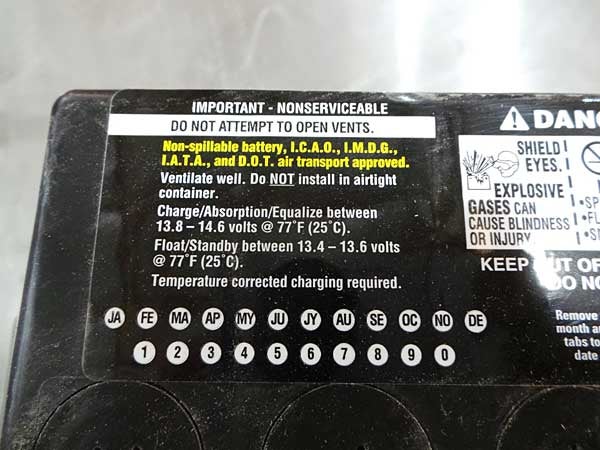
The date is usually printed or stamped directly on the battery case. Most of the time, you'll find it on the top of the battery or on one of the side labels. Look for:
- A small round sticker with numbers and letters
- A laser-etched code on the casing
- A printed alphanumeric string near the brand name or specs
On some batteries, it blends in with other information like voltage or part numbers. You might need to wipe away dust or grime to see it clearly. A flashlight helps, especially on batteries tucked deep inside the engine bay.
I've found that round sticker codes are the most common, especially on batteries made by major brands like Interstate, DieHard, and Optima. Side-printed codes tend to appear on more recent models.
How to Decode the Battery Date Code
Battery date codes aren't standardized across all brands, but there are a few common formats you'll run into. Let me break them down so you don't need a decoder ring.
The Letter-Number Format
This is one of the most common styles. A letter represents the month, and a number represents the year.
- A = January
- B = February
- C = March
- D = April
- E = May
- F = June
- G = July
- H = August
- I = September
- J = October
- K = November
- L = December
For example, "C5" would mean March 2025. "D9" means April 2019. Some brands use "M" for January to avoid confusion with "I" for September, but most stick with the A through L system.
The Numeric Format
Some manufacturers, especially those serving commercial or industrial markets, use a numeric date code. You'll typically see something like "10/24" or "24-10." This means October 2024. It reads just like a regular date you'd see anywhere else.
The Sticker Dot System
Certain brands use a color-coded sticker with a small dot or punch hole. Each color or position corresponds to a specific month or quarter. You'll usually find an explanation in the owner's manual or on the manufacturer's website.
I once worked on a fleet of delivery trucks where the date codes were all numeric. It made life simple. But on a personal project car, I ran into a letter-number code from a brand I wasn't familiar with. I had to call the manufacturer to confirm what "K3" meant. It turned out to be November 2023. Lesson learned: when in doubt, ask the maker directly.
What the Date Doesn't Tell You
The manufacture date is just one piece of the puzzle. It tells you how old the battery is, but not how it's been treated since then. A battery that's been sitting in a hot warehouse for 18 months will likely perform worse than one that's been on a store shelf for three months, even though both are technically the same age.
Here are a few things the date doesn't reveal:
- How deeply the battery has been discharged
- Whether it was stored at extreme temperatures
- How many charge cycles it has gone through
- If it has internal damage from vibration or impact
That's why I always recommend a quick load test or voltage check before installing a battery, even if the date looks fresh.
How Long Does a Car Battery Last After the Manufacture Date
Even with a recent date, a battery has a shelf life. Most experts, including those at AAA, recommend not buying a battery that's older than six months from its manufacture date. After that point, the internal chemistry starts to degrade even without use.
Here's a rough timeline to keep in mind:
- 0 to 6 months: Ideal condition. Full capacity expected.
- 6 to 12 months: Still good, but slightly reduced lifespan.
- 12 to 18 months: Noticeable drop in performance.
- 18+ months: High risk of early failure.
Heat speeds up this decline, which is why batteries stored in warm climates or hot garages age faster than those kept in cooler environments. If you live in the South or Southwest, keep this in mind when shopping.
Tips for Buying a Battery with a Fresh Date
Buying a car battery doesn't have to feel like guesswork. With a little attention, you can walk out with a battery that gives you its full service life. Here's what I personally do when helping someone pick a battery:
- Check the date code before anything else. Make sure it's within six months.
- Look at the battery case. Any swelling, cracks, or leaks are red flags.
- Feel the weight. A healthy battery should feel solid and heavy.
- Ask about the warranty. A longer warranty often signals a more reliable product.
- Buy from a store with high turnover. Batteries move fast there, so they're less likely to be old stock.
I always tell friends and customers to avoid batteries that have been sitting on the shelf for too long. Even if the price is tempting, a slightly newer battery at a slightly higher cost will almost always save you money in the long run.
Common Myths About Battery Dates
Over the years, I've heard some interesting takes on what the date means. Let me clear up a few common myths:
- Myth: The date tells you when the battery was installed.
- It doesn't. It shows when it was made.
- Myth: A battery with an older date is always bad.
- Not always. Storage conditions matter more than age alone.
- Myth: All batteries use the same coding system.
- They don't. Always check the brand's specific format.
- Myth: You can't test an old battery.
- You can. A simple voltmeter or load test can tell you a lot.
Clearing up these myths has saved many of my customers from making wrong assumptions. I once had someone return a perfectly good battery because they thought the code was an expiration date. It wasn't. It was just the manufacture date, and the battery had months of life left.
What Happens If You Ignore the Date
Skipping the date check might not seem like a big deal, but it can lead to real headaches. Here's what I've seen happen when people don't pay attention:
- Premature battery death
- Unexpected breakdowns in cold weather
- Warranty disputes due to old stock
- Money wasted on a short-lived product
The worst case I saw was a family on a road trip whose battery died in the middle of nowhere. It was a "new" battery they'd bought just three months earlier. When we checked, the date showed it had been on the shelf for over two years. That trip turned into a costly tow and an unplanned hotel stay. All because nobody checked the date.
Frequently Asked Questions
How do I read the date on a car battery?
Look for a letter-number or numeric code on the top or side of the battery. The letter usually represents the month, and the number represents the year. For example, "B4" means February 2024.
Where is the date stamped on a battery?
It's typically on a sticker on the top of the battery, or laser-etched into the side. It may be near the brand name or specifications.
How old is too old when buying a car battery?
If the battery is more than six months past its manufacture date, consider it less than ideal. Try to find one that's been on the shelf for less than three months for the best results.
Can a battery be too new to use?
No. A battery can never be too new. The newer the date, the more life it has left. Fresh batteries also tend to charge more efficiently.
Do all car battery brands use the same date format?
No. Different manufacturers use slightly different systems. Some use letters and numbers, others use month and year digits, and a few use color-coded stickers. Always check the specific brand's guide.
Does the battery date affect warranty claims?
Yes. Most warranties begin from the date of purchase, but the manufacturer may deny claims if the battery was already old when you bought it. Always keep your receipt.
Final Thoughts
Reading the date on a car battery is a small habit that can save you a lot of trouble. It's one of the easiest ways to make sure you're getting a fresh, reliable product that will serve you well for years. Whether you're a weekend mechanic or just someone who wants a dependable ride, this little code is worth your attention. Next time you're in the market for a battery, take a few seconds to check the date. Your future self, sitting in a car that starts every morning without fail, will thank you.
If you found this guide helpful, feel free to share it with a friend who's about to buy a new battery. And if you have any questions or stories of your own, drop them in the comments. I'd love to hear them.