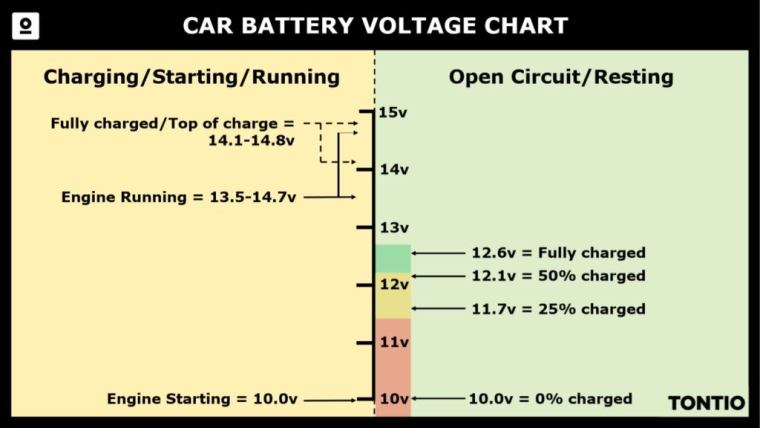
A healthy car battery should read between 12.4 and 12.7 volts when the engine is off, and 13.7 to 14.7 volts when the engine is running.
If you have ever turned the key and heard nothing but a sad click, you already know how important a good car battery voltage really is. After spending more than a decade working with cars, testing batteries, and helping drivers figure out why their vehicles would not start, I have learned that voltage is the heartbeat of your electrical system. In this guide, I will walk you through everything I know about good battery voltage, what the numbers actually mean, how to test them, and what to do when things go wrong.
What Is a Good Voltage on a Car Battery
Think of your car battery like a water tank. Voltage is the pressure inside that tank. When the engine is off, a fully charged and healthy battery should sit comfortably between 12.4 and 12.7 volts. That range tells you the battery has enough stored energy to crank the engine and run your accessories.
When the engine is running, the alternator takes over and pushes voltage higher, usually between 13.7 and 14.7 volts. This is the charging range, and it means your alternator is doing its job and topping off the battery while you drive.
If your readings fall outside these ranges, something is off, and your battery, alternator, or wiring deserves attention.
Why Car Battery Voltage Matters
Voltage is more than just a number on a multimeter. It is a direct window into the health of your vehicle's entire electrical system. I have seen countless drivers ignore small voltage drops until their car refused to start on a freezing morning.
Here is why it matters:
- Reliable starts every time you turn the key or push the button
- Proper power flow to lights, infotainment, sensors, and safety features
- Longer battery life because the system charges at the correct rate
- Early warning before a full breakdown leaves you stranded
A weak battery also puts extra stress on the alternator and starter motor. Fixing a $100 battery early can save you from a $500 alternator repair later.
Resting Voltage vs Running Voltage
One of the most common mistakes I see is people testing voltage while the engine is running and assuming that is the battery's health. Not quite. You need to understand the difference between resting voltage and running voltage.
Resting Voltage
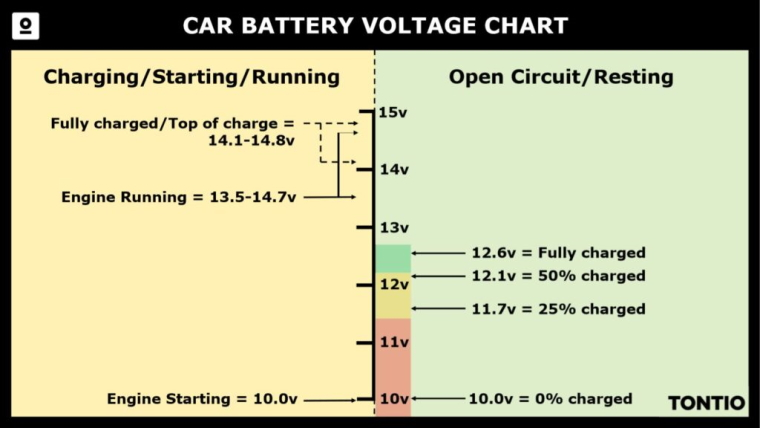
This is the voltage when the car is off and the battery has been sitting for at least a few hours, ideally overnight. A reading of 12.6 volts or higher means the battery is fully charged. Anything below 12.2 volts suggests the battery is undercharged or aging.
Running Voltage
This is the voltage while the engine is running. The alternator should keep the system between 13.7 and 14.7 volts. If it reads below 13.5, the alternator may not be charging properly. If it reads above 15 volts, the alternator is overcharging, which can cook your battery.
I always tell people to take both readings. Together, they tell a much clearer story than either one alone.
How to Test Car Battery Voltage the Right Way
You do not need to be a mechanic to check your battery. A basic digital multimeter costs less than a tank of gas and can save you a tow bill. Here is the simple method I use every time:
- Turn off the car and remove the key from the ignition
- Wait at least 30 minutes so the surface charge fades, ideally test in the morning before driving
- Set your multimeter to DC voltage, usually the 20V setting
- Connect the red lead to the positive terminal, marked with a plus sign
- Connect the black lead to the negative terminal, marked with a minus sign
- Read the number on the screen
Write the number down along with the date. Tracking voltage over time helps you spot a slow decline before it turns into a no-start situation.
Understanding the Voltage Chart
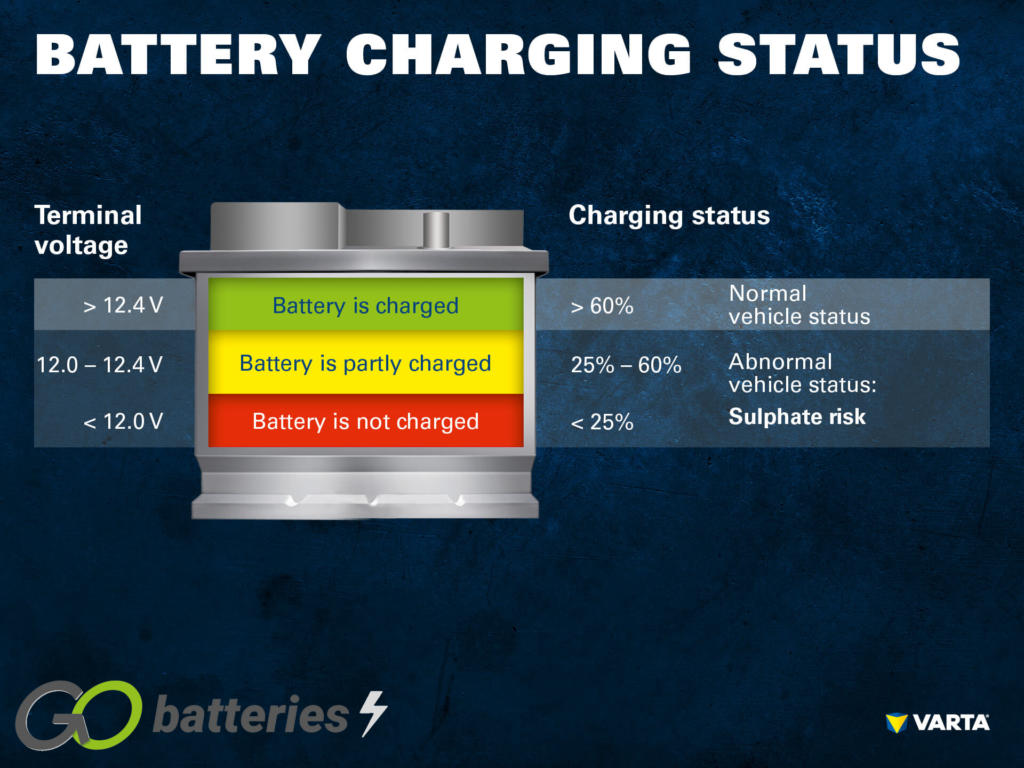
Numbers on a screen mean little without context. Here is a simple chart I share with friends and customers:
- 12.7 volts or higher: Fully charged and healthy
- 12.4 to 12.6 volts: Good charge, slightly under full
- 12.2 to 12.3 volts: Getting weak, recharge soon
- 12.0 to 12.1 volts: Low charge, battery is struggling
- Below 12.0 volts: Discharged, possible damage if left this way
If your resting voltage stays below 12.4 volts after a full charge or a long drive, the battery is likely reaching the end of its life.
Signs Your Battery Voltage Is Too Low
Cars are pretty good at telling you when something is wrong. You just have to listen. Here are the warning signs I always watch out for:
- Slow cranking when you turn the key, especially in cold weather
- Dim headlights or interior lights at idle
- Clicking sound from the engine bay when trying to start
- Battery warning light glowing on the dashboard
- Radio or clock resetting randomly
- Swollen or bloated battery case
If you notice any of these, grab your multimeter and check the voltage before you get stranded.

What Causes Low or High Battery Voltage
From my years of troubleshooting electrical issues, I can tell you the usual suspects almost always fall into a few categories.
Common Causes of Low Voltage
- Leaving headlights or interior lights on overnight
- A failing alternator that cannot keep up with demand
- Corroded or loose battery terminals
- An old battery that can no longer hold a charge
- A parasitic drain from an accessory or module that stays awake
Common Causes of High Voltage
- A faulty voltage regulator inside the alternator
- Loose or damaged ground wires
- Aftermarket accessories that confuse the charging system
Most low voltage problems are simple fixes. High voltage issues are less common but more dangerous because they can damage electronics quickly.
How Temperature Affects Battery Voltage
Here is something many people overlook: temperature has a big impact on battery performance. Cold weather thickens the oil in your engine, which makes the starter work harder, while also slowing down the chemical reaction inside the battery. That is why cars struggle to start in winter.
Heat does the opposite. It speeds up chemical activity, which can cause batteries to self-discharge faster and shorten their lifespan.
A battery that reads 12.4 volts on a hot summer day might drop to 12.0 volts on a freezing morning. That is normal. But if the readings swing wildly or stay low regardless of weather, the battery needs help.

How to Maintain Good Battery Voltage
Prevention is always cheaper than repair. These habits have helped me keep batteries healthy for years:
- Drive your car regularly, even short trips help keep the battery charged
- Keep the terminals clean and tight, a wire brush works wonders
- Avoid deep discharges by turning off lights and accessories when the engine is off
- Test the voltage every few months, especially before winter or long trips
- Use a trickle charger or battery maintainer if the car sits for weeks at a time
A little attention goes a long way. Most batteries last 3 to 5 years, but with proper care I have seen them last 6 years or more.
When to Replace Your Car Battery
Even the best battery eventually gives up. Here is how I know it is time:
- Voltage drops below 12.2 volts even after a full charge
- The battery is more than 4 to 5 years old
- You have needed jump starts more than once in the past few months
- The battery case is cracked, swollen, or leaking
If you are unsure, most auto parts stores will test your battery for free. It takes five minutes and gives you peace of mind.

Frequently Asked Questions
What voltage is too low to start a car?
If your resting voltage drops below 12.2 volts, the battery may not have enough power to crank the engine reliably. Below 12.0 volts, you are at serious risk of a no-start situation.
Is 11.9 volts bad for a car battery?
Yes, 11.9 volts is considered discharged. At that level, the battery is below 50 percent capacity, and leaving it that way can cause permanent damage, especially in cold weather.
Can a car battery show 12 volts and still be bad?
Absolutely. A battery can show a surface charge of around 12 volts right after driving but drop quickly once it sits. That is why testing after the battery rests is so important. A truly healthy battery holds its voltage over time.
How often should I check my battery voltage?
I recommend checking at least once every two months, and definitely before long trips or seasonal changes. Regular checks help you spot problems early.
Does idling the car charge the battery?
Idling does charge the battery, but very slowly. Driving at road speeds is far more effective because the alternator spins faster and produces more output.
Conclusion
Good voltage on a car battery is the foundation of a reliable vehicle. Aim for 12.6 volts at rest and 13.7 to 14.7 volts while running. Test your battery regularly, keep the terminals clean, and pay attention to the warning signs your car gives you.
A small habit of checking voltage today can save you from a frustrating breakdown tomorrow. If you have questions about your specific vehicle or want to share your own battery story, drop a comment below. I would love to hear from you.