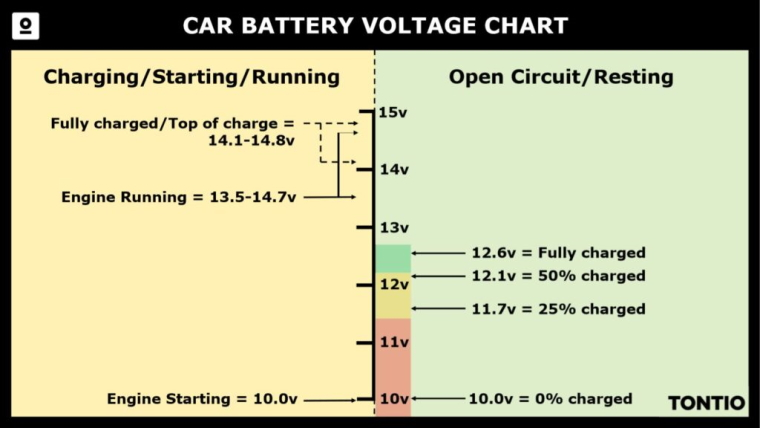
A healthy car battery should read between 12.4 and 12.7 volts when the engine is off, and 13.7 to 14.7 volts when running.
If you've ever popped your hood, seen those two little posts on top of a black box, and wondered whether what you're seeing is normal, you're definitely not alone. Car battery voltage is one of those things most drivers ignore until something goes wrong, but it actually tells you a lot about the health of your vehicle's heart. Over the years of working on cars and helping friends troubleshoot weird electrical issues, I've learned that understanding your battery's voltage can save you from getting stranded, save you money, and help you catch small problems before they become big ones. Let me walk you through everything you need to know about what your car battery voltage is supposed to be, what different readings mean, and how you can stay ahead of battery trouble.
Understanding Car Battery Voltage Basics
Voltage is simply the pressure that pushes electricity through your car's system. Think of it like water pressure in a hose. Too little pressure and nothing flows well, too much and you risk damaging the hose. Your car battery is a 12-volt battery, but it never sits exactly at 12 volts. It always reads a bit higher when fully charged because of the chemistry happening inside.
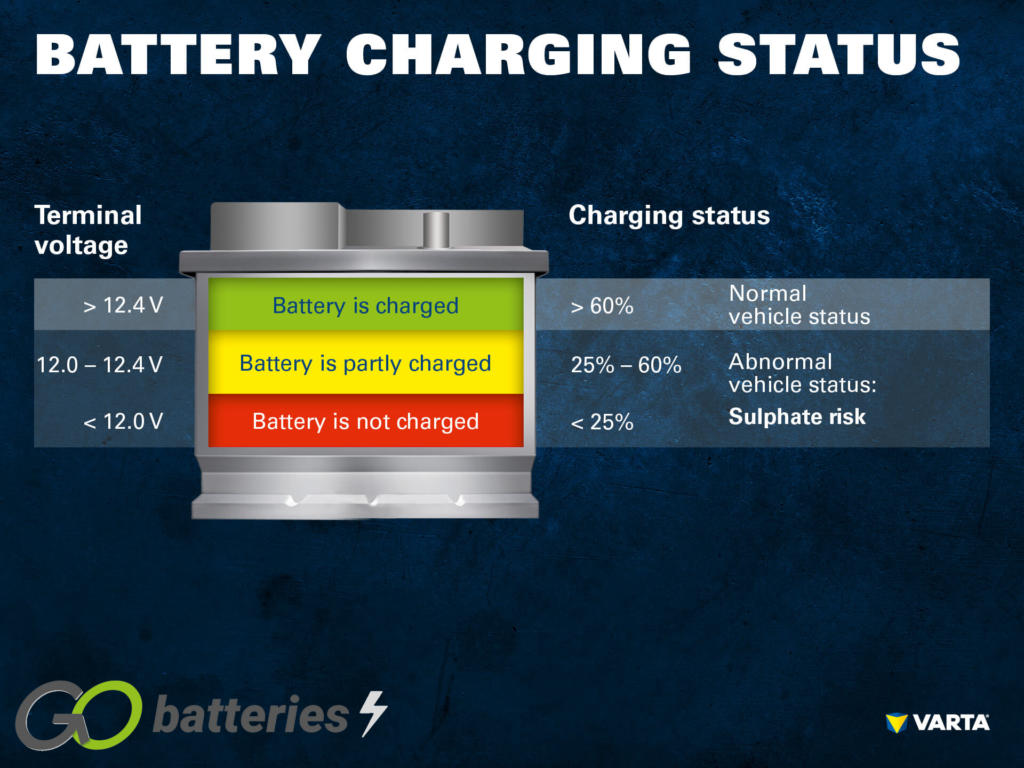
When your engine is off, a healthy, fully charged battery will sit somewhere between 12.4 and 12.7 volts. That range means the battery has enough stored energy to start your car and run all the electronics when needed. If you're getting a reading lower than 12.2 volts, your battery is undercharged. If it's below 11.8 volts, you're looking at a deeply discharged battery that may not have enough juice to start your engine.
When you turn the key or push the start button, the battery's job is to deliver a burst of power to the starter motor. That burst can dip the voltage temporarily, but it should recover quickly. Once the engine is running, the alternator takes over, and the voltage should rise to between 13.7 and 14.7 volts. This shows that the alternator is charging the battery and powering the electrical system at the same time.
What Voltage Should a Car Battery Read When Off?
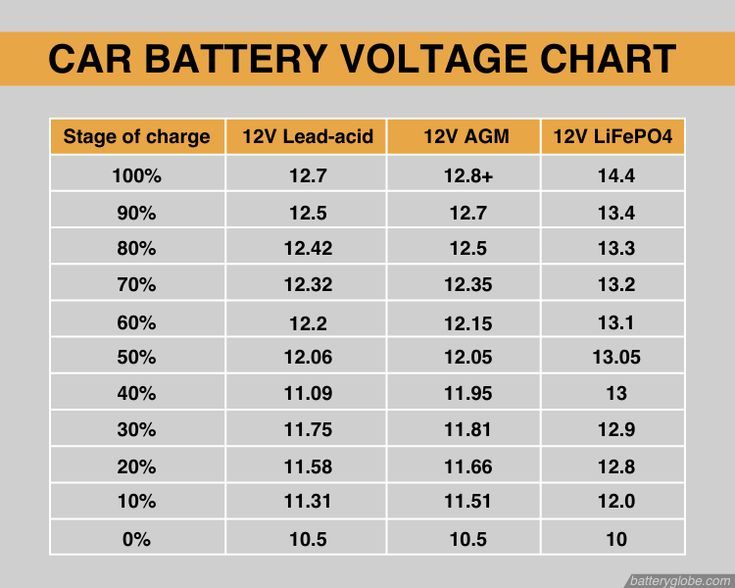
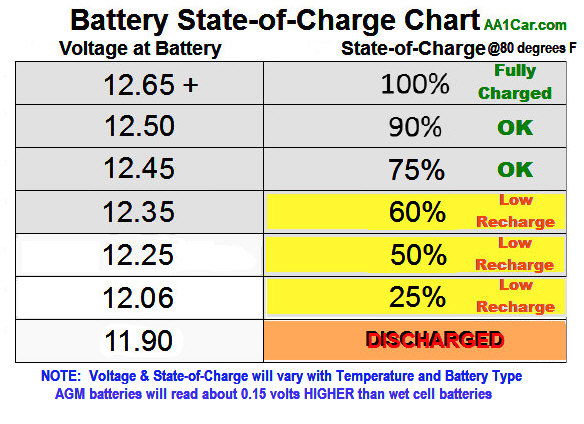
When your car is off and has been sitting for at least a few hours, the battery should show a resting voltage. This is the truest reading of the battery's state of charge because no surface charge from the alternator is fooling the numbers.
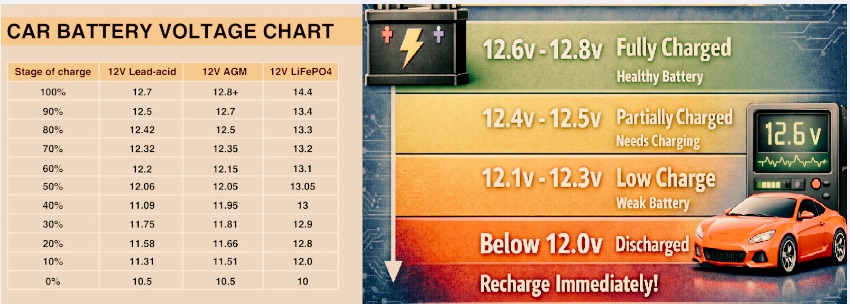
Here is a simple guide to what resting voltage means:
- 12.6 to 12.7 volts: 100 percent charged, perfect condition
- 12.4 volts: About 75 percent charged, still good
- 12.2 volts: About 50 percent charged, getting low
- 12.0 volts: About 25 percent charged, needs attention
- Below 11.8 volts: Discharged, likely won't start the car
I remember one winter when my old truck sat outside for a week in freezing temps. When I finally went to start it, the voltage was at 12.1 volts. It barely turned over. That's when I learned firsthand how quickly cold weather can sap a battery's strength. If your battery reads under 12.4 volts regularly, even after driving, it's a sign something is off.
What Voltage Should a Car Battery Read When Running
Once the engine is on, your alternator is doing the heavy lifting. The voltage should climb to between 13.7 and 14.7 volts. This range is important because it tells you the alternator is charging the battery properly while also running all the accessories like headlights, the radio, and the climate control.
If the voltage is too low, like under 13.5 volts while running, the alternator may not be charging the battery well enough. Over time, this leaves the battery undercharged and shortens its life. On the flip side, if the voltage goes above 15 volts while running, the alternator's voltage regulator may be failing. Too much voltage can cook the battery, damage the electronics, and even cause bulbs to blow out.
A quick tip from experience: if you ever see your headlights getting brighter when you rev the engine, that's a classic sign of a weak voltage regulator. I made that mistake once and ignored it until my battery swelled up and cracked. Lesson learned.

How to Test Your Car Battery Voltage
Testing your battery voltage is one of the easiest things you can do at home, and you don't need to be a mechanic. All you need is a digital multimeter, which you can grab for under twenty dollars at any auto parts store. Here is how to do it:
- Make sure the car has been off for at least a few hours so you get a true resting voltage.
- Set your multimeter to DC voltage, usually the 20-volt setting.
- Connect the red lead to the positive battery terminal, marked with a plus sign.
- Connect the black lead to the negative battery terminal, marked with a minus sign.
- Read the number on the screen and compare it to the resting voltage guide above.
If you want to test the charging system, start the engine and check the voltage again. It should sit between 13.7 and 14.7 volts. If you have someone who can rev the engine a little while you watch the multimeter, that's even better. The voltage should stay steady, not jump up and down.
Factors That Affect Car Battery Voltage
Several things can influence your battery voltage, and knowing them helps you understand what is normal for your situation.
Temperature is a big one. Cold weather thickens the oil in your engine, making the starter work harder, and it also slows the chemical reactions inside the battery. That is why batteries often die in the winter, even if they were fine in the fall. Hot weather has the opposite effect on the chemistry but can still damage batteries by evaporating the liquid inside.
Age matters too. Most car batteries last between three and five years. As they age, their ability to hold a charge drops. You may notice the resting voltage slowly creeping down over time. That's your hint to start shopping for a replacement before you get stranded.
Accessory drain can also pull your voltage down. Things like leaving an interior light on, a phone charger plugged in, or a glove box light that won't turn off can slowly drain the battery overnight. If you wake up to a no-start situation, check for these simple things first.
Finally, a weak alternator will never fully charge the battery. You might drive for an hour and still see a low resting voltage because the alternator isn't doing its job. If your battery keeps dying even after a long drive, the alternator is a prime suspect.

Signs Your Battery Voltage Is Off
Your car usually gives you warning signs when the voltage isn't right. If you pay attention, you can catch problems before they leave you stuck.
- Slow cranking: The engine turns over slowly, like it's too tired to start.
- Dim headlights: They look weaker than usual, especially at idle.
- Dashboard warning lights: The battery light or check engine light may appear.
- Clicking sound: You hear rapid clicking when turning the key but the engine doesn't start.
- Electrical glitches: Power windows move slow, the radio resets, or the infotainment screen acts weird.
- Swollen battery case: The sides of the battery look puffed out, often from overcharging or heat damage.
I once had a car that started fine in the driveway but died at a stoplight. The voltage was jumping between 13 and 16 volts. Sure enough, it was a bad voltage regulator that fried a battery and an alternator in the same week. Don't ignore those little warnings.
How to Keep Your Battery Voltage Healthy
Taking care of your battery isn't hard, and a little attention goes a long way.
Drive your car regularly. Short trips don't give the alternator enough time to fully charge the battery. If you leave your car sitting for weeks, consider using a battery tender or trickle charger to keep it topped off.
Keep the terminals clean. Corrosion builds up on the battery posts and can block the flow of electricity. A quick scrub with a wire brush and some baking soda and water does the trick.
Turn off accessories when the engine is off. Don't sit in the car with the radio blasting and the engine off. That drains the battery fast.
Check the voltage every few months. A two-minute test with a multimeter can tell you a lot. If you see the resting voltage dropping over time, you know the battery is on its way out.
Get the battery tested before long trips. Most auto parts stores will test your battery for free. It's a great way to make sure you're not heading out on a road trip with a weak battery.
Common Myths About Car Battery Voltage
There are a few things people get wrong about battery voltage, so let me clear them up.
Myth one: A battery reading 12.0 volts is fine. It's not. 12.0 volts means the battery is about 25 percent charged. That's a problem waiting to happen.
Myth two: You should never let a battery die completely. Actually, deep discharges do harm lead-acid batteries over time, but one full discharge won't kill a healthy battery. Repeated deep discharges will.
Myth three: Idling the car fully charges the battery. Idling doesn't put much load on the alternator. Driving at road speed is much better for charging.
Myth four: A new battery doesn't need testing. Even new batteries can be defective. It's smart to check the voltage after installation to make sure everything is working right.
When to Replace Your Car Battery
Sometimes a low voltage reading means the battery is just tired and needs replacing. Here are a few signs it's time.
- The resting voltage drops below 12.2 volts even after a long drive.
- The battery is more than four or five years old.
- You see visible damage like cracks, bulges, or heavy corrosion.
- The battery fails a load test at the auto parts store.
- You keep needing jump starts.
A healthy battery should give you years of reliable service, but nothing lasts forever. Replacing it before it leaves you stranded is always better than waiting for the worst.
Frequently Asked Questions
What voltage is too low for a car battery?
A car battery is too low when it reads under 12.0 volts at rest. That means it's deeply discharged and probably won't start the car. Anything below 11.8 volts is considered dead, and you'll likely need a jump or a charger to bring it back.
Is 11.9 volts enough to start a car?
11.9 volts is borderline and usually not enough to reliably start most vehicles. The starter motor needs a strong burst of power, and a battery that low often results in a slow crank or no crank at all. Best to charge it before trying to start the car.
What voltage indicates a bad alternator?
If the running voltage is consistently below 13.5 volts or above 15 volts, the alternator is likely the problem. A healthy alternator should keep the voltage between 13.7 and 14.7 volts while the engine is running.
Can a car battery show 12 volts and still be bad?
Yes. A battery can read 12 volts right after being charged but drop quickly under load. That means it has a bad cell and can't hold a charge. A load test is the best way to catch this issue.
How often should I check my car battery voltage?
Checking your battery voltage every two to three months is a good habit. It's also smart to check it before winter, before long trips, and any time your car shows signs of electrical trouble. It only takes a couple of minutes and can save you from a lot of headaches.
Your car battery voltage is a small number that tells a big story. A healthy resting voltage between 12.4 and 12.7 volts means your battery is charged and ready, while a running voltage between 13.7 and 14.7 volts shows your alternator is doing its job. Knowing these numbers, testing them regularly, and watching for the early signs of a weak battery can keep you from getting stranded and help you get the most life out of your battery. Take a few minutes this week to pop the hood, grab a multimeter, and see where your battery stands. You'll be glad you did the next time you turn the key on a cold morning.