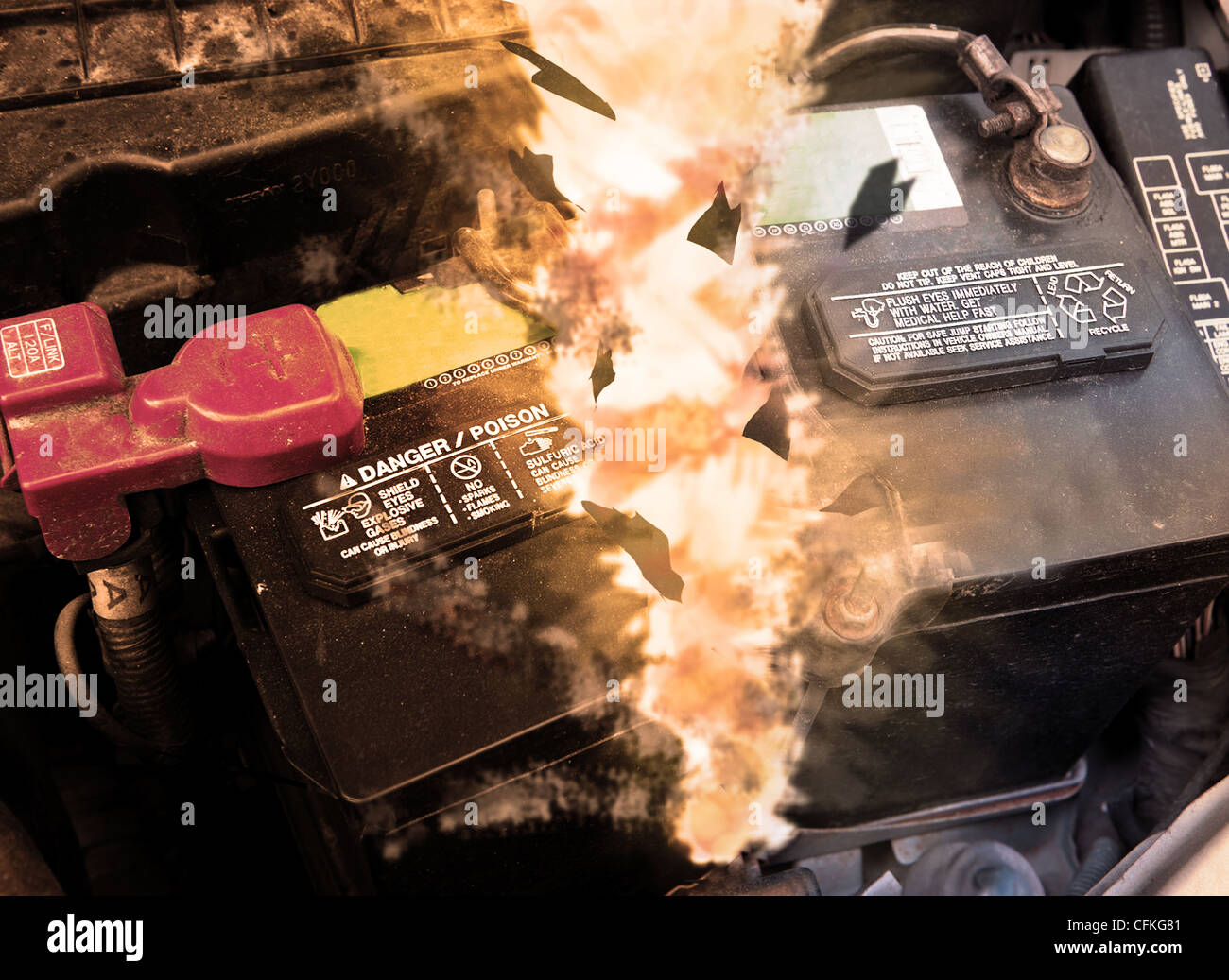
A car battery can explode due to hydrogen gas buildup from overcharging, internal short circuits, physical damage, or extreme heat igniting combustible gases inside the sealed casing.
Picture a calm drive suddenly interrupted by a loud pop and a spray of acid under the hood. A car battery explosion is rare, but when it happens, it’s violent, dangerous, and completely preventable once you understand what’s really going on inside that black box under your hood. Over the years, I’ve seen batteries crack, swell, and blow apart right on the workbench, and in every case, the root cause traced back to a handful of repeating mistakes. Let me walk you through exactly what causes a car battery to explode, how to spot the warning signs, and what you can do to keep yourself safe.

How a Car Battery Works and Why It Can Blow Up
Before diving into the causes, it helps to understand what’s happening inside your battery. A standard 12-volt lead-acid battery stores energy through a chemical reaction between lead plates and sulfuric acid electrolyte. During charging, the battery releases hydrogen and oxygen gases through tiny vents. Under normal conditions, those gases escape safely. But when something throws off that balance, pressure builds, and the battery can crack, leak, or violently rupture.
Think of it like a shaken soda bottle. A little agitation is fine, but once pressure exceeds what the container can handle, things get messy fast.
Overcharging and Excessive Voltage
The single most common reason a car battery explodes is overcharging. When the alternator or charger pushes too much voltage into the battery, the electrolyte heats up and boils. This accelerates the release of hydrogen gas far beyond the design limits.
I remember a customer who installed a high-output aftermarket alternator but never upgraded his voltage regulator. Within weeks, his battery was hot to the touch, swelling at the sides, and venting white vapor. Had he not unplugged it that morning, it would have burst. Overcharging causes:
- Rapid boiling of the electrolyte
- Excessive hydrogen gas production
- Heat buildup that weakens the plastic casing
- Internal melting of separators
A healthy charging system should stay between 13.8 and 14.4 volts. Anything consistently above 15 volts is a red flag.
Hydrogen Gas Accumulation and Spark Ignition
Even a properly charged battery releases small amounts of hydrogen gas, especially right after driving or jump-starting. Hydrogen is highly flammable, and all it takes is one spark to ignite it. Common spark triggers include:
- Loose or corroded battery terminals
- Jump-starting with reversed cables
- Using metal tools near the terminals
- A cracked case exposing internal gases
In a garage with poor ventilation, that hydrogen cloud can linger around the battery. The moment you hook up a charger or turn the key, a tiny arc can ignite the gas and cause the battery to blow apart like a small bomb.
Physical Damage and Impact
Dropping a battery, hitting it with a wrench, or driving over rough terrain can crack the casing. Once the seal is broken, the internal plates shift, the electrolyte leaks, and the chance of an internal short circuit skyrockets.
I once watched a mechanic tap a stubborn terminal post with a hammer to free a stuck cable. The battery had a hairline crack he didn’t notice, and a chunk of casing shot across the shop like a bullet. Physical damage is unpredictable. Always handle batteries carefully and inspect them after any collision or hard bump.
Internal Short Circuits
Sometimes the cause is buried deep inside. When the lead plates inside a battery touch each other or shed debris, they create an internal short. This generates intense heat in seconds, boils the electrolyte, and can rupture the case. Causes of internal shorts include:
- Old age and plate degradation
- Sulfation buildup over time
- Manufacturing defects
- Deep discharges followed by rapid charging
An internal short often shows up as a battery that dies overnight, feels hot after charging, or smells like rotten eggs. Never ignore those signs.
Extreme Temperatures and Thermal Runaway
Heat is a battery’s worst enemy. In summer, under-hood temperatures can easily climb above 200°F. That heat speeds up every chemical reaction inside the battery, especially if it’s already overworked. Cold weather causes the opposite problem. A frozen battery expands, cracks the case, and can leak acid that reacts violently with metal surfaces.
Thermal runaway is a chain reaction where rising temperature causes more current flow, which causes more heat, until the battery literally cooks itself. Once it starts, the only safe move is to disconnect everything and step back.
Manufacturing Defects and Low-Quality Batteries
Not all batteries are built the same. Cheap off-brand batteries often use thinner plates, weaker separators, and lower-grade plastic. They’re more prone to swelling, leaking, and sudden failure. I’ve personally popped the seal on bargain batteries that smelled like a chemistry set gone wrong.
Stick with batteries that meet OEM specifications, carry solid warranties, and come from trusted manufacturers. Saving $20 isn’t worth a blown-up engine bay.
Improper Jump-Starting Mistakes
Jump-starting is one of the most dangerous moments for a battery explosion. Reversing the cables, connecting the negative clamp to the wrong spot, or sparking near the battery can ignite trapped hydrogen gas.
Always follow these steps when jump-starting:
- Connect red to positive on the dead battery
- Connect red to positive on the donor battery
- Connect black to negative on the donor battery
- Connect black to an unpainted metal ground on the dead car
- Start the donor car, then the dead car
- Remove cables in reverse order
Never let the clamps touch each other or spark near the battery.
Sulfation and Old Age
As a battery ages, lead sulfate crystals build up on the internal plates. This reduces capacity but also increases resistance, which generates heat during charging. An old battery is more likely to overheat, vent gas, and fail under load. Most car batteries last 3 to 5 years. Beyond that, you’re rolling the dice every time you turn the key.

Warning Signs Your Battery Is About to Explode
Your battery usually gives you clues before it fails catastrophically. Watch for:
- A strong rotten egg smell
- Bulging or swollen sides
- White or blue corrosion around terminals
- Hissing or bubbling sounds
- The battery feeling hot after driving
- Frequent need for jump-starts
- Dim lights paired with a weak crank
If you notice any of these, stop driving, ventilate the area, and have the battery tested immediately.
How to Prevent a Car Battery Explosion
Prevention is simple once you build the right habits. Keep your charging system in check by having the alternator and voltage regulator inspected annually. Clean your terminals regularly using a wire brush and baking soda solution to remove corrosion. Avoid jump-starting in enclosed spaces without ventilation. Replace your battery every 4 to 5 years, even if it seems fine. Always store spare batteries upright in a cool, dry place. Use a smart charger if your car sits for long periods.
What to Do If a Battery Explodes
Even with the best precautions, accidents happen. If your battery explodes, move away from the vehicle immediately. The acid spray can burn skin, damage paint, and blind you on contact. Ventilate the area to clear fumes. Neutralize the acid using baking soda and water. Wear gloves and eye protection before touching anything. Dispose of the battery properly at an auto shop or recycling center. Have the electrical system inspected before installing a new battery.
Frequently Asked Questions
Can a car battery explode while driving?
Yes, a car battery can explode while driving if the alternator sends excessive charge, the battery is damaged, or internal shorts cause a buildup of hydrogen gas that ignites from a spark or extreme heat under the hood.
Is it dangerous to jump-start a frozen battery?
Yes, jump-starting a frozen battery is extremely dangerous because the casing may be cracked, internal plates may be damaged, and the acid can leak or react violently once current flows through it.
Can heat alone cause a battery to explode?
Yes, extreme heat alone can cause a battery to explode by boiling the electrolyte, building internal pressure, and weakening the plastic casing until it cracks or ruptures.
Why does my battery smell like rotten eggs?
A rotten egg smell means hydrogen sulfide gas is escaping from the battery, usually due to overcharging, internal damage, or a failing cell that needs immediate attention.
How often should I check my battery to prevent explosions?
You should visually inspect your battery every month, clean the terminals every three months, and have a full electrical test once a year to catch issues before they become dangerous.
Final Thoughts
A car battery explosion is one of those things that feels random until you understand how it happens. Most cases come down to overcharging, physical damage, gas buildup, or plain old age. By keeping an eye on the warning signs, sticking to a maintenance routine, and respecting the power inside that little black box, you can dramatically lower your risk. Treat your battery like the live chemical system it is, and it will serve you safely for years. Have a question about your specific battery or charging system? Drop a comment below and I’ll help you troubleshoot it.