Use push-start for manual cars, call roadside assistance, or try a portable jump starter to revive a dead battery without jumper cables.
There is nothing more frustrating than turning the key and hearing nothing but a faint click. A dead battery always seems to strike at the worst possible moment, whether you are rushing to work, stuck in a parking lot, or stranded on a remote stretch of road. Most drivers immediately think of jumper cables, but what happens when you do not have a set? The good news is that a dead car battery is not always a dead end. With the right knowledge and a calm approach, you can get your vehicle running again or get the help you need without traditional jumper cables. Over the years, I have helped dozens of stranded drivers in exactly this situation, and I have tested these methods myself in everything from compact cars to older trucks. In this guide, I will walk you through practical, proven ways to deal with a dead battery when you do not have jumper cables, so you can handle the situation with confidence and get back on the road safely.
Safety First: What to Do Before You Try Anything
Before you attempt any method to revive a dead battery, taking a few safety precautions is essential. A car battery contains sulfuric acid and releases hydrogen gas, which can be explosive under certain conditions. Working around a battery without care can lead to chemical burns, electrical shocks, or damage to your vehicle electrical system.
Here are the key safety steps to follow:
- Turn off the ignition and remove the key from the cylinder.
- Engage the parking brake to prevent the vehicle from rolling.
- Wear protective gloves and safety glasses if you have them.
- Inspect the battery for cracks, leaks, or corrosion before touching it.
- Keep open flames, cigarettes, and sparks away from the battery area.
- Make sure the area is well-ventilated, especially if you are working in an enclosed space like a garage.
- Avoid leaning directly over the battery while connecting or disconnecting any cables or devices.
If the battery shows signs of physical damage, such as a swollen casing or leaking fluid, do not attempt to jump-start or charge it yourself. Instead, call for professional roadside assistance, as a damaged battery can be dangerous and may need to be replaced entirely.
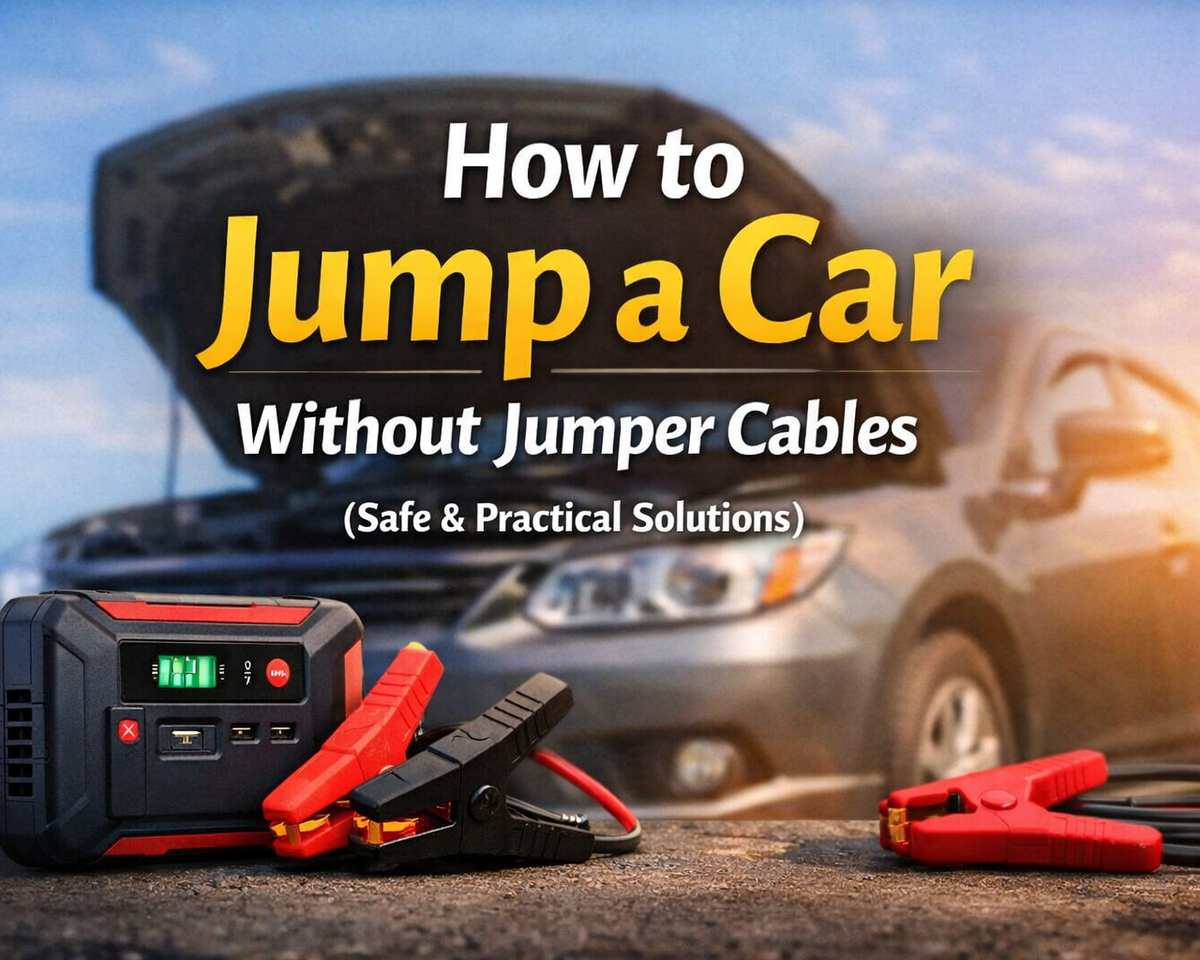
Method 1: Use a Portable Jump Starter
One of the best alternatives to traditional jumper cables is a portable jump starter, also known as a jump box or battery booster. These compact lithium-ion devices are designed to deliver a powerful burst of energy to a dead battery without needing another vehicle.
I keep a portable jump starter in my trunk at all times. It has saved me on three separate occasions, including one freezing morning when my old sedan would not start in a grocery store parking lot. Within minutes, I had the engine running again, and I did not have to flag down a stranger for help.
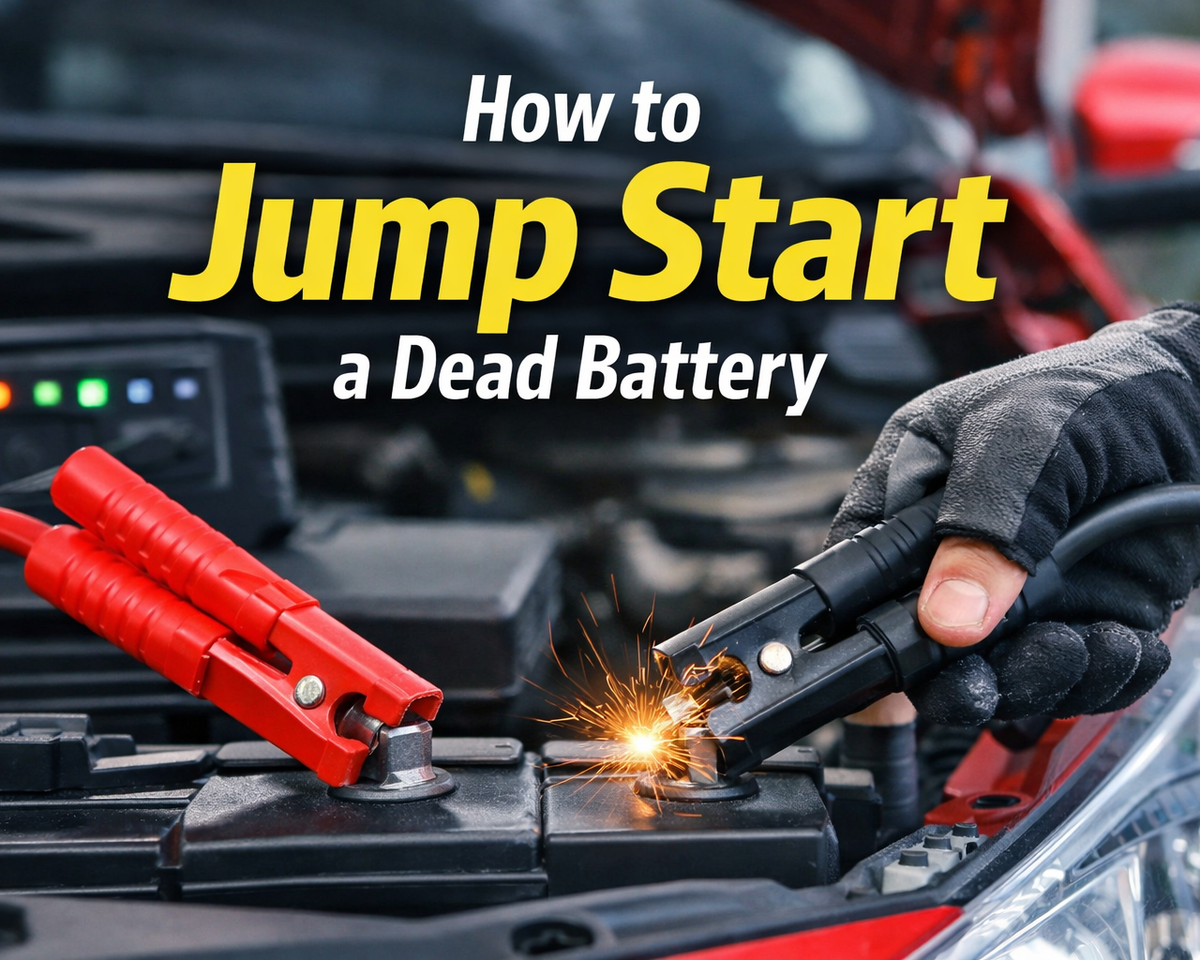
To use a portable jump starter effectively, follow these steps:
- Make sure the jump starter is fully charged before you head out, as most hold enough power for 10 to 20 jumps depending on the model.
- Connect the red clamp to the positive terminal of your battery, marked with a plus sign or the letters POS.
- Connect the black clamp to an unpainted metal surface on the engine block, away from the battery and fuel lines. This serves as a grounding point.
- Turn on the jump starter and wait about 30 seconds for the power to stabilize.
- Try starting your car. If it does not start right away, wait another minute and try again.
- Once the engine is running, disconnect the clamps in reverse order, black first, then red.
- Let the car idle for at least 15 minutes to allow the alternator to recharge the battery.
Portable jump starters are widely available, affordable, and easy to use. They are a smart investment for any driver, especially if you frequently travel long distances or drive an older vehicle with a weaker battery.
Method 2: Push-Start a Manual Transmission Vehicle
If you drive a car with a manual transmission, push-starting, also called bump-starting or pop-starting, is one of the oldest and most reliable tricks for reviving a dead battery without jumper cables. This method uses the momentum of the vehicle to turn the engine over and get it running.
I learned this trick from my uncle when I was 16, and it has come in handy more times than I can remember. There was one winter afternoon when my battery gave out in the driveway, and I had no cables or jump starter. Two friends helped me push the car down the slight incline of the yard, and I popped the clutch in second gear. The engine roared to life, and I drove straight to the auto parts store for a new battery.
To push-start a manual car safely, here is what you need to do:
- Find a flat or slightly downhill surface to make pushing easier.
- Turn the ignition key to the on position, but do not start the engine.
- Depress the clutch pedal fully and put the car in second gear. Second gear is smoother for push-starting than first gear.
- Release the parking brake and have helpers push the car from behind until it reaches about 5 to 10 miles per hour.
- Quickly release the clutch while gently pressing the gas pedal. The engine should turn over and start.
- Once the engine is running, keep it idling or drive around for at least 15 to 20 minutes to recharge the battery.
Keep in mind that push-starting only works with manual transmissions. It will not work on automatic vehicles, as the torque converter and transmission design do not allow for this method.
Method 3: Call Roadside Assistance
When you have no jumper cables, no portable jump starter, and no helpers nearby, calling for roadside assistance is often the safest and most reliable option. Most roadside service providers carry professional-grade jump-start equipment and can get your car running in minutes.
Services like AAA, OnStar, Ford Roadside Assistance, and even many insurance providers offer 24/7 emergency battery jump-starts as part of their membership or coverage. If you do not have a membership, there are also pay-per-use services that can dispatch a technician to your location quickly.
In my experience, having a reliable roadside assistance plan is worth every penny. A few years ago, I was stranded on a rural highway late at night with a dead battery and no signal. A quick call to my insurance company got me a tow and jump-start, and the technician arrived within 45 minutes. Without that service, I would have been stuck for hours in an unsafe situation.
When calling for help, be ready to provide:
- Your exact location, including cross streets or mile markers.
- Your vehicle make, model, and year.
- A description of the problem, such as clicking sounds when turning the key.
- Your membership or policy number if applicable.
- A safe place to wait, such as a parking lot or well-lit area.
While waiting for assistance, stay inside your vehicle if you are on a busy road, turn on your hazard lights, and keep your seatbelt fastened.
Method 4: Use a Battery Charger or Trickle Charger
If you have access to an AC outlet and time on your side, using a battery charger is a slow but effective way to revive a dead battery without jumper cables. This method works best if you are at home or somewhere safe where you can leave the vehicle for several hours.
There are two main types of chargers:
- Standard battery chargers deliver a steady flow of electricity and typically take 4 to 12 hours to fully recharge a dead battery.
- Trickle chargers, also called battery maintainers, deliver a slow, steady charge over a longer period and are ideal for maintaining battery health over time.
To use a battery charger, follow these steps:
- Park the car in a well-ventilated area and turn off the ignition.
- Connect the red clamp to the positive battery terminal and the black clamp to the negative terminal or a grounding point.
- Plug the charger into a standard 110V household outlet.
- Set the charger to the correct voltage, usually 12V for most cars.
- Turn on the charger and let it run until the battery is fully charged.
- Once charged, disconnect the charger in reverse order, black clamp first, then red.
Charging takes longer than jump-starting, but it is gentler on the battery and can extend its lifespan if done regularly.
Method 5: Ask a Driver for a Jump Without Traditional Cables
Even without jumper cables, there are creative ways to get a jump from another driver. Some newer vehicles come equipped with built-in jumper cable ports under the hood, and some drivers carry portable jump starters they are willing to share.
If you are in a public place like a parking lot or gas station, do not hesitate to ask for help. Most people are sympathetic and willing to assist a stranded driver. There have been several times when I have been the one offering help rather than needing it, and it is a great feeling to be able to pay it forward.
Here are a few polite ways to ask for assistance:
- "Hey, sorry to bother you, but my car battery just died. Do you happen to have jumper cables or a jump starter I could borrow?"
- "I am having trouble with my battery. Would you mind giving me a jump when you have a minute?"
- "Do you know if there is an auto parts store or service station nearby where I could get a jump?"
If someone offers to help, guide them through the safe connection steps, just as you would with traditional jumper cables. The process is the same: red to positive, black to negative or ground.
Method 6: Replace the Battery Yourself
If your battery is old or completely dead, the best long-term solution may be to replace it on the spot. Many auto parts stores, like AutoZone, OReilly Auto Parts, and Advance Auto Parts, offer free battery testing and will even install a new battery for you if you buy it from them. Some stores also offer mobile battery replacement services, where a technician comes to your location with a fresh battery.
In my years of driving, I have replaced more batteries than I can count. The first time I did it myself, I was nervous about touching the battery terminals, but it turned out to be much simpler than I expected. With a basic wrench and a new battery from the local parts store, I had my car running in under 30 minutes.
To replace a battery yourself, you will need:
- A new battery that matches your vehicle specifications, found in the owner manual or by checking the old battery group size.
- A wrench or socket set, usually 10mm, to loosen the terminal clamps and battery bracket.
- A memory saver device, optional but helpful, to preserve your radio presets and ECU settings.
Follow these steps to replace the battery:
- Turn off the ignition and remove the key.
- Disconnect the negative cable first, marked with a minus sign or NEG.
- Disconnect the positive cable second, marked with a plus sign or POS.
- Remove the battery hold-down bracket or strap.
- Lift out the old battery carefully, as it is heavy, usually between 40 and 60 pounds.
- Place the new battery in the tray and secure it with the bracket.
- Reconnect the positive cable first, then the negative cable.
- Tighten the terminal clamps and start the car to test the new battery.
After installation, take it for a short drive to allow the alternator to fully charge the new battery.
How to Prevent a Dead Battery in the Future
While knowing how to deal with a dead battery is important, preventing one in the first place is even better. With a few simple habits and regular maintenance, you can avoid the hassle of a dead battery almost entirely.
Here are some preventive tips I swear by:
- Have your battery tested every 6 months, especially before winter and summer, as extreme temperatures are hard on battery life.
- Keep the battery terminals clean and free of corrosion by wiping them with a mixture of baking soda and water.
- Drive your car regularly, at least once a week, to keep the battery charged. Short trips do not give the alternator enough time to recharge the battery fully.
- Turn off all accessories, like lights, radio, and climate control, before turning off the engine to reduce parasitic drain.
- Park in a garage or shaded area during extreme weather to reduce temperature-related battery stress.
- Disconnect the battery if you plan to store the car for more than a month, or attach a trickle charger to maintain the charge.
- Replace the battery every 3 to 5 years, depending on usage and climate conditions.
Following these habits will not only prevent dead batteries but also extend the life of your vehicle electrical components.
Frequently Asked Questions
Can a completely dead battery be recharged?
Yes, a completely dead battery can often be recharged using a battery charger or by driving the car for an extended period. However, if the battery is old, damaged, or sulfated, it may not hold a charge and will need to be replaced.
How long does it take to jump-start a car without cables?
If you are using a portable jump starter, it typically takes less than 5 minutes. With push-starting, it takes a few minutes of pushing and releasing the clutch. Using a battery charger takes several hours, depending on the charger and battery condition.
Is it safe to push-start a car in the rain?
Yes, it is safe to push-start a car in light rain, but you should avoid doing so in heavy rain or standing water, as water can affect electrical connections and create slipping hazards.
Do all portable jump starters work on diesel engines?
Not all portable jump starters work on diesel engines, as diesel engines require more cranking power. Look for a jump starter rated for diesel or one with a peak amperage of at least 1000A to 2000A for reliable starting.
Can I use a phone to charge a car battery?
No, a phone charger or power bank does not provide enough voltage or amperage to jump-start a car battery. While there are some experimental high-capacity power banks designed for vehicles, standard phone chargers are not sufficient for this purpose.
Conclusion
A dead car battery does not have to ruin your day, even if you do not have jumper cables. From push-starting a manual vehicle to using a portable jump starter, calling roadside assistance, charging with a battery charger, borrowing a jump from a stranger, or replacing the battery on the spot, there are plenty of practical ways to get back on the road. The key is to stay calm, prioritize your safety, and choose the method that best fits your situation and resources. I have used every one of these methods at different points in my life, and each has proven to be reliable when it mattered most. If you take only one thing away from this guide, let it be this: invest in a good portable jump starter and keep it in your trunk. It is a small price to pay for peace of mind and the ability to handle a dead battery anytime, anywhere. Do not wait for the next breakdown to start your time. Take a few minutes today to prepare, and you will thank yourself the next time your battery decides to quit on you.