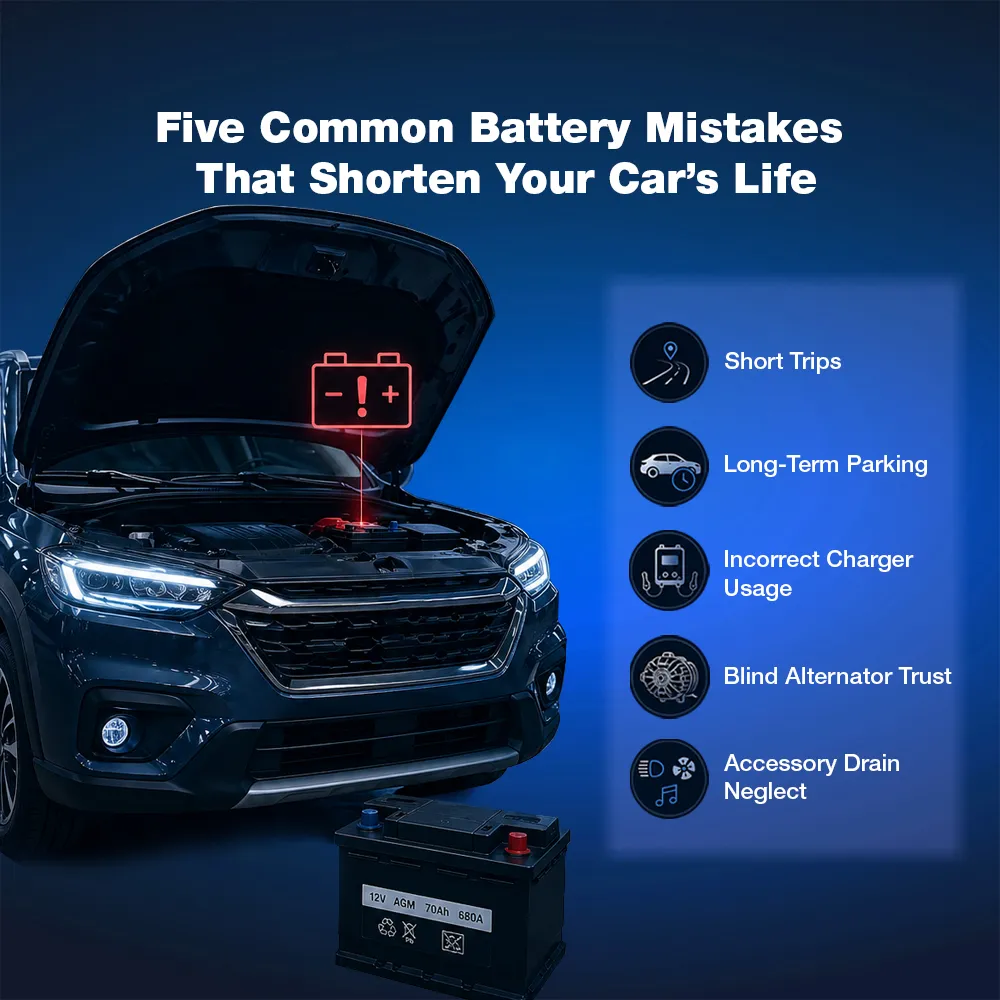
Extreme temperatures, frequent short trips, corrosion, and lack of maintenance are the top reasons car batteries die early. If your battery keeps failing ahead of schedule, one or more of these common culprits is almost always to blame. As someone who has spent years working hands-on with vehicle electrical systems, I've seen firsthand how small daily habits quietly destroy even the best batteries.
Let me walk you through everything that shortens car battery life, why it happens, and what you can do to keep your battery healthy for as long as possible.
How a Car Battery Actually Works
Before we dig into what kills a battery, it helps to understand what a healthy one needs to thrive.
A typical 12-volt lead-acid car battery stores chemical energy and converts it into the electrical power your vehicle needs to start the engine and run accessories. Inside the battery are six cells, each producing about 2.1 volts. Together, they give you the 12.4 to 12.7 volts your car expects when the engine is off.
When you turn the key or press the start button, the battery sends a burst of energy to the starter motor. Once the engine is running, the alternator takes over and recharges the battery while also powering the electrical system. A healthy battery can handle hundreds of charge and discharge cycles, but only if certain conditions are met.
When those conditions are off, even a premium battery can fail in a fraction of its expected lifespan.
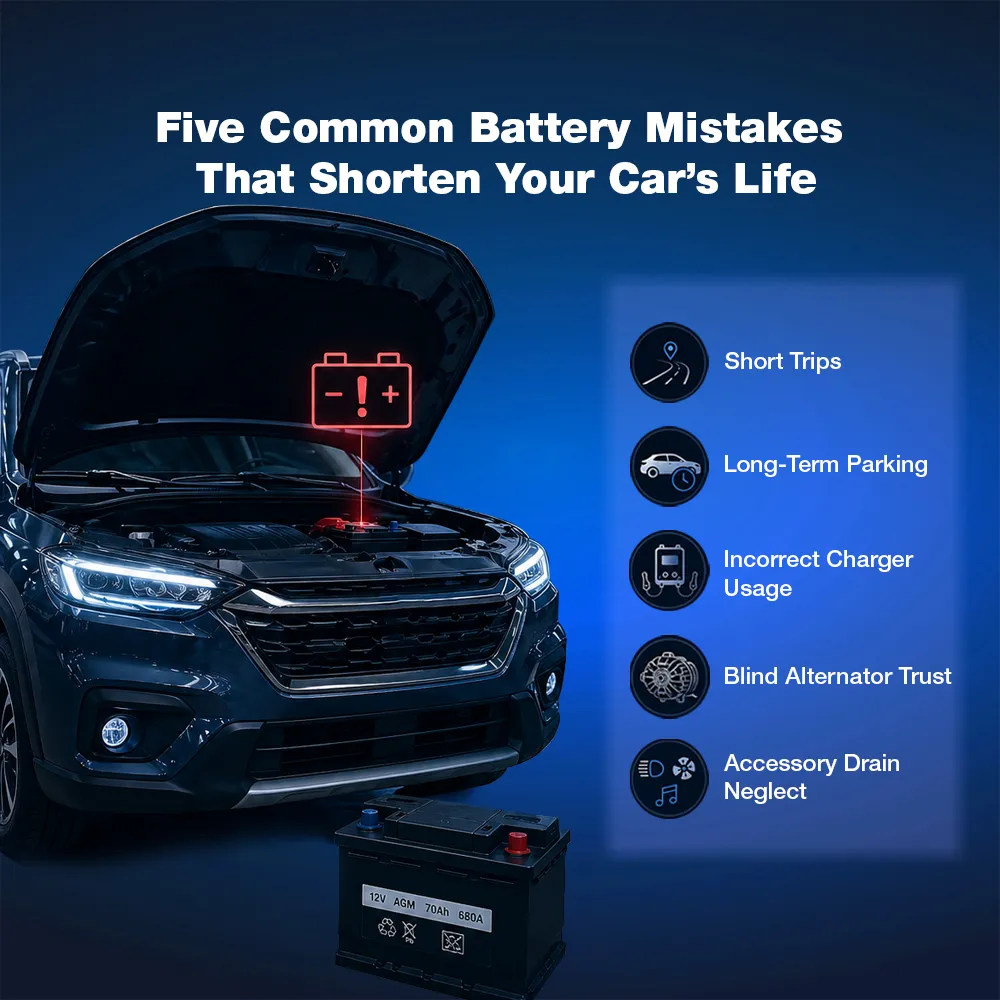
Common Causes of a Shortened Car Battery Life
Extreme Heat and Cold Weather
Temperature is one of the biggest enemies of battery longevity, and both ends of the thermometer cause damage in different ways.
In hot climates, the fluid inside the battery evaporates faster. That fluid is a mix of sulfuric acid and water, and when it drops below the lead plates, those plates can sulfate and lose their ability to hold a charge. Heat also speeds up internal corrosion, which is why batteries in southern states often need replacement after just two or three years.
Cold weather has the opposite effect on performance but a similar effect on lifespan. In freezing temperatures, the chemical reactions inside the battery slow down, which reduces cranking power. At the same time, your engine oil thickens, making the starter work harder. The battery has to push out more energy just to turn the engine over, and if it was already weakened by summer heat, it may simply give up.
In my own experience working on cars in both hot summers and freezing winters, I've noticed batteries in garages last noticeably longer than those exposed to outdoor conditions year-round.
Frequent Short Trips
If most of your drives are under 10 minutes, your battery never gets a chance to fully recharge. The starter motor pulls a huge surge of current every time you fire up the engine, and the alternator needs time to put that energy back. A short drive might restore 30 percent of what was used, leaving the battery in a partial state of charge day after day.
Over time, this pattern leads to chronic undercharging. The lead plates start to harden with sulfate crystals, a process called sulfation, and the battery slowly loses capacity. I once had a customer who drove less than two miles to work every day. His battery lasted just 14 months before it refused to start on a cold morning. Switching to a longer weekend route and using a maintainer extended his next battery well past four years.
Leaving Accessories On While the Engine Is Off
We've all done it. You step out of the car, forget the headlights are on, or leave an interior light glowing overnight. Modern cars are pretty good at shutting things down automatically, but older models are not so forgiving.
Even small parasitic drains can wear it down over weeks. Things like a phone charger plugged into the 12-volt outlet, a trunk light that never fully turns off, or an aftermarket alarm system can slowly pull voltage while the car sits. A healthy battery can handle small draws for a few days, but weeks of even a tiny drain will leave it dead or permanently damaged.
Corrosion on the Battery Terminals
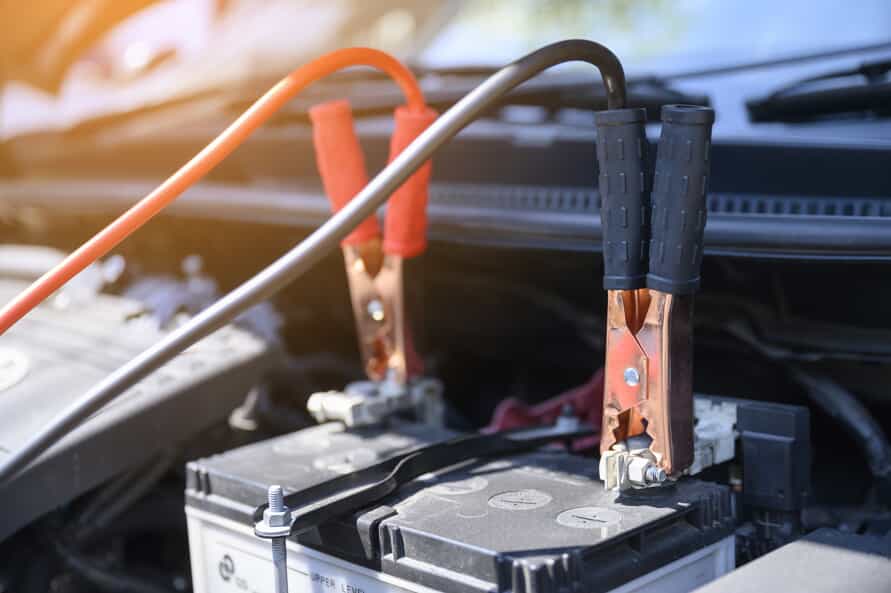
Look at the top of your battery. If you see a white, blue, or greenish powdery substance around the terminals, that's corrosion. It acts like a barrier between the battery post and the cable, blocking the flow of electricity.
Corrosion usually comes from hydrogen gas venting from the battery and reacting with the metal terminals. It can also be caused by loose connections or overcharging. Even if the battery itself is in great shape, corroded terminals can make it look like the battery is dead. Cleaning them off with a wire brush and a baking soda solution often brings a "dead" battery right back to life.
I always remind people that a five-minute terminal cleaning once or twice a year can add real months to battery life.
Poor Alternator Output
The alternator is your battery's best friend. It keeps the charge topped off while you drive. If it's failing, no matter how new or expensive your battery is, it won't last.
A weak alternator may produce just enough voltage to keep the car running but not enough to properly recharge the battery. You might notice dim headlights, a flickering dashboard, or warning lights. A quick test with a multimeter can tell you if your alternator is putting out the expected 13.8 to 14.4 volts when the engine is running.
Vibration and Physical Damage
Car batteries sit in trays, but they still take a beating from road vibrations, especially on rough roads. Over time, constant shaking can break internal connections or damage the lead plates. Most batteries have built-in vibration features, but if the hold-down clamp is loose or missing, the lifespan can drop dramatically.
I've opened up batteries that looked fine on the outside but had shattered plates inside. The cause was almost always a missing or improperly tightened hold-down bracket.
Overcharging or Undercharging
Both directions are harmful. Overcharging, usually caused by a bad voltage regulator, boils away the electrolyte and warps the plates. Undercharging, often from a weak alternator or too many short trips, leads to sulfation. Either condition can ruin a battery long before its time.
Age and Natural Wear
Even with perfect care, car batteries don't last forever. Most traditional lead-acid batteries last between three and five years under normal conditions. AGM and lithium-ion options can stretch that to six or seven years. Once a battery passes the four-year mark, it's wise to have it tested annually so you're not caught off guard.
Excessive Electrical Loads
Modern cars are packed with tech. Heated seats, powerful sound systems, dash cams, GPS units, and USB chargers all draw power. If your vehicle wasn't designed from the factory to handle these loads, the battery may be working harder than it should. Upgrading to a higher-capacity battery or adding a secondary power source can help, but ignoring the extra load will shorten battery life.
Infrequent Use
Cars that sit for weeks or months at a time slowly lose charge through natural self-discharge and parasitic draws. If the battery drops below 12 volts for too long, sulfation sets in and permanent damage can occur. Classic car owners and seasonal drivers often deal with this. A quality battery maintainer, sometimes called a trickle charger, is the easiest fix.

How to Tell If Your Battery Is Failing
Batteries rarely die without warning. Here are the most common signs that your battery is on its last legs:
- The engine cranks slowly, especially on cold mornings.
- The check engine light or battery warning light comes on.
- Headlights dim when the engine idles but brighten when you rev it.
- You need frequent jump-starts.
- The battery case looks swollen or bloated.
- There's a rotten egg smell, which indicates a leaking or overcharged battery.
- Electrical accessories behave erratically.
If you notice any of these, it's time to have your battery tested. Most auto parts stores will do this for free in just a few minutes.

Simple Habits That Extend Car Battery Life
You don't need to be a mechanic to dramatically extend the life of your battery. A few small habits go a long way.
- Drive longer distances at least once a week to allow a full recharge.
- Keep the terminals clean and tight.
- Make sure the hold-down bracket is secure.
- Park in a garage or shaded area when possible.
- Unplug accessories when the car is off.
- Test the battery and charging system once a year.
- Use a battery maintainer if the car sits for long periods.
- Avoid jump-starting unless absolutely necessary, as voltage spikes can damage the cells.
I personally use a small maintainer on every vehicle in my driveway that doesn't get daily use. It's one of the cheapest insurance policies you can buy for a battery.
Common Myths About Car Battery Life
There are a few persistent myths that can actually hurt your battery.
Turning the engine off and restarting uses more battery than idling. This is mostly false. Restarting uses a brief surge, but idling for several minutes uses far more fuel and offers no real benefit to the battery. Modern starters are designed for frequent starts.
Driving with the AC off saves battery. The AC compressor runs off the engine, not the battery, once the car is started. The only time AC affects the battery is during pre-cooling before the engine is running in some hybrid systems.
A new battery doesn't need maintenance. Even new batteries benefit from clean connections and proper charging. Treat them well from day one.
Choosing the Right Replacement Battery
If your battery is truly at the end of its life, choosing the right replacement matters.
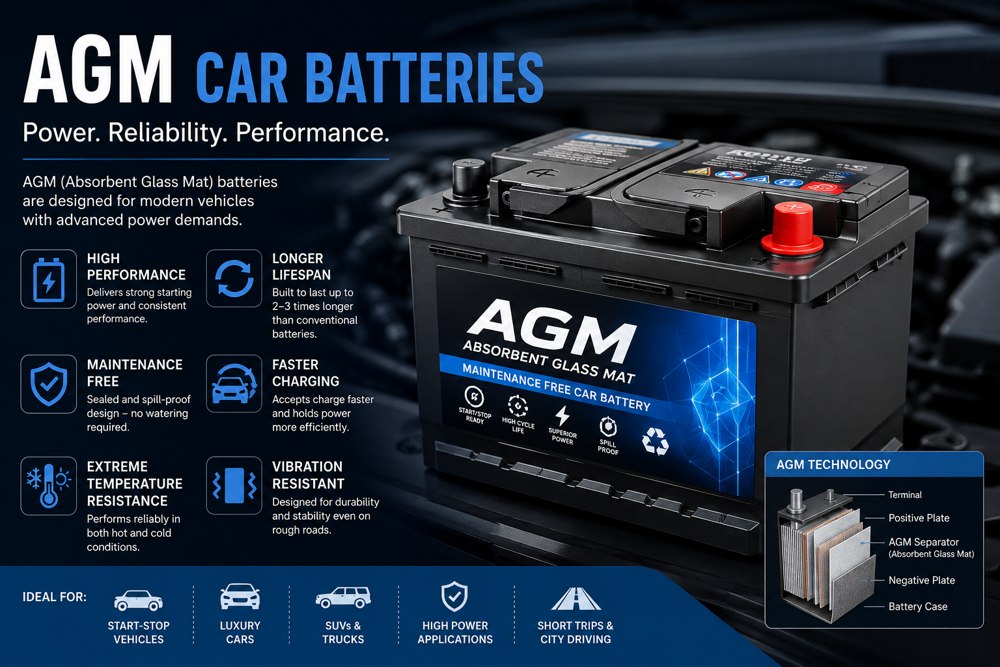
Match the group size, terminal layout, and cold cranking amps to what your vehicle requires. Going cheaper to save a few dollars often means shorter life and weaker performance. Look for batteries with strong warranty coverage and solid reviews from real users. AGM batteries cost more but often last longer, especially in vehicles with start-stop technology or heavy electrical loads.
Frequently Asked Questions About Car Battery Life
How long should a car battery last?
Most car batteries last between three and five years under normal driving conditions. AGM and lithium-ion batteries can stretch that to six or seven years. Extreme climates, short trips, and poor maintenance can shorten that lifespan significantly.
Does idling the car charge the battery?
Idling does charge the battery, but very slowly. The alternator produces more voltage at higher engine RPM, so driving is far more efficient at recharging. Extended idling is not a good substitute for actual driving if you're trying to top off a weak battery.
Can a completely dead battery be restored?
Sometimes. If the battery was drained because of lights left on or a parasitic draw, a smart charger can often bring it back. However, if the battery has been deeply discharged for weeks or shows signs of sulfation and physical damage, replacement is the safer choice.
What kills a car battery the fastest?
Extreme heat is usually the fastest killer, especially when combined with undercharging from short trips. Heat evaporates the electrolyte and accelerates corrosion, while short trips prevent proper recharging. Together, they can ruin a battery in under two years.
Is it bad to only drive short distances?
Yes, it can be. Short drives don't allow the alternator enough time to recharge what the starter used. Over time, the battery stays in a chronically undercharged state, leading to sulfation and early failure. Try to take a longer drive of at least 20 minutes once a week to keep things balanced.
Conclusion
Car batteries are tougher than most people think, but they rely on a balance of proper charging, clean connections, and reasonable usage. Extreme temperatures, frequent short trips, parasitic drains, and neglected maintenance are the most common reasons batteries don't reach their full potential. By understanding what shortens car battery life and building a few simple habits, you can easily add years of reliable service. If your battery is over four years old or showing warning signs, don't wait for a breakdown. Test it now, clean the terminals, and make sure your alternator is doing its job. A little attention today can save you the frustration of a dead battery tomorrow. Drop your questions or your own battery-saving tips in the comments below, I'd love to hear what's worked for you.