Battery voltage is the electrical pressure that powers everything from the headlights to the engine starter. Understanding it helps you know when your battery is healthy, weak, or on its last legs.
Think of your car battery like the heart of your vehicle's electrical system. It pumps life into every component that needs power. Over the years, I've learned that many drivers only think about their battery when the car refuses to start. But knowing what those voltage numbers actually mean can save you from being stranded, save you money, and extend the life of your battery. Let me walk you through everything you need to know, in simple terms, so you can take charge of your car's health.

What Exactly Is Battery Voltage in a Car
Battery voltage is the measure of electrical potential stored in your car's battery, expressed in volts (V). In simple terms, it tells you how much "push" the battery has to send electricity through the wires and components of your vehicle.
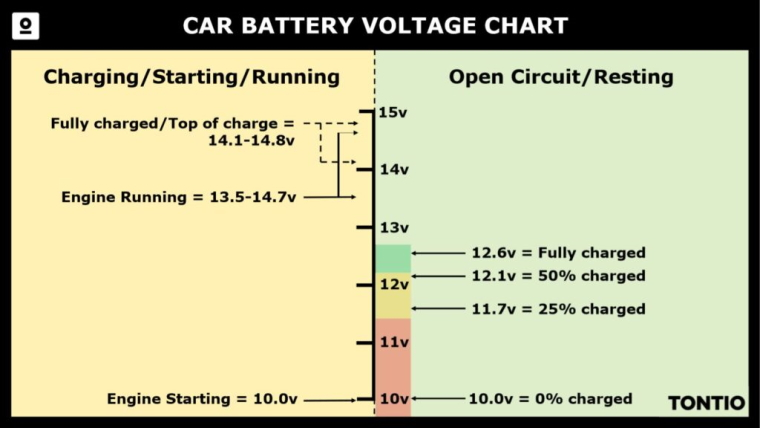
A standard car battery is a 12-volt battery. But here's a little secret most people miss: a fully charged battery actually reads higher than 12 volts when the engine is off. It typically sits around 12.4 to 12.7 volts. When the engine is running, the alternator takes over and pushes the reading to somewhere between 13.7 and 14.7 volts. That jump tells you the charging system is doing its job.
So when someone asks what does battery voltage mean in a car, the short answer is this: it tells you the strength of your battery and whether the charging system is working properly.
Why Battery Voltage Matters More Than You Think
You might think voltage is just a number, but it's actually one of the most useful health indicators your car gives you. I've used a simple multimeter more times than I can count, and it has saved me from getting stuck in parking lots, on road trips, and even during cold winter mornings.
Here is what your voltage reading is really telling you:
- If your battery reads below 12.0 volts, it's undercharged and may struggle to start your engine.
- If your battery reads 12.4 volts or higher when the engine is off, it's in good shape.
- If the reading drops below 11.8 volts, your battery is deeply discharged and might need a recharge or replacement.
- If the reading goes above 15 volts while the engine is running, your alternator may be overcharging and damaging the battery.
That little number is like a check-engine light for your battery, but quieter and more honest.
The Difference Between Voltage and State of Charge
A lot of drivers confuse voltage with state of charge, but they are not the same thing. Voltage is the electrical pressure at that moment. State of charge is the percentage of energy left in the battery relative to its full capacity.
For example, a battery can show 12.4 volts but still have only 70 percent charge if it is aging or slightly sulfated. That is why voltage readings should always be paired with a load test for a more complete picture.
I learned this the hard way once. I had a battery that always read 12.5 volts but kept dying on me. A load test showed the internal cells were weak. The voltage looked fine, but the actual usable power was fading. That is when I realized voltage is a clue, not the full story.
How Voltage Works During Different Driving Conditions
Your battery voltage is not static. It changes based on what your car is doing. Let me break it down:
- Engine off, battery at rest: 12.4 to 12.7 volts means a healthy, fully charged battery.
- Engine starting: voltage can dip to 9.5 to 10.5 volts briefly. This is normal because the starter motor draws a huge burst of power.
- Engine running, alternator charging: 13.7 to 14.7 volts is the sweet spot. This means your alternator is pushing current back into the battery.
- Engine running with heavy electrical load (AC, lights, heated seats): voltage may dip slightly but should stay above 13.5 volts.
If you ever want to feel like a car detective, grab a multimeter, start your engine, and watch how the numbers behave. It is honestly fascinating.
What Causes Low Battery Voltage in a Car
There are several reasons your battery voltage might drop below the healthy range. Some are easy, and some are sneaky.
Here are the most common causes I have seen:
- Leaving headlights or interior lights on overnight.
- A weak alternator that is not charging the battery properly.
- Corroded or loose battery terminals that block current flow.
- A parasitic drain from an accessory or wiring issue.
- Old age. Most car batteries last 3 to 5 years before they start losing their ability to hold a charge.
- Extreme temperatures, especially cold weather, which slows down the chemical reactions inside the battery.
In one of my old trucks, I had a tiny trunk light that stayed on even when the door was closed. It drained the battery twice before I finally tracked down the problem. Sometimes the smallest things can cause the biggest headaches.

What Causes High Battery Voltage in a Car
High voltage is less common but more dangerous. If your battery reads above 15 volts while the engine is running, the alternator's voltage regulator may be faulty. Overcharging can cook the battery, warp the plates inside, and even damage sensitive electronics.
I once had a voltage regulator go bad in an older sedan. The battery boiled over, leaving acid residue all over the terminals. It smelled terrible and cost me a new battery and a cleaning job I will never forget. So yes, high voltage is something you should never ignore.
How to Measure Battery Voltage the Right Way
You do not need to be a mechanic to check your battery voltage. All you need is a basic digital multimeter, which you can pick up for under 15 dollars.
Here is the step-by-step process I follow:
- Turn off the engine and all accessories.
- Set your multimeter to DC voltage (20V range works well).
- Connect the red lead to the positive terminal (usually marked with a plus sign or red cover).
- Connect the black lead to the negative terminal (usually marked with a minus sign or black cover).
- Read the number on the display.
For a more accurate reading, let the car sit overnight before testing. A surface charge from just driving can give you a false high reading.
If you want to test the charging system, start the engine and check the voltage again. It should jump to between 13.7 and 14.7 volts. If it does not, the alternator may be the culprit.
Signs Your Battery Voltage Is Too Low
Sometimes you can feel the problem before you even grab a multimeter. Here are the warning signs I always tell my friends to watch for:
- Slow cranking when you turn the key.
- Dim headlights, particularly at idle.
- Clicking sounds when you try to start the car.
- Dashboard warning lights like the battery symbol.
- Electrical features acting weird, such as windows moving slowly or radio resetting.
These are all clues that your battery is struggling. If you notice any of them, a quick voltage check can tell you whether the battery is the problem or something else.
How to Maintain Healthy Battery Voltage
Keeping your battery voltage in the happy zone is not hard. It just takes a little routine care. Here is what I personally do:
- Drive your car regularly. Short trips do not give the alternator enough time to recharge the battery fully.
- Keep the terminals clean. A wire brush and a little baking soda paste work wonders.
- Check the voltage once a month, especially before long trips or in extreme weather.
- Avoid leaving electronics plugged in when the engine is off.
- Replace the battery every 4 to 5 years as a preventive measure.
A little attention goes a long way. I have stretched battery life past five years just by following these simple habits.
Common Myths About Battery Voltage
There are a few myths I hear all the time, and I want to clear them up:
- Myth: A new battery should read exactly 12 volts. Truth: A healthy new battery actually reads higher, around 12.6 volts.
- Myth: Jump-starting fixes a dead battery. Truth: It gets you going, but it does not fix the underlying cause.
- Myth: Driving charges a dead battery quickly. Truth: It can take hours of driving to fully recharge a deeply discharged battery.
- Myth: Batteries last forever. Truth: They wear out. Heat, vibration, and time all take a toll.
Knowing the truth helps you avoid wasting time and money on fixes that do not work.
Battery Voltage and Modern Cars
Modern cars are loaded with electronics, from infotainment systems to advanced driver-assistance features. All of that puts more demand on the battery than ever before. That is why voltage matters so much today. A weak battery can cause all sorts of strange behavior, from warning lights to random system glitches.
Many newer cars also come with battery sensors that monitor voltage and current. If the system detects a weak battery, it may disable certain features to save power or display a warning message. This is one of the reasons I recommend checking your battery before chasing down electrical gremlins.
How Weather Affects Battery Voltage
Weather plays a huge role in battery performance. Cold weather thickens the oil in your engine, making the starter work harder, and slows down the chemical reactions inside the battery. That is why batteries often die in the winter.
Heat, on the other hand, speeds up chemical reactions but also increases the rate of water loss inside the battery. Over time, heat shortens battery life. I learned this living in both the snowy north and the sunny south. My batteries in hot climates rarely made it past four years, while cold-climate batteries often lasted longer but struggled on cold mornings.
When to Replace Your Battery Based on Voltage
Voltage can tell you when it is time to say goodbye to your battery. Here is a simple rule of thumb I use:
- Above 12.6 volts: Battery is strong, no replacement needed.
- 12.2 to 12.4 volts: Battery is okay but starting to weaken.
- 12.0 volts or under: Charge the battery, but watch it closely.
- Below 11.8 volts after charging: Battery is likely done. Replace it.
If your battery is more than four years old and the voltage starts slipping, do not wait for it to fail. Replace it on your schedule, not your battery's.
Frequently Asked Questions
What is a normal battery voltage for a car?
A normal battery voltage for a car is between 12.4 and 12.7 volts when the engine is off. When the engine is running, the voltage should rise to between 13.7 and 14.7 volts, showing the alternator is charging properly.
Is 12.2 volts okay for a car battery?
Yes, 12.2 volts is okay but on the low side. It means the battery is around 50 percent charged. It will still start the car, but you should charge it soon to avoid getting stranded.
What voltage is too low to start a car?
If your battery voltage drops below 11.8 volts, the car will likely struggle or fail to start. Anything below 11.0 volts usually means the battery is too weak to crank the engine.
Can a car battery show 14 volts?
Yes, a car battery can show 14 volts when the engine is running. This is normal and shows the alternator is working. The voltage should not stay at 14 volts when the engine is off.
How often should I check my battery voltage?
You should check your battery voltage at least once a month, especially in extreme weather or before long trips. Regular checks help you catch problems early and avoid surprises.
Final Thoughts
Battery voltage is one of the simplest and most powerful tools you have for keeping your car reliable. It is like checking the pulse of your vehicle's electrical system. A quick reading with a basic multimeter can tell you if your battery is healthy, weak, or on borrowed time.
I have been through enough dead batteries to know that a little knowledge goes a long way. Take five minutes once a month, grab a multimeter, and listen to what your battery is telling you. It is a small habit that can save you from big headaches down the road.
If you found this guide helpful, feel free to share it with a fellow driver, leave a comment with your own battery tips, or explore more of my car care articles to keep your ride running strong.