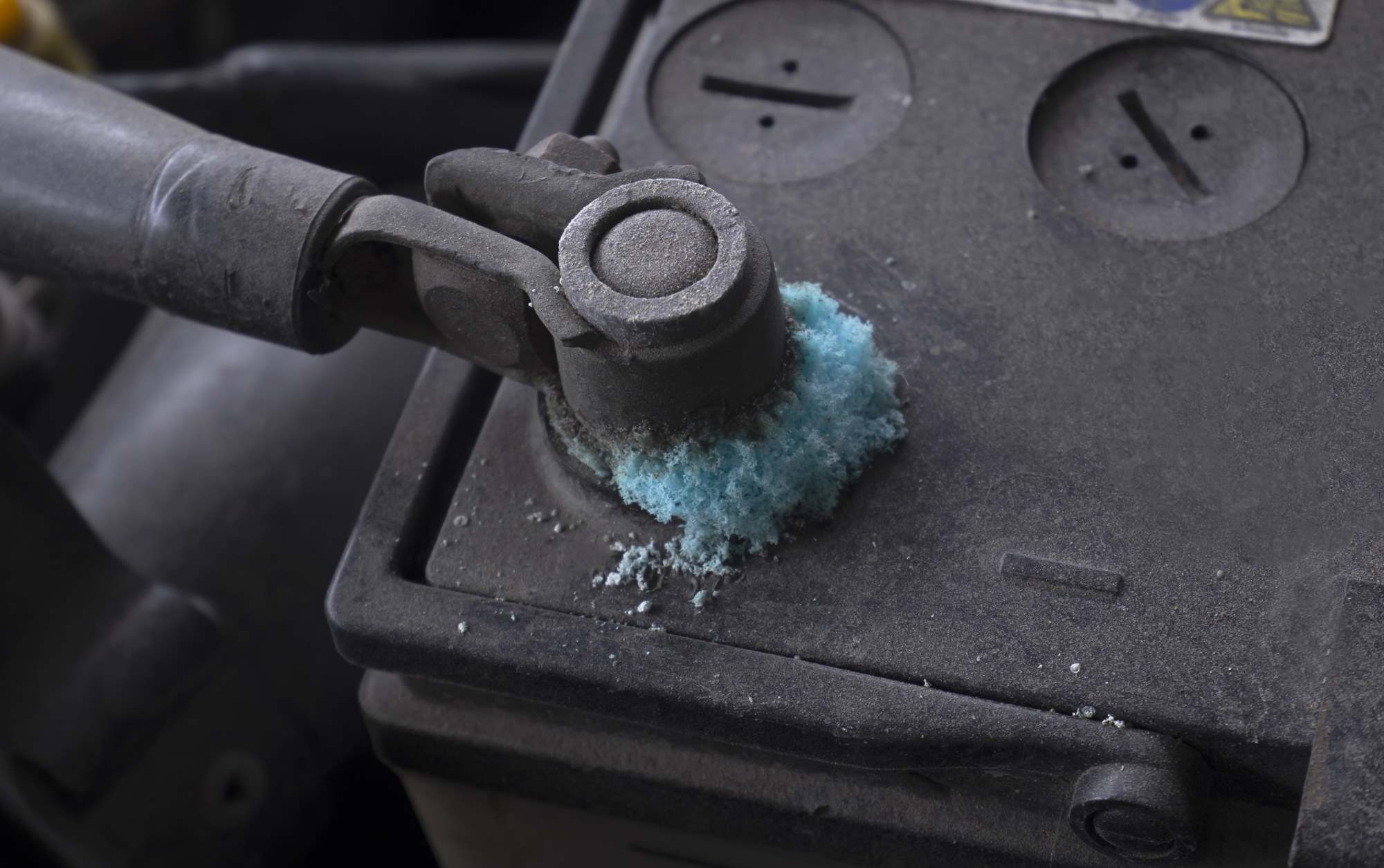
The blue stuff on your car battery is usually copper sulfate buildup caused by battery acid leaking and reacting with the metal. It forms when hydrogen gas escapes and reacts with copper, creating a bluish-green crust that signals corrosion.
If you've popped your hood and noticed a strange blue or bluish-green powder around your battery terminals, you're not alone. This is one of those things that looks alarming but is actually pretty common and very fixable. Over the years, I've helped dozens of car owners clean off battery terminals, and nine times out of ten, that blue crust is just corrosion doing its thing. The good news? Once you know what's causing it and how to handle it safely, your battery will be back to working like new in no time. In this guide, I'll walk you through what the blue stuff really is, why it forms, whether it's dangerous, and how to clean and prevent it from coming back.
What Exactly Is the Blue Stuff on a Car Battery?
The blue substance you see on your battery terminals is a type of corrosion known as copper sulfate. It usually shows up as a powdery, crusty layer that can be light blue, teal, or even greenish in color. You might spot it on the terminal posts (the metal nubs sticking up from the battery), on the cable clamps that connect to them, or sometimes spreading onto nearby metal surfaces.
Copper sulfate forms when the copper in your battery cables reacts with sulfuric acid vapors leaking from the battery itself. When the battery vents small amounts of hydrogen gas, it carries trace amounts of acid with it. That acid reacts with the copper in the terminals, creating that unmistakable blue color. Think of it like rust, but blue and a bit more concerning because it involves battery acid.
Why Does Battery Terminal Corrosion Happen?
Battery corrosion doesn't just show up out of nowhere. There are a few common reasons it develops, and understanding the cause helps you prevent it in the future.
- Overcharging the battery, which causes excess hydrogen gas and acid vapor to escape.
- Loose or poorly tightened cable connections that allow gas to leak around the seal.
- Age of the battery, since older batteries are more prone to venting.
- Temperature swings, especially heat, which speeds up chemical reactions inside the battery.
- A cracked or damaged battery case, which lets acid leak out and react with surrounding metal.
I remember one time helping a friend troubleshoot why his car kept having trouble starting. He had a thick layer of blue-green gunk on the positive terminal. Turns out, his alternator was slightly overcharging the battery, which was forcing gas out through the vents. Once we cleaned it up and fixed the charging issue, the problem never came back.
Is the Blue Corrosion Dangerous?
Yes and no. It's not going to explode or poison you, but it does deserve your respect. Copper sulfate is mildly toxic, and the underlying battery acid is definitely corrosive. If you touch the blue stuff with bare hands and then rub your eyes or mouth, you could get a nasty reaction. More importantly, heavy corrosion acts like a layer of insulation on your battery terminals. That means your electrical system can't get the full power it needs, leading to:
- Hard starting or no-start conditions
- Flickering headlights
- Weird electrical glitches
- A battery that keeps dying even after a full charge
So while it's not an emergency, it's definitely something you want to clean off as soon as you notice it.

How to Safely Clean Blue Corrosion Off Your Battery
Cleaning battery terminals is one of the easiest car maintenance jobs you can do at home. You don't need to be an expert, just careful and methodical. Here's exactly how I do it every time.
- Safety first. Put on gloves and safety glasses. Even if the corrosion looks dry, there's still acid involved.
- Disconnect the battery. Always remove the negative cable first, then the positive. This prevents accidental sparks.
- Make a cleaning paste. Mix a tablespoon of baking soda with a few tablespoons of warm water until it forms a thick paste.
- Apply the paste. Use an old toothbrush or small wire brush to scrub the paste onto the corroded areas. You'll see it fizz as it neutralizes the acid. That's normal and exactly what you want.
- Scrub thoroughly. Get into all the nooks and crannies, especially inside the cable clamps where corrosion loves to hide.
- Rinse and dry. Use a spray bottle of clean water or a damp rag to wipe away the residue. Dry everything completely with a clean towel.
- Reconnect the battery. Attach the positive cable first, then the negative. Tighten them snugly but don't overdo it.
A quick tip from experience: avoid using too much water near the battery vents. You don't want extra moisture getting inside the cells. A light rinse on the outside is fine.
How to Prevent the Blue Stuff From Coming Back
Once you've cleaned everything, you'll want to keep that blue gunk from making a comeback. Prevention is way easier than constantly cleaning.
- Apply a protective coating. After cleaning and drying, put a thin layer of petroleum jelly, dielectric grease, or even battery terminal protectant spray on the terminals. This blocks air and moisture from reaching the metal.
- Keep terminals tight. Loose connections are an open invitation for corrosion. Make sure the clamps are snug and secure.
- Check your charging system. If your alternator is overcharging, you'll keep getting corrosion. A simple voltage test can tell you if your charging system is healthy (should be around 13.7 to 14.7 volts when running).
- Inspect regularly. Pop the hood once every couple of months and glance at your battery. Catching early signs of corrosion saves you time and headaches later.
- Replace old batteries. If your battery is more than four or five years old and keeps corroding, it might be time for a new one. Internal damage can cause persistent venting.

Common Misconceptions About Battery Corrosion
There are a few myths floating around about that blue battery gunk that I want to clear up.
- Myth: It's always caused by a bad battery. Not true. Even brand-new batteries can develop corrosion if the cables aren't sealed well or the charging system is off.
- Myth: You should clean it with cola. I get why people say this since cola is slightly acidic and fizzy. But it's not as effective as baking soda, and the sugar can leave sticky residue.
- Myth: You can ignore it. Nope. Heavy corrosion will eventually prevent your car from starting. It's not just cosmetic.
- Myth: It's the same as rust. It looks similar, but it's chemically different. Rust is iron oxide, while battery corrosion is copper sulfate. They react to different cleaners.
When Should You Worry About Battery Corrosion?
Sometimes, a little corrosion is just a maintenance issue. But other times, it's a warning sign of something more serious.
- If the blue stuff keeps coming back quickly after cleaning, your battery might be venting excessively.
- If you notice a sweet, rotten egg smell along with corrosion, that's sulfuric acid leaking. Get the battery tested right away.
- If the battery case looks swollen or cracked, don't try to clean it. Replace it. A damaged battery can leak acid or even fail catastrophically.
- If your car is acting sluggish electrically even after cleaning the terminals, the corrosion may have damaged the cable ends. Inspect them closely for pitting or weakness.

Frequently Asked Questions
What does blue corrosion on a battery mean?
It means battery acid has reacted with the copper terminals, creating copper sulfate. It's a sign of venting or a small leak, and it can interfere with your electrical system if left alone.
Can you drive with blue corrosion on the battery?
You can, but it's not a great idea. Heavy corrosion reduces the electrical connection, which can cause hard starting or strange electrical behavior. Clean it off as soon as you can.
Is battery corrosion toxic?
Yes, mildly. Copper sulfate can upset your stomach if ingested and irritate your skin and eyes. Always wear gloves when handling it and wash your hands afterward.
What happens if you don't clean battery corrosion?
Your car may have trouble starting, your electrical system may act up, and the corrosion can spread to cables and nearby metal parts. Over time, it can even damage the cable ends permanently.
What is the best thing to clean car battery terminals with?
A simple paste of baking soda and water works great. It's mildly basic and neutralizes the acid safely. A wire brush or old toothbrush helps you scrub it off easily.
Does a blue battery mean it's bad?
Not necessarily. A blue crust on the outside usually just means corrosion, not a failed battery. But if the corrosion keeps returning or the battery is old, it might be time for a replacement.
Wrapping It Up
That mysterious blue stuff on your car battery might look weird, but it's really just corrosion doing what corrosion does. It's your battery's way of saying, "Hey, clean me up and check on me." With a little baking soda, a toothbrush, and about fifteen minutes of your time, you can knock it out and get back to smooth starts and reliable performance. Make it a habit to peek at your battery every few months, keep those terminals protected, and you'll avoid the blue crust altogether. Your car will thank you, and you'll feel pretty good knowing you handled it yourself. If you want more hands-on car maintenance tips, feel free to explore our other guides or drop a comment below with your own battery stories.