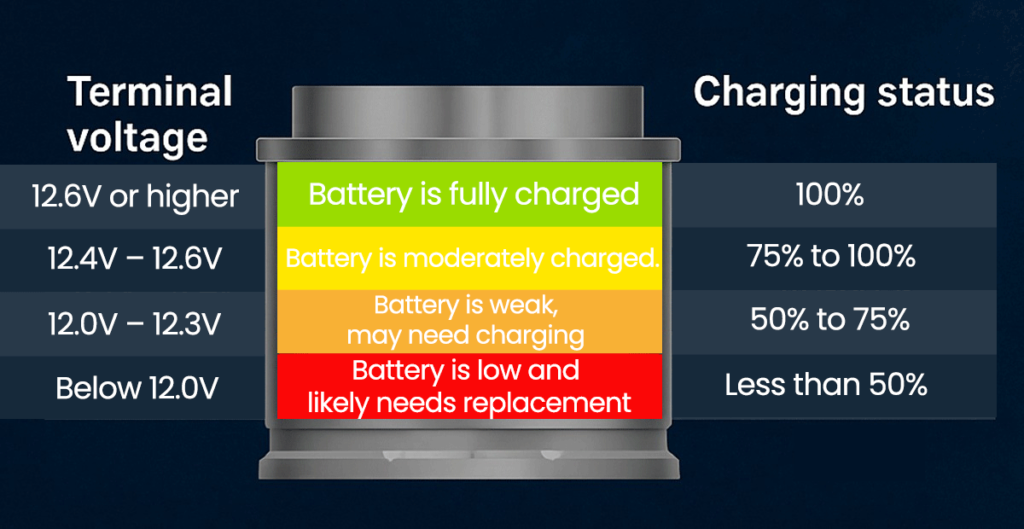
A fully charged 12-volt car battery typically reads between 12.6 and 12.8 volts at rest, with surface charge spiking it briefly to 13.7 volts or higher right after driving. Understanding your battery's voltage isn't just a mechanic's trick; it's the single best way to know if your car will start on a cold morning or leave you stranded. I've spent years under the hoods of everything from daily drivers to weekend classics, and I'll walk you through exactly what those numbers mean and why they matter.

Understanding Car Battery Voltage Basics
Think of your car battery as the heart of your vehicle's electrical system. Just like checking blood pressure gives you clues to overall health, checking voltage tells you how much life your battery has left. Most cars on the road today run on a 12-volt system, but that number is actually a bit of a historical label. The true voltage of a fully charged battery sits a little higher.
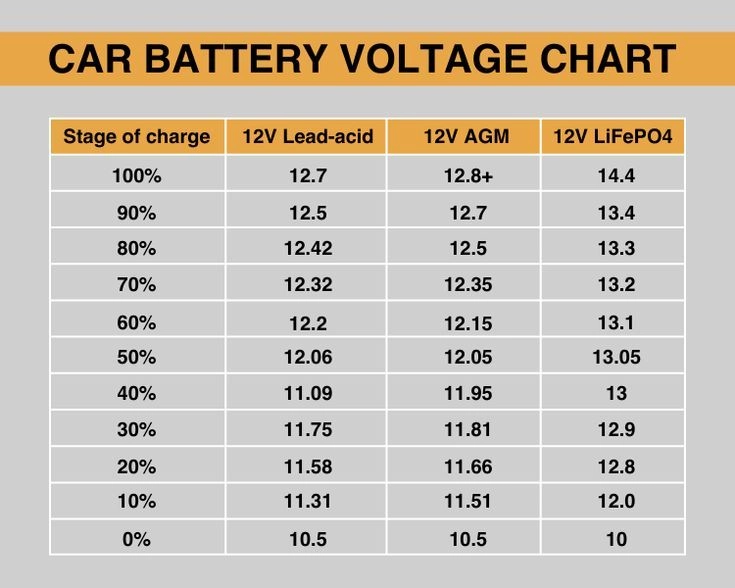
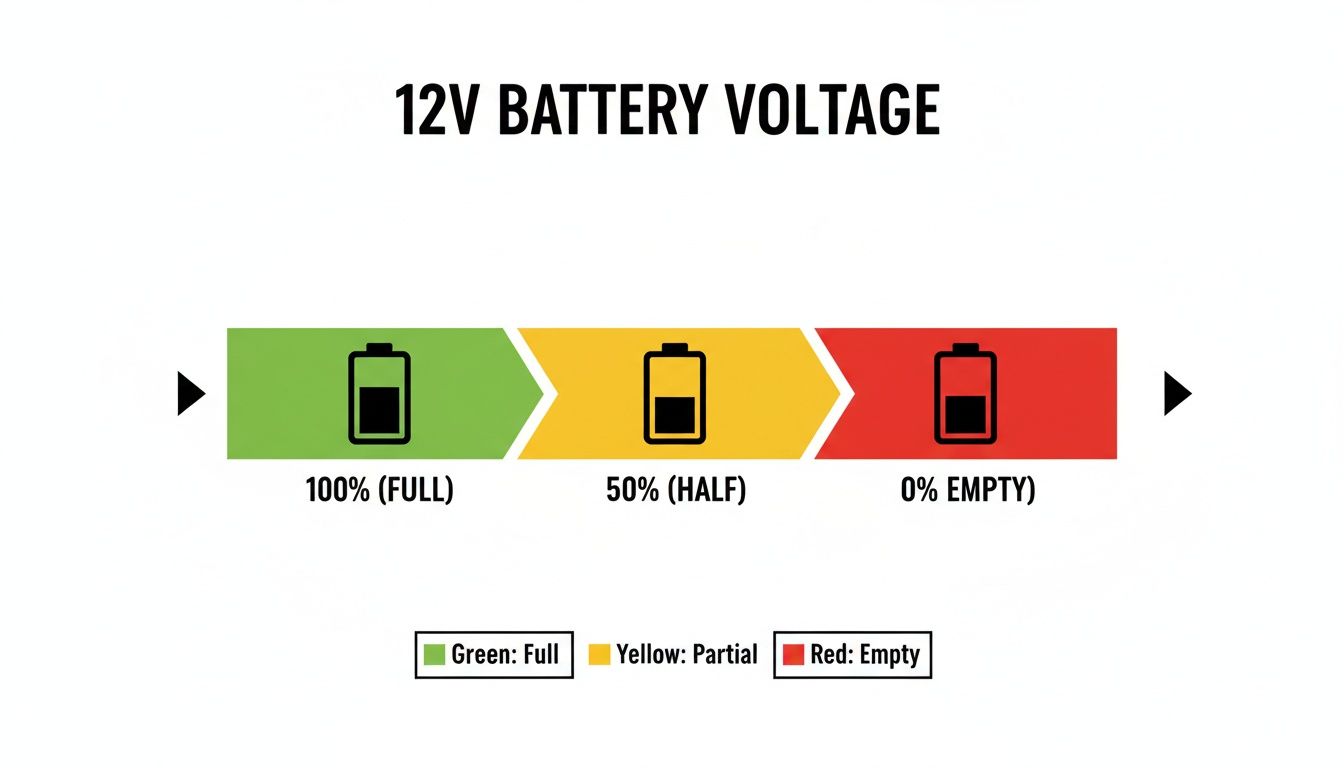
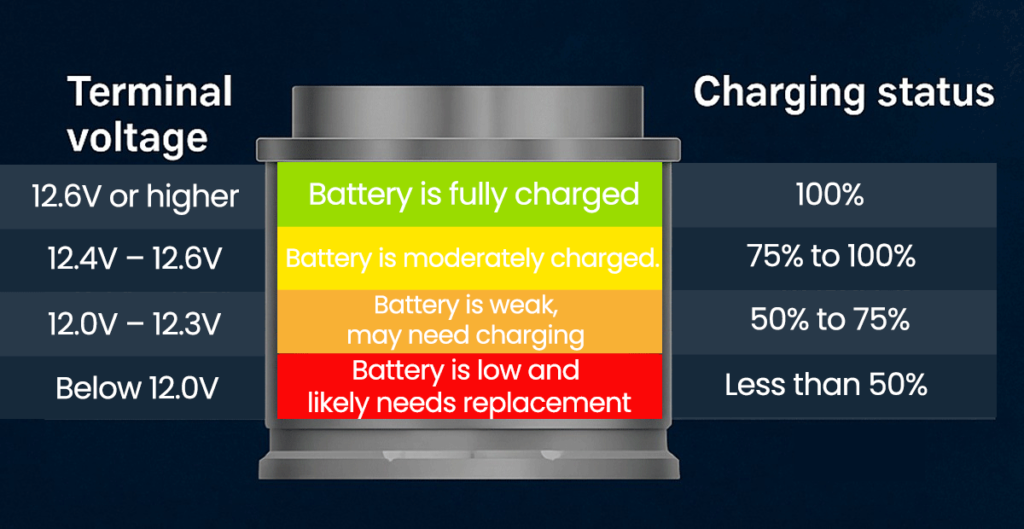
A healthy, rested 12V battery should show between 12.6 and 12.8 volts. If you see 12.4 volts, your battery is only about 75% charged. Drop to 12.0 volts, and you're sitting at 50%. Anything below 11.8 volts means your battery is deeply discharged, and pushing it lower than that risks permanent damage. Lead-acid chemistry doesn't like being empty, and it can shorten the lifespan dramatically.
What "Resting Voltage" Really Means
Before you grab your multimeter and start checking, let me save you from a common mistake I made early on. You cannot get an accurate reading while the engine is running or right after you turn it off. The alternator pushes voltage up to 13.7 to 14.7 volts while the engine runs to recharge the battery. Even after you shut things off, the surface charge keeps the voltage artificially high for a while.
To get a real reading, you need to wait. Let the car sit for at least two to four hours, or even overnight if you can. This lets the surface charge dissipate and gives you the true state of charge. I learned this the hard way when I tested a battery right after a drive and thought it was perfect, only to find it dead the next morning.
Why the Number Isn't Exactly 12 Volts
Here's something that confused me when I first started tinkering with cars. If a battery is called "12-volt," why doesn't it read exactly 12.0 volts when fully charged? The answer lies in basic chemistry. Each cell in a lead-acid battery produces about 2.1 volts. With six cells wired together, you get 12.6 volts at full charge.
This is the nominal voltage, a sort of average working value. When fully charged, it exceeds this nominal rating. As the battery discharges, the voltage drops steadily. Understanding this relationship between voltage and state of charge is the key to reading your battery's health like a pro.
How to Measure Car Battery Voltage Accurately
Measuring your battery voltage is a simple task, but doing it right makes all the difference. You don't need to be an electrician or have expensive tools. A basic digital multimeter costs less than a dinner for two and gives you all the information you need.
Tools You Actually Need
Skip the cheap analog meters. A digital multimeter is your best friend here. It gives clear, precise readings without you squinting at a needle. You also want a pair of safety gloves and glasses. Battery acid is no joke, and you should always treat a battery with respect, even a healthy one.
Before you touch anything, make sure your engine is cool and the car is in park with the parking brake on. Pop the hood and locate the battery. You'll see two terminals: a positive one marked with a plus sign, usually covered with a red cap, and a negative one marked with a minus sign.
Step-by-Step Voltage Testing
Start by setting your multimeter to DC voltage, usually marked with a V and a straight line. Turn the dial to 20 volts if that setting exists on your model. This gives you enough range to read a battery accurately.
Next, connect the red lead to the positive terminal and the black lead to the negative terminal. Make sure you get a solid metal-on-metal connection. A loose touch can give you a false reading, and I've seen people chase ghost problems because of this.
Now read the display. If your battery has been resting for several hours, the number you see is the true resting voltage. Compare it to the standard scale:
- 12.6 to 12.8 volts: Fully charged and healthy
- 12.4 volts: About 75% charged
- 12.2 volts: Around 50% charged
- 12.0 volts: 25% charged
- Below 11.8 volts: Discharged and possibly damaged

What Voltage Indicates a Bad Battery
A bad battery doesn't always mean a dead battery. Sometimes the signs are subtle, and voltage testing helps you catch problems before you're stuck calling for a jump. Knowing what to look for saves you time, money, and frustration.
Low Voltage After Resting
If your battery reads below 12.4 volts after a full rest, it isn't holding a full charge. This might point to a failing battery, but it could also mean something is draining it. A parasitic draw, like a light staying on or a faulty relay, can slowly pull voltage down even when the car is off.
To rule out a draw, you can test the parasitic load. With the car completely shut down and the key out of the ignition, disconnect the negative terminal and connect an ammeter between the cable and the terminal. A healthy car usually draws less than 50 milliamps. If you see more, you have a vampire drain eating your battery's life.
Voltage Drops Under Load
Another telltale sign of a weak battery is how it behaves when you turn the key. If the voltage drops dramatically when you try to start the engine, the battery can't deliver the necessary cranking amps. A healthy battery should stay above 10 volts during cranking. If it falls below that, the battery is on its way out.
I remember testing a friend's truck that started fine on warm mornings but struggled in the cold. A simple voltage test during cranking showed it dropping to 9.5 volts. The battery was old, and its internal resistance had increased, making it weak under heavy load. Replacing it fixed the problem instantly.
Sulfation and Permanent Damage
Leaving a battery discharged for long periods causes sulfation, where lead sulfate crystals build up on the plates. This permanent damage reduces capacity and shortens lifespan. If your battery consistently reads low even after a full charge, sulfation might be the cause.
You can sometimes recover a mildly sulfated battery with a slow, long charge. But if the voltage refuses to climb above 12.4 volts after hours of charging, it's time to retire it. No amount of charging will fix a battery that has lost its internal structure.
Factors That Affect Battery Voltage Readings
Voltage isn't a static number. It changes based on temperature, age, and how you use your vehicle. Knowing these factors helps you interpret readings correctly and avoid jumping to conclusions about battery health.
Temperature Matters More Than You Think
Cold weather thickens the oil in your engine, making it harder to crank, and slows down the chemical reactions inside your battery. A battery that reads 12.6 volts on a warm summer day might only deliver 10.0 volts when it's zero degrees outside, even if it's perfectly healthy.
This is why batteries seem to fail in winter. They were already weak, but the cold exposed the problem. If you live in a cold climate, consider testing your battery in the fall, before the deep freeze hits. A marginal battery in October becomes a dead battery in January.
Age and Internal Resistance
As batteries age, their internal resistance increases. This means they can hold a charge but struggle to deliver high current when needed. A five-year-old battery might show 12.6 volts at rest but drop to 9 volts during cranking. Voltage testing alone doesn't tell the whole story for older batteries.
This is why a load test is often more revealing for aging batteries. Most auto parts stores will perform a free load test, simulating the demands of starting the engine. It gives you a clearer picture than voltage alone, especially for batteries over three years old.
Surface Charge Confusion
Right after charging or driving, your battery holds a surface charge that inflates the voltage reading. This false reading can mislead you into thinking the battery is healthier than it is. Always let the battery rest before testing.
I once helped a neighbor troubleshoot a car that wouldn't start. He had just driven it for an hour, so the battery was fully charged by the alternator. He tested it immediately and saw 12.9 volts. We waited a few hours, and it dropped to 12.3 volts, revealing it was actually only 75% charged. Without that wait, he would have replaced a perfectly good alternator chasing a battery problem.
Maintaining Proper Voltage for Battery Longevity
Keeping your battery in the right voltage range extends its life and saves you money. A few simple habits can add years to your battery and prevent those frustrating no-start mornings.
Regular Driving and Charging Cycles
Batteries love to be used. Short trips where the engine only runs for a few minutes don't give the alternator enough time to recharge what the starter took out. If you mostly drive short distances, consider using a battery maintainer to keep the charge topped off.
A maintenance charger, sometimes called a tender, plugs into a wall outlet and slowly tops off your battery. It's perfect for cars that sit for weeks at a time, like weekend toys or seasonal vehicles. The float charge keeps the battery at 13.2 to 13.8 volts, just enough to stay full without overcharging.
Cleaning Terminals and Connections
Corroded terminals act like a dam in a river, restricting current flow. Even a battery with perfect voltage can't crank the engine if the connections are bad. I check my terminals every few months and clean them with a wire brush and a mixture of baking soda and water.
After cleaning, coat the terminals with dielectric grease or a battery terminal protector. This prevents future corrosion and keeps the connection solid. A few minutes of prevention saves hours of troubleshooting later.
Avoiding Deep Discharges
Each deep discharge cycle wears out a lead-acid battery. Leaving your headlights on overnight or letting the car sit unused for months drains the battery to harmful levels. If you accidentally drain it, recharge it as soon as possible to minimize damage.
For cars that sit for long periods, disconnecting the negative terminal prevents parasitic drains. Some modern cars have systems that draw power continuously for alarms, computers, and memory functions. A disconnect switch or a battery tender solves this problem and keeps your battery healthy during storage.

Different Battery Types and Their Voltage Ranges
Not all car batteries are the same, and their voltage characteristics can vary. Understanding the differences helps you choose the right battery for your vehicle and interpret voltage readings correctly.
Flooded Lead-Acid Batteries
These are the traditional batteries found in most cars. They use liquid electrolyte and are affordable and reliable. Their voltage range matches what we've discussed: 12.6 volts fully charged, with the standard discharge curve we covered earlier.
Flooded batteries require occasional maintenance, like checking water levels and cleaning terminals. They're tolerant of overcharging better than other types, but they still benefit from regular voltage checks.
AGM and Gel Batteries
Absorbed Glass Mat and gel cell batteries are sealed and maintenance-free. They hold voltage slightly higher than flooded batteries when fully charged, often reading 12.8 to 13.0 volts. They also recharge faster and resist vibration better.
AGM batteries are common in modern cars with start-stop systems and high electrical demands. They cost more upfront but last longer in the right applications. If your car came with an AGM battery, replacing it with a flooded battery can cause electrical issues and shortened lifespan.
Lithium-Ion Car Batteries
Some performance and luxury cars use lithium-ion starter batteries. These hold a much higher voltage, often around 13.2 to 13.4 volts when fully charged. They're lighter and more powerful but require specific charging systems.
If your car has a lithium battery, never use a standard lead-acid charger on it. The charging profile is different, and using the wrong charger can cause damage or even safety issues. Always follow manufacturer recommendations for lithium battery care.
Common Mistakes When Testing Battery Voltage
Over the years, I've seen the same mistakes repeated by people of all experience levels. Avoiding these errors saves you time and prevents misdiagnosis.
Testing While the Engine Runs
This is the number one mistake beginners make. They want to see the alternator working, so they test voltage with the engine running. While this can tell you if the alternator is charging, it doesn't tell you the battery's state of charge.
For a battery health test, the engine must be off. For an alternator test, the engine should be at idle with all accessories off, then revved slightly to see the voltage climb to the 13.7 to 14.7 range. These are two different tests with two different goals.
Ignoring Temperature Compensation
A battery's voltage changes with temperature. Most voltage charts assume a temperature around 80 degrees Fahrenheit. If you're testing in extreme cold or heat, the readings shift slightly. A battery that reads 12.6 volts at room temperature might read 12.4 volts in freezing weather, but that doesn't mean it's discharged.
Many modern battery testers have temperature compensation built in. If you're using a simple multimeter, remember that small variations due to temperature are normal and don't always signal a failing unit.
Assuming Voltage Tells the Whole Story
Voltage is just one piece of the puzzle. A battery can show perfect voltage but fail under load due to high internal resistance. This is especially true for older batteries. Combining a voltage test with a load test gives you a complete picture of battery health.
I keep a small load tester in my garage for this reason. It applies a simulated load and measures how the voltage responds. It's the closest thing to actually starting the car without turning the key.
Frequently Asked Questions
What voltage should a car battery read when the engine is off?
A healthy battery should read 12.6 to 12.8 volts after sitting for several hours. This is the true resting voltage, and anything below 12.4 volts indicates the battery is partially discharged and needs attention.
Is 12.2 volts okay for a car battery?
A 12.2-volt reading means your battery is at about 50% charge. It might still start your car, but it's not fully charged. If you see this reading, drive the car for at least 30 minutes or use a charger to top it off.
What voltage is too low for a car battery?
Anything below 11.8 volts is considered deeply discharged and can cause permanent damage. If your battery drops below this level, charge it immediately. Repeated deep discharges will shorten its lifespan significantly.
How accurate are voltage readings for testing batteries?
Voltage readings are very accurate for determining state of charge, but they don't reveal internal resistance or capacity issues. For a complete picture, combine voltage testing with a load test, especially for batteries older than three years.
Should I test my battery when it's hot or cold?
Temperature affects readings slightly, so try to test at moderate temperatures when possible. If you must test in extreme conditions, remember that cold batteries show lower voltage and hot batteries show slightly higher readings even at the same state of charge.
Can a battery show 12.6 volts and still be bad?
Yes, especially in older batteries. They can hold surface charge but fail under load due to increased internal resistance. This is why a load test is important for diagnosing weak batteries that voltage alone might miss.
Keeping Your Battery Healthy Starts with Understanding Voltage
Your car battery's voltage tells a story about its health, charge level, and readiness to perform. A fully charged 12-volt battery reading 12.6 to 12.8 volts at rest means you have a healthy battery ready to start your engine. Lower readings signal charging needs or potential failure, while knowing how to test correctly keeps you from chasing ghost problems.
Take twenty minutes this weekend to test your battery voltage. Grab a multimeter, let the car sit overnight, and see what your battery is really doing. If the numbers look good, you have peace of mind. If they don't, you've caught a problem before it stranded you somewhere inconvenient. Share your voltage readings or your own battery testing tips in the comments below; I'd love to hear what you found under your hood.