Most bike tires need between 30 and 100 PSI, depending on tire width, riding style, and rider weight. Checking the sidewall of your tire gives you the exact range that works best for safety and comfort.
Whether you ride to work, cruise trails on weekends, or race on smooth pavement, the pressure inside your tires changes everything about how your bike feels. Too soft and you waste energy, too hard and the ride gets harsh and dangerous. After spending years working on bikes and helping friends tune their setups, I have learned that tire pressure is one of the simplest ways to upgrade your cycling experience, yet most riders either ignore it or guess wrong. In this article, I will walk you through everything you need to know about what to inflate bike tires to so you can ride smoother, faster, and safer every single time.

Why Bike Tire Pressure Matters More Than You Think
Think of your tires as the only part of your bike that actually touches the ground. The air inside them supports your weight, absorbs bumps, and keeps you from slipping on wet pavement or loose dirt. When pressure is off, your tires cannot do any of those jobs well.
I remember my first mountain bike ride after moving to a new city. I pumped my tires until they felt firm by hand and hit the trail. Within ten minutes, my rear tire squirmed under every turn, and my arms felt beat up from the vibration. A riding buddy stopped, checked my tires with his gauge, and told me I was running about half the pressure I needed for my weight and tire width. One quick adjustment changed the whole ride. That day taught me that guessing pressure costs you comfort, control, and even safety.
Proper tire pressure also protects your rims from damage, helps your tires last longer, and makes pedaling more efficient. Underinflated tires flex too much and wear out the sidewalls. Overinflated tires bounce on small bumps and crack when they hit sharp rocks or potholes. Finding the right number keeps everything in balance.
How to Find the Correct PSI for Your Bike
Every tire has a recommended pressure range printed right on the sidewall. Look for a number followed by PSI or BAR. That range is your starting point, and from there you can fine tune based on your body weight, tire size, and the kind of riding you do.
Here is the breakdown by tire width so you know where to start before you make changes for your weight and terrain.
- Narrow road bike tires (23–28mm): 80 to 130 psi
- Standard road and gravel tires (32–45mm): 40 to 80 psi
- Hybrid and commuter tires (35–45mm): 50 to 70 psi
- Mountain bike tires (2.0–2.4 inch): 30 to 50 psi
- Plus size mountain bike tires (2.6–3.0 inch): 20 to 35 psi
- Fat bike tires (3.8 inch and wider): 8 to 20 psi
You can run higher numbers inside those ranges when you weigh more, ride smooth pavement, or want less rolling resistance. You can run lower numbers when you ride rough trails, want more grip, or want a plusher feel.
Factors That Change Your Ideal Tire Pressure
The number on the sidewall is only a starting point. Your perfect pressure depends on several real world factors that shift the equation every time you ride.
Rider Weight Heavier riders need more pressure to support their weight without bottoming out the rim. Lighter riders can run softer tires and still feel supported.
Riding Surface Smooth pavement rewards high pressure because it reduces drag. Rough trails reward lower pressure because it increases the contact patch and softens impacts.
Tire Width Wider tires hold more air at lower pressure, which gives them better grip and comfort. Narrower tires need higher pressure to feel firm and avoid pinch flats.
Riding Style Racers and commuters who want speed often pump to the high end of the range. Tourers and trail riders who want comfort and control often pump to the low end.
Weather and Temperature Cold air contracts, which lowers pressure, while hot pavement warms air and raises it. Check pressure more often when seasons change.
Cargo and Load Carrying groceries, a child seat, or touring gear adds weight to the bike. Add a few PSI for every extra ten pounds of load to keep handling safe.
How Tire Pressure Affects Performance and Comfort
Pressure changes how your bike feels in three big ways: speed, grip, and comfort.
Higher pressure rolls faster on smooth pavement because the tire deforms less and loses less energy to internal friction. It also feels harsher on rough roads because there is less give in the tire to absorb bumps.
Lower pressure increases the contact patch, which boosts grip on loose or wet surfaces. It also feels softer and quieter because the tire can flex around small rocks and cracks. The trade off is more rolling resistance on hard surfaces and a higher chance of pinch flats if you go too low.
Finding your sweet spot means choosing pressure that matches where and how you ride. A road cyclist chasing a personal best wants every watt of efficiency. A weekend trail rider wants control and confidence on descents. Same tire, different goal, different number.

How to Measure and Inflate Bike Tires the Right Way
You cannot manage what you cannot measure, and tire pressure is no exception. A good gauge is the only way to know your real PSI, and a good pump makes the job fast and easy.
Step 1: Check the sidewall of your tire for the recommended PSI range.
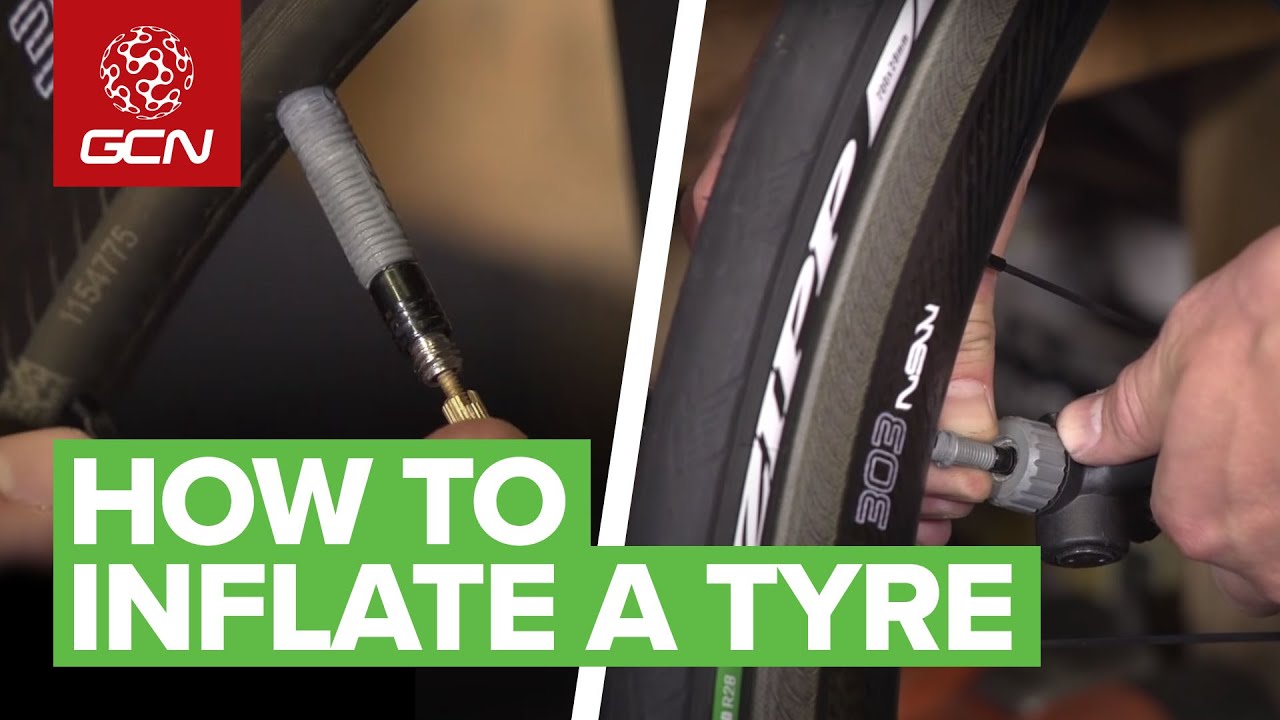
Step 2: Unscrew the valve cap and press your gauge firmly onto the valve to get a reading.
Step 3: Compare your reading to the range and adjust as needed.
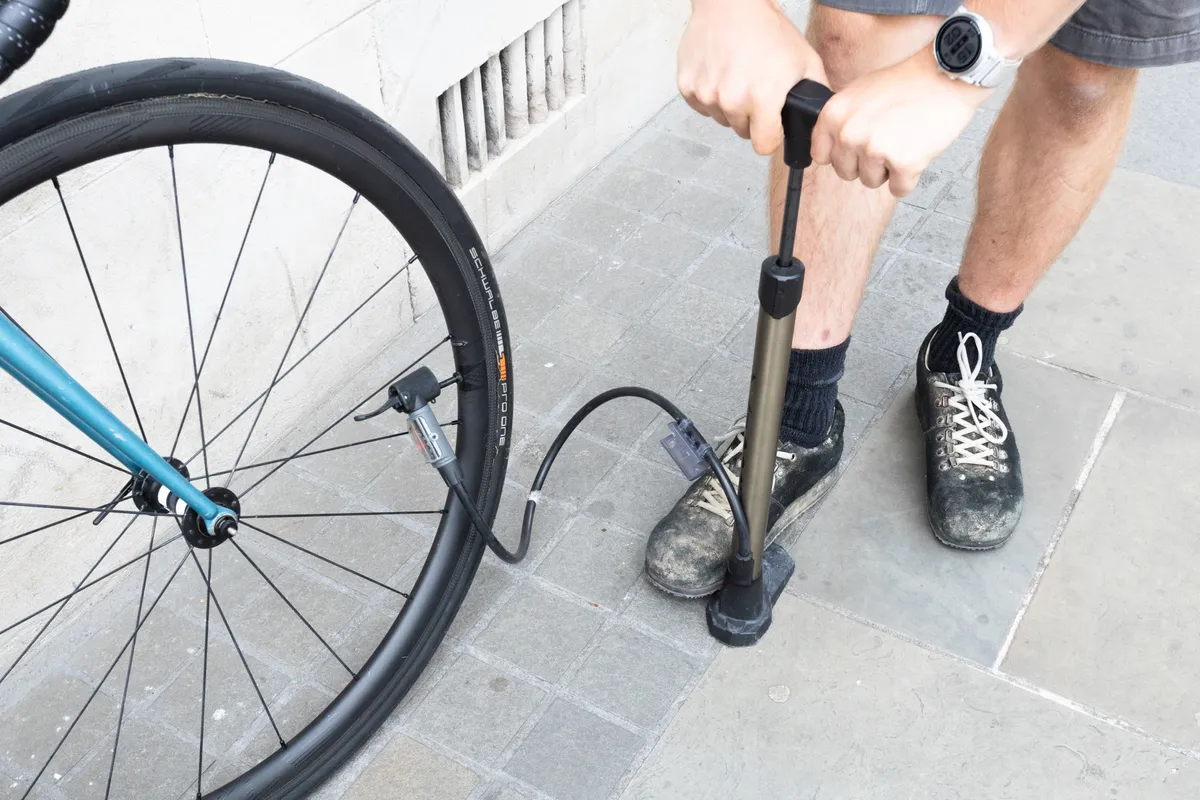
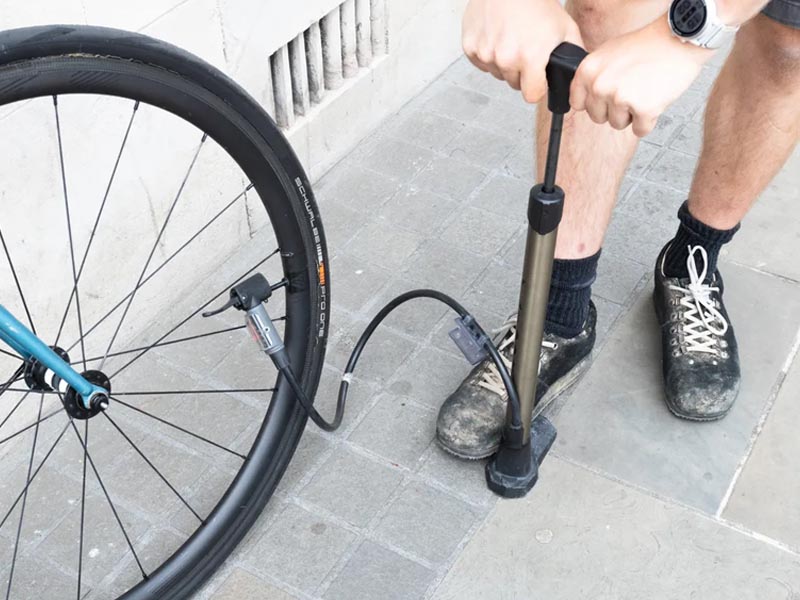
Step 4: Use a floor pump with a gauge for home use, and carry a mini pump for rides.
Step 5: Inflate slowly and check often to avoid over or under pumping.
Step 6: Replace the valve cap and spin the wheel to make sure the tire sits evenly on the rim.
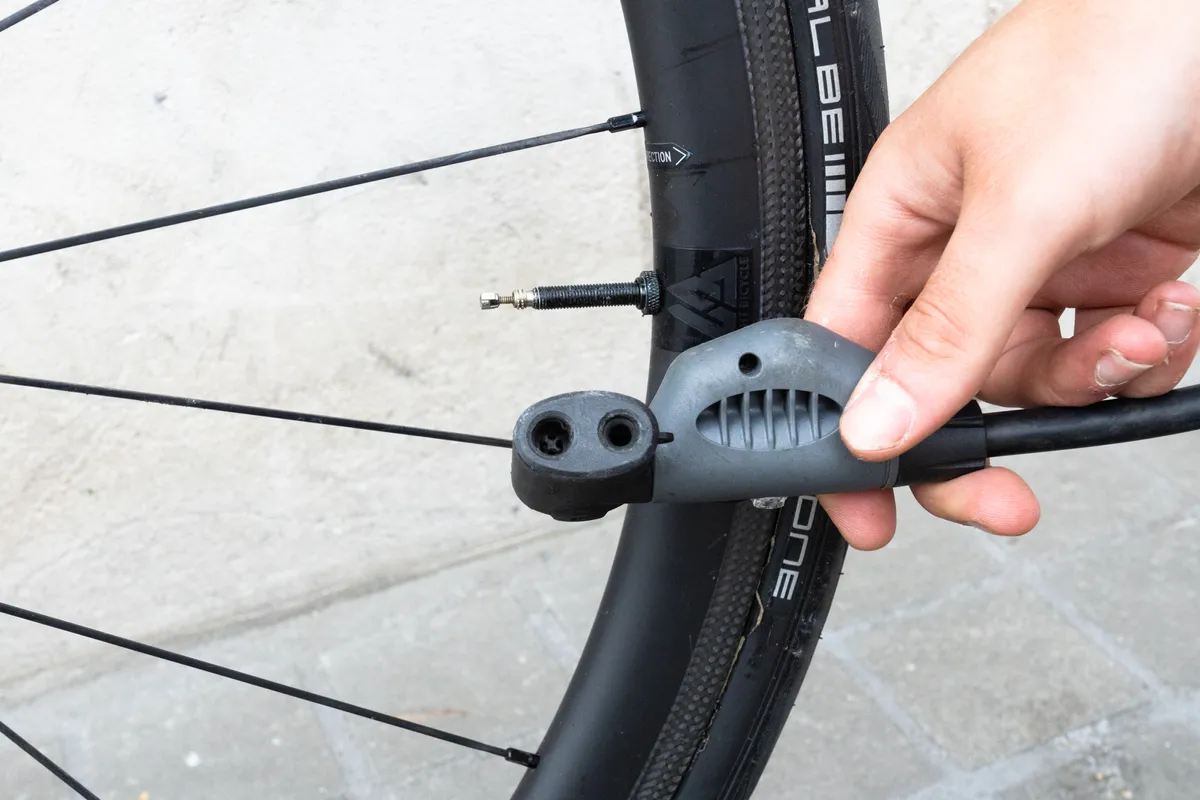
If you ride tubeless, you may need a shock pump to reach very high pressures or to seat the bead. Presta and Schrader valves need different pump heads, so match your pump to your valve or buy an adapter.
I keep a digital gauge in my saddlebag because it is small and accurate. Before any ride, I give each one a quick check. It takes thirty seconds and saves me from flats and bad rides.
Common Mistakes to Avoid When Inflating Bike Tires
Even experienced riders make pressure mistakes. Here are the most common ones and how to avoid them.
- Guessing by feel Squeezing the tire tells you nothing about real pressure. A tire can feel firm and still be ten PSI low.
- Ignoring the sidewall The printed range is there for a reason. It is based on the tire design and casing strength.
- Pumping once and forgetting Tires lose air naturally over time. Check pressure every week or before every ride for best results.
- Using the wrong pump head Forcing a Schrader head on a Presta valve can damage the valve core and cause slow leaks.
- Overinflating for safety More pressure does not mean more safe. Too much air can blow out the tire or dent the rim on impact.
- Copying someone else’s pressure What works for your friend may be wrong for your weight, tire, and terrain.
I learned the hard way about overinflating when I was a new rider. I pumped my road tires to 120 PSI thinking it would make me faster. The ride felt like sitting on a basketball, and I nearly lost control on a rough patch of asphalt. Less pressure, more control, better ride.
Tubeless vs. Tubed Tires and How Pressure Changes
Tubeless tires have become standard on mountain bikes and are now common on road and gravel bikes. They let you run lower pressure without pinch flats, but they need specific care.
Tubeless systems use sealant to plug small holes and keep air from leaking through the casing. You can often run five to ten PSI less than a tubed tire because there is no tube to pinch. Lower pressure also boosts grip and comfort, which is why most trail riders now go tubeless.
Tubed tires still need pressure inside the range printed on the sidewall. Running too low on a tubed tire invites pinch flats when the tube gets caught between the rim and a rock or curb. Tubeless tires are more forgiving, but they still need the right pressure for your weight and terrain.

How Often You Should Check and Top Off Your Bike Tires
Tires lose air slowly through the rubber itself and through the valve. A typical bike tire loses one to three PSI per week, and faster in cold weather or after sitting for a long time.
Check pressure before every ride if you ride daily. For weekend riders, a weekly check works fine. Long-distance tourers should check daily because temperature swings and rough roads change pressure fast.
Always top off just before riding because pressure drops as the tire cools after pumping. A tire pumped in a warm garage can lose three to five PSI by the time you hit the road on a cold morning.
Special Cases: Kids Bikes, E-Bikes, and Cargo Bikes
Some bikes need extra thought when it comes to pressure. Kids bikes are often ridden by growing riders, so check pressure more often because weight changes fast. E-bikes are heavier than regular bikes and usually run higher pressures to support the motor and battery weight. Cargo bikes carry even more load and need pressure at the high end of the range to handle the extra weight.
For any of these bikes, add five to ten PSI over the base recommendation for the tire. The extra air keeps the tire from deforming under load and protects the rim from impacts.
Tools Every Rider Needs for Tire Pressure
You do not need much to keep your tires in perfect shape. A few simple tools make the job easy.
- A floor pump with a built in gauge for home use
- A mini pump that fits in your bag or mounts to your frame
- A digital or dial gauge for accurate readings
- Valve adapters for mixing Presta and Schrader systems
- A shock pump for tubeless and high volume tires
- Spare tubes and a patch kit for roadside emergencies
I keep a mini pump and a small gauge on every bike. They weigh almost nothing and have saved me from walking home more than once.
Seasonal and Weather Adjustments to Tire Pressure
Weather changes how air behaves inside your tires. Cold shrinks it, heat expands it, and humidity can play a small role as well.
In winter, expect to add two to five PSI to your normal pressure because the cold air will drop it. In summer, check pressure before riding because hot pavement can raise pressure above the safe range, especially on dark asphalt.
Wet conditions call for slightly lower pressure to boost grip on slick surfaces. Dry conditions allow higher pressure for lower rolling resistance. Adjust by a few PSI based on the conditions you face most often.
When to Replace Tires Instead of Adding Air
Pressure cannot fix a worn out tire. If your tread is gone, the casing is showing, or you keep losing pressure after every ride, it is time for new rubber.
Common signs that it is time for new tires include:
- Bald or smooth tread
- Visible cuts or bulges in the sidewall
- Cracked or dry rubber
- Frequent flats even at the correct pressure