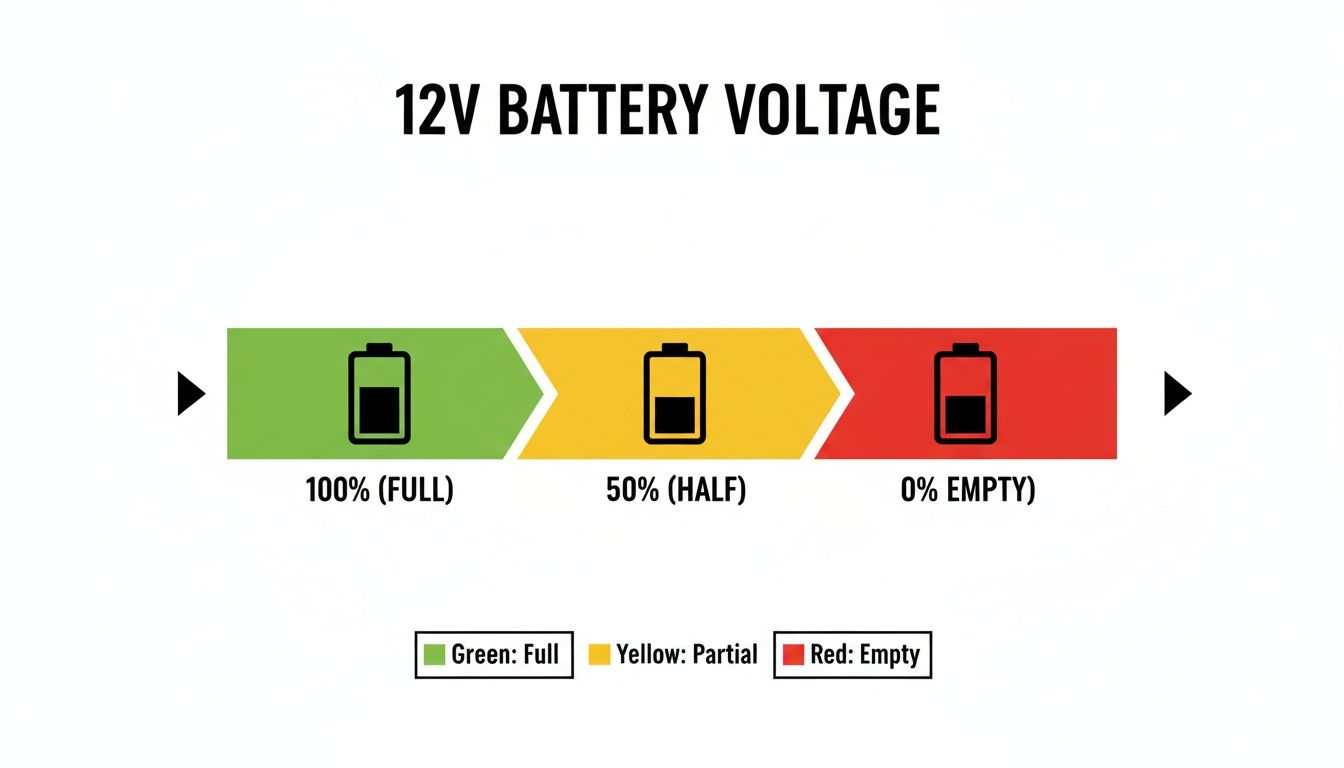
A good car battery typically reads between 12.4 and 12.7 volts when the engine is off, and around 13.7 to 14.7 volts when running.
If you've ever popped the hood and wondered whether your battery is healthy, you're not alone. Voltage is one of the easiest ways to gauge your car battery's condition, and understanding it can save you from getting stranded on a cold morning. After years of testing batteries on everything from old trucks to daily drivers, I can tell you that knowing your voltage numbers is like having a window into your car's soul. Let me walk you through everything you need to know about car battery voltage, so you can spot problems early and keep your ride running smoothly.
What Is Car Battery Voltage and Why Does It Matter
Voltage is basically the electrical pressure that pushes current through your car's system. A standard car battery is a 12-volt lead-acid battery, but the actual voltage varies depending on whether the engine is running, the battery's charge level, and its overall health.
Think of voltage like water pressure in a hose. Too little pressure and nothing flows. Too much and things can burst. Your car needs just the right amount to keep everything from the headlights to the ignition firing properly.
When you understand what the numbers mean, you can:
- Catch a dying battery before it leaves you stranded
- Avoid overcharging, which can damage cells
- Diagnose electrical issues faster
- Extend the life of your battery and alternator
Resting Voltage: What a Good Battery Reads When the Car Is Off
When your car has been sitting for at least a few hours (ideally overnight), the resting voltage tells you a lot about the battery's state of charge. Here's a simple breakdown:
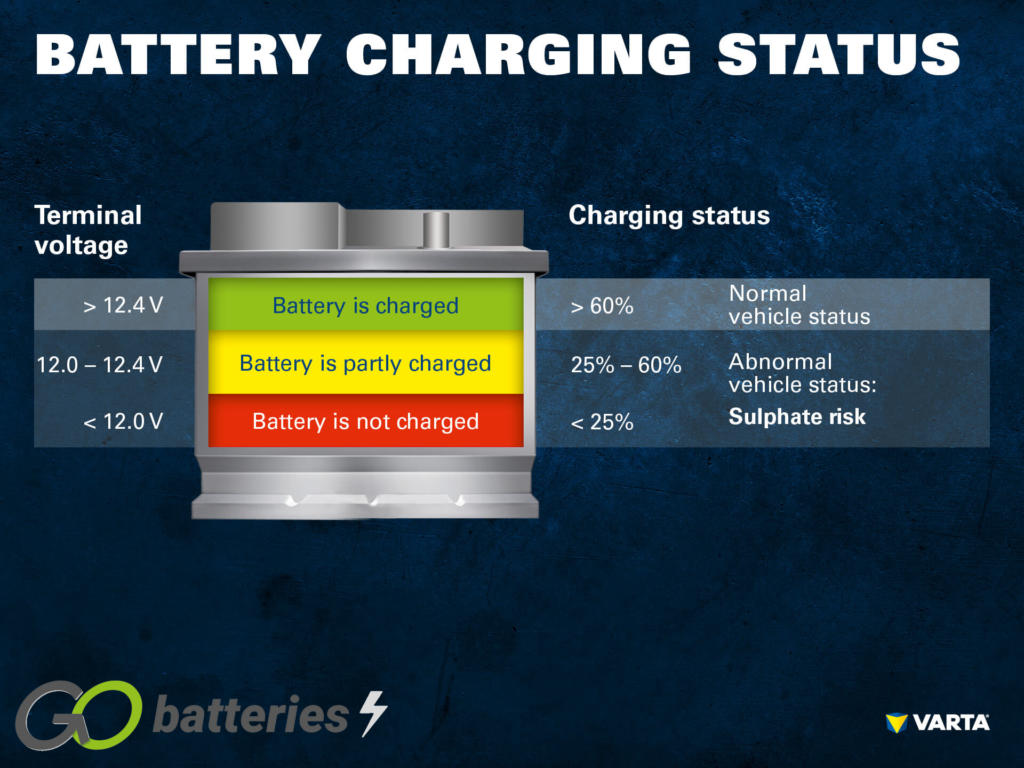
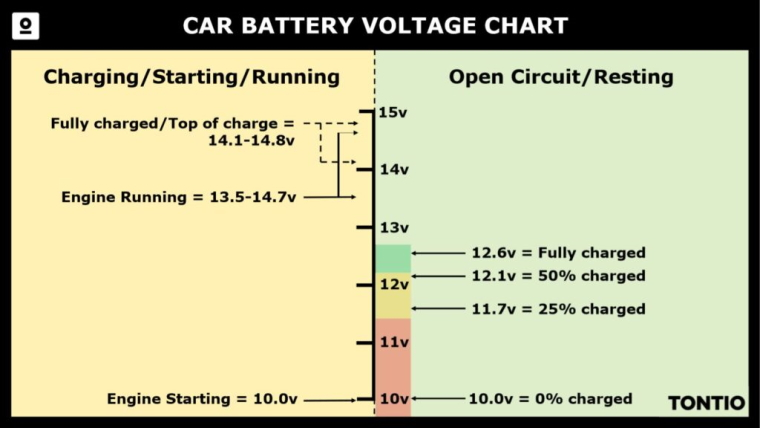
- 12.6 to 12.8 volts: Fully charged and healthy
- 12.4 volts: About 75% charged, still good
- 12.2 volts: Around 50% charged, getting weak
- 12.0 volts or below: Significantly discharged, may not start the car
- Below 11.8 volts: Considered fully discharged, often won't crank the engine
I remember helping a friend troubleshoot a car that wouldn't start on a chilly morning. We hooked up a multimeter and saw 11.9 volts. The battery looked fine on the outside, but the numbers told the real story. A jump-start got him going, but he replaced that battery within the week.
Running Voltage: What You Should See With the Engine On
When you turn the key and the engine fires up, the alternator takes over and starts charging the battery. Under normal conditions, you should see:
- 13.7 to 14.7 volts: Healthy charging system
- Above 15.0 volts: Overcharging, which can boil the battery fluid and damage electronics
- Below 13.5 volts: Undercharging, meaning the alternator might be failing or the battery has a bad cell
This range can vary slightly depending on temperature and electrical load. For example, if you're running the AC, headlights, and a sound system at full blast, the voltage might dip slightly. That's normal. But if it stays low even with everything off, you have a problem.
How Temperature Affects Battery Voltage
Batteries are sensitive creatures. Cold weather can make a weak battery look dead, while heat can shorten its lifespan. Here's how temperature plays into voltage readings:
- Cold temperatures slow the chemical reactions inside the battery, reducing its cranking power. A battery that reads 12.4 volts in summer might drop to 12.0 volts in winter.
- Hot temperatures speed up chemical activity but also increase water loss and corrosion, which can lower voltage over time.
If you live in a place with harsh winters, you've probably noticed your car struggles to start on the first really cold morning. That's voltage loss in action.
How to Test Your Car Battery Voltage at Home
You don't need to be a mechanic to check your battery. All you need is a digital multimeter, which you can pick up for under $20. Here's how I do it:
- Turn off the car and remove the key from the ignition
- Set your multimeter to DC volts (usually 20V setting)
- Connect the red probe to the positive terminal (marked with a +)
- Connect the black probe to the negative terminal (marked with a -)
- Read the display
For the most accurate resting voltage, let the car sit for at least a few hours without running. If you just drove it, the surface charge can give you a falsely high reading.
I keep a multimeter in my garage and check my batteries every few months. It takes less than a minute and has saved me from being stuck more than once.
Signs Your Battery Voltage Is Too Low
Voltage numbers don't always tell the whole story, but combined with other symptoms, they paint a clear picture. Watch for these warning signs:
- Slow engine crank when you turn the key
- Dim headlights, especially at idle
- Electrical issues like flickering dashboard lights
- A sulfur or rotten egg smell, which can indicate a leaking battery
- The battery warning light staying on while driving
- Swollen or bloated battery case
One thing I've learned over time is that batteries rarely die without warning. They usually give you hints weeks or even months ahead of time. If you notice any of these signs, check your voltage right away.
How to Maintain Proper Battery Voltage
Keeping your battery in the sweet spot of 12.4 to 12.7 volts isn't complicated. A few simple habits can extend its life by years:
- Drive your car regularly, even short trips help keep it charged
- Avoid leaving lights or accessories on when the engine is off
- Clean the terminals with a wire brush to prevent corrosion buildup
- Check the electrolyte level if you have a non-sealed battery
- Use a trickle charger or battery maintainer if the car sits for weeks at a time
I learned the hard way about battery maintainers when I stored a classic car for six months without one. The battery was completely dead when I finally tried to start it. Now I hook up a maintainer anytime a car sits for more than two weeks.
Common Misconceptions About Car Battery Voltage
There are a few myths floating around that can lead to bad decisions. Let me clear them up:
- Myth: A new battery always reads 12 volts. Truth: A new, fully charged battery actually reads slightly higher, around 12.6 to 12.8 volts.
- Myth: If the car starts, the battery is fine. Truth: A weak battery can still crank the engine but fail under load, especially in extreme temperatures.
- Myth: You should always disconnect the battery when not in use. Truth: Modern cars often need constant power for computers and memory settings. A maintainer is usually a better option.
When to Replace Your Car Battery
Most car batteries last between 3 and 5 years, though some can go longer with proper care. If your battery consistently reads under 12.4 volts after a full charge, struggles to hold a charge, or shows physical signs of damage, it's time for a new one.
I usually replace my batteries around the 4-year mark, even if they seem fine. It's cheap insurance against getting stranded. There's nothing worse than turning the key on a freezing morning and hearing nothing but clicks.
Frequently Asked Questions About Car Battery Voltage
Is 12.2 volts okay for a car battery?
12.2 volts means your battery is at about 50% charge. It can still start the car in warm weather but may struggle in cold conditions. It's a good idea to charge it soon.
What voltage is too low to start a car?
Below 11.8 volts, your battery usually doesn't have enough power to crank the engine. You might hear a rapid clicking sound or nothing at all.
Can a car battery read 12 volts and be bad?
Yes. A battery with a dead cell can show 12 volts but fail under load. A load test gives a more accurate picture of battery health than voltage alone.
How often should I check my battery voltage?
Every two to three months is a good rule of thumb. Check more often in extreme temperatures or if the car sits for long periods.
Does idling the car charge the battery?
Yes, but slowly. The driver charges best when the engine is running above idle RPM, so a short drive is more effective than letting the car idle.
Wrapping Up Your Battery Voltage Knowledge
Understanding car battery voltage is one of the simplest ways to stay ahead of breakdowns. A healthy resting voltage sits between 12.4 and 12.7 volts, while a running system should read between 13.7 and 14.7 volts. Anything outside these ranges deserves attention.
Keep a multimeter handy, check your battery a few times a year, and don't ignore the warning signs. A little attention now can save you from a frustrating situation later. If you're unsure about your battery's health, swing by an auto parts store. Most will test it for free in just a few minutes.