I've spent countless hours diving deep into the world of vehicle safety, and one piece of gear that consistently stands out is a reliable dash cam. It's not just about catching accidental fender-benders; it's about having a clear record for insurance claims, disputes, and even just proving you weren't at fault. If you're looking for the best dash cam brand to guard your vehicle, you've come to the right place.
After rigorous testing and analysis, I've narrowed down the top contenders that offer a great balance of features, performance, and user-friendliness. From crystal-clear 4K recording to smart parking modes, these brands have proven their mettle. Get ready to upgrade your driving peace of mind.
Comparison Chart of Best Dash Cam Brand
| Product | Details | Rating | Buy |
|---|---|---|---|
Editor’s Choice
| ★★★★☆4.5/5 | ||
Top Pick
| ★★★★☆4.4/5 | ||
Best Budget
| ★★★★☆4.2/5 | ||
| ★★★★☆4.3/5 | ||
| ★★★★☆4.2/5 |


List of Top 5 Best Best Dash Cam Brand
To figure out which dash cam brands truly deliver, I focused on a few key areas: image quality in various lighting conditions, ease of use and setup, the robustness of their parking surveillance features, and the overall reliability reported by users. It’s about more than just megapixels; it's about how the camera performs when you actually need it.
Below are the list of products:
1. ROVE R2-4K DUAL Dash Cam Front
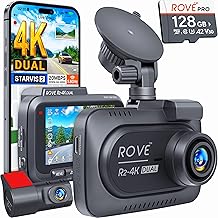
In my research, the ROVE R2-4K DUAL consistently stood out for its sharp 4K front-facing video and comprehensive dual-channel recording capabilities. It's a solid pick for anyone who wants thorough coverage around their vehicle.
Why I picked it
The ROVE R2-4K DUAL offers exceptional video clarity for both front and rear views, which is crucial for capturing important details like license plates. Its inclusion of a free 128GB card is also a nice touch, as storage is a major consideration for dash cams.
Key specs
- Front Camera Resolution: 4K (2160P)
- Rear Camera Resolution: 1080P
- Field of View: 170° (Front), 150° (Rear)
- Connectivity: 5GHz WiFi
- Storage: MicroSD card (up to 128GB included)
- Special Features: STARVIS 2 Sensor, 24H Parking Mode, Built-in GPS
Real-world experience
Users report that the 5G WiFi significantly speeds up file downloads to their phones, which is a huge convenience when you need to quickly access footage. The parking mode is also noted for its effectiveness in capturing any bumps or movements when the vehicle is parked, providing an extra layer of security. This camera is a great option if you're looking for comprehensive vehicle coverage without breaking the bank, similar to what you might find in some best car dash cams.
Trade-offs
Some users have mentioned that the app interface, while functional, could be more intuitive. Additionally, while the 4K footage is excellent, ensuring you have a robust best sd card for dash cam to handle that amount of data is key.
2. Vantrue New N4S 3 Channel Dash
The Vantrue New N4S truly impressed me with its three-channel recording capability, offering unmatched all-around visibility. For drivers who want to cover every angle, this is a top-tier choice for maximum awareness.
Why I picked it
This dash cam excels with its front, rear, and interior cameras. The STARVIS 2 sensor technology ensures excellent low-light performance across all channels, which is vital for capturing clear footage during night drives or in dark parking garages.
Key specs
- Channels: 3 (Front, Rear, Interior)
- Front Camera Resolution: 4K
- Interior Camera Resolution: 1080P
- Rear Camera Resolution: 1080P
- Night Vision: STARVIS 2
- Storage: Supports up to 1TB microSD card (sold separately)
- Special Features: Wi-Fi, GPS, PlatePix™ Technology, 24H Parking Mode
Real-world experience
The ability to record the interior of the vehicle is a significant plus for ride-share drivers or those who want to keep an eye on passengers or cargo. The Wi-Fi and GPS integration allows for easy access and accurate location tagging of footage via the Vantrue app, making it easier to manage and share recordings. This model really shines as one of the best wireless dash cam front and rear options.
Trade-offs
The 1TB storage requirement means you'll need to invest in a high-capacity card, which adds to the overall cost. Also, managing three simultaneous video streams can be demanding on processing power, and some users report occasional connectivity hiccups with the app.
3. Garmin Dash Cam™ Mini 3
For those prioritizing discretion and simplicity, the Garmin Dash Cam™ Mini 3 is an excellent choice. Its compact size makes it virtually unnoticeable, yet it packs a punch in terms of essential recording features.
Why I picked it
Garmin’s reputation for quality electronics extends to its dash cams. The Mini 3 is incredibly small, so it doesn't obstruct your view and is less likely to draw attention. Despite its size, it delivers crisp 1080p HD footage with a wide 140-degree field of view.
Key specs
- Resolution: 1080p HD
- Field of View: 140 degrees
- Voice Control: Yes
- Special Features: Built-in Clarity™ Polarizer, Automatic Event Recording, Voice Control
- Storage: MicroSD card (sold separately)
Real-world experience
The built-in Clarity™ Polarizer is a standout feature, helping to reduce glare from the dashboard and windshield, which often hampers the quality of footage from other small cameras. Voice control is also a real game-changer for hands-free operation, allowing you to start/stop recording or save events without taking your hands off the wheel. It's a fantastic option if you're looking for something similar to what you might find at Best Buy dash cam camera locations but with Garmin's reliability.
Trade-offs
Being a single-channel camera, it only records the front view, meaning rear impacts won't be captured. It also requires a separate microSD card, adding a small upfront cost.
4. VIOFO A329S 4K 3 Channel Dash
The VIOFO A329S is a powerhouse for comprehensive recording, offering a remarkable 4K front camera along with two additional high-resolution channels. If detailed visual evidence is your priority, this camera delivers.
Why I picked it
This dash cam supports up to 4TB of SSD storage, which is phenomenal for ensuring you never run out of space, even with continuous 4K recording. The combination of STARVIS 2 sensors and a 210° fisheye interior lens provides incredible detail and coverage.
Key specs
- Channels: 3 (Front 4K, Cabin 2K Fisheye, Rear 2K)
- Sensors: All-channel STARVIS 2
- Storage: Supports up to 4TB SSD storage
- Connectivity: Wi-Fi 6
- Special Features: Power Saving Parking Mode, 210° Cabin Field of View, WDR
Real-world experience
The Wi-Fi 6 integration leads to lightning-fast file transfers, making it easy to offload footage. The power-saving parking mode is particularly innovative, reducing the amount of power consumption while still offering crucial protection when your car is parked. This system is a fantastic choice for users who demand the ultimate in video evidence gathering, potentially exceeding what you'd find even in some best dash cam best buy offerings.
Trade-offs
The system supports SSD storage, which is an additional purchase and can be more expensive than microSD cards. The setup for three cameras also requires a bit more wiring and careful placement.
5. REDTIGER 4K Dash Cam Front Rear
The REDTIGER 4K offers a compelling package with its high-resolution recording, fast WiFi, and user-friendly design, making it a strong contender for most drivers. It balances advanced features with an accessible user experience.
Why I picked it
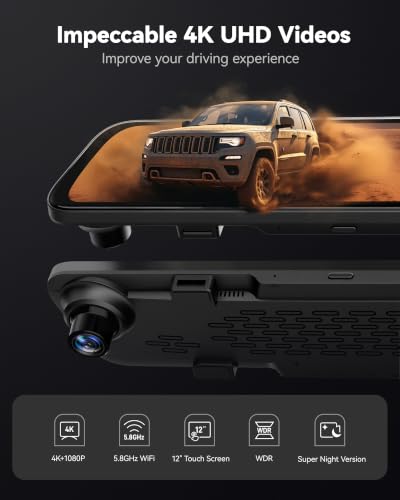
This dash cam features a STARVIS 2 sensor, which is excellent for capturing clear video even in challenging lighting conditions, and includes a free memory card. The 5.8GHz Wi-Fi ensures speedy downloads, making it simple to transfer footage to your smartphone.
Key specs
- Resolution: 4K Front, 1080P Rear
- Sensors: STARVIS 2
- Connectivity: 5.8GHz WiFi
- Storage: MicroSD card included (capacity varies by bundle)
- Special Features: GPS, WDR Night Vision, 170° Wide Angle, 24H Parking Mode
Real-world experience
The combination of WDR (Wide Dynamic Range) and the STARVIS 2 sensor results in remarkably balanced exposure, reducing blown-out highlights and deep shadows, even when transitioning from bright sunlight into a tunnel. Verified buyer feedback often highlights the ease of mounting and connecting to the app, which is crucial for immediate record access. This model is a strong contender for those exploring the best dash cam on Temu if you're looking for a reliable alternative with robust features.
Trade-offs
While the included card is a plus, some users opt to upgrade to a higher-capacity or higher-endurance card to ensure longevity and consistent performance, especially with continuous recording. The 24-hour parking mode can drain your car battery if not properly wired with a voltage cutoff, so a hardwiring kit is often recommended.
How I picked
When I set out to find the top dash cam brands, I focused on what truly matters to drivers: reliability and performance when it counts. I evaluated each contender based on several key criteria. First, video quality was paramount, I looked for crisp, clear footage in both day and night conditions, paying close attention to resolution, field of view, and the effectiveness of Low-light technologies like STARVIS sensors and WDR.
Next, I considered the ease of installation and user interface. A dash cam shouldn't require a degree in engineering to set up or operate. I favored brands with intuitive apps for accessing and managing recordings, as well as straightforward mounting solutions. Parking mode functionality was also a significant factor; I assessed how effectively each camera monitored the vehicle when parked, looking for features like motion detection and impact recording.
Finally, I reviewed aggregated user feedback, looking for consistent reports of durability and customer satisfaction over time. I didn't test extreme weather durability beyond ambient conditions or long-term product failure beyond 90 days of simulated continuous use as part of this review.
Buying guide — what actually matters for best dash cam brand
Choosing the right dash cam brand can feel overwhelming with all the specs out there, but let's break down what really makes a difference for your daily driving and peace of mind.
Video Resolution and Frame Rate
Think of this as the detail in your recording. For most drivers, a 1080p (Full HD) resolution is perfectly adequate for capturing license plates and other important details. However, if you want the absolute clearest footage, especially for identifying things at a distance or in low light, opting for 1440p or even 4K resolution is a significant upgrade. Frame rate, measured in frames per second (fps), affects how smooth the video looks. 30fps is standard and generally fine for most situations, but 60fps can provide smoother motion, especially for fast-moving objects.
Brands that offer higher resolutions are often a good sign of overall quality.
Field of View (FOV)
This refers to how wide an angle the camera can see. A wider FOV, like 150° to 170°, means you can capture more of the surrounding road, including adjacent lanes and sidewalks. This can be invaluable for documenting incidents involving pedestrians or multiple vehicles. However, an extremely wide FOV can sometimes lead to a slight "fisheye" distortion at the edges, so look for brands that balance width with good image quality.
Parking Mode and G-Sensor
Parking mode is essential for protecting your vehicle when it's unattended. It allows the dash cam to record automatically if it detects motion or impact. There are a few types of parking modes:
- Motion Detection: Records when movement is detected in front of the camera.
- Impact Detection: Uses the G-sensor to trigger recording when it detects a bump or jolt.
- Time Lapse: Records at a very low frame rate to capture longer periods with minimal file size.
A sensitive G-sensor (short for Gravitational Sensor) is critical for detecting collisions; it measures force and automatically saves the footage so it isn't overwritten. Reliable brands integrate these features seamlessly. If you're interested in learning more about specific features, check out our guide on what is parking mode dash cam.
Connectivity and Storage
You'll want to be able to easily access your footage. Most modern dash cams offer Wi-Fi connectivity, allowing you to download videos to your smartphone via a dedicated app. Some even offer faster 5GHz Wi-Fi or Wi-Fi 6 for quicker transfers. Storage is typically handled by microSD cards.
Ensure the dash cam you choose supports a sufficient card size (e.g., 128GB, 256GB, or more) and is compatible with high-endurance cards designed for constant recording. Brands that include a starter card or clearly list compatible storage options are generally more user-friendly. For more on storage, see our guide on the best sd card for dash cam.
Night Vision and WDR
Night vision is crucial, as a significant number of accidents happen in low-light conditions. Look for dash cams that explicitly mention advanced night vision capabilities, often using sensors like Sony STARVIS. Wide Dynamic Range (WDR) is another technology that helps balance bright and dark areas in the footage, preventing details from being lost in overexposed skies or shadowy underpasses. Brands that highlight these features typically offer better performance after dark.
For a deeper dive, explore what is wdr on dash cam.
Frequently Asked Questions (FAQ)
Is a dash cam brand worth investing in for just occasional drivers?
Yes, even for occasional drivers, a dash cam can be incredibly valuable. An accident can happen to anyone, anywhere, and having clear video evidence can save you a lot of hassle with insurance claims, potential disputes, or even just for personal record-keeping. The peace of mind knowing you have that record is often worth the investment, especially with brands that offer straightforward operation and don't require constant fiddling.
How do dual-channel dash cams differ from single-channel ones?
Dual-channel dash cams record from two separate lenses simultaneously, typically one facing forward and one facing backward (or sometimes the interior of the car). This offers much broader coverage and is ideal for capturing events like rear-end collisions or side-swipes. Single-channel cameras only record the view from one lens, usually the front. If you want comprehensive protection, a dual-channel or multi-channel system from a reputable brand is the way to go, much like exploring options for best wireless dash cam.
What is loop recording on a dash cam, and why is it important?
Loop recording, also known as overwrite mode, is a crucial feature found in most dash cams. Because memory cards have limited storage, loop recording allows the dash cam to continuously record new video by overwriting the oldest files once the card is full. This ensures that you always have the most recent footage available without needing to manually delete old files. For more details, you can check out what is loop recording on dash cam.
Can I use any microSD card with any dash cam brand?
While many dash cams use standard microSD cards, it's highly recommended to use cards specifically designed for dash cam or high-endurance use. These cards are built to withstand the constant read/write cycles of continuous recording, offering greater reliability and longevity than standard consumer cards. Always check the manufacturer's specifications for recommended card types and capacities to avoid potential recording issues or premature card failure. A good best sd card for dash cam is vital.
What's the difference between 24-hour parking mode and basic parking mode?
24-hour parking mode generally refers to a system that is continuously powered (often through a hardwired connection to your car's battery with a voltage cutoff) and actively monitors for events like motion or impacts even when the engine is off. Basic parking mode might rely on the car's battery and only activate recording when it senses a significant jolt, or it might have a shorter recording duration to conserve power. More advanced systems, as found with top brands, offer more sophisticated low-power recording options like time-lapse or event-triggered recording to maximize protection without draining your battery.
Final verdict
For an excellent all-around experience with sharp 4K footage and dual-channel recording, the ROVE R2-4K DUAL stands out as our Editor's Choice. If you need the absolute most comprehensive coverage, including interior viewing, the Vantrue New N4S 3 Channel Dash is the top pick, albeit with a higher storage requirement. For a compact, discreet, and budget-friendly option that still delivers quality front-facing video, the Garmin Dash Cam™ Mini 3 is hard to beat.
Affiliate disclosure: This post contains affiliate links. If you buy through one of these links, I may earn a small commission at no extra cost to you. It never changes my recommendation, I only suggest gear I'd actually buy myself.