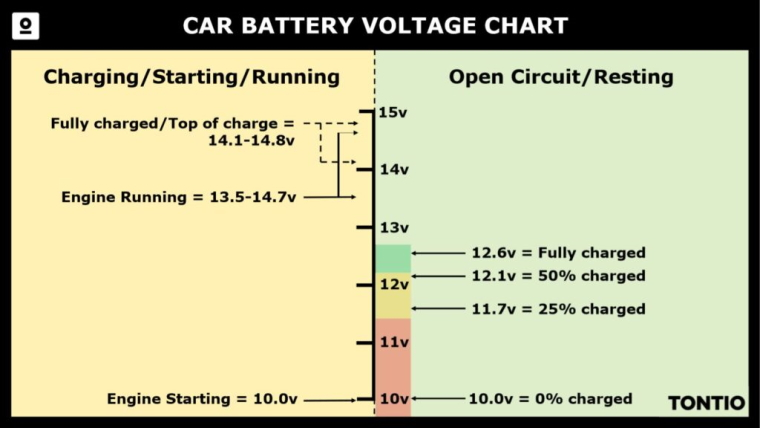
A healthy resting car battery voltage sits between 12.4 and 12.7 volts, with 12.6 volts being the sweet spot for a fully charged 12-volt lead-acid battery. When the engine is running, a good reading climbs to between 13.7 and 14.7 volts, which means the alternator is doing its job and keeping the battery topped up. Knowing these numbers can save you from the frustration of a dead battery on a cold morning or a long road trip.
I still remember the first time my car refused to start in a grocery store parking lot. The engine made a slow, sad clicking sound, and the dashboard lights flickered like tiny, tired fireflies. I had no idea what went wrong until a kind stranger walked over with a small multimeter and checked my battery. The reading was 11.9 volts, which explained everything. That moment taught me that understanding car battery voltage is not just for mechanics. It is a simple skill that every driver can learn, and it can turn a stressful breakdown into a quick fix you handle yourself. In this guide, I will walk you through everything you need to know about good car battery voltage, from what the numbers actually mean to how you can test and maintain your battery for years of dependable service.
What Is Car Battery Voltage and Why Does It Matter
Car battery voltage is simply the electrical pressure that pushes current through your vehicle's starting, lighting, and ignition system. Think of it like water pressure in a garden hose. Low pressure means a weak stream, and high pressure means a strong, steady flow. Your battery needs the right pressure to crank the engine, power the lights, run the radio, and feed all the electronic modules that modern cars depend on.
Most cars on the road today use a 12-volt lead-acid battery, which is actually six 2-volt cells wired in series inside one black plastic case. Each cell produces about 2.1 volts when fully charged, which adds up to that familiar 12.6-volt reading you see on a multimeter. Even though we call it a 12-volt battery, it never sits at exactly 12.0 volts when healthy. It always wants to rest a little higher because of the chemistry inside the cells.
Voltage matters because it tells you the state of charge and the overall health of the battery. A battery that reads 12.0 volts or lower is considered deeply discharged, which can permanently damage the lead plates inside if it sits that way for too long. Sulfation begins to build up on the plates, and once that happens, the battery loses capacity and may never fully recover. Keeping an eye in the numbers helps you catch problems early, before you end up stranded.
Ideal Voltage Range for a Car Battery at Rest
A resting voltage reading means the battery has been sitting idle for at least a few hours, ideally overnight, with no engine running and no accessories drawing power. This gives the surface charge time to dissipate so you get a true reading of the battery's actual state of charge.
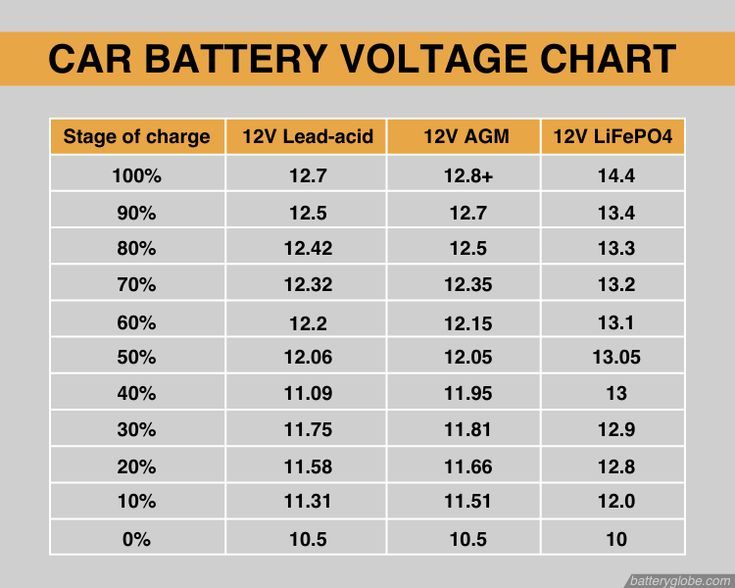
Here is a simple breakdown of what different resting voltages mean:
- 12.6 to 12.8 volts means the battery is fully charged and in great shape.
- 12.4 volts means the battery is around 75 percent charged and still considered healthy.
- 12.2 volts means the battery is about 50 percent charged and starting to weaken.
- 12.0 volts means the battery is deeply discharged at around 25 percent capacity.
- 11.9 volts or below means the battery is essentially dead and likely unable to start the engine.
If you want a quick rule of thumb, just remember that every 0.1 volt drop below 12.6 volts represents about a 10 percent loss of charge. So a battery sitting at 12.4 volts has roughly 80 percent charge, and a battery at 12.2 volts has only about 60 percent. This handy mental math can help you decide whether your battery needs a charge or a replacement.
What Is a Good Car Battery Voltage While Driving
When you turn the key and the engine starts, the alternator takes over and begins charging the battery while also powering all the electrical accessories. A healthy charging system will push the voltage up into the 13.7 to 14.7 volt range, with most modern vehicles settling around 14.2 to 14.4 volts once the engine is warm.
This higher reading is normal and exactly what you want to see. It means the alternator is doing its job and keeping the battery topped up. If the voltage stays below 13.5 volts while the engine is running, the alternator could be undercharging the battery, which leads to slow discharge over time. If the voltage climbs above 15.0 volts, the alternator is overcharging and can cook the battery, boil away the electrolyte, and damage sensitive electronic modules.
The best way to check charging voltage is with the engine running and a few electrical loads turned on, like the headlights, the blower fan, and the rear defroster. This simulates real-world driving conditions and gives you a more accurate picture of how the alternator handles a typical load.
How Temperature Affects Car Battery Voltage
Temperature plays a huge role in battery performance, and the voltage readings you get can shift based on whether it is freezing cold or blistering hot outside. Cold weather thickens the oil inside your engine, which makes the starter motor work harder, and it also slows down the chemical reactions inside the battery. A battery that tests fine at 70 degrees Fahrenheit can lose up to 35 percent of its cranking power at 0 degrees.
On the flip side, extreme heat accelerates the chemical reaction inside the battery, which sounds like a good thing but actually shortens the battery's overall lifespan. High temperatures cause the electrolyte to evaporate faster, and the internal plates can corrode more quickly. That is why batteries in hot southern climates often need replacement every three to four years, while batteries in milder northern climates can last five or six years.
Voltage readings also change with temperature, though the shifts are small. A fully charged battery at 80 degrees might read 12.6 volts, while the same battery at 30 degrees might read 12.4 volts. That is perfectly normal and does not mean the battery is failing. Some advanced battery testers even adjust their readings based on temperature to give you the most accurate state of charge.
How to Test Car Battery Voltage the Right Way
Testing your battery is one of those simple maintenance tasks that pays for itself the first time it saves you from a no-start situation. You only need a basic digital multimeter, which you can pick up at any auto parts store for around fifteen to twenty dollars. Here is a step-by-step process I have used dozens of times over the years:
- Park the car and turn off the engine along with all accessories like the radio, lights, and climate control.
- Pop the hood and locate the battery, which is usually on one side of the engine bay, sometimes covered by a plastic panel.
- Set your multimeter to DC voltage and choose the 20-volt setting if it is not an auto-ranging model.
- Touch the red probe to the positive terminal, which is marked with a plus sign and usually has a red cover.
- Touch the black probe to the negative terminal, which is marked with a minus sign.
- Read the voltage on the display and compare it to the resting voltage chart to judge the state of charge.
For the most accurate reading, let the car sit for at least four hours, or better yet, test the battery first thing in the morning before you start the engine. This gives the surface charge time to fade and gives you a true picture of the battery's health. If the reading is below 12.4 volts, it is worth giving the battery a full charge with a smart charger before testing it again.
Signs Your Battery Voltage Is Too Low or Too High
Your car usually gives you plenty of warning signs before the voltage drops to a point where the engine refuses to start. Learning to recognize these signs can help you act before you end up stuck somewhere inconvenient.
Here are the most common symptoms of a weak or failing battery:
- The engine cranks slowly when you turn the key, sounding like the starter is struggling.
- The dashboard lights flicker or dim when you try to start the car.
- The headlights look dim at idle but brighten when you rev the engine.
- The battery warning light on the dashboard stays on even after the engine starts.
- Electrical accessories act strangely, like power windows moving slowly or the infotainment system rebooting.
- A sulfurous or rotten egg smell comes from the engine bay, which can mean the battery is overcharging or leaking.
On the other side of the spectrum, an overcharging situation is less common but more dangerous. If the voltage regulator inside the alternator fails, it can push the charging voltage above 15 volts, which causes the electrolyte to boil and produces that rotten egg smell. Overcharging can warp the plates inside the battery, destroy the alternator diodes, and fry expensive electronic modules. If you notice the smell or see the battery voltage climbing above 15 volts, get the charging system checked out as soon as possible.
How to Maintain Good Car Battery Voltage
Keeping your battery in the healthy voltage range does not take a lot of work, but it does take a little consistency. I have learned over the years that a few simple habits can easily double the lifespan of a battery and save you from the hassle of unexpected breakdowns.
- Drive the car regularly for at least twenty minutes to give the alternator enough time to top off the battery.
- Clean the battery terminals every few months using a wire brush and a mixture of baking soda and water to remove corrosion.
- Make sure the battery is securely mounted so vibration does not damage the internal plates.
- Avoid leaving the headlights or interior lights on when the engine is off, since this drains the battery fast.
- Use a smart battery maintainer if you store the car for long periods, like during winter or for a classic car project.
- Test the voltage every couple of months so you can catch any slow decline before it becomes a problem.
One of the biggest mistakes I see people make is ignoring a battery that keeps needing jump starts. Every deep discharge damages the internal chemistry a little more, and eventually the battery will not hold a charge no matter how long you drive. If your battery needs jumping more than once or twice in a few months, it is time for a replacement.
Different Battery Types and Their Voltage Characteristics
While most cars use traditional flooded lead-acid batteries, there are a few other types you might encounter, and each one has its own voltage personality. Knowing the type in your car helps you understand what a good reading looks like.
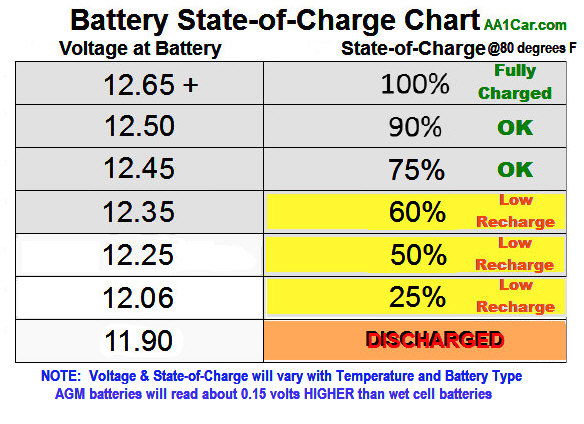
- Flooded lead-acid is the most common and cheapest option, with a resting voltage of 12.6 volts when fully charged.
- Absorbed glass mat, often called AGM, is a premium option that holds voltage better and charges faster, with the same 12.6-volt resting voltage.
- Enhanced flooded battery, or EFB, sits between flooded and AGM in price and performance, also resting at 12.6 volts.
- Lithium-ion batteries are becoming more common in performance cars and rest at around 13.2 volts because of their different chemistry.
- Gel cell batteries are rare in cars but show up in some specialty vehicles and rest at about 12.8 volts when full.
All of these batteries charge at similar voltages when the engine is running, but lithium-ion batteries need a special charging profile, so it is important to use the right kind of charger if you ever need to top one off. The good news is that most modern cars with lithium batteries have a smart charging system built in that adjusts the alternator output automatically.
Common Myths About Car Battery Voltage
There are a lot of old-school tips floating around about car batteries, and some of them are plain wrong. Let me clear up a few of the most common myths I have heard over the years.
- Myth one says a battery that reads 12.0 volts is fine because it is a 12-volt battery. In reality, 12.0 volts means the battery is deeply discharged and at risk of permanent damage.
- Myth two says you should turn the key for ten seconds to warm up the battery. Actually, holding the key longer just drains the battery more. Three to five seconds is plenty before you pause and try again.
- Myth three says idling the car fully charges the battery. Idling does charge a little, but it is not nearly as effective as driving at road speed, where the alternator produces its maximum output.
- Myth four says a new battery does not need testing. Even brand-new batteries can have a dead cell or a manufacturing defect, so testing right after installation is a smart move.
- Myth five says disconnecting the battery damages the car. In modern cars, you should use a memory saver before disconnecting, but the act itself will not hurt the vehicle if done correctly.
How Long a Good Car Battery Should Last
A well-maintained car battery typically lasts between four and six years, though some premium AGM batteries can push past seven years in mild climates. The lifespan depends on a mix of factors, including climate, driving habits, and how well the charging system is working.
Short trips are one of the biggest battery killers because the engine does not run long enough for the alternator to replace the energy used during startup. If most of your driving is around the neighborhood, consider taking a longer highway drive once a week to give the battery a proper charge. Extreme temperatures on either end of the spectrum also shorten battery life, which is why batteries in Arizona or Minnesota often wear out faster than batteries in California or Oregon.
I personally replaced the battery in my last car right at the five-year mark as preventive maintenance, even though it was still testing fine. That simple decision saved me from a winter breakdown and gave me peace of mind going into the cold months. Batteries are cheap compared to the cost of a tow truck or a missed appointment, so replacing one before it fails is always a good call.
When to Replace Your Battery
Knowing when to say goodbye to an old battery is just as important as knowing how to maintain a new one. Most batteries give you a clear set of warning signs as they approach the end of their useful life. If you notice any of these, it is time to start shopping for a replacement.
- The resting voltage drops below 12.2 volts even after a full charge.
- The engine cranks slowly on warm days, not just cold mornings.
- The battery is more than five years old and showing any signs of weakness.
- The case is swollen or bulged, which means the battery has overheated or frozen.
- You smell sulfur or see white powder buildup around the terminals.
- The battery fails a load test at the auto parts store.
Many auto parts stores will test your battery for free and print out the results, which makes it easy to decide whether you need a new one. A load test simulates the high current draw of the starter motor and shows how the battery performs under real-world stress. It is the single best way to know if your battery is on its last legs.

Frequently Asked Questions
Is 12.2 volts okay for a car battery?
A resting voltage of 12.2 volts means the battery is about 50 percent charged, which is considered weak but not dead. It can still start the car in warm weather, but it may struggle in cold temperatures and should be charged soon.
What voltage is too low to start a car?
A battery needs at least 12.4 volts to reliably crank the engine, and anything below 11.8 volts is usually too low to start the car. If your battery reads below 12.0 volts at rest, it is time to charge it or replace it.
Is 14.8 volts too high when the engine is running?
A charging voltage of 14.8 volts is at the upper edge of normal and usually fine, but anything consistently above 15.0 volts suggests a voltage regulator problem in the alternator that should be inspected.
How often should I check my car battery voltage?
Checking the voltage every two to three months is plenty for most drivers, though testing it before and after winter is a good habit. Daily drivers in extreme climates may want to check once a month.
Can a car battery voltage be too high when sitting?
Yes, a resting voltage above 12.9 volts can indicate a surface charge from recent driving or, in rare cases, a failing voltage regulator. Letting the battery rest for a few hours gives you a more accurate reading.
Will a battery show 12 volts if it is bad?
A bad battery often shows a normal-looking resting voltage but fails under load, which is why a load test is more reliable than a simple voltage check. The voltage drops sharply when you try to start the engine.
Conclusion
Good car battery voltage is the foundation of a reliable vehicle, and the numbers are simple once you know what to look for. A healthy resting battery sits between 12.4 and 12.7 volts, while a properly charging system pushes the voltage up to between 13.7 and 14.7 volts when the engine is running. Staying on top of those readings takes only a few minutes with a basic multimeter, and the payoff is years of worry-free driving without the dreaded click of a dead starter.
Think of your battery like the heart of your car. It pumps life into every system, and just like your own heart, it needs a little attention to stay strong. Take ten minutes this weekend to pop the hood, check the voltage, clean the terminals, and make sure the connections are tight. Your future self will thank you the next time you turn the key on a freezing Monday morning and the engine fires up without a second thought. If you found this guide helpful, share it with a friend who has been dealing with battery troubles, and feel free to drop your questions in the comments below.