
A healthy car battery should read between 12.4 and 12.7 volts when the engine is off for accurate state-of-charge.
I still remember the first time I popped the hood on my old truck with a cheap multimeter and saw 11.9 volts staring back at me. My stomach dropped because I thought for sure the battery was toast. Turns out, I just had a loose terminal and a habit of leaving the dome light on overnight. That little scare sent me down a rabbit hole of learning everything I can about resting voltage. Now I want to share what I have learned with you so you can skip the panic and get straight to the facts.

Understanding Car Battery Voltage When Off
When your car is completely off and has been sitting for a while, the battery is in what the pros call its "resting state." This is when you get the most honest reading of its actual condition. Parasitic drains like the clock, alarm system, and computer memory all pull a tiny bit of power, but the main number you see on your multimeter tells the story of the battery's overall health and charge level.
A fully charged, healthy 12-volt lead-acid battery will typically show somewhere between 12.6 and 12.7 volts when at rest. Some premium batteries can even push a little higher right after charging, sometimes hitting 12.8 or 12.9 volts before settling down. The key thing to remember is that voltage drops slowly as the battery loses charge, and each drop in voltage represents a significant loss in actual usable capacity.
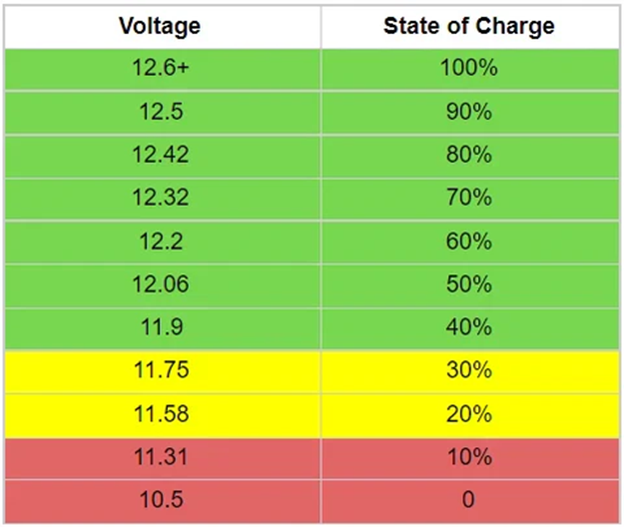
Here is a quick breakdown of what your readings actually mean in the real world:
- 12.6 volts or higher means the battery is at 100 percent charge and in excellent shape.
- 12.4 volts indicates about 75 percent charge, which is still considered healthy for daily driving.
- 12.2 volts means the battery is roughly 50 percent charged and starting to enter a risky zone.
- 12.0 volts or below signals a deeply discharged battery that may struggle to start the engine.
- Below 11.9 volts indicates a dead or severely sulfated battery that likely needs replacement or a serious charging session.
I learned this the hard way one winter when my battery sat at 12.1 volts for a few days because I forgot to unplug a phone charger. The engine cranked slowly the next time I tried to start it, and I ended up stranded in a grocery store lot. A good lesson learned: voltage matters more than most people realize, especially in cold weather.
Why Voltage Drops When the Car Is Off
Batteries are not perfect storage devices. They lose charge naturally over time through a process called self-discharge, and your car's electrical system adds to that drain even when everything seems off. Modern vehicles have dozens of modules that stay awake in a low-power state, drawing small but steady amounts of current from the battery.
Parasitic drain is completely normal and typically ranges between 20 and 50 milliamps in most healthy vehicles. The problem starts when something draws more than that, like a stuck relay, a trunk light that won't turn off, or an aftermarket accessory that wasn't installed properly. Over days or weeks, these extra drains can pull your resting voltage down into dangerous territory.
Temperature also plays a huge role in how your battery behaves when off. A battery sitting in a hot garage will self-discharge much faster than one stored in a cool basement. Cold weather, on the other hand, doesn't drain the battery as much, but it thickens the oil and makes the engine harder to crank, which means a partially charged battery feels even weaker in winter.
How to Test Your Battery Voltage the Right Way
Testing your resting voltage is one of the easiest things you can do as a car owner, and it costs almost nothing if you already own a multimeter. The trick is getting accurate results, which means you need to let the battery settle before you test.
Follow these simple steps for an accurate reading:
- Turn off the engine and remove the key from the ignition.
- Make sure all lights, accessories, and climate controls are completely off.
- Close all doors so the interior lights and dome lamps shut off completely.
- Wait at least 15 minutes, though waiting an hour gives you the most accurate resting number.
- Set your multimeter to DC voltage and connect the red lead to the positive terminal and the black lead to the negative terminal.
- Read the number on the display and compare it to the chart above.
I always recommend doing this test once a month if your car sits for long periods. I made it part of my Sunday routine, and it has saved me from being stranded more times than I can count. If you see a number below 12.4 volts, it's worth investigating further with a load test or a trip to your local auto parts store for a free charging system check.

What Happens When Voltage Is Too Low
A battery that sits below 12.0 volts for an extended period starts to suffer from a condition called sulfation. This happens when lead sulfate crystals build up on the internal plates, and over time, these crystals harden and reduce the battery's ability to hold a charge. Once sulfation gets bad enough, no amount of charging will bring the battery back to its original capacity.
Low voltage also stresses your car's electrical components. When the battery is weak, the alternator has to work harder to keep up with the demands of the system, which can shorten its lifespan as well. You might notice dim headlights, a weak horn, or sluggish power windows before the battery gets weak enough to leave you stranded.
If your battery reads below 11.8 volts, there is a good chance it has already entered the sulfation stage and may not recover fully even with a long slow charge. At that point, replacement is usually the safest and most reliable option, especially if the battery is more than three or four years old.
Factors That Affect Resting Battery Voltage
Several factors can change what a healthy resting voltage looks like for your specific vehicle. Battery age is the biggest one, as older batteries simply hold less charge than new ones due to normal wear and tear on the internal chemistry. A five-year-old battery might show 12.5 volts at rest, but its actual capacity could be far less than a new battery showing the same number.
The type of battery also matters. Traditional flooded batteries behave differently than AGM or gel cell batteries, which tend to hold their voltage slightly higher and recover from deep discharges better. If you have a start-stop vehicle with an advanced battery management system, your resting voltage might read a bit different because the system actively manages the charge level.
Driving habits play a role too. If you mostly take short trips, the alternator never has enough time to fully recharge the battery after starting. Over weeks, this creates a slow drain that pulls the resting voltage lower and lower. This is one of the most common reasons I see for premature battery failure in the shop, and it's easily fixed with an occasional longer drive or a portable charger.
How to Maintain Proper Voltage When the Car Sits
If you have a classic car, a seasonal vehicle, or just don't drive every day, keeping the battery topped off is essential. The simplest solution is a quality battery maintainer or trickle charger that automatically monitors the voltage and tops it off only when needed. These devices are cheap insurance against the slow drain that ruins batteries sitting in garages.
Another habit I picked up after losing a battery to parasitic drain is to disconnect the negative terminal if the car will sit for more than a month. This breaks the circuit completely and prevents any drain from the vehicle's systems. Just remember that some modern cars may lose radio presets or require a security code reset, so weigh the convenience against the cost of a new battery.
Keeping the battery terminals clean also makes a difference. Corroded connections create resistance, which can trick you into thinking the battery is weak when it's actually fine. A quick scrub with a wire brush and a coat of dielectric grease keeps everything flowing properly and gives you more accurate voltage readings when you test.
Common Misconceptions About Battery Voltage
One of the biggest myths I hear is that a battery showing 12 volts is "fine because it's close to 12." In reality, 12.0 volts at rest means the battery is essentially dead. The 12-volt label on the case refers to the nominal voltage, not the fully charged voltage, which is closer to 12.6 or 12.7 volts.
Another misconception is that idling the car charges it fully. Idling only puts a small amount of charge back into the battery because the alternator spins slowly at low RPM. To truly recharge a weak battery, you need higher RPMs from driving or a dedicated charger. I see people waste hours idling their cars thinking they're fixing the problem, when really they need a proper charging session.
Some people also believe that jumping a dead battery fixes the issue permanently. In reality, jumping only provides enough surface charge to start the engine. The alternator does the rest, but it can take hours of driving to fully recharge a deeply discharged battery, and many short trips will never get the job done.
Frequently Asked Questions
How long should I let my car sit before testing the battery voltage?
You should wait at least 15 minutes after turning off the engine, but waiting an hour gives you the most accurate resting voltage reading. This allows the surface charge from the alternator to dissipate so you get a true picture of the battery's state of charge.
Is 12.2 volts bad for a car battery when off?
A resting voltage of 12.2 volts indicates the battery is around 50 percent charged, which is not ideal for reliable starting. While not immediately dangerous, it suggests the battery is undercharged and may benefit from a slow charge or a longer drive to restore full capacity.
Can a car battery show 12 volts and still be bad?
Yes, a battery can show around 12 volts and still be bad if it has lost significant capacity due to age or sulfation. Voltage alone doesn't tell the whole story, which is why a load test is the best way to confirm whether a battery is truly healthy or just barely holding a surface charge.
How often should I check my car battery voltage when parked?
Checking once a month is a good habit for daily drivers, but if your car sits for weeks at a time, checking every two weeks is safer. Catching a slow drain early gives you time to recharge or replace the battery before it leaves you stranded.
Does cold weather change the resting voltage of a car battery?
Cold weather doesn't significantly change the resting voltage, but it reduces the battery's cranking power and makes a partially drained battery feel much weaker. A battery sitting at 12.4 volts might start fine in summer but struggle in winter because cold reduces its available power.
Conclusion
Keeping an eye on your resting battery voltage is one of the simplest and smartest things you can do as a car owner. A healthy battery sitting between 12.4 and 12.7 volts means reliable starts, a healthy charging system, and peace of mind every time you turn the key. Anything below 12.0 volts deserves your attention before it becomes a bigger problem on the side of the road.
Grab a multimeter, spend five minutes under the hood this week, and get to know your battery's baseline number. If the reading looks off, address it now with a charger or a quick visit to your mechanic instead of waiting for the day your car refuses to start. Your future self will thank you when you're never the one stuck in a parking lot begging for a jump. Drop your voltage questions or stories in the comments below, and happy driving.