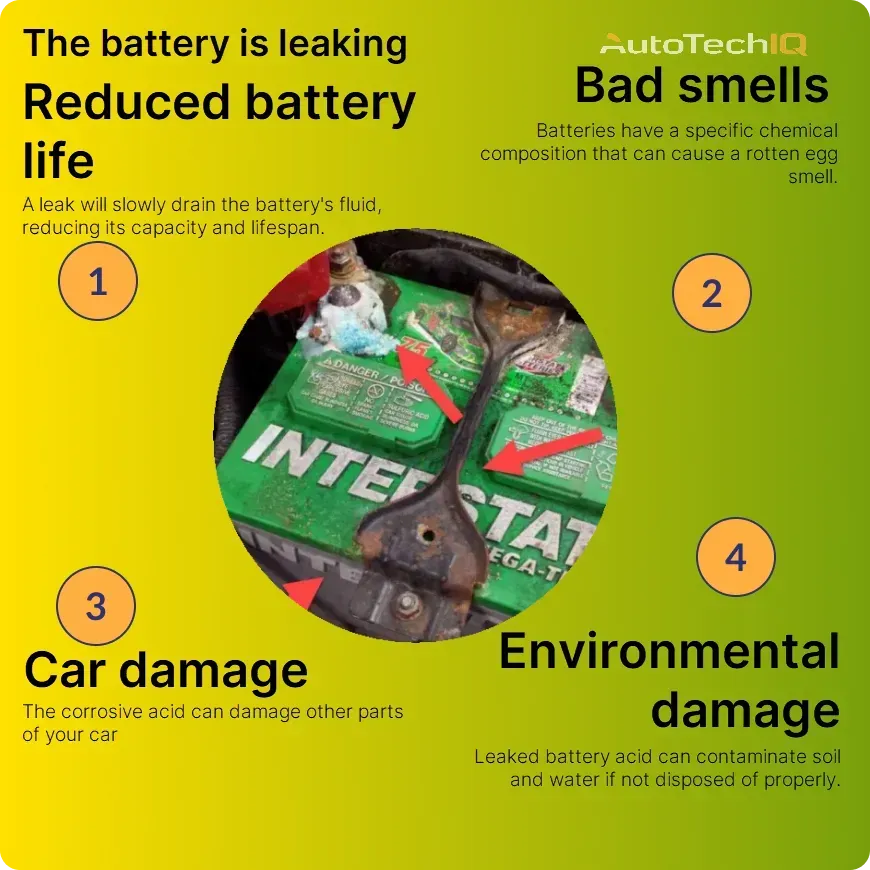
A car battery usually leaks because of overcharging, damage, corrosion buildup, or extreme temperatures that cause fluid to escape from the casing.
A leaking car battery is one of those problems that catches you off guard. One day your vehicle starts fine, and the next you spot a wet, crusty mess around the terminals. I've been there more than once in my years of working with cars, and I can tell you it's almost always preventable. Knowing what causes a car battery to leak not only saves you money on repairs but also keeps you safe from the highly corrosive acid inside. Let me walk you through every possible reason this happens, what it means for your car, and how you can stop it before it starts.
Common Causes of a Leaking Car Battery
A battery leak isn't random. It's the result of one or more factors pushing the battery past its limit. Below are the most common reasons I've seen batteries leak in real-world situations.
Overcharging the Battery
Overcharging is the number one cause of battery leaks. When a vehicle's voltage regulator fails or the alternator sends too much charge, the electrolyte inside the battery heats up and expands. That pressure forces liquid out through the vent caps or seams.
In my experience, this happens most often when someone replaces their alternator with an incompatible unit or installs a high-output charging system without upgrading the regulator. The fix is simple: test your charging system regularly and keep the voltage between 13.8 and 14.4 volts while the engine is running.
Physical Damage to the Battery Case
Even a small crack can cause a leak. Batteries live in rough environments under the hood, exposed to vibration, road debris, and temperature swings. A loose hold-down bracket or a minor fender-bender can easily crack the plastic housing.
I once saw a battery cracked clean in half because the owner had overtightened the terminal bolts. The case flexed, split, and leaked acid all over the tray. Always make sure your battery is secured snugly but never forced into place.
Corrosion Buildup Around Terminals
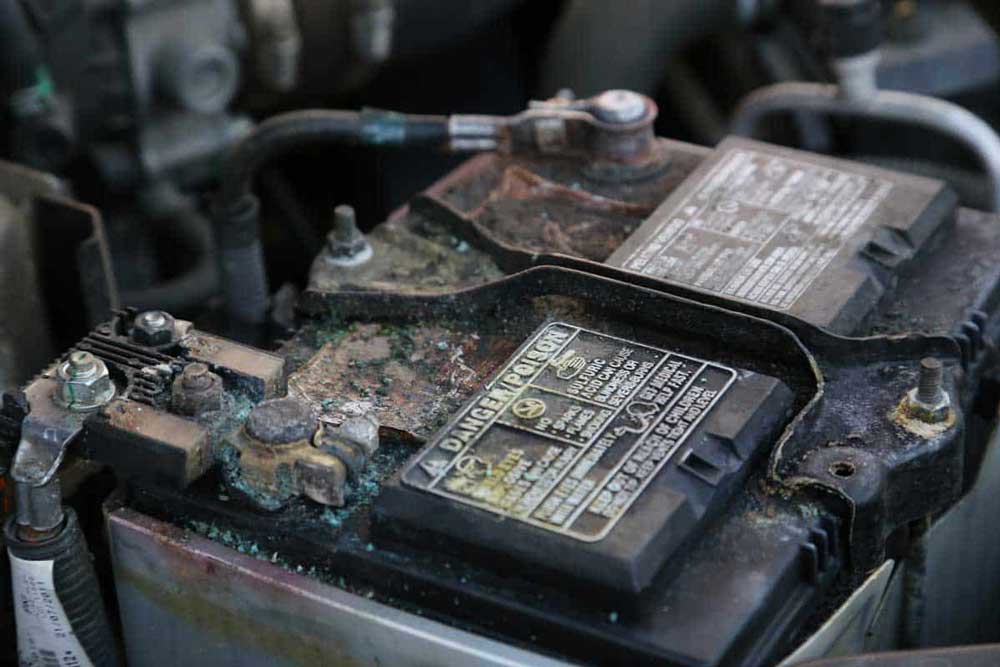
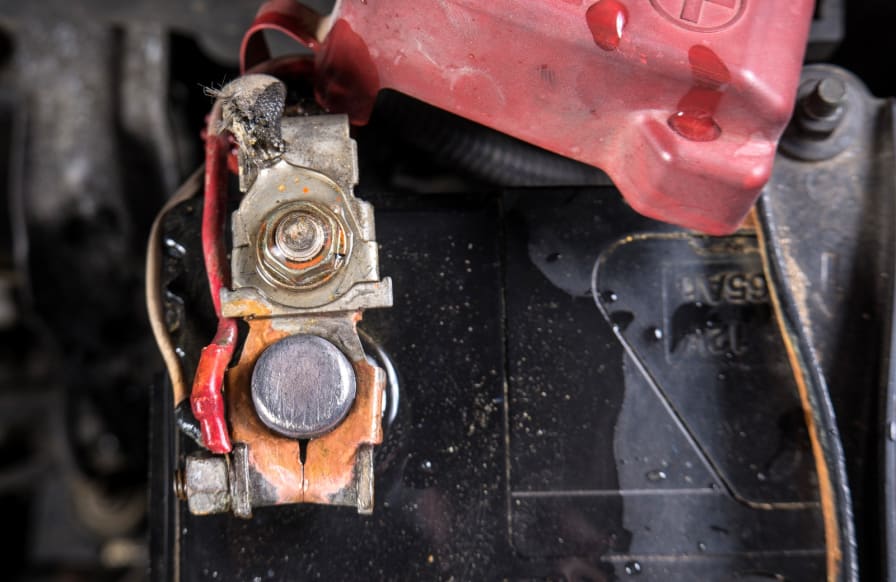
Corrosion itself isn't technically a leak, but it often signals one. When acid vapors escape through the vents, they react with the metal terminals and create that bluish-white or greenish powder. Heavy corrosion means the battery is venting more than it should.
Cleaning the terminals with a baking soda paste helps, but if corrosion keeps coming back, the battery is likely failing internally and needs replacement.
Extreme Temperatures and Weather Conditions
Heat is a battery's worst enemy. High temperatures cause the electrolyte to evaporate faster, increasing internal pressure and forcing fluid out. Cold weather, on the other hand, can freeze the electrolyte if the battery is weak, expanding the case and cracking it open.
If you live in a region that swings from hot summers to freezing winters, your battery works overtime. Parking in a garage during heatwaves and using an insulated battery blanket in winter can add years to its life.
Old Age and Battery Wear
Nothing lasts forever, and batteries are no exception. Most car batteries last three to five years. As they age, the internal plates deteriorate, seals weaken, and the chance of a leak goes up significantly.
When a battery reaches the four-year mark, I always tell people to start budgeting for a replacement. A sudden leak from an old battery is rarely a surprise to anyone paying attention.
Manufacturing Defects
Sometimes the battery is flawed from day one. Poor welds, thin casing, or improperly sealed vents can all cause leaks shortly after installation. While rare, defects do happen even with reputable brands.
This is why keeping your receipt and registering it with the manufacturer matters. Most come with at least a two or three-year warranty that covers this exact situation.
Sulfation and Internal Short Circuits
When a battery sits unused for too long, lead sulfate crystals build up on the internal plates. This process, called sulfation, reduces the battery's ability to hold a charge and can eventually cause internal shorts. These shorts generate heat, which expands the electrolyte and pushes it out through the vents.
If you store a vehicle for more than a month, I always recommend using a trickle charger. It's a small investment that prevents sulfation and the leaks that come with it.
Improper Jump-Starting Techniques
Hooking up jumper cables the wrong way sends a surge of voltage through the battery. That sudden spike can crack the case, blow out the seals, or boil the electrolyte. I've seen people fry a perfectly good battery in seconds by reversing the polarity.
Always connect positive to positive and negative to a grounded metal part of the car, not the dead battery's negative terminal. It takes just a few extra seconds but prevents thousands of dollars in damage.
Using the Wrong Battery Type
Not every battery fits every car. Installing a battery with the wrong voltage, size, or terminal placement puts stress on the electrical system. That extra strain often shows up as leaks at the vent caps or seams. Stick with the battery group size and specifications listed in your owner's manual.
Signs Your Battery Is Leaking
Sometimes a leak is obvious. Other times, it's sneaky. Here are the warning signs I always tell drivers to watch for.
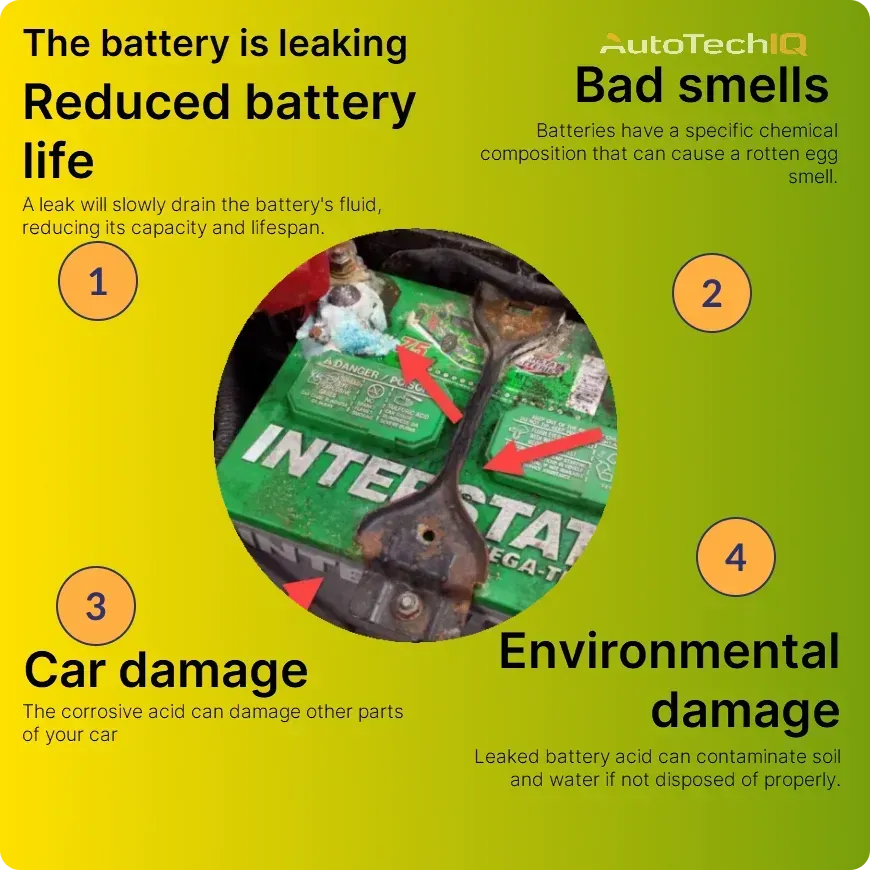
- A strong sulfur or rotten egg smell coming from under the hood
- Visible wetness or crusty residue around the battery terminals
- A bloated or swollen battery case
- Dim headlights or slow engine cranking
- The check battery or check engine light appearing on the dash
- Electrical components acting strange, like power windows moving slowly
If you notice any of these, pop the hood and take a look. A five-minute inspection can save you from being stranded somewhere inconvenient.
Why a Leaking Battery Is Dangerous
A leaking battery isn't just messy. It's a genuine safety hazard. The fluid inside is a mix of sulfuric acid and water, which can:
- Burn your skin and eyes on contact
- Eat through paint, clothing, and metal parts
- Produce flammable hydrogen, which can ignite near sparks
- Corrode wiring and lead to expensive electrical repairs
I always keep baking soda, water, gloves, and safety glasses in my garage for exactly this reason. If you ever spot a leak, don't touch the fluid with bare hands. Neutralize it with baking soda first, then clean it up carefully.
How to Prevent a Car Battery from Leaking
Prevention is way cheaper than repair. After years of trial and error, here's the routine that has saved me from surprise leaks.
- Check the charging system voltage every six months
- Clean the terminals with a baking soda and water paste twice a year
- Secure the battery with a proper hold-down bracket
- Avoid short trips that never let the battery fully recharge
- Disconnect the battery if storing a vehicle for over a month
- Park in shaded or sheltered areas during extreme heat
- Replace the battery every four to five years, even if it seems fine
What to Do If Your Battery Is Already Leaking
If you catch it early, you can sometimes save the surrounding parts from damage. Here's the safe step-by-step process I follow.
- Turn off the engine and remove the keys
- Put on gloves and safety glasses
- Sprinkle baking soda over the leak to neutralize the acid
- Disconnect the negative terminal first, then the positive
- Carefully remove the battery and place it in a plastic tray
- Clean the tray and surrounding area with water and baking soda
- Take the old battery to an auto parts store for recycling
If the leak is large, the case is cracked, or the smell is overwhelming, leave it alone and call a professional. Some situations aren't worth the risk.
Frequently Asked Questions
Can a leaking battery still start a car?
Yes, but only for a short time. The battery may have enough charge to turn the engine over, but the leak will get worse and eventually leave you stranded.
Is a leaking battery covered under warranty?
Most batteries come with a two to three-year warranty. If the leak is due to a defect or premature failure, the manufacturer will usually replace it for free.
How long does it take for a battery to leak after damage?
It depends on the severity of the damage and the conditions. A cracked case can leak within hours, while a slow vent leak might take weeks to become noticeable.
Can cold weather cause a battery to leak?
Yes, but only if the battery is weak or discharged. A fully charged battery won't freeze, but a dead one can freeze and crack the case open.
Is it safe to drive with a leaking battery?
No. The acid can damage engine components, and the electrical system may fail at any moment. Get it replaced as soon as possible.
Final Thoughts
A leaking battery is almost always a warning sign you should never ignore. Whether it's overcharging, old age, damage, or just bad luck, the cause is usually something you can spot and fix before it becomes a bigger problem. With regular checks, simple maintenance, and a little common sense, you can keep your battery healthy and your car running smoothly for years. Don't wait for that rotten egg smell to force your hand. Stay ahead of the problem, and your battery will reward you with reliable starts every single morning. If this guide made things clearer, share it with a friend who always seems to be dealing with car trouble, or drop a comment below with your own battery story.