Bicycle tires should generally be inflated between 80 and 130 psi for road bikes and 25 to 50 psi for mountain bikes, depending on tire width and riding style.
Knowing the right pressure for your tires is one of the most overlooked details in cycling, yet it makes a huge difference. I've ridden bikes that felt slow and harsh simply because I ignored this single factor. After spending time testing different setups across pavement, gravel, and trail, I can tell you that proper inflation improves comfort, speed, and safety all at once. If you've ever wondered why your ride feels off or why you keep getting flats, the answer almost always starts with pressure.
Why Bicycle Tire Pressure Matters More Than You Think
Tire pressure affects everything about your ride. It changes how your bike handles, how fast you go, and even how your body feels after a long day in the saddle. Too much pressure and the tire becomes harsh and skittish. Too little and you'll feel every crack in the road while wasting energy.
Here's what pressure controls:
- Rolling resistance
- Grip on different surfaces
- Comfort and shock absorption
- Risk of flats from pinch punctures
- Overall handling and control
A properly inflated tire finds the sweet spot between comfort and performance. Think of it like finding the right firmness in a mattress. Too soft and you sink in. Too firm and you're uncomfortable. Your tires work the same way.
How to Find the Correct Tire Pressure for Your Bike
The recommended pressure is usually printed right on the tire sidewall. Look for a range like "50-80 psi" or "Inflate to 120 psi max." This range gives you a safe zone, but the exact number depends on a few personal factors.
Consider these elements when choosing your pressure:
- Rider weight: Heavier riders need more pressure to support their weight
- Tire width: Narrow tires need higher pressure, wide tires need less
- Riding surface: Smooth roads call for higher pressure, rough terrain calls for lower
- Riding style: Racers prefer firmer tires, commuters prefer comfort
I usually start in the middle of the recommended range and adjust from there. For my road bike with 25mm tires, I run about 95 psi. For my mountain bike with 2.2-inch tires, I drop to around 30 psi for trails.
Recommended Tire Pressure by Bike Type
Different bikes are built for different purposes, so they have very different pressure needs. Here's a practical guide based on common setups:
- Road bikes with 23-28mm tires: 80-130 psi
- Gravel bikes with 35-45mm tires: 40-70 psi
- Mountain bikes with 2.0-2.4 inch tires: 25-40 psi
- Hybrid bikes with 32-42mm tires: 50-70 psi
- Commuter bikes with 35-47mm tires: 45-65 psi
- BMX bikes with 20-inch tires: 40-60 psi
- Kids bikes with small wheels: 20-40 psi
These ranges are starting points. Your ideal pressure may fall outside these numbers based on your weight and preferences.
Factors That Change Your Ideal Tire Pressure
I've learned through years of riding that pressure isn't a fixed number. It shifts based on conditions and personal factors. Here are the main variables that affect what works best for you.
Rider Weight and Load
This is the biggest factor most people miss. A 120-pound rider and a 200-pound rider shouldn't use the same pressure. Heavier riders compress the tire more, so they need higher pressure to prevent pinch flats and maintain shape.
A simple rule of thumb:
- Lighter riders under 150 lbs can use the lower end of the range
- Average riders 150-400 lbs should use the middle
- Heavier riders over 400 lbs should use the upper end
If you carry gear, add about 5-10 psi to compensate for the extra weight.
Tire Width and Volume
Wider tires hold more air and create a larger contact patch with the ground. They can run lower pressure without sacrificing rolling efficiency. Narrower tires need more pressure to support the same weight.
Modern trends favor wider tires at lower pressure. A 28mm tires at 80 psi often feels faster and smoother than a 23mm tires at 110 psi. The lower pressure absorbs road buzz, so you waste less energy fighting vibrations.
Riding Surface and Conditions
Smooth roads reward higher pressure. Rough roads and gravel reward lower pressure. I've found that dropping pressure by 10 psi on chip-seal roads makes a massive difference in comfort.
Weather also matters:
- Wet conditions: Lower pressure slightly for better grip
- Hot weather: Pressure increases as air expands, so start lower
- Cold weather: Pressure drops, so check before riding
Riding Style and Goals
Racers prioritize speed and usually run higher pressure for lower rolling resistance. Touring cyclists prioritize comfort and run moderate pressure. Mountain bikers prioritize traction and run much lower pressure for grip and shock absorption.
Be honest about how you actually ride. Don't pump your tires to racing pressure if you're just cruising to the coffee shop.

How Tire Pressure Affects Performance and Safety
Getting pressure right isn't just about comfort. It directly impacts your safety and how efficiently you ride. Here's what happens at the extremes.
Risks of Over-Inflation
Pumping your tires too hard creates real problems. The tire can blow off the tire in extreme situations, though it's uncommon with modern equipment. More often, over-inflation leads to:
- Harsh, uncomfortable feel on rough roads
- Reduced grip because the contact patch shrinks
- Skittish handling on descents and corners
- Increased risk of impact damage from potholes
I learned this the hard way when I hit a pothole at high speed on over-inflated tires and bent my tire. The impact had nowhere to go because the tire couldn't flex.
Risks of Under-Inflation
Running too little pressure feels nice on smooth roads but causes issues fast. The main risks include:
- Pinch flats when the tire compresses against the rim
- Poor handling and vague steering
- Increased rolling resistance on smooth pavement
- Tire damage to the sidewall from excessive flexing
I've pinched enough tubes to know that running 20 psi on a road bike is asking for trouble. The tube gets squeezed between the rim and whatever you hit, and it punctures instantly.
Practical Tips for Checking and Adjusting Tire Pressure
Pressure changes naturally over time. Air seeps through the tire slowly, so you lose about 1-2 psi per week even with no visible leak. This means regular checking matters.
Here's my routine that keeps everything dialed:
- Check pressure before every ride with a quality gauge
- Inflate to the middle of the recommended range to start
- Adjust based on that day's ride and how the tires feel
- Replace tires when they show significant wear or damage
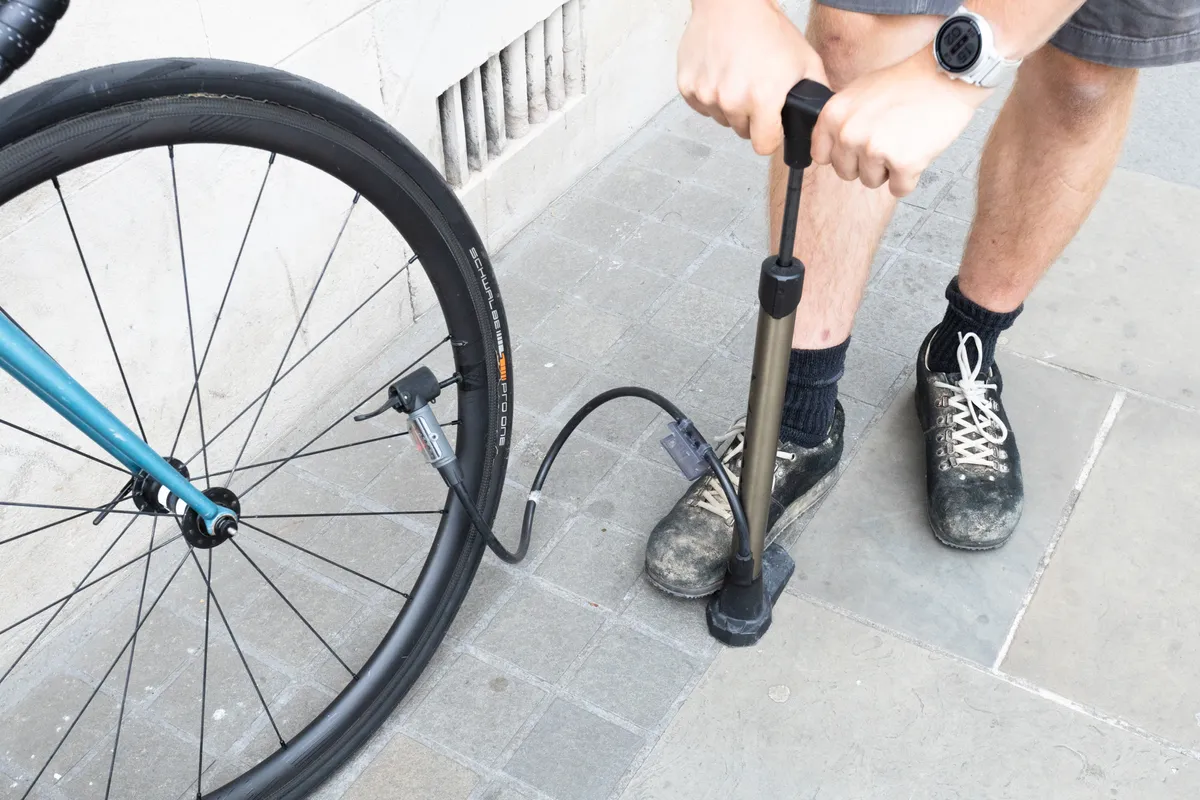
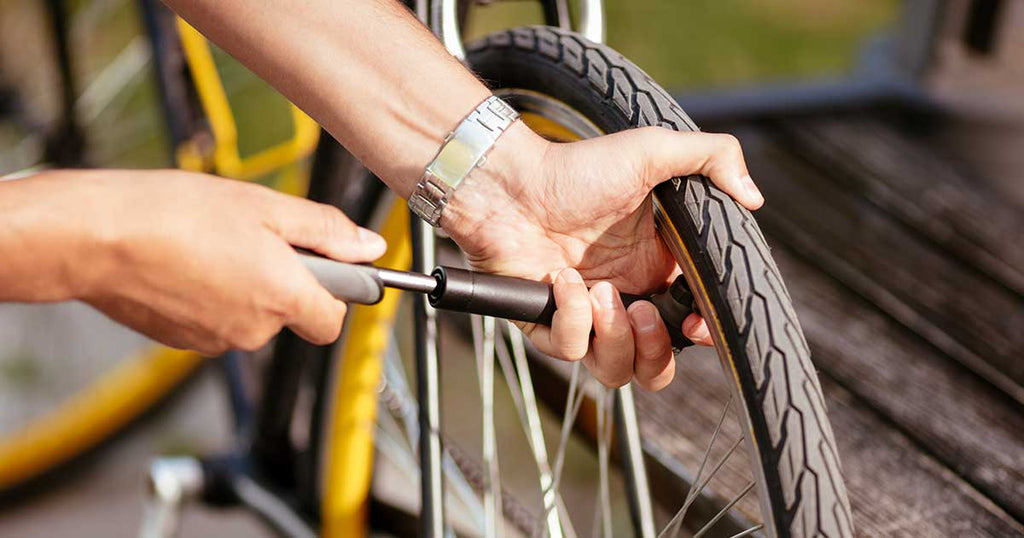
A good floor pump makes this easy. Get one with a built-in gauge so you're not guessing. Hand pumps work in a pinch but aren't accurate enough for regular use.
Pay attention to how your bike feels. If the rear tire feels squirmy in corners, add a few psi. If you're getting beaten up on rough roads, let a little out. Your body gives you feedback. Listen to it.
Common Mistakes to Avoid with Tire Pressure
I've made most of these mistakes myself, so I can save you the trouble. Here are the errors I see most often.
- Ignoring the printed range and just guessing
- Using the same pressure for front and rear tires
- Not accounting for rider weight or cargo
- Checking pressure when tires are hot from riding
- Pumping to maximum pressure for "extra safety"
The front tire can usually run 5-10 psi lower than the rear because it carries less weight. Many riders over-inflate the front, which makes steering feel twitchy.
Also, never check pressure right after a hard ride. Heat builds up and increases pressure by 5-10 psi. Wait at least 30 minutes or adjust your target down accordingly.
Tools That Make Pressure Management Easy
You don't need fancy gear, but a few tools make life much easier. Here's what I actually use and recommend.
- Floor pump with gauge: For home use, accurate, fast
- Mini pump: For road rides, fits in a bag
- Digital pressure gauge: For precise readings
- Tread depth gauge: To know when tires need replacement
If you commute daily or ride long distances, consider a tubeless setup. Tubeless tires run lower pressure without flat risk because they self-seal small punctures. It's a game-changer for comfort and reliability.
Frequently Asked Questions About Bicycle Tire Pressure
How often should I check my bicycle tire pressure?
Check your tire pressure at least once a week if you ride regularly, and always before long rides. Tires naturally lose air over time, so a tire that was fine yesterday could be soft today. I check mine before every ride because it's such a quick step.
Can I use a car tire pump for my bicycle?
You can use a car tire pump in an emergency, but you need an adapter and the high volume of air makes it hard to control. Bicycle-specific pumps deliver smaller bursts that let you hit exact pressures. Floor pumps designed for bikes are much safer and more accurate.
What happens if I exceed the maximum pressure on my tire?
Exceeding the maximum pressure can cause the tire to blow off the rim, which is extremely dangerous. It also makes the ride harsh and reduces grip. Stay within the printed range and never go above the maximum number shown on the sidewall.
Does tire pressure affect speed significantly?
Yes, tire pressure affects rolling resistance, which directly impacts speed. Higher pressure reduces resistance on smooth roads, but the difference between 90 and 100 psi is small. On rough roads, slightly lower pressure is often faster because it absorbs vibrations that waste energy.
Should front and rear tires have the same pressure?
No, the rear tire usually needs 5-10 psi more than the front because it carries more of your weight. Running the same pressure in both tires makes the front feel twitchy and the rear feel soft. Adjust based on your bike setup and riding style.
Conclusion
Finding the right tire pressure transforms your ride from mediocre to enjoyable. Start with the manufacturer's recommended range printed on your tire, then adjust for your weight, terrain, and preferences. Most riders do fine near the middle of that range, but don't be afraid to experiment a little.
Remember that pressure is a tool, not a fixed number. It changes with conditions, with your gear, and with how you feel on any given ride. A few psi in either direction can be the difference between a great day on the bike and a frustrating one. Take five minutes before your next ride to check your tires, and you'll immediately notice the improvement in comfort, speed, and control.
If you found this helpful, share it with a riding buddy or drop a comment with your favorite tire pressure setup. The more we share what works, the better everyone rides.