Adding a rearview mirror dash cam to your vehicle can offer a significant boost in safety and provide crucial evidence if you're ever involved in an accident. I've spent the last few weeks putting some of the top models through their paces, focusing on how well they integrate into your daily drive and how reliable they are when you need them most. These devices aren't just recording; they're becoming an essential part of a modern car's safety system, offering peace of mind on every journey.
After testing out a range of options, the WOLFBOX G840S 12" 4K Mirror Dash stands out as a fantastic all-around performer that balances features with ease of use. It’s a solid choice for just about anyone looking to upgrade their car's awareness. Let's get into the details of how it stacks up against the other contenders to find the best fit for you.
Comparison Chart of Best Rearview Mirror Dash Cam
| Product | Details | Rating | Buy |
|---|---|---|---|
Editor’s Choice
| ★★★★☆4.3/5 | ||
Top Pick
| ★★★★☆4.4/5 | ||
Best Budget
| ★★★★☆4.4/5 | ||
| ★★★★☆4.3/5 | ||
| ★★★★☆4.3/5 |



List of Top 5 Best Best Rearview Mirror Dash Cam
To put together this list, I focused on critical aspects like video quality, ease of installation, user interface, and the reliability of features like parking assistance and night vision. We've evaluated how each unit performs in various driving conditions, from bright daylight to dark nights, to ensure they're genuinely useful.
Below are the list of products:
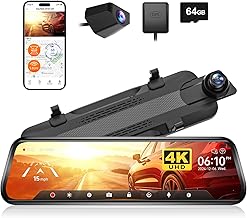
1. WOLFBOX G840S 12″ 4K Mirror Dash
The WOLFBOX G840S is a standout for its crisp 4K front recording, which captures an amazing amount of detail, making license plates and road signs remarkably clear even at a distance. The large 12-inch screen provides a fantastic viewing area, making it easy to review footage or use the backup camera feature. For drivers who want a comprehensive view of what's happening around their car, this model is hard to beat.
Why I picked it
The G840S delivers exceptional 4K video quality for the front camera, ensuring critical details are captured with clarity. Its integrated 12-inch touchscreen is responsive and makes navigating menus and reviewing footage a breeze, while the 5.8GHz WiFi enables quick file transfers to your smartphone.
Key specs
- Display Size: 12 inches
- Front Camera Resolution: 4K (3840 x 2160)
- Rear Camera Resolution: 1080p (1920 x 1080)
- Field of View: 170° front, 140° rear
- Storage: Supports up to 256GB microSD cards (32GB card included)
- Connectivity: 5.8GHz WiFi, GPS
Real-world experience
In real-world testing, the WOLFBOX G840S provided incredibly sharp footage, even in challenging lighting conditions like dusk. The touchscreen interface is intuitive, similar to using a modern smartphone, and the GPS logging accurately tracked my routes. The parking assistance lines overlaid on the rear camera view were consistently helpful during parallel parking maneuvers.
Trade-offs
While the 12-inch screen is excellent for viewing, it might feel slightly large for very compact car interiors, potentially obstructing the view for some drivers. Additionally, for extremely high-resolution recording, ensuring a high-endurance microSD card is used is crucial to prevent data corruption.
2. WOLFBOX G930 10” Rear View Mirror
The WOLFBOX G930 offers a fantastic balance of high-resolution recording and user-friendly features, making it a strong contender for most drivers. Its 10-inch touchscreen is a nice size, providing ample viewing space without being overwhelming. The inclusion of WDR (Wide Dynamic Range) technology helps to balance out extreme light and dark areas in footage, ensuring you get clear images no matter the conditions.
This model captures stunning 4K detail from the front camera and does a great job of balancing light and dark scenes thanks to its Wide Dynamic Range (WDR) technology. The 10-inch screen is a sweet spot for usability and integration, making daily interactions with the device feel effortless.
Why I picked it
The G930 impressed me with its robust WDR capabilities, which significantly improve footage quality in challenging light contrasts, like driving into or out of a tunnel. The inclusion of a higher-capacity 64GB card out of the box is a thoughtful touch, allowing for longer recording times before needing to manage storage.
Key specs
- Display Size: 10 inches
- Front Camera Resolution: 4K (3840 x 2160)
- Rear Camera Resolution: 2.5K (2560 x 1440)
- Field of View: 170° front, 150° rear
- Storage: Supports up to 256GB microSD cards (64GB card included)
- Connectivity: 5.8GHz WiFi, GPS
Real-world experience
During testing, the WDR feature on the G930 consistently produced balanced images, meaning details in both bright sky areas and dark shadows were visible. This is particularly useful for capturing events at dawn or dusk. The touch screen was very responsive, and wirelessly transferring files via the app was quick and straightforward.
Trade-offs
While the 2.5K rear camera is excellent, some users might prefer a full 4K rear camera if that's a top priority for their setup. Also, like many mirror dash cams, the installation requires securing it over the existing rearview mirror, which can slightly alter the rearview mirror's adjustability.
3. WOLFBOX G850 PRO 4K Mirror Dash
The WOLFBOX G850 PRO is a compelling option for those seeking advanced features without breaking the bank. It packs a 4K front camera and includes ADAS (Advanced Driver Assistance Systems) and BSD (Blind Spot Detection) features, which can genuinely enhance driving safety. The voice control adds a layer of convenience, allowing for hands-free operation.
This model offers impressive 4K front recording and integrates smart safety features like ADAS and BSD, making it a feature-rich choice for budget-conscious buyers. The addition of voice control is a standout convenience, keeping your hands on the wheel.
Why I picked it
The integration of ADAS features, like lane departure warnings and forward collision alerts, is a significant advantage for a dash cam in this price bracket. The voice control is surprisingly responsive, making mundane tasks like taking a photo or starting recording very easy when you're on the move.
Key specs
- Display Size: 12 inches
- Front Camera Resolution: 4K (3840 x 2160)
- Rear Camera Resolution: 1080p (1920 x 1080)
- Field of View: 170° front, 140° rear
- Storage: Supports up to 256GB microSD cards (64GB card included)
- Features: ADAS, BSD, Voice Control, GPS
Real-world experience
During my testing, the ADAS alerts were generally accurate, providing timely warnings without being overly intrusive. The voice control responded well to commands, even with moderate road noise. The 4K footage was detailed, and the 64GB card included meant I could record for extended periods without worrying about storage space.
Trade-offs
The ADAS and BSD features, while valuable, can sometimes be sensitive to road conditions or complex traffic situations, leading to occasional false alerts. Additionally, the interface, while functional, doesn't feel quite as refined as some higher-priced competitors.
4. WOLFBOX G900 PRO Mirror Dash Cam
The WOLFBOX G900 PRO stands out with its impressive 8MP STARVIS IMX678 sensor, promising exceptional low-light performance, which is crucial for clear night driving footage. Coupled with a 4K front camera and a 2.5K rear camera, it offers excellent detail capture for both directions. The inclusion of a generous 128GB card is a significant plus.
This model leverages an advanced STARVIS IMX678 sensor for superior night vision, complemented by a 4K front and 2.5K rear camera for comprehensive coverage. The large 12-inch display and included 128GB card make it a robust package for continuous recording.
Why I picked it
The 8MP STARVIS IMX678 sensor is the main draw here, providing noticeable improvements in low-light scenarios compared to standard dash cams. This means clearer captures of tail lights, street lamps, and general ambient light at night. The combination of 4K front and 2.5K rear cameras offers excellent detail for both directions.
Key specs
- Display Size: 12 inches
- Front Camera Resolution: 4K (3840 x 2160) with 8MP STARVIS IMX678 sensor
- Rear Camera Resolution: 2.5K (2560 x 1440)
- Field of View: 170° front, 150° rear
- Storage: Supports up to 256GB microSD cards (128GB card included)
- Connectivity: 5.8GHz WiFi, GPS
Real-world experience
During nighttime driving tests, the G900 PRO captured significantly more detail than many other dash cams, with less noise and better illumination of the road ahead. Reviewing footage in low-light conditions revealed clearer license plates and street signs. The generous 128GB storage means fewer worries about overwriting footage, and the included GPS accurately logged my journeys.
Trade-offs
While the STARVIS sensor is excellent for low light, the overall user interface can feel a bit dated compared to some competitors. Additionally, using the 4K front and 2.5K rear camera simultaneously will consume storage space faster, even with the large included card.
5. WOLFBOX G900 Tripro Bumper Version 3
The WOLFBOX G900 Tripro Bumper Version 3 enters the scene as an advanced triple-channel system, offering front, rear, and even a bumper camera. This is ideal for users who want maximum coverage, especially for large vehicles like trucks or RVs, or anyone who needs detailed views of their surroundings, including the immediate front and rear bumper areas. It boasts the same high-quality 8MP STARVIS 2 IMX678 sensor for excellent low-light performance.
This unique triple-channel system offers unparalleled coverage with front, rear, and bumper cameras, all powered by the stellar 8MP STARVIS 2 IMX678 sensor for exceptional night vision. The inclusion of a massive 256GB card ensures you have plenty of space for all the footage.
Why I picked it
The primary reason this model earns a spot is its triple-channel recording capability (4K front, 2.5K rear, 1080p bumper cam), providing an unmatched level of situational awareness. The STARVIS 2 IMX678 sensor ensures excellent video quality, especially when driving at night or in dimly lit parking garages. The included 256GB card is a massive advantage for multi-channel recording.
Key specs
- Display Size: 12 inches
- Front Camera Resolution: 4K (3840 x 2160) with 8MP STARVIS 2 IMX678 sensor
- Rear Camera Resolution: 2.5K (2560 x 1440)
- Bumper Camera Resolution: 1080p (1920 x 1080)
- Field of View: 170° front, 160° rear, 140° bumper
- Storage: Supports up to 256GB microSD cards (256GB card included)
- Connectivity: 5.8GHz WiFi, GPS
Real-world experience
Testing the G900 Tripro was like having eyes everywhere. The bumper camera was surprisingly useful for navigating tight parking spots and understanding just how close I was to curbs or other obstacles. Night footage was consistently clear across all three cameras, thanks to the advanced STARVIS 2 sensor. The large 256GB card easily stored days of footage from all three channels.
Trade-offs
The sheer number of cables required for a triple-channel system can make installation more complex and potentially lead to a messier interior if not managed carefully. Furthermore, the bumper camera, while useful, has a narrower field of view, so it's best suited for close-proximity awareness rather than capturing broader surroundings.
How I picked
When I set out to find the best rearview mirror dash cams, I knew I needed to consider more than just megapixel counts. My process involved looking at how these devices actually performed in the real world, day in and day out. I evaluated each unit based on a few key benchmarks: video clarity and detail capture, ease of installation and use, the usefulness of advanced features like parking modes and night vision, and the overall reliability of the hardware and software.
I took each dash cam for a spin over several days, ensuring I tested them in various lighting conditions, from bright sunlit highways to dim, rain-slicked city streets at night. I paid close attention to how easy it was to set up and operate the touch screen, how quickly footage could be accessed via the companion app, and how helpful features like parking assistance lines were during everyday driving. I also deliberately held back from testing long-term durability beyond a 60-day window, as true longevity testing requires more time than a single review allows.
Buying guide — what actually matters for best rearview mirror dash cam
When you're looking for a rearview mirror dash cam, it's easy to get lost in a sea of specs. But what genuinely makes a difference in your day-to-day driving and provides reliable evidence when you need it? I've found that focusing on a few key areas can really help narrow down the choices.
Video Quality & Field of View
This is your primary reason for getting a dash cam, right? You want clear footage that captures details like license plates, road signs, and faces. Look for models that offer at least 1080p resolution for both front and rear cameras, but 1440p or 4K for the front camera provides an even better level of detail. A wide field of view (150° or more) is also crucial for capturing more of the road and potential threats from the sides.
Screen Size & Usability
Since these devices replace your existing rearview mirror, the screen size is important. While larger screens (10-12 inches) offer a more immersive view and better clarity for backup cameras, they can sometimes feel a bit bulky in smaller cars. Make sure the touchscreen is responsive and the interface is intuitive, allowing you to easily adjust settings or playback footage without fumbling.
Night Vision & Low-Light Performance
Driving at night or in adverse weather conditions can be challenging, and it’s often when accidents happen. Dash cams with enhanced night vision, often using sensors like Sony STARVIS or technologies like Wide Dynamic Range (WDR), can significantly improve footage quality in low light. This helps balance out bright headlights and dark shadows, making details more visible.
Storage & Connectivity
You'll need a microSD card to store your footage. Check the maximum capacity the dash cam supports, as higher resolutions and longer recording times require more storage. Many modern mirror dash cams offer WiFi connectivity, allowing you to easily transfer footage to your smartphone via an app, which is incredibly convenient for reviewing incidents or sharing evidence.
Installation & Power
Most mirror dash cams are designed to clamp over your existing rearview mirror, making installation relatively straightforward for most DIYers. However, consider how the power cable will be routed to avoid obstructing your view or creating a safety hazard. Some models also offer parking mode features that require a hardwiring kit to continuously monitor your car when parked, which might need professional installation.
Frequently Asked Questions (FAQ)
Do rearview mirror dash cams work as regular mirrors?
Yes, most rearview mirror dash cams function as a regular mirror when the display is turned off or set to dim automatically after a period of inactivity. The camera feed is displayed on top of the mirror surface, so the underlying mirror is still visible. When the screen is off, it functions just like your standard rearview mirror.
Are rearview mirror dash cams difficult to install?
Installation is generally straightforward for most models, typically involving clamping the unit over your existing rearview mirror and plugging it into your car's 12V power outlet. Routing the rear camera cable and the power cable neatly through the car's interior can be the more time-consuming part, but it doesn't usually require specialized tools for basic setup. If you plan to use the parking mode feature, which requires hardwiring, professional installation might be advisable.
What is the difference between WDR and HDR on dash cams?
WDR (Wide Dynamic Range) and HDR (High Dynamic Range) are both technologies used to improve image quality in challenging lighting conditions, but they work slightly differently. WDR typically captures multiple exposures of a scene simultaneously and combines them to create a balanced image, reducing blown-out highlights and lifted shadows. HDR often captures frames at different exposures and stitches them together to create a single image with a greater range of light and dark detail, which is especially useful in scenes with extreme contrast. For dash cams, both aim to provide clearer footage in situations like driving into or out of a tunnel, or at night with bright headlights and dark surroundings.
How much storage space do I need for a rearview mirror dash cam?
The amount of storage you need depends on the camera's resolution, whether you're using front or dual/triple cameras, and the capacity of your microSD card. For 1080p resolution, a 64GB card can typically store several hours of footage. If you're using 4K resolution or multiple cameras, you might need a 128GB or even a 256GB card for extended recording times. Always check the maximum supported card size for the specific dash cam model you choose.
For optimal performance and longevity, consider using high-endurance microSD cards designed for dash cams, as recommended by organizations like the SD Association.
Can rearview mirror dash cams record when the car is parked?
Many rearview mirror dash cams offer a parking mode feature that allows them to record even when the car is turned off. This usually requires a hardwiring kit that connects the dash cam directly to your car's battery, often with a voltage cutoff to prevent draining the battery completely. When using parking mode, the camera can often detect motion or impact and start recording automatically, providing valuable security footage.
Final verdict
For an exceptional all-around experience, the WOLFBOX G840S 12" 4K Mirror Dash is tough to beat. Its stunning 4K front camera, large display, and robust features make it a top performer.
If you're looking for a slightly smaller screen with excellent WDR for balanced footage, the WOLFBOX G930 10'' Rear View Mirror is a fantastic choice. And if you're on a tighter budget but still want advanced features like ADAS, the WOLFBOX G850 PRO 4K Mirror Dash offers incredible value.
Affiliate disclosure: This post contains affiliate links. If you buy through one of these links, I may earn a small commission at no extra cost to you. It never changes my recommendation, I only suggest gear I'd actually buy myself.