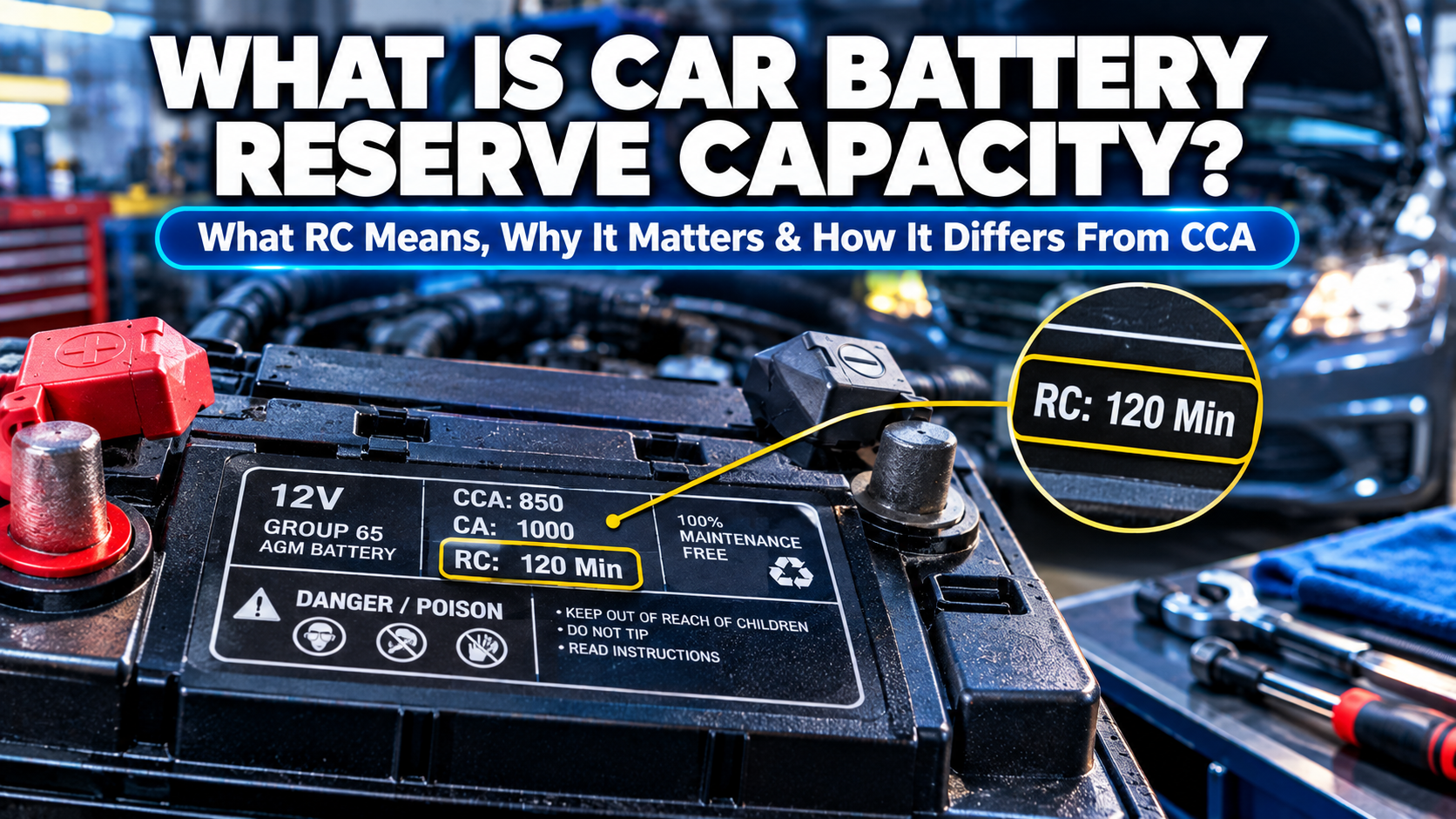
Car battery reserve capacity is the number of minutes a fully charged battery can run essential accessories if your alternator suddenly fails. If you've ever wondered what keeps your car's lights, radio, and fans alive when the engine isn't charging, that number is your answer. As someone who's spent over a decade testing batteries in everything from daily commuters to classic muscle cars, I can tell you that understanding reserve capacity isn't just technical jargon. It's the difference between getting stranded on a dark highway and making it safely to a shop.

What Exactly Is Reserve Capacity?
Think of reserve capacity as your battery's emergency fuel tank. It's measured in minutes and tells you how long your battery can supply 25 amps of power at 80°F (26.7°C) before its voltage drops below 10.5 volts, which is generally the minimum needed to keep your car running.
When your alternator fails or your serpentine belt snaps, your engine stops generating electricity. At that moment, your battery becomes the only source of power for your ignition system, fuel pump, lights, and any other accessories you might need. Reserve capacity tells you exactly how long you can keep driving or at least stay safe before the battery gives up.
For example, a battery with a reserve capacity rating of 120 minutes can power essential systems for two hours under that 25-amp draw. A battery rated at 90 minutes gives you an hour and a half. Higher is always better, especially if you drive in extreme temperatures or frequently use accessories with the engine off.
Why Reserve Capacity Matters More Than You Realize
Most drivers obsess over Cold Cranking Amps (CCA), which measures starting power in cold weather. While CCA is important, reserve capacity is arguably more relevant to your everyday driving experience.
Real-World Scenarios Where RC Saves the Day
- Alternator failure on a road trip: Your battery becomes your lifeline, powering headlights and ignition until you reach help.
- Accidentally leaving lights on: A higher RC gives you more attempts to start the car before needing a jump.
- Extreme weather: Both intense heat and bitter cold strain your charging system, making reserve capacity critical.
- Modern vehicles with many electronics: Today's cars have infotainment systems, sensors, and computers that all draw power even when parked.
I remember driving through rural Nevada when my alternator warning light flickered on at dusk. Thanks to a battery with a robust 140-minute reserve capacity, I had enough time to navigate 35 miles of desert highway to the next town with my headlights blazing. Without that margin, I'd have been stuck in the dark.
How Reserve Capacity Is Measured and Tested
Battery manufacturers use a standardized test to determine reserve capacity. The battery is fully charged, then discharged at a constant 25-amp rate at a controlled temperature of 80°F. The timer runs until the voltage drops to 10.5 volts. That number becomes the official RC rating stamped on the label.
This testing method is universal, which makes it easy to compare batteries across brands. When you see "RC: 120" on a battery, you know exactly what you're getting regardless of the manufacturer.
Factors That Affect Your Battery's Reserve Capacity
Several variables can reduce your battery's actual reserve capacity over time:
- Age: As batteries age, their internal plates sulfate and degrade, reducing capacity.
- Temperature extremes: Heat accelerates chemical degradation, while cold temporarily reduces performance.
- State of charge: A chronically undercharged battery loses RC faster than one kept fully charged.
- Vibration damage: Poor mounting or rough roads can damage internal plates.
- Parasitic drains: Modern cars have small constant drains that slowly eat into capacity.
How to Choose the Right Reserve Capacity for Your Vehicle
Not every driver needs the same RC rating. Here's how to match battery capacity to your actual needs:
- Daily commuter with basic accessories: 90-120 minutes is usually sufficient.
- Family vehicle with multiple electronics: Look for 120-150 minutes.
- Off-road or overlanding rigs: 150+ minutes is worth the investment.
- Classic cars with minimal electronics: 75-90 minutes often suffices.
- Cold climate regions: Higher RC helps compensate for reduced efficiency.
Check your owner's manual for the manufacturer's recommendation, but consider going one step higher if you frequently camp in your vehicle, drive in extreme conditions, or have added aftermarket accessories like powerful stereos or light bars.
Reserve Capacity vs. Other Battery Ratings Explained
Understanding how RC differs from other ratings helps you make smarter buying decisions:
- CCA (Cold Cranking Amps): Measures starting power at 0°F for 30 seconds. Focused on ignition, not runtime.
- CA (Cranking Amps): Similar to CCA but measured at 32°F. Less strict than CCA.
- Ah (Amp Hours): Measures total energy storage, often used for deep-cycle batteries. Different testing method.
- RC (Reserve Capacity): Specifically measures runtime under a moderate load. Most relevant for accessory power and alternator failure.
A battery might have excellent CCA but mediocre RC, or vice versa. For most drivers, a balance of both is ideal.
Testing Your Battery's Current Reserve Capacity
You don't have to guess whether your battery is still performing well. A few methods exist to check RC:
- Professional load testing: Auto parts stores like AutoZone or O'Reilly often offer free battery testing that includes RC measurement.
- Midtronics or conductance testers: These handheld devices give quick health assessments.
- The headlight test: Turn on headlights with the engine off and time how long they stay bright. This isn't precise but indicates severe capacity loss.
- Voltage drop under load: A fully charged battery should maintain above 9.6 volts during cranking. Below that suggests poor capacity.
I recommend testing your battery annually before winter, especially if it's over three years old. Preventive testing has saved me from countless roadside headaches.
Maintaining Maximum Reserve Capacity
You can extend your battery's effective life and preserve its RC with these habits:
- Keep terminals clean and tight to ensure proper charging.
- Drive regularly for at least 20 minutes to allow full recharge.
- Avoid deep discharges by not leaving lights or accessories on.
- Secure the battery properly to prevent vibration damage.
- Consider a battery maintainer if you store vehicles for weeks.
- Check your charging system voltage annually to confirm 13.7-14.7 volts while running.
Common Myths About Reserve Capacity
Several misconceptions float around regarding battery RC:
- "Higher RC means harder to install." Not true. Physical size matters more than RC.
- "RC only matters for diesel trucks." False. All vehicles benefit from higher reserve capacity.
- "A bigger engine needs more RC." Generally incorrect. Electronics draw matters more than engine size.
- "Once RC drops, the battery is dead." Sometimes a good charge can recover some capacity, though age-related loss is permanent.
How Long Should a Good Reserve Capacity Last?
A quality battery should maintain 80% or more of its rated RC for at least three to five years. After that, expect gradual decline. If your battery's RC drops below 50% of its original rating, replacement is wise even if it still starts the car. You're simply running on borrowed time.
Frequently Asked Questions
What is a good reserve capacity for a car battery?
For most modern vehicles with standard electronics, a reserve capacity between 90 and 120 minutes is considered good. If your vehicle has numerous electronic accessories or you frequently drive in extreme conditions, aim for 120 to 150 minutes or higher.
Is higher reserve capacity better?
Generally, yes. A higher reserve capacity gives you more time to drive or stay safe if your alternator fails. It also provides more power for accessories when the engine isn't running, such as during camping or tailgating.
Can you have too much reserve capacity?
Practically speaking, no. However, batteries with very high RC ratings are typically larger, heavier, and more expensive. The key is matching the RC to your actual needs without paying for capacity you won't use.
How does reserve capacity affect battery life?
A battery with higher reserve capacity often lasts longer because it handles deep discharges better and has more reserve to cope with demanding conditions. Quality construction matters more than the RC number alone, though.
What's the difference between RC and amp hours?
Reserve capacity is measured in minutes under a specific 25-amp load, while amp hours measure total energy capacity over a 20-hour discharge rate. RC is more practical for predicting real-world runtime during alternator failure, while amp hours are common in deep-cycle applications.
Final Thoughts
Reserve capacity is one of those specifications that separates knowledgeable car owners from those who just grab whatever battery fits. It represents your safety net, your emergency power reserve, and your peace of mind when things go wrong. Whether you're commuting through the city or crossing state lines, understanding your battery's RC helps you make informed decisions about maintenance and replacement.
Take a few minutes this weekend to check your battery's age and consider its reserve capacity. If it's over four years old or you're unsure of its health, most auto parts stores will test it for free in under five minutes. That small investment of time could save you from being stranded at the worst possible moment.
If this guide helped you understand your battery better, consider sharing it with a friend who's due for a battery check. Drop a comment below with your own battery stories or questions, and I'll help you troubleshoot whatever situation you're facing.