A car battery voltage below 9.6 volts during cranking is too low to start your engine reliably. Anything under 11.8 volts at rest also signals a weak or dying battery that needs attention.
I still remember the freezing morning my old pickup refused to turn over, and the meter on my multimeter showed a sad 9.2 volts under load. That was the day I learned just how unforgiving low voltage can be. Most drivers only think about their battery when it leaves them stranded, but voltage is the earliest warning system your car gives you. Once you understand the numbers, you can catch problems long before you end up stuck in a parking lot.
Understanding Car Battery Voltage Basics
Think of your car battery as a quiet worker. It sits there, sends power to every light, sensor, and computer, and then gives a huge burst of energy to crank the engine. Voltage is simply the pressure behind that energy, and when that pressure drops, the whole system suffers.
A healthy, fully charged 12-volt car battery should read:
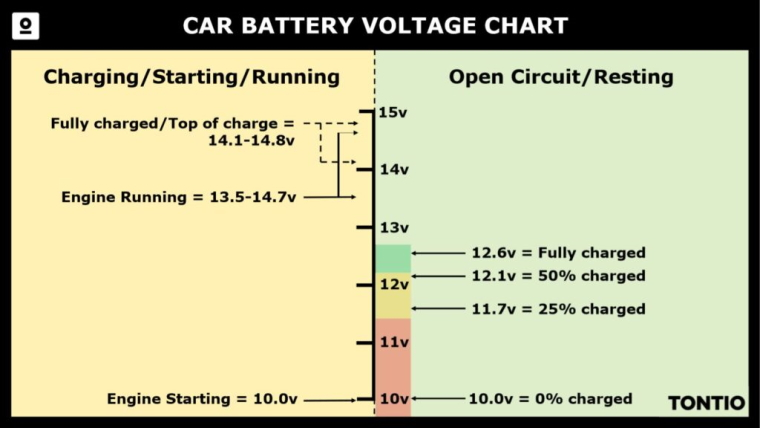
- 12.6 to 12.8 volts at rest with no loads running
- 13.7 to 14.7 volts while the engine is running
- 9.6 volts or higher during cranking
If your readings fall outside those windows, your battery is either weak, undercharged, or on its way out. The difference between a good battery and a bad one is often just a few tenths of a volt, which is why accurate measurement matters.
What Voltage Is Considered Too Low for a Car Battery
Different situations call different limits, so here is the breakdown I use when testing batteries on the shop floor.
At rest, no accessories running:
- 12.6 volts or higher: fully charged and healthy
- 12.4 volts: about 75 percent charged, still usable but not ideal
- 12.2 volts: about 50 percent charged, recharge soon
- 12.0 volts or lower: deeply discharged, likely too weak to start reliably
During cranking:
- 9.6 volts or higher: battery is healthy and holding charge
- 9.0 to 9.5 volts: weak battery, may struggle in cold weather
- Below 9.0 volts: battery is failing or severely discharged, replace or recharge
With engine on, alternator output:
- 13.7 to 14.7 volts: charging system is working properly
- Below 13.5 volts: alternator may be undercharging
- Above 15.0 volts: alternator is overcharging, which can cook your battery
Common Causes of Low Battery Voltage
From years of troubleshooting dead batteries, I have found that low voltage almost always traces back to one of these culprits. Knowing them helps you stop guessing and start fixing.
- Age and wear
Most car batteries last 3 to 5 years. After that, internal plates corrode, acid weakens, and capacity drops. The voltage stays decent when the battery is sitting still, but the moment you ask it to crank, the voltage plunges. If your battery is older than 4 years and showing low readings, replacement is usually the smartest move.
- Parasitic drains
Modern cars have dozens of computers that sip power even when the ignition is off. A trunk light that stays on, a stuck relay, or an aftermarket alarm can slowly pull the battery down over several days. I once found a glovebox switch that stayed lit because a penny had fallen onto the contacts. That tiny draw emptied the battery in under a week.
- Faulty alternator
The alternator recharges the battery while you drive. If its diode is bad or the voltage regulator fails, the battery never gets topped up. You might drive all day and still arrive with a dead battery. Testing alternator output is quick and saves you from chasing the wrong part.
- Loose or corroded terminals
Corrosion acts like a dam in a river. It blocks current from flowing freely. Even a battery with perfect voltage can read low at the terminals if the connections are dirty. I have revived "dead" batteries with nothing more than a wire brush and some baking soda solution.
- Extreme temperatures
Cold weather thickens engine oil and slows chemical reactions inside the battery, which drops cranking voltage. Heat does the opposite and evaporates internal fluid, permanently damaging cells. Either extreme pushes voltage toward the danger zone.
How to Test Car Battery Voltage Properly
Testing is simple once you know the steps. A basic multimeter costs less than a tank of gas and pays for itself the first time it saves you a tow.
- Turn off the engine and all accessories for at least 30 minutes so the battery settles.
- Set your multimeter to DC volts, usually the 20V setting.
- Connect the red probe to the positive terminal and the black probe to the negative terminal.
- Read the voltage and compare it to the resting chart above.
- If you want to check cranking voltage, have a helper turn the key while you watch the meter. The reading should stay above 9.6 volts during the start.
For a more thorough check, many auto parts stores will perform a free load test that simulates the demands of a cold morning. That test is the gold standard for knowing whether your battery is strong enough for winter.
Signs Your Battery Voltage Is Too Low
Your car usually tells you something is off before the battery completely dies. Watch for these warning signs.
- Slow cranking when you turn the key
- Dim headlights, especially at idle
- Clicking sound instead of the engine turning over
- Battery or charging system warning light on the dashboard
- Electronics resetting or acting strangely
- Swollen battery sides from internal heat damage
If any of these show up, test the voltage right away. Catching a weak battery early keeps you from being stranded and protects your alternator from overworking itself trying to charge a dying battery.
What to Do When Voltage Is Too Low
Once you confirm a low reading, the fix is one of three paths depending on the cause.
Recharge the battery
If the battery is healthy but drained, a slow charger or a long highway drive can bring it back. Avoid jump-starting and driving short distances repeatedly, because the alternator never fully tops off the battery that way.
Clean and tighten connections
Remove the terminals, scrub them with a wire brush, and reinstall them snugly. Coat them with dielectric grease to slow future corrosion. This 10-minute job often solves mysterious electrical gremlins.
Replace the battery
If the battery is old, fails a load test, or holds a surface charge but collapses under load, replacement is the right call. Match the group size, cold cranking amps, and terminal layout to your vehicle.

How to Prevent Low Battery Voltage
A little care goes a long way. These habits keep your battery in the healthy voltage range for years.
- Drive the car regularly for at least 20 minutes to keep it charged
- Use a maintenance charger if the car sits for weeks
- Check terminals twice a year for corrosion
- Test voltage every fall before cold weather arrives
- Turn off headlights and accessories before shutting off the engine
- Replace the battery proactively around the 4-year mark
Think of it like brushing your teeth. A small effort today prevents a painful, expensive problem tomorrow.
Voltage vs. State of Charge at a Glance
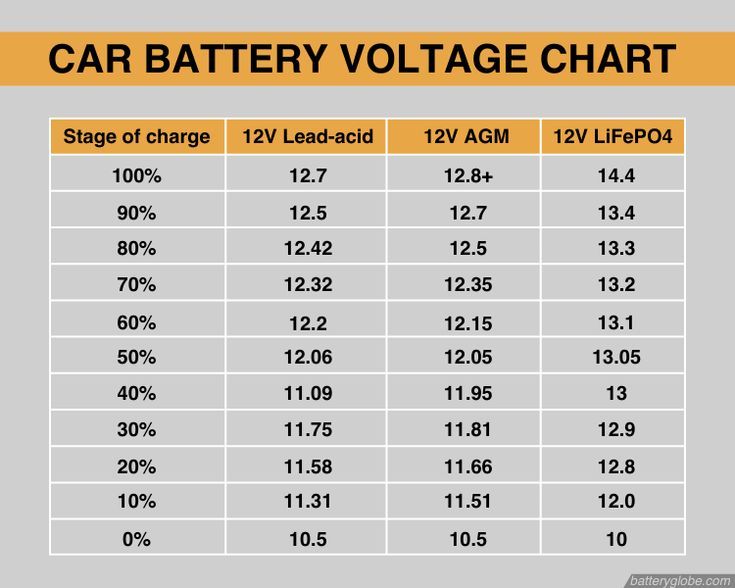
Sometimes a quick chart is the easiest way to remember the numbers.
- 12.7 volts and up: 100 percent charged
- 12.4 volts: 75 percent charged
- 12.2 volts: 50 percent charged
- 12.0 volts: 25 percent charged
- 11.8 volts and below: discharged, likely unable to crank the car
Keep this mental map handy, and you will always know where your battery stands.
When Low Voltage Means a Bigger Problem
Sometimes low battery voltage is a symptom, not the disease. If your battery keeps dying even after a full charge, look deeper.
- The alternator could be failing and not sending proper voltage back
- A short circuit could be draining power overnight
- The battery could have a bad cell, which a load test will reveal
- The vehicle's computer could be staying awake longer than it should
I once chased a "dead battery" for a customer three times before discovering a tiny trunk switch that stayed closed. Voltage problems are puzzles, and the battery is just one piece. Always check the whole charging system before throwing parts at the problem.
Frequently Asked Questions
What voltage is too low to start a car?
Anything below 9.6 volts during cranking is too low and usually means the battery cannot reliably start the engine. At rest, a reading below 11.8 volts is also a sign the battery is too weak.
Can a car battery be too dead to jump?
Yes. If the voltage stays under 10 volts even after a jump attempt, or if the battery is swollen, frozen, or leaking, it may be beyond recovery. In that case, replacement is safer than trying to revive it.
Is 11.9 volts too low for a car battery?
Yes, 11.9 volts at rest is roughly 25 percent charged and is too low to reliably start a car. It should be recharged or replaced soon to avoid getting stranded.
How low can car battery voltage go before damage occurs?
Dropping below 10.5 volts for extended periods can permanently damage a lead-acid battery through sulfation. The longer it stays low, the less capacity it will ever hold, even after recharging.
What voltage should a car battery show when the engine is off?
A healthy battery should show 12.6 to 12.8 volts when the engine is off and no accessories are running. Anything lower means it is discharged or aging.
Conclusion
A car battery voltage that drops below 11.8 volts at rest or below 9.6 volts during cranking is too low to keep your car running reliably. Voltage is the simplest, clearest health check your battery will ever give you, and the small effort of testing it twice a year pays off every time you avoid a stranded morning. Keep a multimeter in your glovebox, learn the numbers, and stay ahead of the next dead battery before it ever strands you. If this guide helped, share it with a friend who has ever been stuck clicking an engine that refused to turn over.