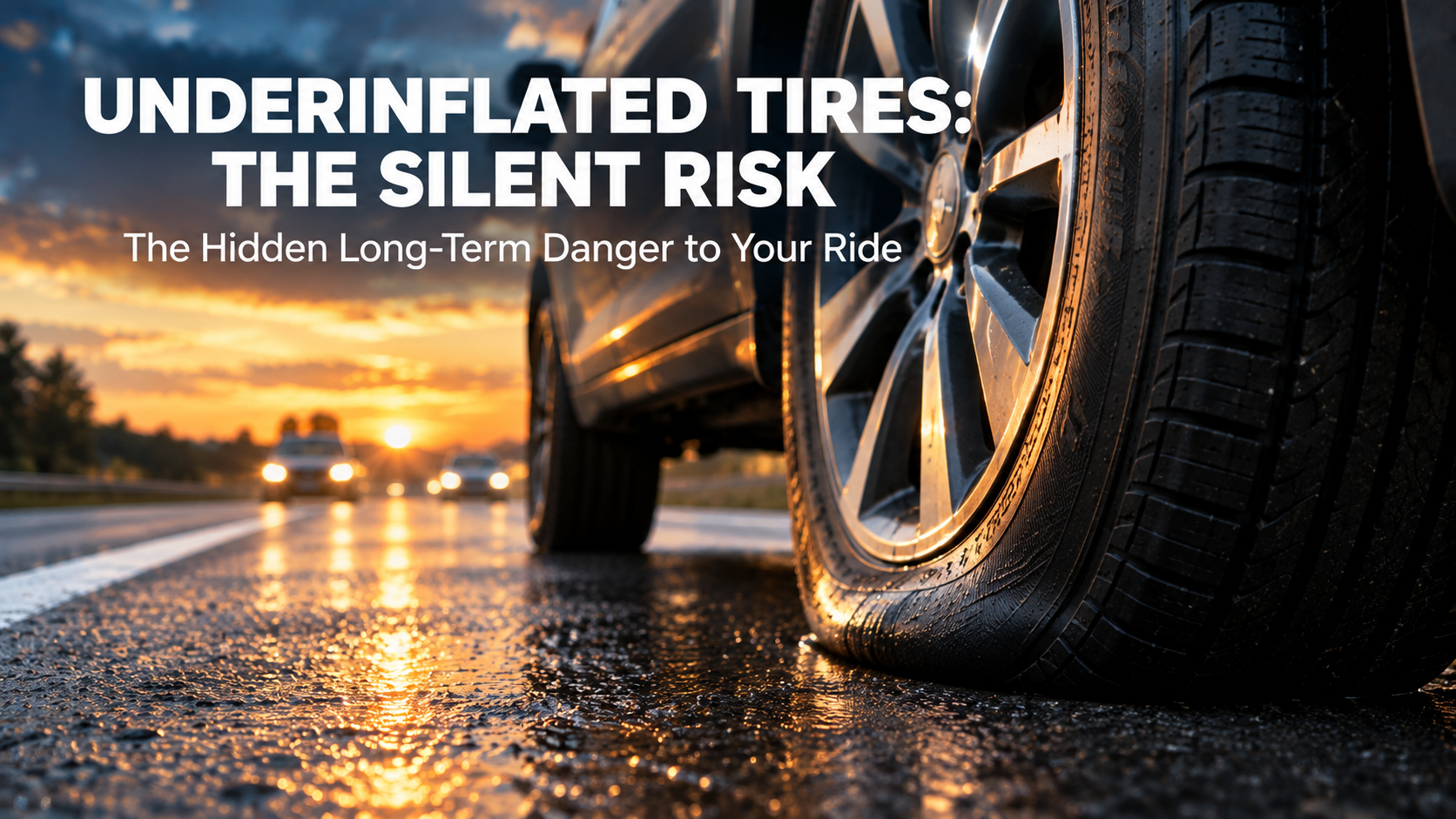
Underinflated tires cause uneven tread wear, reduced fuel economy, overheating, and eventual sidewall failure that puts your safety at serious risk over time. If you've ever wondered what really happens when your tires run a few PSI low for months on end, the answer goes far beyond a rough ride. Years of working with drivers, fleet managers, and weekend road-trippers has taught me one thing: tires quietly do their job until they don't, and by then the damage is often already done.
I've personally watched a set of brand-new tires wear down to the cords in less than 25,000 miles simply because someone ignored the "low tire pressure" light for too long. The long-term effects of under inflated tires aren't just about replacing rubber early; they touch your wallet, your vehicle's mechanical health, and most critically, your safety on the road. Understanding these effects helps you catch small problems before they snowball into costly or dangerous ones.
Let's walk through exactly what happens when your tires stay underinflated, why it matters, and what you can do to stay ahead of it.

What Does "Underinflated" Actually Mean?
Before we get into the long-term effects, it helps to nail down what underinflation really is. Every vehicle has a manufacturer-recommended tire pressure, usually found on the driver's door jamb sticker, in the owner's manual, or sometimes inside the glove box. This number, measured in PSI (pounds per square inch), is the sweet spot for your specific tires and vehicle setup.
Underinflated tires are any tires that fall below that recommended PSI. Even being 5 to 10 PSI low counts, and many drivers roll around for weeks without realizing it. Tires naturally lose about 1 PSI per month through a process called permeation, plus small leaks from nails, valve stem issues, or temperature drops can speed things up.
Here's the thing: most people don't notice underinflation because the symptoms build up gradually. The car might feel slightly softer, the fuel bill creeps up a tiny bit, and the steering feels just a little lazier. Nothing dramatic, until something dramatic happens.
The Hidden Long-Term Effects of Under Inflated Tires
The long-term effects of under inflated tires fall into a few major categories: tire wear, fuel economy, vehicle performance, safety, and component damage. Let's break each one down.
1. Uneven and Accelerated Tread Wear
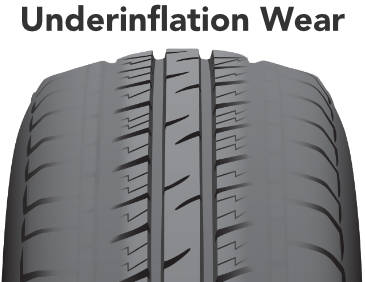
This is the most common and visible long-term effect. When a tire is underinflated, more of its surface area makes contact with the road, especially the outer edges. Over thousands of miles, this causes the shoulders of the tire to wear down much faster than the center.
I remember a customer who came in complaining about a noisy ride and vibration. Her front tires looked like racing slicks on the edges while the middle still had good tread. She had been driving for months on tires that were 12 PSI low. That kind of wear pattern is a dead giveaway of chronic underinflation, and it cuts tire life in half.
The result? You end up replacing tires far sooner than you should, which hits your wallet harder than you might expect. A set of four tires can run anywhere from $400 to over $1,200, so burning through them in 30,000 miles instead of 60,000 doubles your cost per mile.
2. Reduced Fuel Economy
Underinflated tires create more rolling resistance. Think of it like trying to ride a bike with flat tires; you have to work harder to keep moving. Your engine has to burn more fuel just to push the car down the road.
Over the long term, even a 5 PSI drop in all four tires can reduce fuel economy by about 3 to 5 percent. For someone driving 12,000 miles a year at $3.50 per gallon, that adds up to roughly $40 to $70 in extra fuel costs annually. Not huge in one tank, but over five years of ownership, it can mean a couple hundred dollars literally rolling out of your gas tank.
3. Increased Risk of Tire Blowouts and Failures
This is the big one, the one that can turn a normal Tuesday commute into a life-changing event. Underinflated tires flex more than they should with every rotation. That extra flexing generates heat, and heat is the enemy of rubber.
Over time, the internal structure of the tire weakens. The sidewall, which is the thinnest and most flexible part of the tire, takes the brunt of the damage. Tiny cracks can form, the cords inside can separate, and eventually the tire can fail catastrophically, especially at highway speeds.
A blowout on the highway is one of the most dangerous things that can happen in a moving vehicle. Loss of control, collisions with guardrails, rollovers, the consequences can be severe. The long-term effect here isn't just wear and tear; it's the slow build-up of risk that many drivers never see coming.
4. Poor Vehicle Handling and Longer Stopping Distances
When your tires don't have the right pressure, they don't respond the way the engineers who designed your car intended. Steering feels vague, cornering becomes sloppy, and braking distances get longer.
I once drove a car with tires that were 8 PSI low just to test the difference. The car wandered on the highway, the steering had a noticeable delay, and during a simulated emergency stop from 60 mph, the stopping distance increased by almost 15 feet compared to properly inflated tires. That's the length of a small car. In a real-world panic stop, 15 feet can be the difference between stopping in time and a fender-bender, or worse.
5. Extra Stress on Suspension and Drivetrain Components
Your tires are part of your vehicle's suspension system. When they don't perform correctly, other parts have to pick up the slack. Over the long term, chronically underinflated tires can contribute to:
- Premature wear on shock absorbers and struts
- Extra load on wheel bearings
- Increased stress on CV joints, especially in front-wheel-drive cars
- Alignment drift that wears out other tires unevenly
It becomes a domino effect. One underinflated tire leads to uneven wear, which leads to alignment issues, which leads to suspension component replacement. Suddenly what started as "just low air" turns into a $1,500 repair bill.
6. Damage to Tire Sidewalls
Sidewalls are designed to flex, but they have limits. Chronic underinflation pushes them past those limits. Over time, sidewalls develop tiny cracks, bulges, and weak spots that can't be repaired, only replaced.
A bulge in the sidewall is a serious warning sign. It means the internal cords have broken and the tire is one bad pothole away from a blowout. I always tell people: a bulge means the tire has already failed, even if it's still holding air.
Why Do Tires Become Underinflated in the First Place?
Knowing the causes helps you stay ahead of the long-term effects. The most common culprits include:
- Slow leaks from nails, screws, or curb damage
- Failing or aging valve stems
- Natural air loss through permeation (about 1 PSI per month)
- Temperature drops, since tire pressure drops roughly 1 PSI for every 10°F decrease
- Overloading the vehicle beyond its rated capacity
Even the highest-quality tires lose air. That's why monthly pressure checks aren't optional; they're essential.
How to Prevent the Long-Term Damage
The good news? Every long-term effect we just covered is 100 percent preventable with a little attention. Here's what actually works:
- Check tire pressure at least once a month, and before any road trip
- Always check when tires are cold, meaning the car hasn't been driven for at least 3 hours
- Invest in a quality tire pressure gauge; the built-in ones at gas stations aren't always accurate
- Don't rely solely on the Tire Pressure Monitoring System (TPMS) light; by the time it comes on, you're usually 25 percent below recommended pressure
- Rotate tires every 5,000 to 7,500 miles to promote even wear
- Have your alignment checked annually or whenever you hit a hard pothole
These small habits take maybe 10 minutes a month, but they can extend tire life by thousands of miles and prevent dangerous failures.
Common Myths About Tire Pressure
Let me clear up a few myths that lead drivers into trouble:
- Myth: The number on the tire's sidewall is the recommended pressure. Truth: That's the maximum pressure, not the recommended one. Always follow the door jamb sticker.
- Myth: Underinflated tires give better traction in winter. Truth: They give worse traction in all conditions, including snow, ice, and rain.
- Myth: New tires don't lose air. Truth: They actually lose air faster in the first few months as the tire settles onto the wheel.

Frequently Asked Questions
How long does it take for under inflated tires to cause damage?
Damage begins almost right away. Even a few hundred miles on significantly underinflated tires can start uneven wear patterns. Over weeks and months, the damage compounds, especially the risk of sidewall failure and tread separation. The sooner you correct the pressure, the less permanent the damage.
Is it safe to drive on underinflated tires short-term?
Driving a short distance to the nearest service station is generally fine, but you should avoid highways and high speeds until the tires are properly inflated. Heat builds up quickly at speed, which is when blowouts become likely.
Can underinflated tires be repaired, or do they need replacement?
It depends on the damage. Minor wear from short-term underinflation doesn't ruin a tire, but chronic underinflation often causes sidewall damage that cannot be repaired. Once sidewalls are cracked, cracked deeply, or bulging, replacement is the only safe option.
Do underinflated tires affect gas mileage long-term?
Yes, consistently. Underinflated tires increase rolling resistance, forcing the engine to work harder. Over months and years, this adds up to noticeable extra fuel costs, usually in the 3 to 5 percent range for every 5 PSI below recommended.
How do I know if my tires have been underinflated for a long time?
Look for uneven shoulder wear, cracks on the sidewalls, bulges, and a "squishy" feeling when you push on the tire. If you're unsure, any tire shop can do a free inspection and tell you what they're seeing.
Final Thoughts
The long-term effects of under inflated tires aren't just about getting a few extra thousand miles out of your rubber. They're about safety, savings, and protecting the rest of your vehicle. Tires are the only part of your car that actually touches the road, and keeping them properly inflated is one of the easiest and most impactful things you can do as a driver.
Make tire pressure checks part of your routine, just like filling up the gas tank. It takes minutes and saves you from the kind of damage that builds quietly in the background until something goes wrong. If you've been ignoring that little yellow icon on your dash, today is a great day to grab a gauge and take five minutes to check all four corners.