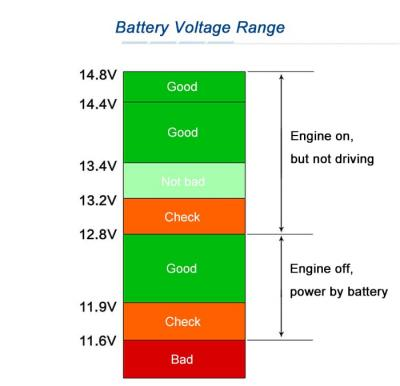
A healthy car battery should read between 12.4 and 12.7 volts when fully charged at rest, with anything below 12.2 volts signaling a weak or discharged battery. Knowing the right voltage range can save you from being stranded on a cold morning or facing a dead engine at the worst possible time. Over the years, I’ve tested dozens of batteries in everything from sedans to heavy-duty trucks, and voltage has always been the first clue I look at. In this guide, I’ll break down exactly what voltage is good for a car battery, how to check it accurately, and what those numbers really mean for your vehicle’s health.
Understanding Car Battery Voltage Basics
Think of your car battery like a water tank. Voltage is the pressure pushing power through the system. A standard 12-volt automotive battery actually has six cells, each producing about 2.1 volts, which adds up to roughly 12.6 volts when fully charged.
When you turn the key, the battery sends a burst of energy to the starter. Once the engine runs, the alternator takes over and keeps the battery topped off. That’s why voltage changes depending on whether the engine is off, starting, or running.
Here’s a quick breakdown of what you’ll see:
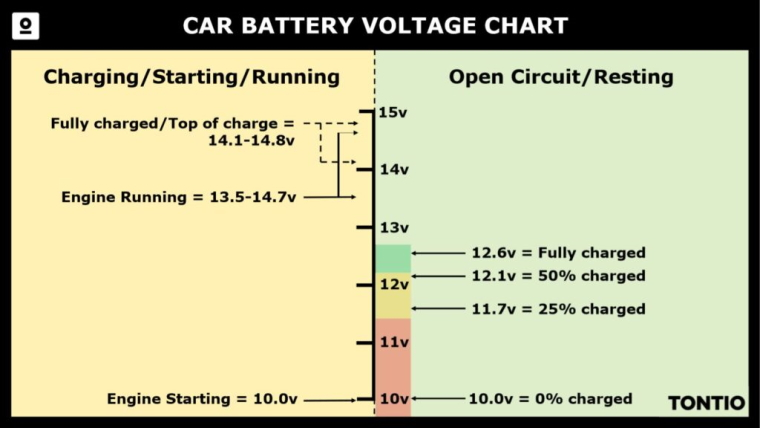
- Resting voltage (engine off, no load): 12.4 to 12.7 volts
- Cranking voltage (during start): 9.6 to 10.5 volts
- Running voltage (engine on): 13.7 to 14.7 volts
If your resting voltage is under 12.2 volts, your battery is partially discharged. Under 11.8 volts, it’s considered dead and likely won’t start your car.
What Voltage Is Considered Good for a Car Battery
A good car battery voltage falls within a specific window depending on what the car is doing. Let me walk you through the three main states I check whenever I diagnose a battery issue.
Resting Voltage (No Load)
This is the most accurate way to judge battery health. Let the car sit for at least 4 to 8 hours without driving or starting it. Then measure the voltage across the terminals.
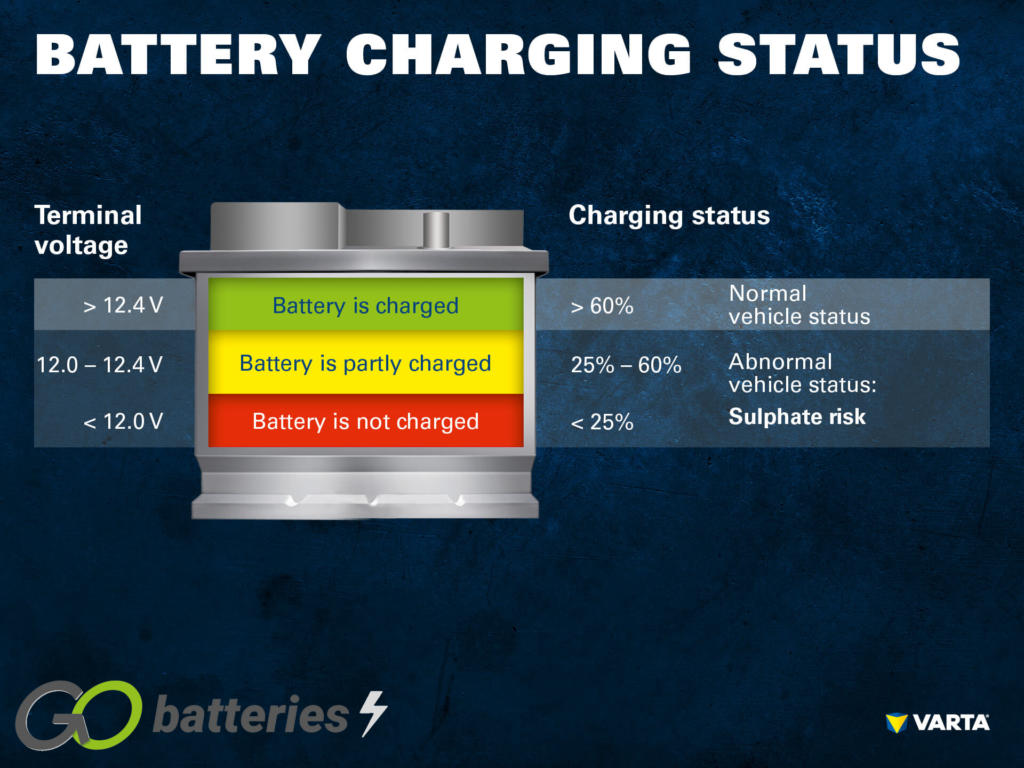
- 12.6 to 12.8 volts: Fully charged and healthy
- 12.4 volts: Around 75% charged, still functional
- 12.2 volts: About 50% charged, may struggle in cold weather
- 12.0 volts or below: Weak or discharged, needs charging or replacement
I once had a client whose SUV wouldn’t crank on a chilly morning. The battery read 12.1 volts at rest. A quick charge brought it back to 12.6 volts, and the problem disappeared. Resting voltage tells the truth when other tests lie.
Cranking Voltage (During Start)
When you hit the ignition, voltage naturally drops because the starter draws massive current. A healthy battery should drop to around 9.6 to 10.5 volts during cranking. If it dips below 9 volts, the battery is weak and likely failing.
Running Voltage (Alternator Output)
With the engine running, the alternator charges the battery. You should see 13.7 to 14.7 volts at the terminals. Anything under 13.5 volts means the alternator may not be charging properly. Anything over 15 volts suggests a voltage regulator issue, which can cook your battery over time.
How to Test Your Car Battery Voltage the Right Way
You don’t need to be a mechanic to check battery voltage. I’ve taught plenty of friends and family members this simple process, and it takes less than five minutes.
Here’s my step-by-step method:
- Grab a digital multimeter. They’re cheap and available at any auto parts store.
- Turn off your car and remove the key from the ignition.
- Set the multimeter to DC voltage (20V range works perfectly).
- Connect the red lead to the positive terminal (+) and the black lead to the negative terminal (-).
- Read the display and compare it to the resting voltage chart above.
For the most accurate reading, let the car sit overnight without opening the hood. Surface charge from recent driving can give you a falsely high number. If you’re in a hurry, turn on the headlights for 30 seconds, then shut them off and wait 5 minutes before testing.
One tip I always share: clean your terminals before testing. Corroded terminals can block the flow of current and give you a low reading even when the battery is fine.
Factors That Affect Car Battery Voltage
Voltage doesn’t stay constant. Several factors can push it up or down, and understanding them helps you avoid false alarms.
Temperature Changes
Cold weather thickens battery oil, slowing the chemical reactions inside. A fully charged battery at 80°F might drop to 12.4 volts at 20°F even though it’s perfectly healthy. That’s why batteries die more often in winter, not because they’re bad, but because voltage drops under stress.
Age of the Battery
Most car batteries last 3 to 5 years. As they age, internal resistance increases, and voltage drops faster under load. If your battery is over four years old and reading below 12.4 volts, it’s living on borrowed time.
Accessory Drain
Leaving headlights, interior lights, or a phone charger plugged in overnight can pull voltage down to 11 volts or lower. If you’ve ever wondered why your car won’t start after sitting for a few days, parasitic drain is often the culprit.
Alternator Health
A weak alternator won’t fully charge the battery while driving. You might see 12.8 volts after driving but 11.9 volts the next morning. The battery isn’t the problem here, the alternator is.
Signs Your Battery Voltage Is Too Low
Voltage numbers tell one story, but your car tells another. Here are the warning signs I’ve learned to recognize over the years.
- Slow engine crank: The starter sounds lazy or hesitant.
- Dim headlights: Especially at idle when the alternator isn’t spinning fast.
- Dashboard warning light: The battery icon usually looks like a little red box.
- Clicking sound when turning the key: Not enough voltage to engage the starter.
- Electrical glitches: Radio resets, clock loses memory, or power windows move slowly.
I remember one winter when my own truck struggled to start. The voltage read 11.8 volts. Instead of jumping straight to a replacement, I charged it overnight, drove it for 30 minutes, and rechecked. It held at 12.5 volts. Saved myself $150 and learned that not every low reading means a dead battery.
How to Maintain Healthy Battery Voltage
Prevention beats replacement every time. Here’s what I do to keep my batteries in top shape year-round.
- Drive your car regularly. Short trips don’t give the alternator enough time to recharge the battery.
- Keep terminals clean. A wire brush and baking soda paste work wonders.
- Test voltage monthly. Especially before winter and summer extremes.
- Avoid deep discharges. Don’t let the battery sit below 12.0 volts for long periods.
- Use a trickle charger. If you store a vehicle for weeks, a float charger maintains voltage without overcharging.
Different Battery Types and Their Voltage Profiles
Not all car batteries behave the same. The voltage ranges stay similar, but internal chemistry affects performance.
- Flooded lead-acid: Standard battery, most common. Reads 12.6 volts when full.
- AGM (Absorbent Glass Mat): Sealed, more vibration-resistant. Holds voltage better under load.
- Gel cell: Rare in cars, but stable. Slightly lower voltage readings, around 12.4 to 12.5 volts full.
- Lithium-ion: Used in some hybrid and electric vehicles. Higher resting voltage, usually 13.2 volts.
If you drive a modern car with start-stop technology, you likely have an AGM battery. These handle deep cycles better and maintain voltage even when the engine shuts off at red lights.
Common Mistakes When Checking Battery Voltage
I’ve seen people make these errors time and again. Avoid them, and you’ll get accurate readings every time.
- Testing right after driving. Surface charge skews the number high.
- Ignoring temperature. A cold battery naturally reads lower.
- Using a cheap multimeter. Inaccurate tools give unreliable results.
- Not letting the battery rest. Wait at least 15 minutes after turning off the car.
- Confusing voltage with charge level. Voltage estimates state of charge but doesn’t measure capacity.

Frequently Asked Questions
What voltage is too low for a car battery?
A resting voltage below 12.2 volts is considered low. Anything under 12.0 volts means the battery is discharged and may not start your car. Below 11.8 volts, the battery is typically considered dead and may need replacement or a full recharge.
Is 11.9 volts enough to start a car?
11.9 volts is borderline. In warm weather, it might crank, but in cold conditions, it likely won’t. I recommend charging the battery fully and retesting. If it drops back below 12.0 volts quickly, the battery is failing.
What voltage should a car battery show when running?
When the engine is running, a healthy battery should read between 13.7 and 14.7 volts. This range confirms the alternator is charging properly. Numbers outside this range suggest an alternator or voltage regulator problem.
Can a car battery show 12 volts and still be good?
Yes, but it’s only at about 50% charge. A healthy battery at rest should show 12.4 to 12.7 volts. If you’re seeing exactly 12.0 volts, the battery is partially discharged and needs attention before it leaves you stranded.
How long does it take to charge a car battery to full voltage?
A standard car battery takes 4 to 8 hours with a proper charger to reach full voltage. Jump-starting and driving for 30 minutes only restores partial charge. For a complete recharge, use a smart charger and let it run overnight.
Final Thoughts
Battery voltage is the heartbeat of your vehicle’s electrical system. A healthy resting voltage between 12.4 and 12.7 volts means your battery is ready for action. If numbers drop below 12.2 volts, it’s time to charge, test, or replace.
I’ve learned through years of hands-on experience that a five-minute voltage check once a month can prevent the headache of a dead battery on a busy morning. Grab a multimeter, know your numbers, and stay ahead of the problem. Your car, and your future self, will thank you. Have questions about your battery’s voltage or want to share your own testing tips? Drop a comment below and let’s talk cars.