
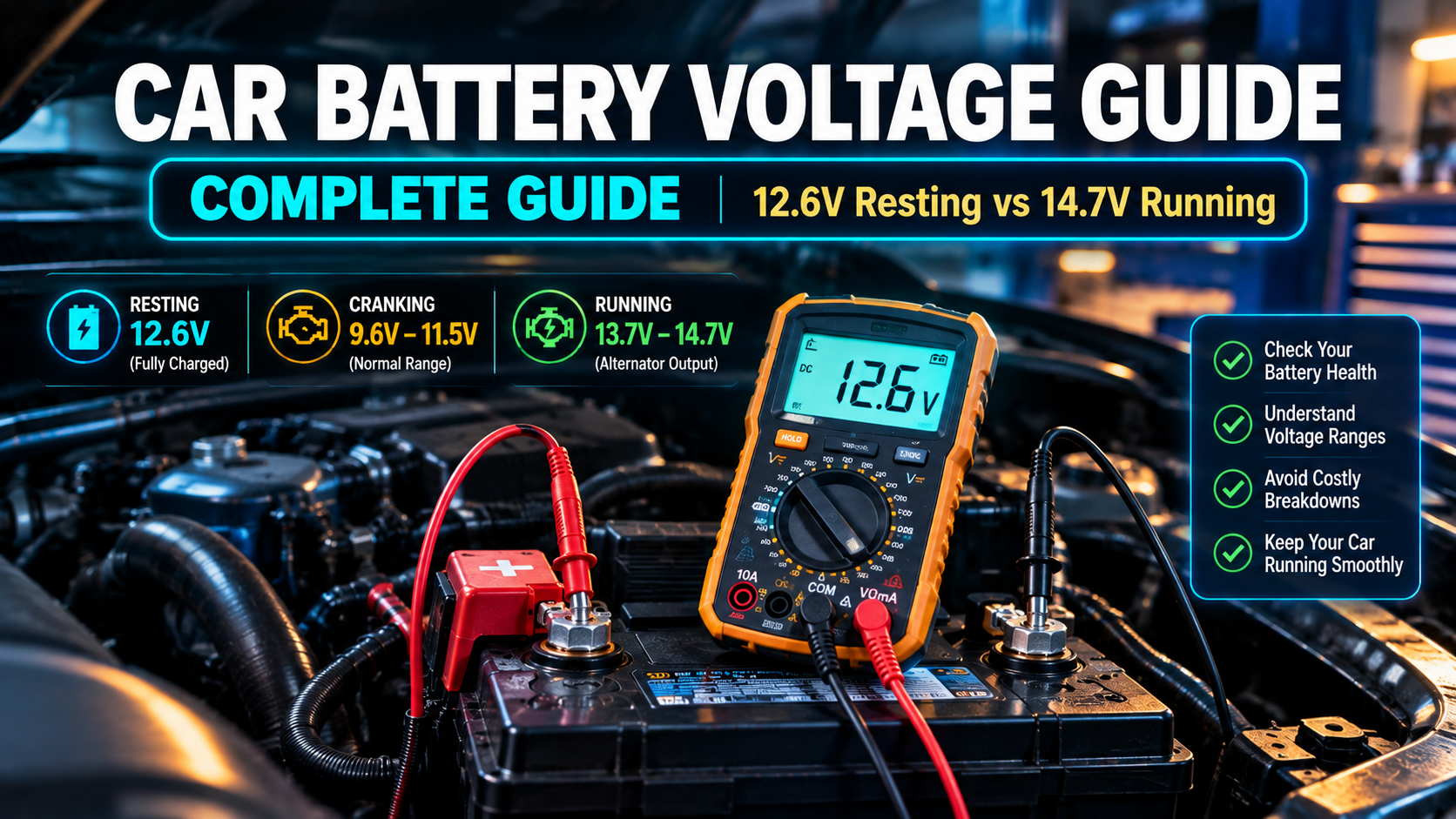
A healthy car battery sits at 12.6 volts when fully charged and rests around 13.7–14.7 volts while the engine runs. Most drivers never think about it until their car refuses to start on a cold morning.
Understanding car battery voltage can save you from that frustrating click-click sound and an expensive tow. I learned this the hard way years ago when my old sedan died in a parking lot, and a quick voltage check could have warned me weeks earlier. This guide breaks down everything you need to know about battery voltage, from resting readings to charging systems, so you can spot problems before they leave you stranded.
Understanding Car Battery Voltage Basics
Think of your car battery as the heart of your vehicle's electrical system. It powers everything from the headlights to the radio, and most importantly, it cranks the engine to life. Voltage is simply the electrical pressure that pushes current through your car's wiring. Without the right voltage, nothing works properly.
A standard car battery is a 12-volt battery, but here's a fun fact I share with everyone I help: that "12-volt" label is more of a nickname than an exact number. Actual readings fluctuate based on the battery's state of charge, temperature, and whether the engine is running.
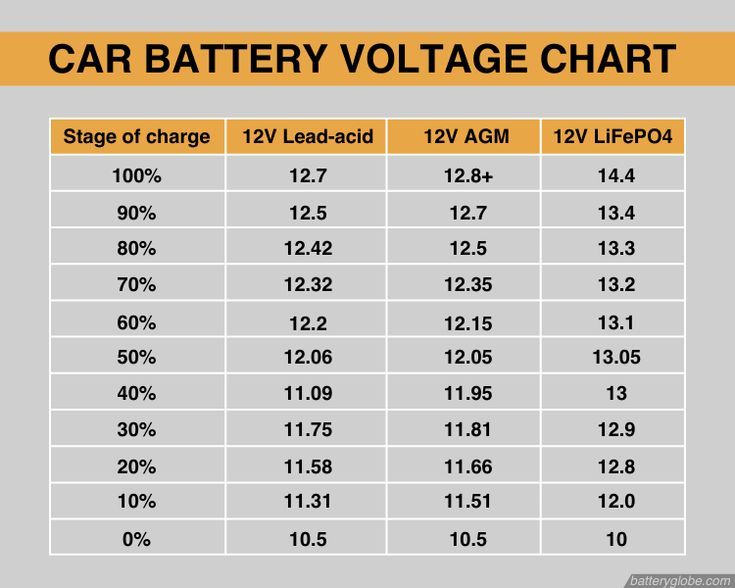
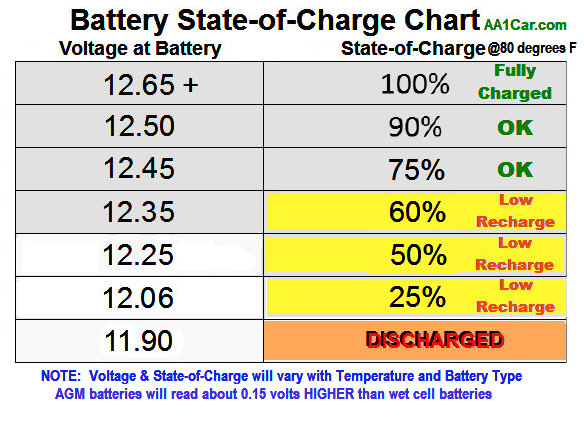
Here are the key voltage ranges every driver should know:
- 12.6 volts or higher: Fully charged battery at rest
- 12.4 volts: About 75% charged, still in good shape
- 12.2 volts: Roughly 50% charged, starting to worry
- 12.0 volts or below: Discharged battery that needs charging
- 11.8 volts or lower: Severely discharged, likely won't start the car
Why Voltage Matters More Than You Think
Voltage tells a story about your battery's health. I've tested hundreds of batteries over the years, and the ones that fail unexpectedly almost always showed warning signs in their voltage weeks earlier. Low voltage doesn't just mean a dead battery. It can damage your alternator, strain your starter motor, and shorten the life of sensitive electronics.
Resting Voltage: The True Measure of Battery Health
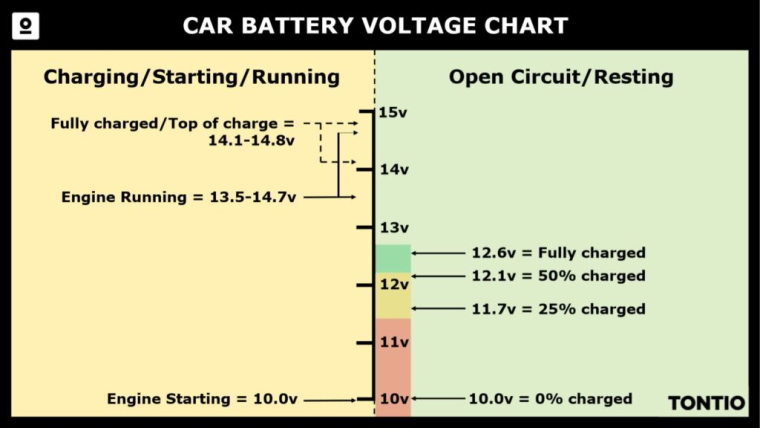
Resting voltage is what your battery reads when nothing is drawing power and the engine is off. This number gives you the most honest picture of battery health. You should wait at least 12 hours after driving or 30 minutes after charging to get an accurate resting voltage reading.
Here's a personal tip from my own routine: I check my cars' resting voltage once a month, especially before winter. A simple multimeter costs less than a tow truck ride, and it takes about 30 seconds to use.
How to Measure Resting Voltage Safely
You only need a basic digital multimeter and a few minutes. Follow these steps for an accurate reading:
- Turn off the engine and remove the key from the ignition
- Make sure all lights, accessories, and the radio are turned off
- Set your multimeter to DC voltage (20V range works for most meters)
- Connect the red lead to the positive (+) terminal
- Connect the black lead to the negative (−) terminal
- Read the display and compare it to the voltage chart above
If your resting voltage reads below 12.4 volts, your battery needs attention. A reading below 12.0 volts means the battery is deeply discharged and may have permanent damage if left that way.

Engine Running Voltage: What the Charging System Should Show
When you start the engine, the alternator takes over and charges the battery while you drive. A healthy charging system should push voltage between 13.7 and 14.7 volts at the battery terminals. This higher voltage is necessary to overcome the battery's internal resistance and push current back into it.
I've seen many beginners panic when they see 14.5 volts on their meter and think something is wrong. Don't worry. That number is normal and actually indicates a healthy alternator doing its job properly.
Warning Signs in the Charging Voltage
The engine running voltage tells you if your alternator and voltage regulator are working correctly. Watch for these red flags:
- Below 13.5 volts: Alternator may be undercharging, which leads to a weak battery over time
- Above 15.0 volts: Overcharging condition that can boil off battery acid and damage electronics
- Fluctuating readings: Suggests loose connections, a failing voltage regulator, or alternator issues
- No increase from resting voltage: Alternator is likely failing and not charging at all
I once helped a friend diagnose a flickering dashboard issue that stumped two repair shops. A simple voltage test showed the alternator was pushing 15.8 volts, slowly cooking the battery. A new voltage regulator fixed the problem and saved the battery.
Cold Cranking Voltage: What Happens When You Start the Car
The moment you turn the key or push the start button, voltage drops significantly as the starter motor draws huge current from the battery. This is called cranking voltage, and it tells you a lot about battery health under load.
A healthy battery should maintain at least 9.6 volts during cranking. If voltage drops below this number, the battery may struggle to start the engine, especially in cold weather. I've seen many "mystery" no-start issues traced back to voltage dropping to 8 volts or lower during cranking.
Temperature's Big Impact on Battery Voltage
Cold weather is brutal on car batteries. For every 10°F drop in temperature, a lead-acid battery loses about 10% of its cranking power. At 0°F, a fully charged battery might only deliver 60% of its rated capacity. This is why dead batteries seem to happen overnight when temperatures drop.
Here's what I've learned from years of winter breakdowns: the battery that seemed fine in October often fails in January. If your battery is more than three years old, get it tested before cold weather arrives.

Different Battery Types and Their Voltage Characteristics
Not all car batteries are created equal. While most consumer vehicles use traditional flooded lead-acid batteries, several other types are common today. Each has slightly different voltage characteristics.
- Flooded Lead-Acid: The most common type, with standard voltage readings described above
- AGM (Absorbent Glass Mat): Holds voltage slightly higher and recovers from deep discharge better
- EFB (Enhanced Flooded Battery): Found in many start-stop vehicles, with similar voltage to AGM
- Lithium-Ion: Used in some hybrid and performance vehicles, with different resting voltage around 13.2 volts
How Battery Age Affects Voltage Readings
A battery's age significantly impacts how well it holds voltage. Most car batteries last 3 to 5 years, though some premium brands reach 6 or 7 years with proper care. As batteries age, their internal resistance increases, which causes voltage to drop faster under load.
You can spot an aging battery by watching for these patterns: slower engine cranking, dimmer headlights at idle, and voltage that drops more than usual when accessories run. I keep a maintenance log for my vehicles, and tracking voltage over months reveals trends that single tests cannot.
Common Voltage Problems and How to Fix Them
Low voltage problems usually fall into a few common categories. Knowing which one you're dealing with saves time and money on repairs.
A battery that reads normal but dies overnight usually has a parasitic draw somewhere in the electrical system. A battery that won't hold a charge likely has a dead cell. A battery that reads fine but won't start the car may have corroded terminals or loose cables.
Quick Fixes for Voltage Issues
Start with the simplest solutions before assuming the worst:
- Clean corroded battery terminals with a wire brush and baking soda solution
- Tighten loose cable connections on both terminals
- Check the ground cable connection to the chassis
- Test for parasitic draw by removing fuses one at a time
- Charge the battery with a quality battery charger overnight
I once spent $200 on a new battery that didn't solve a problem. The real culprit was a trunk light that stayed on because of a misaligned switch. Sometimes the simplest things cause the biggest headaches.
Frequently Asked Questions
How often should I check my car battery voltage?
Check your battery voltage at least once every three months, and more often if the battery is over three years old. Monthly checks are ideal during extreme hot or cold weather when battery stress is highest.
Can a car battery show 12 volts but still be bad?
Yes, a battery can show 12 volts at rest but fail under load. This is why a load test or cranking voltage test is more reliable than just checking resting voltage. A bad cell can mask serious internal damage behind a normal-looking reading.
What voltage is too low to start a car?
Most cars need at least 9.6 volts during cranking to start reliably. A resting voltage below 11.8 volts often won't have enough power to crank the engine at all, especially in cold weather.
Is 11.9 volts okay for a car battery?
An 11.9 volt reading at rest indicates a deeply discharged battery at about 25% capacity. This battery needs immediate charging and may have permanent damage if it stays this low for long.
Should I replace my battery if voltage is 12.2 volts?
A resting voltage of 12.2 volts means the battery is at about 50% charge. If it recovers to full charge after driving and holds that charge, the battery may still be serviceable. However, if it drops back to 12.2 volts quickly, replacement is likely needed.
Conclusion
Car battery voltage is one of the simplest yet most useful diagnostics you can perform. A quick check with a basic multimeter takes less than a minute and can warn you about problems weeks before they leave you stranded. Remember that 12.6 volts means full charge at rest, 13.7 to 14.7 volts is healthy while running, and anything below 12.0 volts needs immediate attention.
Make voltage checks part of your regular maintenance routine, just like oil changes and tire rotations. Keep your terminals clean, your connections tight, and your battery charged, especially before extreme weather. Your car will thank you with reliable starts for years to come.
Have a voltage question or a battery story to share? Drop a comment below and let's troubleshoot together.