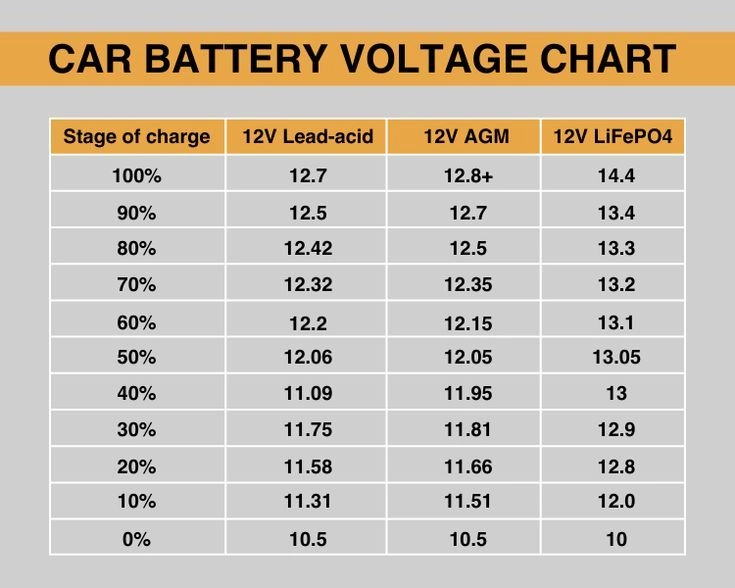
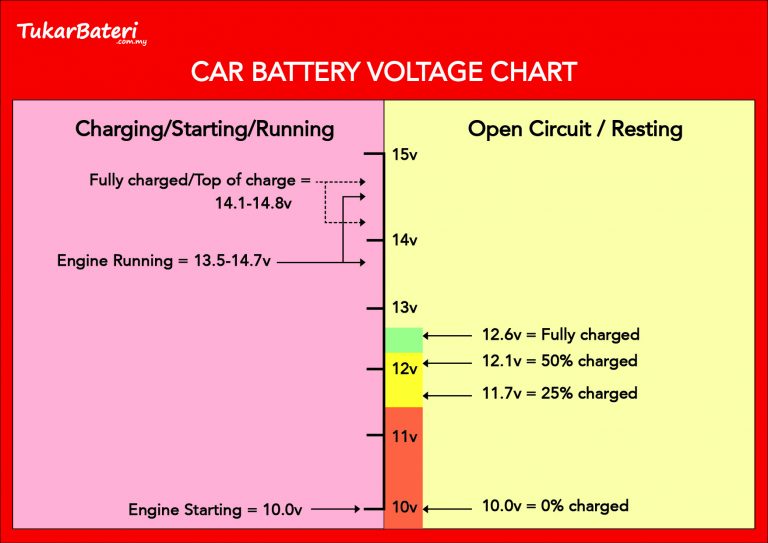
A healthy car battery should read between 12.4 and 12.7 volts when the engine is off and between 13.7 and 14.7 volts when the engine is running.
Knowing the right voltage reading can save you from being stranded with a dead battery or paying for a replacement you don't need yet. I've spent years working with car batteries, testing them in the shop and on the road, and I can tell you that voltage is one of the clearest windows into its condition. Let me walk you through what the numbers really mean, how to test them properly, and what signs tell you it's time for a new one.
Understanding Car Battery Voltage Basics
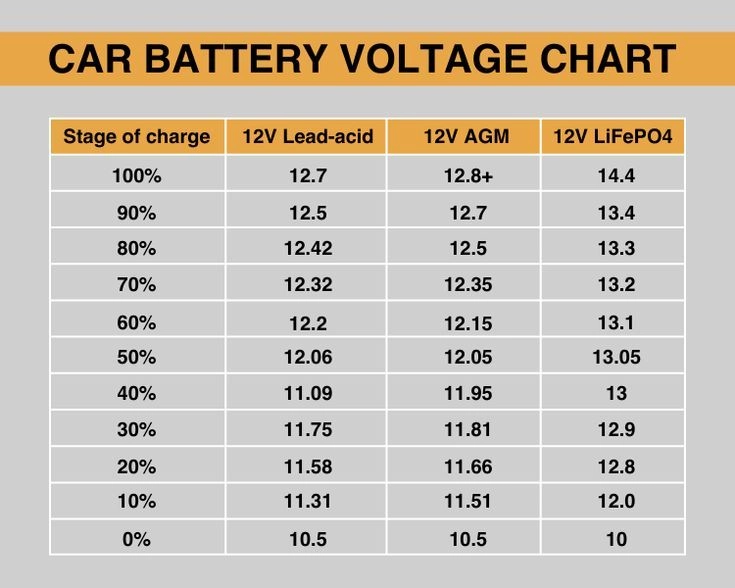
A standard 12-volt car battery doesn't actually stay at exactly 12 volts all the time. The voltage moves up and down based on what the battery is doing, whether it's resting, charging, or under load.
Here's a quick breakdown of the three main states:
- Resting voltage (engine off, no accessories running): 12.4 to 12.7 volts
- Charging voltage (engine running): 13.7 to 14.7 volts
- Surface charge voltage (right after driving): can read higher temporarily
I always tell people to think of voltage like a fuel gauge. It doesn't tell you everything, but it gives you a strong hint about what's going on under the hood.
What the Voltage Should Be When the Car Is Off
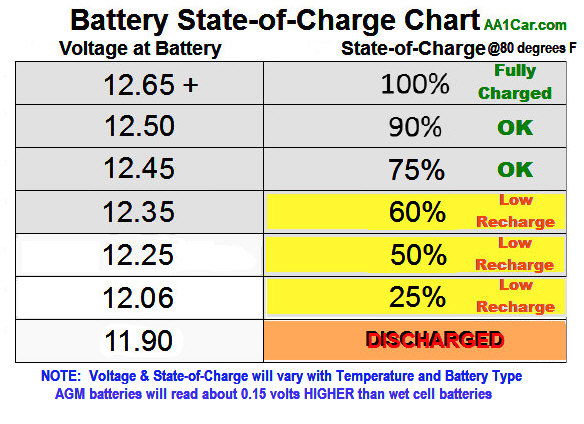
When the engine is off and the battery has been resting for at least a few hours, a fully charged battery should sit between 12.4 and 12.7 volts. Anything below 12.2 volts means the battery is partially discharged, and below 12.0 volts it's considered deeply discharged.
From experience, most drivers don't realize their battery is slowly losing charge until the car struggles to start on a cold morning. That's usually the first real-world symptom.
Here's how to read the resting voltage scale:
- 12.6 volts or higher: Fully charged
- 12.4 volts: About 75% charged
- 12.2 volts: About 50% charged
- 12.0 volts or lower: Needs charging or replacement
What the Voltage Should Be When the Engine Is Running
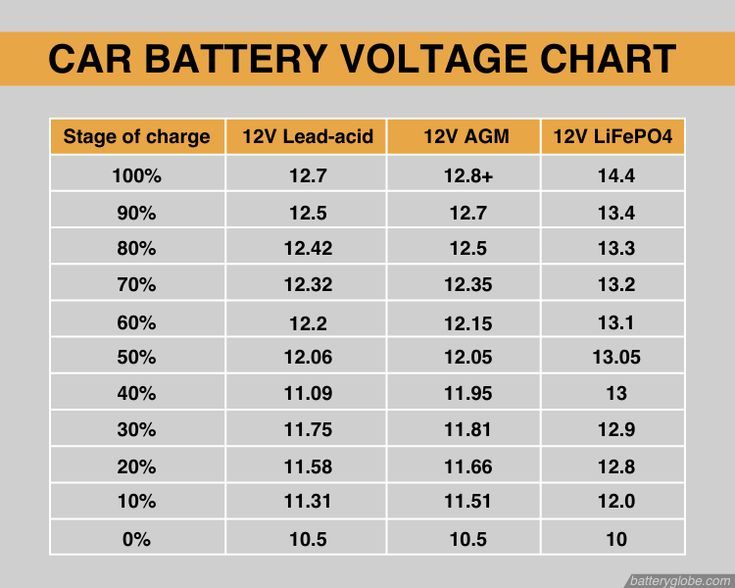
Once you start the car, the alternator takes over and pushes the voltage higher. A healthy charging system will show between 13.7 and 14.7 volts at the battery terminals while the engine runs.
If the voltage stays below 13.5 volts while running, the alternator might not be charging the battery properly. If it climbs above 15 volts, the voltage regulator could be failing, which can overcharge and damage the battery.
I remember one customer who kept replacing batteries every few months, thinking they were bad. Turns out, his alternator was cooking them at 15.2 volts. A simple regulator fix saved him hundreds of dollars.
How to Test Your Battery Voltage the Right Way
Testing voltage is simple, but the method matters. You need a digital multimeter and a little patience.
Follow these steps for an accurate resting voltage reading:
- Turn off the car and remove the key
- Wait at least 2 to 4 hours, or longer if possible
- Set your multimeter to DC volts (20V range)
- Connect the red lead to the positive terminal
- Connect the black lead to the negative terminal
- Read the display
For a running voltage test, start the engine, let it idle for a minute, and check the reading with the headlights and AC off, then on. The voltage should stay within the 13.7 to 14.7 range either way.
Factors That Affect Battery Voltage Readings
Several things can throw off your voltage reading, and knowing them helps you avoid misdiagnosis.
- Temperature: Cold weather lowers voltage readings, while heat raises them
- Surface charge: Testing right after driving gives a falsely high reading
- Accessory load: Headlights, fans, and radios pull voltage down
- Battery age: Older batteries hold less charge and drop faster
- Corrosion: Dirty terminals block proper voltage transfer
I once had a car come in showing 11.9 volts, and the owner was ready to buy a new battery. After cleaning the corroded terminals, it jumped back to 12.6 volts. Always check the connections first.
Signs Your Battery Voltage Is Too Low or Too High
Voltage problems don't always show up on a gauge first. Your car usually gives you clues before the battery dies completely.
Watch for these warning signs:
- Slow cranking when starting the engine
- Dim headlights, especially at idle
- Clicking sound when turning the key
- Battery warning light on the dashboard
- Swollen battery case or rotten egg smell
- Electronics resetting or acting strange
High voltage problems are rarer but just as serious. An overcharging battery will boil off its electrolyte, kill the cells, and sometimes even warp the plates inside.
How Often Should You Check Battery Voltage?
If your car is running fine, checking voltage once every few months is plenty. I usually recommend a quick check at every oil change, since you're already under the hood anyway.
For older batteries or cars that sit for long periods, monthly checks are better. A battery can lose 1% of its charge per day just sitting still, and that adds up fast.
Does Voltage Tell You the Whole Story?
Voltage is a good indicator, but it doesn't tell you everything. A battery can show 12.6 volts and still fail under load. That's why a load test is the gold standard for checking battery health.
A proper load test puts the battery under 50% of its cold cranking amp rating for 15 seconds. If the voltage drops below 9.6 volts during that test, the battery is weak and needs replacement.
Think of voltage like checking your tire pressure. It tells you the basics, but a road test tells you how it really performs.
Different Battery Types and Their Voltage Ranges
Most cars use lead-acid batteries, but there are a few types with slightly different ideal readings.
- Flooded lead-acid: 12.4 to 12.7 volts resting
- AGM (Absorbent Glass Mat): 12.6 to 12.8 volts resting
- EFB (Enhanced Flooded Battery): 12.5 to 12.7 volts resting
- Gel cell: 12.8 to 12.9 volts resting
AGM batteries, common in newer cars with start-stop systems, hold voltage slightly higher and recover better from deep discharges. If your car has one, don't replace it with a cheaper flooded battery. The charging system is tuned for AGM.
How Temperature Changes Battery Voltage
Cold weather is a battery's worst enemy. At 0°F, a fully charged battery only delivers about 60% of its normal cranking power. At the same time, starting the engine requires more energy because the oil is thicker.
That's why batteries often die in winter, even if they were fine in summer. The voltage drops faster in the cold, and the demand goes up.
Heat is the opposite enemy. It speeds up chemical reactions inside the battery, which sounds good but actually shortens its lifespan. Batteries in hot climates typically last 2 to 3 years, while cooler climates can stretch to 5 or 6.
How to Maintain the Right Battery Voltage Long-Term
Keeping your battery healthy isn't hard, but it does take a little attention.
- Drive the car regularly for at least 20 minutes to keep it charged
- Clean the terminals every few months with a wire brush
- Check the voltage monthly if the car sits a lot
- Use a maintainer or trickle charger for stored vehicles
- Avoid short trips that don't let the battery fully recharge
I keep a small battery maintainer on my classic car during the winter. It's saved me from buying at least three batteries over the years.
Common Myths About Battery Voltage
There are a lot of old wives' tales out there about car batteries. Let me clear up a few.
- Myth: Jump-starting a dead battery damages your alternator. Truth: A quick jump is fine, but repeated deep discharges do shorten battery life.
- Myth: You need to run the car for hours to recharge a dead battery. Truth: A proper drive cycle charges it, but idling barely tops it off.
- Myth: A new battery doesn't need checking. Truth: Even new batteries can fail early or have charging issues.
- Myth: Disconnecting the battery resets everything for free. Truth: It clears codes, but you lose radio presets and learned settings.

When to Replace Your Battery Based on Voltage
Voltage alone doesn't tell you when to replace a battery, but combined with age and symptoms, it's a strong guide.
- Under 12.4 volts and over 3 years old: Plan to replace soon
- Under 12.0 volts after a full charge: Replace now
- Fails a load test: Replace regardless of voltage
- Swollen case or bad smell: Replace immediately
A good rule of thumb is to replace the battery every 4 to 5 years, even if it seems fine. That's when internal wear starts catching up with most batteries.
Frequently Asked Questions
Is 11.9 volts bad for a car battery?
Yes, 11.9 volts is too low for a resting car battery. It means the battery is deeply discharged and either needs a slow charge or replacement if it won't hold a charge anymore.
What voltage is too low to start a car?
Most cars need at least 9.6 volts during cranking to start reliably. If the voltage drops below that while turning the key, the battery is likely too weak to start the engine.
Can a car battery show 12 volts and still be bad?
Yes, a battery can show 12 volts at rest but fail under load. That's why a load test is important, especially for older batteries that seem fine on a multimeter.
How long does it take to charge a car battery to full voltage?
A typical car alternator charges a battery in about 30 minutes to an hour of driving. Using a trickle charger, it can take 6 to 12 hours for a deeply discharged battery.
What should the battery voltage be overnight?
After sitting overnight, a healthy battery should still read between 12.4 and 12.7 volts. A drop below 12.2 volts overnight means something is draining the battery or the battery is weak.
Conclusion
Keeping an eye on your car battery voltage is one of the easiest ways to prevent breakdowns and extend its life. Aim for 12.4 to 12.7 volts when off and 13.7 to 14.7 volts when running, and test it a few times a year. Catch problems early, clean those terminals, and don't ignore the slow cranks or dim lights. Your battery will thank you with years of reliable starts. Drop a comment below if you have a voltage question or want to share your own battery story.