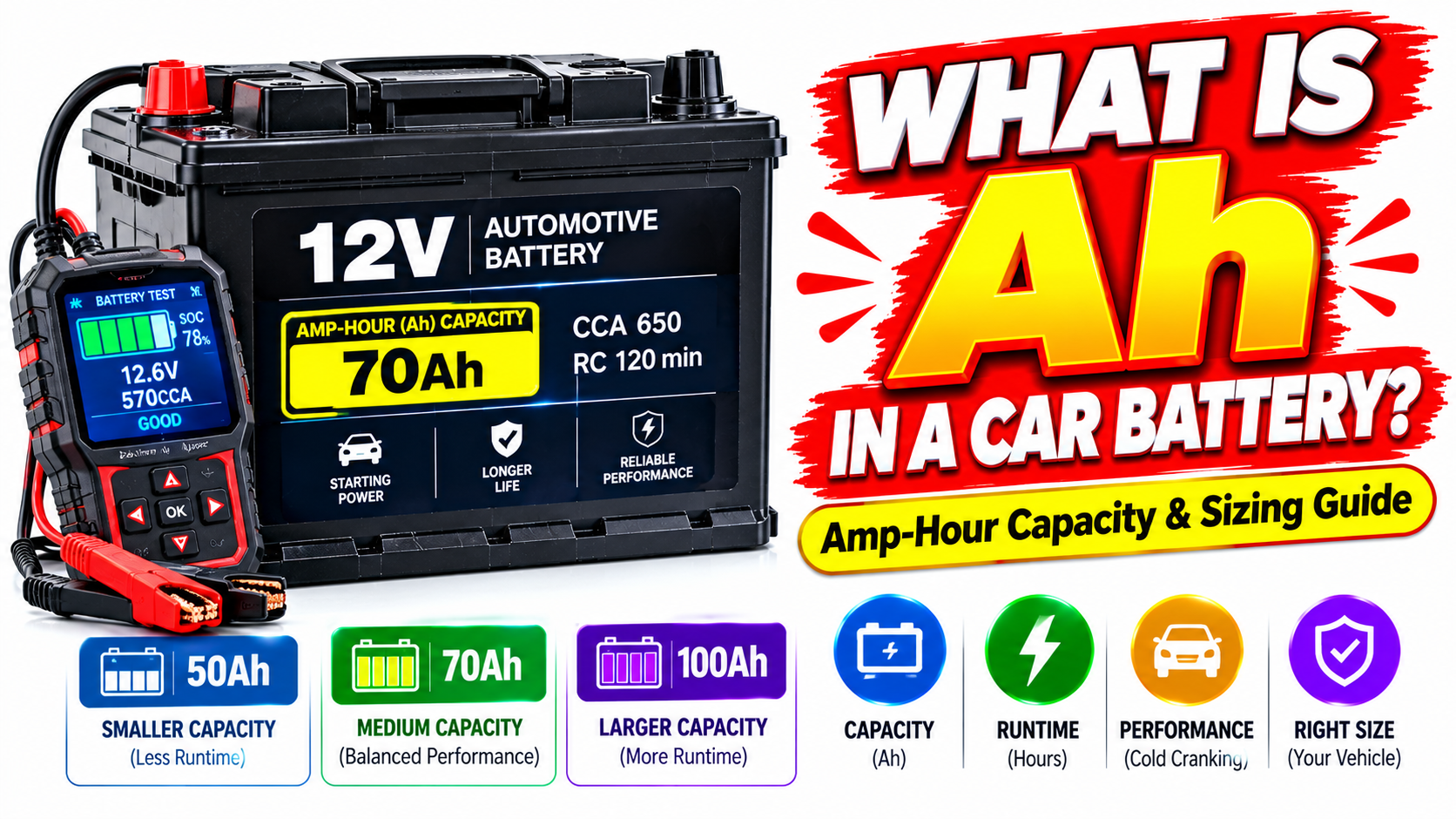
Ah in a car battery stands for ampere-hour, a unit that tells you how much electrical charge the battery can deliver over time.
If you've ever peeked under the hood or scanned the side of a car battery, you've probably noticed a number followed by "Ah." It's one of those little specs that looks technical, but it actually holds the key to understanding whether a battery is the right fit for your car. Think of it like the fuel tank of your battery's energy. A bigger Ah means more stored power, while a smaller Ah means less. Knowing what Ah means, and how it impacts performance, can save you from being stranded on a cold morning or paying for a battery that just isn't built for your driving needs. Let me walk you through everything you need to know, so you can pick the right battery with confidence.

Understanding the Basics of Ampere-Hours
Ampere-hour, often shortened to Ah, is a standard way to measure a battery's capacity. One Ah means the battery can supply one ampere of current for one full hour before it runs out. In simple terms, it's a way of saying, "Here's how much juice this battery can hold and deliver."
A battery rated at 50 Ah, for example, can theoretically provide 5 amps for 10 hours, or 10 amps for 5 hours, or even 1 amp for 50 hours. The relationship between amps and time is what defines the Ah rating. While real-world conditions like temperature, age, and load can affect actual output, the Ah rating gives you a reliable benchmark for comparison.
When shopping for a replacement battery, you'll notice that most vehicles are designed to work with a specific Ah range. Sticking within that range keeps your electrical system happy. Go too low, and you risk sluggish starts. Go too high, and your alternator might have to work harder to keep it charged.
Why Ah Matters for Your Vehicle
The Ah rating directly impacts how long your battery can power essential functions. This is especially important if your car has a lot of electronics or if you frequently use accessories when the engine is off. Here's why it matters:
- It determines how many times you can start your car before the battery drains.
- It affects the performance of headlights, infotainment systems, and other electronics when the engine is off.
- It plays a role in supporting advanced features like start-stop systems, hybrid drivetrains, and onboard computers.
- It ensures the battery can handle heavy electrical loads, especially in modern cars packed with sensors and gadgets.
Think of it this way: the battery is like a water bucket. Ah tells you how big the bucket is. A bigger bucket can hold more water, meaning you can use it longer before refilling. In your car, that translates to fewer worries about your car not starting after sitting for a few days.
Ah vs. CCA: What's the Difference?
You'll often see two ratings on a battery: Ah and CCA. While they sound similar, they measure very different things.
CCA stands for Cold Cranking Amps. It measures how much current a battery can deliver for 30 seconds at 0°F (-18°C) without dropping below a specific voltage. In other words, CCA tells you how well the battery can start your engine in cold weather.
Ah, on the other hand, measures sustained energy delivery over time. It's about capacity, not raw cranking power. A battery might have a high Ah but a low CCA, or vice versa. That's why it's important to check both numbers, especially if you live in a region with harsh winters.
Here's a quick breakdown:
- Ah: Total energy storage and runtime capacity.
- CCA: Short burst of power needed to start the engine in cold conditions.
If you live in a warm climate, Ah might be more important for your daily driving needs. If you face freezing winters, CCA becomes a priority.
How to Choose the Right Ah Rating
Picking the correct Ah rating isn't complicated, but it does take a little attention to detail. Here's how I usually approach it when helping someone choose a battery:
Check your owner's manual first. It will list the recommended Ah range for your specific vehicle model. Manufacturers test vehicles with specific battery sizes to ensure optimal performance.
Consider your driving habits. Do you take short trips that don't allow the battery to fully recharge? Do you often run accessories with the engine off? If so, going a step higher in Ah can give you extra peace of mind.
Look at your climate. Extreme heat and cold both affect battery performance. Higher Ah ratings can offer better reserve capacity in tough conditions.
Think about your electrical accessories. If you've added aftermarket upgrades like a powerful sound system, extra lighting, or GPS units, you'll want a battery with more Ah to handle the extra load.
Most standard cars run on batteries between 40 and 80 Ah. Trucks, SUVs, and vehicles with start-stop systems might need 70 Ah or more. Diesel engines, especially larger ones, often require higher Ah ratings because of their high compression.
Common Misconceptions About Ah
There's a lot of confusion around Ah, especially when people are trying to upgrade or replace a battery. Let me clear up a few myths I often hear.
A higher Ah doesn't mean more power. It means longer-lasting power. The voltage stays the same, so your electrical system won't get a boost just because you went up in Ah.
You can't just pick any Ah you want. While some flexibility exists, straying too far from the manufacturer's recommendation can cause issues. The alternator may not be designed to recharge a much larger battery efficiently.
A dead battery can sometimes still hold a charge. Low Ah doesn't always mean the battery is completely dead. It could just be deeply discharged and might recover with proper charging. That said, if a battery consistently fails to hold a charge, it's time for a replacement.
More Ah doesn't always mean a better battery. Quality, brand, construction type, and warranty all matter just as much, if not more, than the Ah number alone.
How Ah Affects Battery Life and Maintenance
Ah and battery lifespan are closely connected, but they aren't the same thing. A higher Ah rating doesn't automatically mean the battery will last longer. However, running a battery at near its full capacity all the time can shorten its life.
Here are a few practical tips I've picked up over the years:
- Avoid draining the battery below 50 percent regularly. Deep discharges reduce overall lifespan.
- Keep the terminals clean and tight. Corrosion reduces efficiency and can lower effective capacity.
- Drive regularly or use a trickle charger. Batteries lose charge over time, even when not in use.
- Test the battery annually, especially before winter. Many auto parts stores offer free testing.
- Replace the battery every 4 to 6 years, even if it seems fine. Performance naturally declines with age.

How Ah Relates to Battery Types
Different battery technologies handle Ah ratings in unique ways. Here's how the most common types compare.
Flooded lead-acid batteries are the traditional choice. They offer reliable Ah capacity at a lower cost, but they require occasional water top-ups and are sensitive to deep discharges.
AGM batteries, or Absorbent Glass Mat, are common in modern cars with start-stop systems. They typically provide higher Ah in a smaller footprint, handle deeper discharges better, and last longer overall.
Lithium-ion batteries are starting to appear in some high-performance and hybrid vehicles. They offer excellent energy density and very low weight, but they come at a higher price and may require special charging systems.
EFB batteries, or Enhanced Flooded Batteries, are designed specifically for start-stop vehicles. They offer improved cycling capability compared to standard flooded batteries, making them a middle-ground option.
Choosing the right type and Ah combination depends on your vehicle's demands and your budget. I've found AGM batteries to be the sweet spot for most modern cars, especially those with sensitive electronics.

How Temperature and Usage Affect Ah
Real-world Ah performance isn't the same as the number printed on the label. Cold weather reduces a battery's effective capacity. At 0°F, a battery might only deliver about 65 percent of its rated Ah. Heat, on the other hand, can actually increase short-term capacity but shorten overall lifespan due to increased chemical activity.
Short, frequent trips are tough on batteries. The alternator doesn't have enough time to fully recharge the battery after starting, leading to a slow decline in effective Ah over time. Long highway drives are much better for battery health.
Idling with heavy electrical loads also drains Ah faster than you'd think. If you sit in your car with the AC, radio, and lights running for extended periods, you're eating into your reserve capacity.

Frequently Asked Questions
What does a higher Ah mean on a car battery?
A higher Ah rating means the battery can store and deliver more electrical energy over time. This often translates to longer-lasting power for accessories and better support for vehicles with high electrical demands.
Can I use a higher Ah battery in my car?
In most cases, yes, as long as the voltage matches and the physical size fits. However, it's best to stay within a reasonable range of the manufacturer's recommendation to avoid putting extra strain on the alternator.
Is a higher Ah battery better for cold weather?
Not necessarily. Cold cranking performance is measured by CCA, not Ah. A battery with a high Ah but low CCA may struggle in freezing temperatures. For cold climates, focus on both numbers.
How do I know what Ah my car battery needs?
Check your owner's manual or look at the label on your current battery. The original spec is always a safe guide. If you've added electrical accessories, consider stepping up slightly.
Does Ah affect battery price?
Generally, yes. Higher Ah batteries often cost more because they contain more active material. However, brand, technology, and warranty also play a big role in pricing.
Wrapping It All Up
Understanding what Ah means in a car battery gives you the power to make smarter choices. It's not just a number on a label. It's a clear indicator of how much energy your battery can hold and deliver when you need it most. Whether you're replacing an old battery, upgrading for more accessories, or just trying to make sense of the specs, knowing how Ah fits into the bigger picture helps you avoid unnecessary costs and frustrating breakdowns.
Take a moment to check your current battery, review your driving habits, and match the Ah rating to your needs. A little knowledge here goes a long way toward keeping your car reliable, no matter the season. If you found this guide helpful, feel free to share it with a fellow driver or drop a comment with your own battery experiences. The road is always smoother when we learn from each other.