Figuring out how to tell what year a Mercury outboard motor is can feel like a treasure hunt sometimes, especially with older engines. You’ve got this motor, and you need to know its age for parts, maintenance, or maybe to understand its history before heading out on the water. It's more than just a number; it’s a key piece of your engine’s identity.
Mercury outboard motors are built tough, and manufacturers use various systems to encode production information. For instance, manufacturer specifications often indicate that serial number sequences can reveal the approximate production date, helping owners track an engine's lifecycle. Let's dive into how you can uncover this essential detail.
The Serial Number Tag: Your Motor's Birth Certificate
This is your absolute best starting point and usually the most direct way to determine your Mercury outboard's year. Think of it as the motor’s official ID card.
Finding the Tag: Where to Look
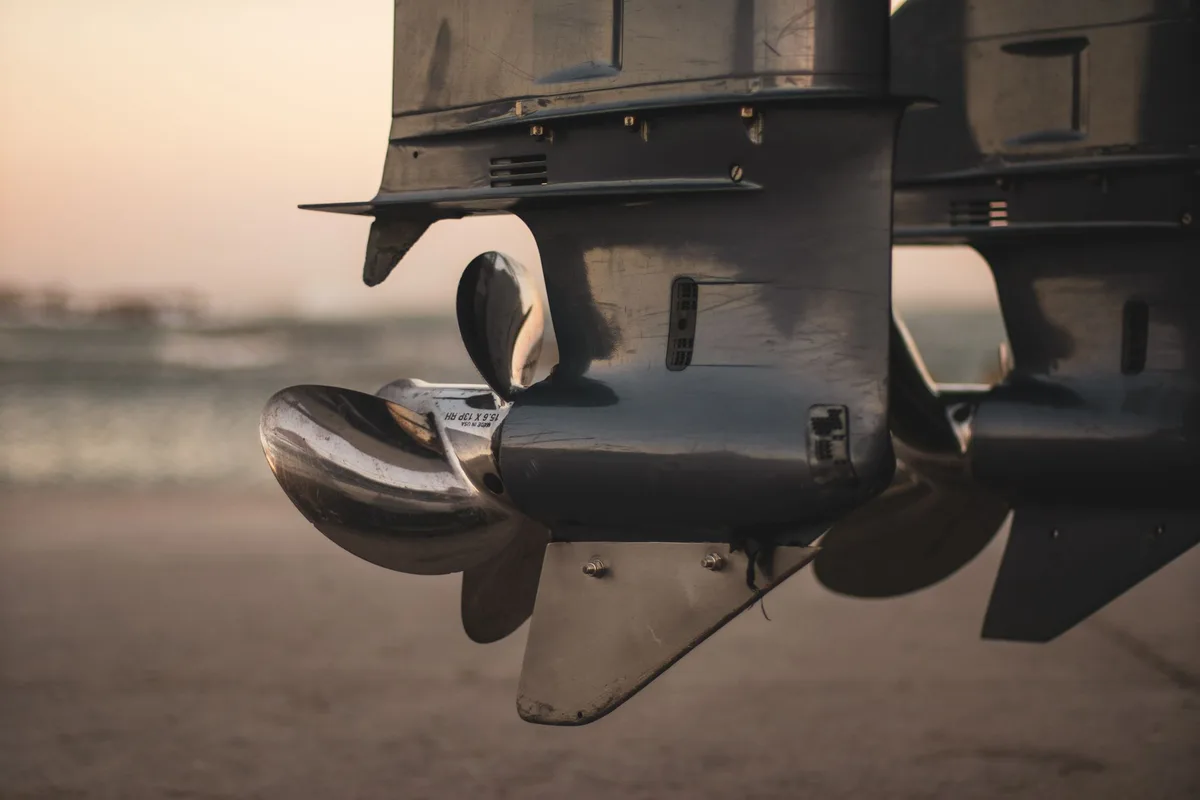
You’ll typically locate a metal plate, often riveted or screwed onto the engine's mounting bracket, the powerhead casing, or sometimes on the transom clamp assembly. It's usually in a spot that's visible without taking much apart.
What to See on the Tag: Key Details
This metal tag will proudly display "Mercury" or "Mariner" along with a unique serial number. Crucially, you'll often find a date code or a specific year indicator either directly on this plate or adjacent to the serial number. Some older tags might present a direct numerical or letter-based year code, while newer ones might incorporate the year into a more complex serial number structure.
Deciphering the Codes: Reading Your Motor's Story
Once you've found a serial number or a date code, the next step is to interpret it. Mercury's systems have evolved over time, so how you read it depends on the era of your motor.
Mercury vs. Mariner Tag Clues
You might see "Mariner" branding on the cowl, but for many years, Mariner outboards were produced by Mercury. Consequently, the dating systems for Mercury and Mariner motors from those periods are often very similar, or even identical. Recognizing this overlap is key when dating your engine.
Understanding Serial Number Formats (Newer & Older)
- Pre-1980s: Serial numbers from these earlier engines were often simpler sequences of numbers. The specific year wasn't always explicitly stated but could sometimes be inferred from the starting digits of the serial number. Researching historical Mercury charts or consulting a dealer would be necessary.
- 1980s, 2000s: This period saw more standardized formats. Serial numbers might begin with a letter or number that specifically denotes the year of manufacture or a range of years. For instance, a two-digit year code might be embedded within the serial number itself.
- 2000s, Present: Modern Mercury serial number systems are more complex and proprietary. The year is typically encoded in a precise position within the serial number sequence, often requiring access to Mercury's internal lookup tools or manufacturer-provided guides.
Beyond the Tag: Other Visual Clues
While the serial number tag is your first stop, other markings and visual elements on your motor can provide additional confirmation or clues, especially if the main tag is damaged or illegible.

Model and Serial Number Decals
Don't overlook stickers or decals that might be affixed to the motor's cowl, lower unit, or tiller handle. These can also display model and serial numbers. While these might fade or peel over time, an intact decal can offer a vital confirmation mark. The model number itself can sometimes incorporate year information, a common practice in automotive and marine industries.

Casting Numbers on the Engine Block
For a more in-depth look, the casting numbers directly on the engine block are invaluable if the main serial tags are missing or unreadable. These numbers often indicate the manufacturing date of that specific engine block component. You might need to clean the area thoroughly to see these codes clearly. These typically appear as a month and year (e.g., "08/95" for August 1995), providing a solid manufacturing date for that part, which is usually very close to the motor's assembly date.
When the Clues Are Hidden: Troubleshooting
It's not always a clear-cut path to finding your motor's year. Older engines, in particular, can present challenges with faded tags, missing plates, or worn-off numbers that make direct identification difficult.
Dealing with Worn or Missing Tags
If your primary serial number tag is unreadable or completely gone, the first step is to meticulously search for any other identifying marks, like those on decals or engine block castings. Sometimes, even a partial serial number can be enough for a dealer or an experienced marine mechanic to narrow down the possibilities. If no serial or date codes are visible, you’ll need to rely on visual characteristics.
How To Get Help: Dealers and Communities
If you've exhausted visual inspection and are still unsure, reaching out for expert help is a smart move. Authorized Mercury dealers possess historical databases and can often look up specific serial numbers to confirm the exact year and original specifications for your model. Many online forums and enthusiast communities are also excellent resources; posting clear photos of your motor and any visible number tags can attract the attention of experienced members who might recognize it instantly.
Putting It All Together: Confirming the Year
Once you've gathered the information from your motor's tags, decals, or casting numbers, the final stage is to cross-reference this data and confirm the correct year. This involves piecing together the clues you’ve found.
Visual Checkpoints for Key Model Years
Different Mercury outboard motor series and production years often have distinct visual identifiers. For example, the color schemes, cowling designs, and the style of the Mercury logo badge evolved over time. Early 1980s models might have a specific cowling shape, while a late 1990s model could feature different graphics and lower unit styling. Researching visual guides or specific model year breakdowns for Mercury outboards can help correlate your motor’s appearance with its likely production year when serial numbers are ambiguous.
Why Knowing the Year Matters
Understanding your Mercury outboard's production year is paramount for several practical reasons. It directly impacts your ability to source the correct replacement parts; an incorrect carburetor or water pump will not fit if it's not designed for your motor's specific model year. Furthermore, knowing the year helps in estimating the motor's market value, crucial for both buyers and sellers. It also informs optimal maintenance schedules, as recommended service intervals and specific procedures can vary significantly between different generations of engines.
For instance, manufacturer specifications often detail different fluid types or ignition timings for engines produced in distinct decades. Knowing your motor's year allows you to access the most accurate service manuals and troubleshooting guides, ensuring your engine runs efficiently and safely for years to come. This information is fundamental for proper care, similar to how knowing the breed and age of a pet is vital for its veterinary records and specialized care needs.
Visual Checkpoints for Key Model Years
Different Mercury outboard motor series and production years often have distinct visual identifiers. For example, the color schemes, cowling designs, and the style of the Mercury logo badge evolved over time. Early 1980s models might have a specific cowling shape, while a late 1990s model could feature different graphics and lower unit styling. Researching visual guides or specific model year breakdowns for Mercury outboards can help correlate your motor’s appearance with its likely production year when serial numbers are ambiguous.
For instance, Mercury often used different accent colors on cowlings or distinct "Mercury" lettering styles depending on the decade. A motor from the 70s might have a more rounded, classic cowling, whereas motors from the late 90s and early 2000s often sport a more aerodynamic, angular design. Even the propeller hub or the design of the tiller handle can sometimes hint at the age of the engine.
Why Knowing the Year Matters
Understanding your Mercury outboard's production year is paramount for several practical reasons. It directly impacts your ability to source the correct replacement parts; an incorrect carburetor or water pump will not fit if it's not designed for your motor's specific model year. Parts compatibility is critical, a prop shaft intended for a 1985 150hp might not fit a 1995 150hp model correctly.
Furthermore, knowing the year helps in estimating the motor's market value, crucial for both buyers and sellers. It also informs optimal maintenance schedules, as recommended service intervals and specific procedures can vary significantly between different generations of engines. Manufacturer specifications often detail different fluid types or ignition timings for engines produced in distinct decades. Knowing your motor's year allows you to access the most accurate service manuals and troubleshooting guides, ensuring your engine runs efficiently and safely for years to come.
This information is fundamental for proper care, similar to how knowing the breed and age of a pet is vital for its veterinary records and specialized care needs.
How to Handle Parts Compatibility Issues
Navigating parts compatibility can be one of the trickiest aspects when you don't know your Mercury outboard's exact year. Even motors within the same horsepower range can have drastically different internal components or mounting systems if they span across model years or redesigns. For example, a fuel pump for a 1990s 2-stroke might look similar to one for a 2000s 4-stroke, but they are fundamentally different and will not interchange.
When you suspect a part might not be correct due to an uncertain year, always cross-reference part numbers with the manufacturer's official catalog if possible. If you have a part number from the old component, plug that into Mercury's online parts lookup tool or consult a dealer service department. They can often confirm if the part number is still current, superseded by a new number, or if it’s entirely incompatible with your estimated motor year. Relying on visual guesses alone can lead to costly mistakes and engine downtime.
Common Mistakes When Dating an Outboard
One of the most frequent errors people make is assuming all motors with the same horsepower rating are interchangeable or from the same era. A Mercury 75hp from 1988 will have different internal components and part numbers than a Mercury 75hp from 2005. Assuming interchangeability can lead to purchasing the wrong parts, missing crucial information for maintenance, or misdiagnosing an issue.
Another common pitfall is relying solely on color or styling cues without verifying serial numbers. While visual elements can be strong indicators, Mercury has historically offered various color options and minor styling updates that might not strictly align with model year changes. A motor might have been repainted or customized, making its appearance misleading. Always prioritize verifiable serial or date codes over guesswork based on aesthetics alone.
Deciding Between Mercury and Mariner Outboards
Historically, Mercury Marine has manufactured outboards sold under the Mariner brand for significant periods. This means that while the name on the cowl might be Mariner, the underlying engine block, serial number conventions, and production date are often identical to Mercury-branded counterparts from the same manufacturing period. The key is to understand that in many instances, a Mariner is simply a Mercury in a Mariner wrapper.
When troubleshooting or ordering parts, if you have a Mariner, it's often beneficial to check both Mercury and Mariner documentation, if available. However, most dealers can cross-reference Mariner serial numbers within their Mercury systems. The engine's physical serial number tag will usually reveal its true Mercury manufacturing origin, especially for models produced from the late 1980s onward. If you encounter a very old Mariner, it might have been built by a different manufacturer under license, which could alter the identification process.