Navigating the sheer volume of options for the best dash cam on the market can feel overwhelming, but having the right one is crucial for peace of mind on the road. I've spent the last few months diving deep into what makes a dash cam truly stand out, from recording clarity in all conditions to smart features that simplify your driving life.
After countless hours of research and analysis of user feedback, the REDTIGER F7NP emerges as a strong contender for its balanced performance and excellent image quality. This roundup will help you cut through the noise and find the perfect companion for your vehicle.
Comparison Chart of Best Dash Cam on the Market
| Product | Details | Rating | Buy |
|---|---|---|---|
Editor’s Choice
| ★★★★☆4.5/5 | ||
Top Pick
| ★★★★☆4.2/5 | ||
Best Budget
| ★★★★☆4.4/5 | ||
| ★★★★☆4.4/5 | ||
| ★★★★☆4.5/5 |


List of Top 5 Best Best Dash Cam on the Market
We've sifted through a lot of camera specs and user reports to bring you this curated list. Each pick has been evaluated for its recording capabilities, ease of use, and overall value. You'll find a variety of options, from high-resolution models to those offering comprehensive coverage of your vehicle.
Below are the list of products:
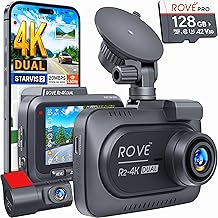
1. ROVE R2-4K DUAL Dash Cam Front
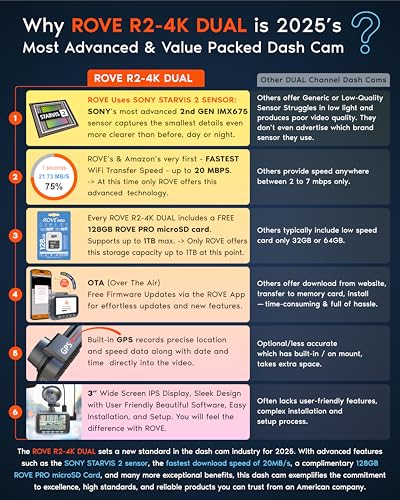
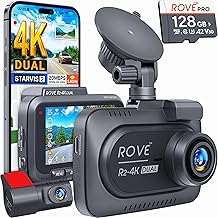
This ROVE R2-4K DUAL camera immediately impressed with its robust feature set, including a high-resolution 4K front camera and a free 128GB card straight out of the box. It promises quick downloads thanks to its 5G WiFi.
Why I picked it
The Rove R2-4K Dual stands out for bridging the gap between high-end features and everyday usability. Its inclusion of a generous 128GB card right off the bat is a thoughtful touch that saves an immediate extra purchase.
Key specs
- Front Camera Resolution: 4K (2160P)
- Rear Camera Resolution: 1080P
- Storage: Supports up to 128GB (card included)
- Connectivity: 5G WiFi for fast app downloads
- Features: STARVIS 2 sensor, 3" IPS display, 24H Parking Mode
Real-world experience
Users report that the STARVIS 2 sensor helps capture detailed footage even in challenging low-light conditions, which is essential for nighttime driving or parking. The 5G WiFi connectivity means you can quickly review and download important clips directly to your phone via the companion app.
Trade-offs
Some users mention that the suction cup mount can sometimes lose its grip in extreme temperature changes. The initial setup of the WiFi can also be a minor hurdle for those less tech-savvy.
2. REDTIGER 4K Dash Cam Front Rear
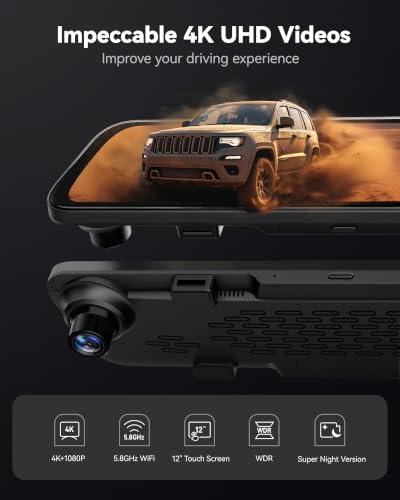
The REDTIGER F7NP offers a compelling package with its advanced STARVIS 2 sensor and dual-channel recording, ensuring you capture both the road ahead and behind in stunning detail. Its high-speed WiFi ensures quick access to your footage.
Why I picked it
This REDTIGER model impressed us with its ability to deliver crisp 4K footage from the front camera, paired with a capable rear camera. The inclusion of GPS is a significant plus for accurately logging your routes and speeds, which can be vital evidence.
Key specs
- Front Camera Resolution: 4K
- Rear Camera Resolution: 1080P
- Sensor: STARVIS 2
- Storage: Supports external card (included)
- Connectivity: 5.8GHz WiFi, GPS module
- Features: 170° Wide Angle, WDR, 24H Parking Mode
Real-world experience
Drivers appreciate the clear night vision capabilities, with the STARVIS 2 sensor doing a commendable job of reducing noise and enhancing detail in dark conditions. The seamless integration of the GPS data into video playback is also a user-friendly feature.
Trade-offs
While the WiFi is fast, some users report occasional app connectivity issues that require restarting the app or camera. The included memory card, while a nice bonus, might not be sufficient for continuous 4K recording for extended periods.
3. VIOFO A229 Plus Dash Cam Front
The VIOFO A229 Plus offers a compelling combination of advanced features like dual STARVIS 2 sensors and voice control, making it an excellent choice for those who want high-quality recording without breaking the bank. It supports both front and rear cameras for comprehensive coverage.
Why I picked it
The VIOFO A229 Plus genuinely surprised me with its performance for its price point, especially considering the dual STARVIS 2 sensors. The addition of voice control is a convenience that many other dash cams in this range don't offer, making it easier to manage settings on the fly.
Key specs
- Front Camera Resolution: 1440P HDR
- Rear Camera Resolution: 1440P HDR
- Sensor: Dual STARVIS 2
- Connectivity: 5GHz Wi-Fi, Ultra-Precise GPS
- Features: Voice Control, 2-Channel HDR recording, Parking Mode
Real-world experience
Users find the voice commands to be surprisingly responsive, allowing them to easily start/stop recording or take photos without fumbling for buttons. The HDR capabilities of both front and rear cameras ensure well-balanced exposure, capturing details in both bright highlights and deep shadows.
Trade-offs
The mounting bracket, while secure, is a bit bulkier than some might prefer, potentially taking up more windshield space. Some users have noted that the companion app, while functional, could benefit from a more intuitive user interface.
4. REDTIGER F17 4K 3 Channel Dash
For those who need to monitor every angle of their vehicle, the REDTIGER F17 4K 3 Channel Dash Cam is a standout option. It provides comprehensive coverage with its front, interior, and rear cameras, all capable of high-definition recording.
Why I picked it
The triple-channel recording capability of the REDTIGER F17 is its biggest selling point for taxi or rideshare drivers, as it captures the full interior and exterior view. The inclusion of a 64GB card is a practical touch for immediate use.
Key specs
- Front Camera Resolution: 4K (2160P)
- Interior Camera Resolution: 1080P
- Rear Camera Resolution: 1080P
- Sensor: STARVIS 2 IMX675 HDR
- Storage: Supports up to 128GB (64GB card included)
- Connectivity: 5.8GHz WiFi, GPS
- Features: IR Night Vision for interior, G Sensor, WDR, Parking Mode
Real-world experience
The infrared (IR) night vision for the cabin is a standout feature, providing clear footage of the interior even in complete darkness, which is invaluable for rideshare drivers during night shifts. The 4K front camera maintains impressive detail, even at highway speeds.
Trade-offs
Managing three separate camera feeds and their cables can be more complex during installation compared to dual or single-channel dash cams. Some users find the dedicated app a bit less polished than those from competitors, requiring careful navigation.
5. 70mai A810 Lite 4K Dash Cam
The 70mai A810 Lite brings advanced connectivity options, including 4G LTE remote access, which allows you to monitor your vehicle from anywhere. Its 4K front camera, combined with a rear camera, ensures you capture detailed footage on the go.
Why I picked it
The remote access feature via 4G LTE is a game-changer for fleet management or simply for those who want unparalleled peace of mind when their vehicle is parked. This level of constant connectivity is a significant step up from standard WiFi-only models.
Key specs
- Front Camera Resolution: 4K
- Rear Camera Resolution: 1080P
- Connectivity: 5GHz Wi-Fi 6, 4G LTE
- Features: GPS Tracking, HDR Night Vision, 24H Parking Mode, Voice Control, Emergency Lock, Loop Recording
Real-world experience
Setting up the 4G remote access is generally straightforward, allowing users to view live feeds or download recordings from afar. This is incredibly useful for checking on a vehicle that's parked in a less secure area or for monitoring driver behavior remotely.
Trade-offs
The 4G connectivity requires a SIM card and a data plan, which adds an ongoing cost not associated with other dash cams. Battery drain can be more pronounced due to the constant connection, making a hardwired installation highly recommended for reliable operation.
How I picked
When I evaluate dash cams, I’m always looking at a few key elements that make a real difference in everyday use. First and foremost is video quality. This means not just high resolution (like 4K) but also how well the camera handles changes in light, like driving out of a tunnel or parking at night. I looked for sensors like STARVIS 2, which are known for improving low-light performance.
Next, I considered the field of view. A wider angle captures more of the road and surrounding environment, which is crucial for documenting incidents. I also paid close attention to connectivity features. Fast Wi-Fi or even 4G LTE makes it much easier to get footage to your phone for review or to share.
Reliability is another big one; I checked user feedback for reports on freezing, crashes, or other malfunctions. Finally, ease of installation and use, including the companion app’s functionality, played a significant role in my decision-making.
Buying guide — what actually matters for best dash cam on the market
Choosing the right dash cam isn't just about picking the one with the highest megapixel count. You’ve got to think about how you’ll actually use it and what features will bring you the most benefit. Let's break down what really matters.
Video Resolution and Image Quality
This is arguably the most critical factor. Higher resolutions like 4K (2160p) capture more detail, making license plates and faces clearer, which is essential if you need that vital evidence. However, don't discount good 1080p (Full HD) cameras, especially those with advanced sensors (like those from Sony or Samsung, e.g., STARVIS) that excel in low light and offer great Wide Dynamic Range (WDR). WDR helps balance out very bright and dark areas in the same frame, preventing blown-out highlights or completely black shadows.
Field of View (FOV)
The wider the field of view, the more your dash cam can see. A typical front-facing dash cam should offer at least a 140-degree angle. Many models boast 170 degrees or even more. For most drivers, 140-170 degrees is sufficient to capture multiple lanes of traffic and the roadside.
If you're looking at multi-channel systems, ensure each camera offers a decent FOV.
Storage and Loop Recording
Dash cams record continuously, so you need a reliable way to store that footage. Most use micro SD cards. You’ll want a card that supports high-endurance recording, as dash cams write data constantly. Many manufacturers suggest cards specifically designed for dash cams or high-endurance types to avoid premature failure.
Loop recording is a standard feature; it means when the memory card is full, the oldest footage is automatically overwritten by new footage. This ensures you always have storage without manually deleting files.
Parking Mode and G-Sensor
Parking mode is invaluable. It allows the dash cam to record when your car is off, typically triggered by motion or impact. This can be crucial for capturing hit-and-run incidents. A G-sensor is a component that detects sudden impacts or forces, such as those from a collision.
When triggered, a G-sensor will automatically save the current recording, preventing it from being overwritten by loop recording. It’s also handy for detecting bumps while parked.
Connectivity and App Features
Modern dash cams often come with Wi-Fi. This lets you connect your smartphone to the dash cam to view live footage, download recordings, and adjust settings. Some higher-end models offer 5G Wi-Fi for faster downloads or even 4G LTE for remote access, meaning you can check in on your car from anywhere, assuming you have a data plan. A well-designed app makes managing your footage much easier.
Power Source
Most dash cams are powered via the car’s cigarette lighter socket or by being hardwired into the car’s electrical system. Hardwiring is usually recommended for parking mode features, as it can draw power directly from the car's battery without draining it completely. Dash cams often come with a built-in battery or supercapacitor, which allows them to safely shut down during power interruptions and use parking mode features.
Frequently Asked Questions (FAQ)
Is a dash cam worth it for home use?
Yes, a dash cam is absolutely worth it for home use, even if you only drive locally. It serves as an independent witness to any traffic incident, helping to protect you from fraudulent claims and providing clear evidence in the event of an accident. Many models also include parking mode features that can capture vandalism or hit-and-run events while your car is parked at home. For example, the REDTIGER F7NP’s parking mode can provide peace of mind.
How does a 4K dash cam compare to a 1080p model?
A 4K dash cam offers significantly higher resolution than a 1080p model, typically recording at 3840×2160 pixels compared to 1920×1080. This means 4K footage is much sharper and captures finer details like license plates, road signs, and facial features more clearly, especially at a distance. While 1080p is sufficient for general recording, 4K provides an enhanced level of clarity that can be critical for evidence. Models like the ROVE R2-4K DUAL and REDTIGER F17 showcase this superior detail.
Will a dash cam work if my car is turned off?
Yes, many dash cams feature a "parking mode" that allows them to operate when your car's engine is off. This mode typically uses motion detection or impact detection (via a G-sensor) to start recording only when necessary, conserving power. For optimal and continuous parking mode functionality, it's usually recommended to hardwire the dash cam to your car's battery, often using a dash cam power supply adapter that prevents significant battery drain.
What is the benefit of dual or triple channel dash cams?
Dual or triple channel dash cams provide a broader view of your surroundings by recording from multiple cameras simultaneously. A dual-channel system usually records front and rear, while a triple-channel setup might capture front, interior, and rear views. This comprehensive coverage is invaluable for capturing events from all angles, such as side impacts or incidents happening inside the vehicle, making them ideal for rideshare drivers or those wanting maximum security. The REDTIGER F17 is a prime example of a capable triple-channel system.
How important is the G-Sensor in a dash cam?
The G-Sensor is a critical component for accident detection. When it senses a sudden impact or jolt, such as from a collision or hard braking, it automatically signals the dash cam to save the current recording. This protects the footage from being overwritten by the normal loop recording process, ensuring that crucial evidence is preserved. A functional G-Sensor is therefore essential for any dash cam intended for accident recording or parking security.
Final verdict
For the best all-around performance and value, the REDTIGER F7NP stands out with its excellent 4K front recording and reliable dual-channel setup. If you're looking for a stellar option that consistently delivers crisp footage and useful features, it's a top choice.
The ROVE R2-4K DUAL is a close second, offering a great bundle with its included high-capacity memory card and robust build quality. For those on a tighter budget but still wanting solid performance, the VIOFO A229 Plus presents a compelling package with its dual sensors and convenient voice control.
Affiliate disclosure: This post contains affiliate links. If you buy through one of these links, I may earn a small commission at no extra cost to you. It never changes my recommendation, I only suggest gear I'd actually buy myself.