So, you're trying to nail down the right shaft length for your outboard motor. That's a super common question, and honestly, getting it wrong can really mess with how your boat handles, and sometimes, it can even damage your motor or your rig. Think of it like trying to fit a shoe that's too big or too small; it's just not going to work right. We'll walk through this step-by-step, and by the end, you'll know exactly what you need.
Manufacturer specifications for outboard motors, like those from Mercury Marine or Yamaha, clearly indicate that shaft length is a critical factor for optimal performance. These specifications typically fall into standard designations such as Short (S), Long (L), Extra Long (XL), and Ultra Long (XXL), corresponding to transom heights of approximately 15, 20, 25, and 30 inches, respectively.
Why Outboard Motor Shaft Length Is a Big Deal
Getting the shaft length on your outboard motor right isn't just a minor detail; it’s fundamental to how your boat performs and how long your equipment lasts. If the shaft is too short, the propeller might not be fully submerged. This means it can easily suck in air, a phenomenon known as ventilation. Ventilation makes the propeller spin without propelling the boat effectively, leading to a loss of thrust and potentially causing a jarring, bouncy ride called porpoising.
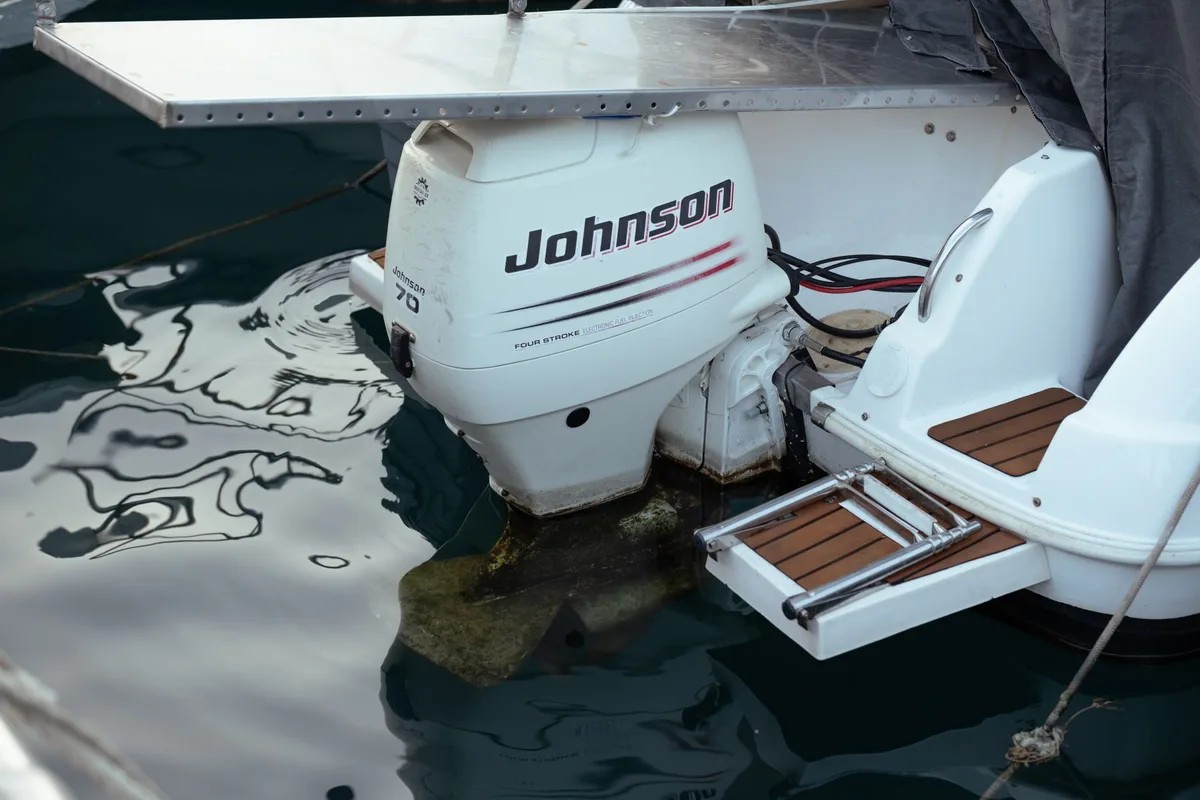
On the flip side, a shaft that's too long can cause the propeller to sit too low in the water. This creates unnecessary drag, slowing your boat down and making it burn more fuel. In shallow water situations, an overlong shaft also increases the risk of the propeller hitting submerged objects, which can lead to costly repairs.
How to Tell if Your Shaft Length is Right
You can usually tell if your outboard motor's shaft length is correct by observing your boat's behavior on the water. When the length is appropriate, the anti-ventilation plate (also called the cavitation plate), which is a flat metal plate situated just above the propeller, will be positioned correctly relative to the hull of your boat. Specifically, for most planing hull designs, this plate should sit roughly zero to two inches above the lowest point of the hull.
If you notice excessive porpoising, significant loss of thrust when turning, or the engine revving uncontrollably at high speeds, your shaft length might be too short. Conversely, if your boat feels sluggish, struggles to get on plane, or shows poor fuel economy, and you've ruled out other issues like a fouled hull or propeller, a shaft that's too long could be the culprit.
The Two Key Measurements You Need
Figuring out the correct outboard motor shaft length for your boat comes down to two primary measurements: the height of your boat's transom and the ideal position for the motor's anti-ventilation plate. These measurements work together to ensure the propeller operates efficiently underwater. This isn't a guesswork situation; it's about precise measurements to get optimal performance and prevent damage.
Measuring Your Boat's Transom Height
Your boat's transom is the vertical, flat surface at the stern where the outboard motor is mounted. Measuring its height is the first crucial step. This measurement is generally taken from the top edge of the transom down to the lowest point of the boat's hull, typically found at the centerline of the stern. This establishes the baseline height that your motor needs to accommodate.
Where the Motor Mounts
The second part of the equation is where the motor itself attaches. Outboard motors are designed with specific shaft lengths, and this length refers to the distance from the top engine mounting bracket to the center of the propeller shaft. This measurement is standardized by manufacturers to work with typical transom heights, ensuring correct propeller submersion when installed.
Understanding Standard Shaft Length Designations (S, L, XL, XXL)
Outboard motor manufacturers use standardized designations to simplify the selection process. These are typically:
- Short (S): Generally for transoms around 15 inches high.
- Long (L): Usually for transoms around 20 inches high.
- Extra Long (XL): Designed for transoms around 25 inches high.
- Ultra Long (XXL): Created for transoms around 30 inches high.
These designations are important because they correlate directly with your boat's transom height, ensuring the propeller will be at the correct depth in the water. Choosing the wrong designation can lead to all the performance issues mentioned earlier.
The Crucial Cavitation Plate to Hull Relationship
The anti-ventilation plate, or cavitation plate, is a critical component for achieving optimal performance. This flat, horizontal plate sits directly above the propeller. Its primary functions are to prevent air from being drawn into the propeller during turns or when the boat is experiencing aeration, and to help steer the boat at lower speeds.
For most planing hull boats, the ideal setup places the top of this anti-ventilation plate just slightly above the lowest point of the boat's hull. Manufacturer specifications, such as those found on websites like Mercury Marine, often recommend this plate be 0 to 2 inches above the hull. This positioning ensures the propeller is fully submerged during normal operation for maximum thrust and efficiency, without being excessively deep, which would cause drag.
Step-by-Step: Measuring Your Transom for Shaft Length
Accurately measuring your boat's transom is essential for selecting the correct outboard motor shaft length. This process requires a few simple tools and careful observation. Performing this measurement correctly ensures you purchase a motor that will integrate seamlessly with your hull and deliver the performance you expect.
What You'll Need
Before you start, gather these items:
- A long, sturdy, and straight edge (a metal level, a long ruler, or a straight piece of lumber works well).
- A reliable tape measure.
- A friend to help hold the straight edge can be useful, though not strictly necessary.
Laying the Foundation: The Straight Edge
To get an accurate measurement, you need a reference point at the top of your transom. This is where the straight edge comes in. Carefully place your straight edge across the very top of the transom, making sure it's perfectly level. Ensure the straight edge extends beyond the sides of the transom so you have a clear line to measure down from.

Finding That Lowest Hull Point
Now, you need to locate the lowest point of your boat's hull at the stern. This is typically found directly below the transom. You'll be looking underneath the hull, directly in the center where the transom's vertical line would meet the hull's lowest curvature.
Getting the Precise Measurement
With the straight edge level across the top of the transom and your lowest hull point identified, take your tape measure. Start the measurement from the underside of the straight edge and extend the tape measure straight down, perfectly perpendicular to the straight edge, until it reaches that lowest point on the hull. Record this measurement accurately. This number, representing your transom height, is your key to selecting the right shaft length designation.
What If You Already Have a Motor?
If you're looking to replace an outboard and your current motor is working fine, that's your easiest path to figuring out the right shaft length. Most outboard motors will have their shaft length designation stamped directly onto the motor's mounting bracket or near the model and serial number plate. You'll typically see abbreviations like "S" for short, "L" for long, "XL" for extra long, and "XXL" for ultra long.
If the designation isn't readily visible, you can measure it directly. Measure from the very top edge of the engine's mounting bracket down to the center of the propeller shaft. Compare this measurement to standard shaft lengths (e.g., 15 inches for S, 20 inches for L, 25 for XL, 30 for XXL). This direct measurement of your existing, properly functioning motor is a reliable indicator of the shaft length you need.
Common Mistakes That Hurt Performance
Several common mistakes can lead to purchasing the wrong outboard motor shaft length, significantly impacting your boat's performance and potentially causing damage. Understanding these pitfalls can save you time, money, and frustration down the line. Most of these errors stem from not performing the correct measurements or misunderstanding how shaft length interacts with your specific hull design.
Shaft Too Short: The Ventilation Problem
A shaft that is too short is arguably one of the most problematic. When the propeller isn't sufficiently submerged, it can easily draw air from the surface or from disturbed water. This air entering the propeller's blades causes a rapid loss of thrust and an increase in engine RPM, a condition known as ventilation.
This sudden increase in engine speed without corresponding boat speed feels jarring and makes controlling the boat difficult, especially at higher speeds or in choppy conditions. This can also place undue stress on the propeller and drivetrain components. It's a clear sign that the propeller is not operating in its intended environment, fully submerged in water.
Shaft Too Long: The Drag Issue
Conversely, an outboard motor with a shaft that is too long will cause the propeller and gearcase to sit lower in the water than necessary. This increased submersion creates excess drag, acting like an anchor that holds your boat back. This drag translates to slower top speeds, a sluggish ability to get the boat onto a plane, and significantly reduced fuel efficiency.
Furthermore, a motor with an excessively long shaft poses a greater risk in shallow water. The lower-hanging gearcase and propeller are more likely to strike submerged objects like rocks, logs, or sandbars, which can cause severe damage to the propeller, the lower unit, and potentially the entire motor.
Shaft Length Not Matched to Trim Angle
Another critical error involves ignoring how the outboard motor's trim angle affects propeller depth. Even with the correct shaft length for your transom, if the motor is trimmed too far out relative to the hull, the propeller can still become partially exposed, leading to ventilation. Likewise, trimming too far in can negatively affect how the boat handles.
Understanding your boat's optimal trim range is key. Manufacturer specifications, like those from Yamaha Outboards, often provide guidelines on recommended trim angles for different operational conditions. The goal is to keep the propeller fully engaged with the water, and effective trimming is an integral part of this, working in conjunction with the correct shaft length.
Pro Tips for Getting It Perfect
To ensure you select the perfect shaft length for your outboard motor and boat, a few professional insights can make all the difference. These tips go beyond basic measurements and focus on optimizing performance and avoiding common oversights that many boat owners might miss. Think of them as the little details that separate a good installation from a great one.
Consider buying slightly longer if you're unsure. If your transom height falls between standard designations, it's generally safer to opt for the longer shaft. While you can often use shims or adjust the motor mount height to compensate for a slightly longer shaft, you can't magically lengthen a shaft that's too short.